Rush
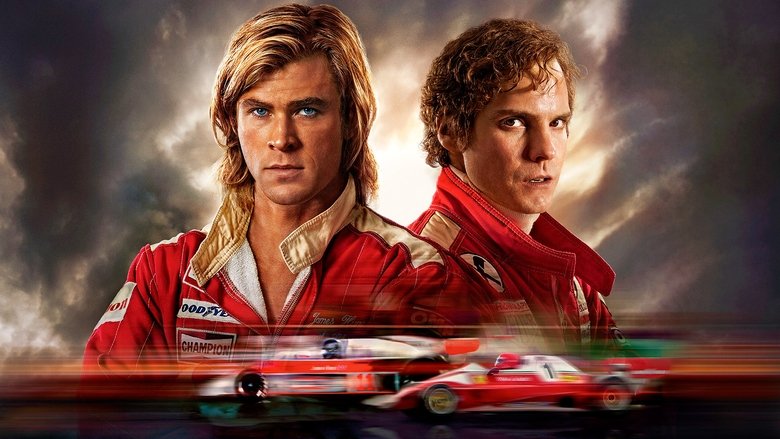
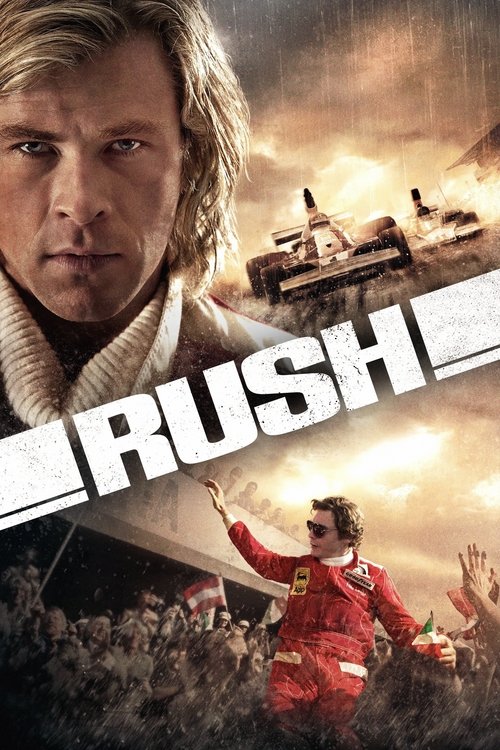
High-octane biopic fusing 70s grit with the visceral poetry of speed. A duel of fire and ice where two rivals race toward death to feel truly alive, captured in kinetic, sun-bleached frames.
Rush

Rush

"Everyone's driven by something."

02 September 2013 United Kingdom 123 min ⭐ 7.7 (7,620)
Director: Ron Howard
Cast: Chris Hemsworth, Daniel Brühl, Olivia Wilde, Alexandra Maria Lara, Pierfrancesco Favino
Drama Action
Rivalry as Symbiosis Discipline vs. Hedonism Death as a Life Force The Burden of Happiness
Budget: $38,000,000
Box Office: $90,200,000

Overview

Set against the glamorous and deadly backdrop of the 1976 Formula One season, Rush chronicles the intense rivalry between two drivers with opposing philosophies: the charismatic, hedonistic Englishman James Hunt and the disciplined, calculating Austrian Niki Lauda. Their competition transcends the track, pushing both men to their physical and psychological limits.

The narrative reaches its breaking point at the treacherous Nürburgring in Germany, where Lauda suffers a horrific, near-fatal crash in torrential rain. Miraculously, he returns to the cockpit just weeks later, his face still bandaged and bleeding, to challenge Hunt for the World Championship in a rain-soaked finale in Japan. The film explores not just the race for the title, but the mutual respect forged in the fires of their obsession.
Core Meaning

At its heart, Rush is a study of how rivalry drives greatness. It posits that we are defined not by our friends, but by our enemies who force us to evolve. The film contrasts two valid approaches to existence: Hunt's embrace of the immediate moment regardless of risk, and Lauda's disciplined management of long-term survival. Ultimately, it suggests that neither path is superior; they are complementary forces that needed each other to reach their apex.

Thematic DNA

Rivalry as Symbiosis 30%
Discipline vs. Hedonism 25%
Death as a Life Force 25%
The Burden of Happiness 20%

Rivalry as Symbiosis

The film deconstructs the idea of an enemy. While Hunt and Lauda initially despise each other, they realize that their hatred is the fuel for their success. Lauda explicitly states that a wise man gets more from his enemies than a fool from his friends.

Discipline vs. Hedonism

Lauda represents the Apollonian ideal of order, logic, and percentage risk, while Hunt embodies the Dionysian spirit of chaos, sex, and intuition. The film balances these forces without judging one as 'correct,' showing the costs and rewards of both.

Death as a Life Force

The proximity to death is what gives the drivers' lives meaning. Hunt argues that the closeness to death makes him feel more alive, a sentiment that justifies the extreme risks they take for a plastic trophy.

The Burden of Happiness

Lauda introduces the idea that 'happiness is the enemy' because it gives you something to lose. His marriage creates vulnerability, making him hesitate at crucial moments, whereas Hunt's emptiness allows him to remain fearless.

Character Analysis

Niki Lauda

Daniel Brühl

Archetype: The Calculator / Anti-Hero
Key Trait: Ruthless Pragmatism

Motivation

To win through perfection, discipline, and the elimination of unnecessary risk. He seeks to prove that racing can be mastered by intellect.

Character Arc

Starts as an abrasive, unliked technician who buys his way into F1. Through his suffering and recovery, he earns the respect of the world and his rival, learning that life is not just about percentages.

James Hunt

Chris Hemsworth

Archetype: The Maverick / Hero
Key Trait: Charismatic Recklessness

Motivation

To be respected, to feel alive, and to prove his worth to the establishment that rejected him. He races to escape his own inner demons.

Character Arc

Begins as a talented but undisciplined playboy. Fueled by Lauda's dominance, he finds the focus to become a champion, only to realize that the victory leaves him with an emptiness he cannot fill.

Marlene Knaus

Alexandra Maria Lara

Archetype: The Anchor
Key Trait: Quiet Strength

Motivation

To love and support Lauda despite the terrifying risks of his profession.

Character Arc

She represents the 'happiness' that Lauda fears. Her presence transforms Lauda from a machine into a man with something to lose.

Symbols & Motifs

The Rat

Meaning:

Symbolizes Lauda's lack of vanity and his survivalist instinct. While others mock his appearance, he embraces the rat's intelligence and resilience.

Context:

Used as a derogatory nickname by Hunt and the press, but reclaimed by Lauda who notes that rats are 'survivors' and intelligent.

The Gold Lighter

Meaning:

Represents Hunt's anxiety, his need for tactile stimulation, and the flickering, unstable nature of his high-speed lifestyle.

Context:

Hunt constantly flicks his gold lighter before races, a nervous tic that betrays the fear beneath his confident facade.

Rain

Meaning:

The great equalizer and the bringer of death. It represents the chaotic variable that calculation cannot fully control.

Context:

Appears at the fateful Nürburgring crash and the final race in Japan, serving as the ultimate test of the drivers' courage and philosophy.

The Car as a Coffin

Meaning:

A vessel of death 'surrounded by high-octane fuel.' It emphasizes the fragility of the drivers' existence.

Context:

Hunt describes the car not as a machine of glory, but as a 'bomb on wheels,' highlighting the absurdity of their profession.

Memorable Quotes

A wise man gets more use from his enemies than a fool from his friends.

— Niki Lauda

Context:

Spoken by Lauda to Hunt at the end of the film, acknowledging that Hunt's rivalry drove him to his recovery and success.

Meaning:

The central thesis of the film: adversity and competition are more valuable for personal growth than comfort and agreement.

The closer you are to death, the more alive you feel. It's a wonderful way to live. It's the only way to drive.

— James Hunt

Context:

Hunt explains to a nurse (and the audience) why he does what he does, equating risk with vitality.

Meaning:

Encapsulates Hunt's philosophy and the allure of dangerous sports. It justifies the insanity of 1970s F1 racing.

Happiness is your biggest enemy. It weakens you. Puts doubts in your mind. Suddenly you have something to lose.

— Niki Lauda

Context:

Lauda says this after marrying Marlene, realizing that his love for her has made him fear death for the first time.

Meaning:

Highlights the cost of emotional attachment in a high-stakes environment. To be perfect, one must be detached.

I accept every time I get in my car there is a 20% chance I could die, and I can live with it, but not 1% more.

— Niki Lauda

Context:

Lauda arguing with the other drivers to cancel the Nürburgring race due to heavy rain and poor safety conditions.

Meaning:

Shows Lauda's calculated approach to risk. He is not suicidal; he is a risk manager.

Philosophical Questions

Is it better to burn out or fade away?

The film contrasts Hunt's short, explosive life of pleasure with Lauda's long, enduring life of discipline. It asks whether the quality of life is measured in peak intensity or longevity.

Does trauma define us?

Lauda's crash becomes his defining moment not because of the injury, but because of his will to return. The film explores whether we are defined by what happens to us, or how we respond to it.

Alternative Interpretations

While framed as a rivalry, many critics interpret the film as an unconventional love story or 'bromance.' The obsession the two men have with each other transcends their relationships with women. Another reading suggests a reversal of the 'winner' archetype: while Hunt wins the championship and lives the 'rock star' life, the film subtly suggests Lauda is the true victor of life—surviving, building a lasting legacy, and finding discipline, whereas Hunt burns out and dies young.

Cultural Impact

Rush played a significant role in revitalizing global interest in Formula 1 history, particularly in the United States where the sport is less dominant. It was critically acclaimed for its refusal to dumb down the technical aspects of the sport, earning the respect of the notoriously critical F1 community, including Bernie Ecclestone and Niki Lauda himself. The film solidified Daniel Brühl's status as a top-tier international actor and proved Chris Hemsworth's range beyond action hero roles. It is frequently cited alongside Senna and Grand Prix as one of the greatest racing films ever made.

Audience Reception

The film received an 'A-' CinemaScore and widespread acclaim from audiences (88% on Rotten Tomatoes). Viewers praised the visceral racing sequences and the chemistry between Hemsworth and Brühl. The sound design by Hans Zimmer and the visual effects were highlighted as immersive. Some criticism was directed at the initial 'villain' framing of Lauda, though most audiences appreciated the nuance that developed. F1 fans largely embraced the film despite minor historical inaccuracies.

Interesting Facts

  • Daniel Brühl wore a prosthetic dental appliance to mimic Niki Lauda's famous overbite, which he jokingly called 'The Rat' on set.
  • The real Niki Lauda said seeing the movie was a shock, exclaiming 'Shit! That's really me,' and praised the accuracy of Brühl's portrayal.
  • Chris Hemsworth had to shed significant muscle mass he had built for 'Thor' to fit into the narrow F1 cockpits, dropping from 215 lbs to 185 lbs.
  • The cars used in the racing scenes were largely Formula 3 cars disguised with Formula 1 bodywork, as the actors were not allowed to drive real vintage F1 cars at speed.
  • Director Ron Howard knew almost nothing about Formula 1 before signing on to direct the film.
  • The real James Hunt and Niki Lauda were actually friends who once shared a flat in London, unlike the bitter enemies portrayed in the early parts of the film.
  • Jochen Mass, who was Hunt's teammate in 1976, played himself in the movie, driving the #12 McLaren during the Nürburgring scenes.

Easter Eggs

Sean Edwards playing Guy Edwards

Sean Edwards, a professional racing driver, portrays his own father, Guy Edwards, in the scene where he pulls Lauda from the burning Ferrari. Tragically, Sean died in a racing accident just months after the film's release.

Alistair Caldwell's Cameo

The real Alistair Caldwell (McLaren's 1976 team manager) appears as a moustached race official in the background of the Japanese GP press conference, while actor Stephen Mangan plays his character.

Jochen Mass Cameo

The real Jochen Mass drives his own car in the film. A production assistant famously asked him his name for the credits and didn't believe him when he said 'Jochen Mass'.

Real Niki Lauda

The real Niki Lauda appears in the archival footage montage at the very end of the film, bridging the gap between the actor's portrayal and the real legend.

⚠️ Spoiler Analysis

Click to reveal detailed analysis with spoilers

Frequently Asked Questions

Explore More About This Movie

Dive deeper into specific aspects of the movie with our detailed analysis pages

Comments (0)

Leave a comment

No comments yet. Be the first to share your thoughts!