Green Book
"Inspired by a True Friendship."
Overview
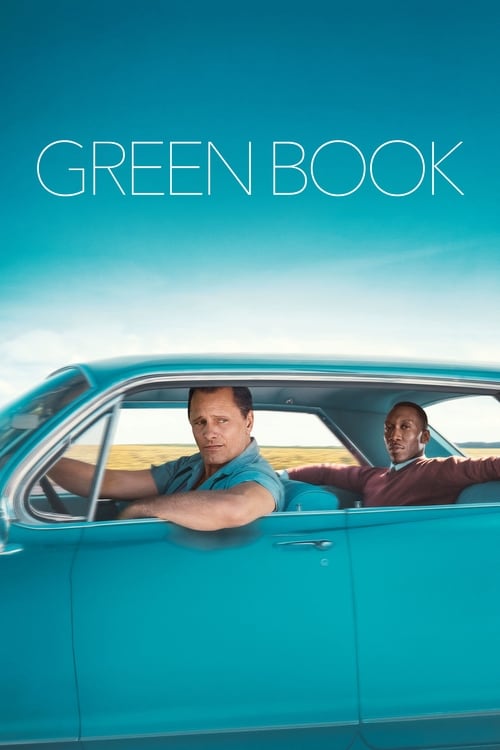
Inspired by a true story, "Green Book" follows Tony Lip (Viggo Mortensen), a working-class Italian-American bouncer from the Bronx, who is hired to drive Dr. Don Shirley (Mahershala Ali), a world-class African-American classical pianist, on a concert tour from Manhattan into the Deep South in 1962. The film is named after "The Negro Motorist Green Book," a guidebook for African-American travelers that listed safe hotels, restaurants, and service stations in the segregated South.
Initially, the two men are at odds due to their vastly different personalities and backgrounds. Tony is boorish and uncultured, while Dr. Shirley is refined, educated, and fastidious. As they travel deeper into the South, they encounter racism and danger, forcing them to rely on each other to survive. Their journey is one of unexpected humor and humanity as they are forced to confront their own preconceived notions and set aside their differences.
Through their shared experiences, an unlikely and profound friendship blossoms, challenging societal norms and transforming both of their lives. The film explores themes of race, class, dignity, and the power of human connection to overcome prejudice.
Core Meaning
The central message of "Green Book" is the transformative power of friendship and empathy in dismantling prejudice. Director Peter Farrelly aims to show that by stepping outside of one's own world and getting to know someone on a personal level, deeply ingrained biases can be broken down. The film posits that true understanding and respect are not achieved through grand gestures, but through the accumulation of small, shared experiences. It also highlights the importance of dignity in the face of injustice, as exemplified by Dr. Shirley's insistence on non-violence. Ultimately, "Green Book" suggests that while societal change is a monumental task, individual change is possible and is the first step towards a more just and compassionate world.
Thematic DNA
Racism and Prejudice
The film confronts the pervasive racism of 1960s America head-on, particularly in the Jim Crow South. Dr. Shirley is subjected to numerous humiliations, from being denied entry to restaurants and restrooms to facing violence. The theme is also explored through Tony's initial prejudice, which evolves as he witnesses the injustices Dr. Shirley endures. The film illustrates both overt and subtle forms of racism, highlighting its systemic nature.
Friendship and Human Connection
The core of the film is the development of an unlikely friendship between Tony and Dr. Shirley. Their bond transcends the boundaries of race and class, demonstrating that shared experiences and mutual respect can foster deep connections between people from different worlds. The film's central message is that friendship is a powerful antidote to prejudice.
Identity and Belonging
Dr. Shirley's character embodies a profound sense of isolation. He is a black man who doesn't fit in with the black community, and a highly cultured artist who is not fully accepted by the white society for whom he performs. His poignant outcry, "So if I'm not black enough and if I'm not white enough, then tell me, Tony, what am I?!" encapsulates his struggle with identity and belonging. The film explores the complexities of identity beyond simple racial categorizations.
Dignity and Courage
Dr. Shirley consistently chooses to confront racism with dignity rather than violence, believing it to be the only way to truly win. This theme is articulated in his line, "You never win with violence. You only win when you maintain your dignity." The film also suggests it takes courage to challenge people's hearts and minds, as stated by Oleg, one of Dr. Shirley's bandmates.
Character Analysis
Tony 'Lip' Vallelonga
Viggo Mortensen
Motivation
Initially, Tony's motivation is purely financial; he needs a job to support his family while the Copacabana is closed for renovations. As the story progresses, his motivation shifts to protecting Dr. Shirley, not just as a job, but out of genuine friendship and a sense of justice.
Character Arc
Tony begins the film as a prejudiced, working-class bouncer with a simplistic worldview. His journey with Dr. Shirley exposes him to the realities of racism and challenges his ingrained biases. Through his developing friendship with Don, Tony's capacity for empathy and understanding grows, transforming him into a more compassionate and open-minded individual. By the end, he not only defends Dr. Shirley but also welcomes him into his home, signifying a profound change of heart.
Dr. Don Shirley
Mahershala Ali
Motivation
Dr. Shirley is motivated by a desire to challenge racism and change people's hearts through his music and his dignified presence in the Deep South. He deliberately books the tour in the South, despite the danger, to make a statement. He is also driven by a deep-seated loneliness and a yearning for connection.
Character Arc
Dr. Shirley starts the journey as a man of immense talent and refinement, yet he is emotionally isolated and guarded. His experiences in the South force him to confront the limitations of his genius in a racist society. His friendship with Tony allows him to break down his own barriers, connect with someone on a personal level, and embrace a sense of belonging he has long been denied. By the end, he takes the step to join Tony's family for Christmas, a significant move out of his self-imposed isolation.
Dolores Vallelonga
Linda Cardellini
Motivation
Dolores is motivated by her love for her family and her desire for Tony to be a good man. She encourages his better nature and is the reason he strives to improve himself, as seen through his dedication to writing her letters.
Character Arc
Dolores serves as the film's moral compass and the emotional anchor for Tony. While she doesn't undergo a dramatic arc herself, her warmth and unwavering love for Tony provide a stark contrast to the ugliness he and Dr. Shirley encounter. Her gracious and welcoming nature is evident when she insists Tony call Dr. Shirley to thank him for his help with the letters and when she warmly welcomes him into their home at the end.
Symbols & Motifs
The Green Book
The Green Book itself symbolizes both the harsh reality of segregation and the resilience and resourcefulness of the African-American community. It is a tangible representation of the dangers black travelers faced, while also being a tool of empowerment that enabled them to navigate a hostile country with a degree of safety.
The record label gives Tony a copy of "The Negro Motorist Green Book" at the beginning of their journey to guide them to establishments that would serve African Americans in the Jim Crow South. While the title of the film, its importance as a historical artifact is a constant underlying presence throughout their travels.
Kentucky Fried Chicken
The fried chicken symbolizes cultural stereotypes and the breaking down of assumptions. For Tony, it's a food he assumes all black people enjoy. For Dr. Shirley, it represents a part of black culture he feels disconnected from. Sharing the chicken marks a moment of connection and the beginning of Dr. Shirley letting his guard down.
Tony buys a bucket of Kentucky Fried Chicken and is shocked to learn Dr. Shirley has never had it. He encourages him to try it, and they eat it together in the car, a scene that provides both humor and a subtle shift in their relationship.
The Letters to Dolores
The letters Tony writes to his wife, with Dr. Shirley's help, symbolize the emotional growth of both men. For Tony, they represent a newfound ability to express his love and vulnerability. For Dr. Shirley, they are a way to connect with another person on an intimate, albeit indirect, level, combating his own loneliness.
Dr. Shirley is appalled by Tony's poorly written letters and begins to help him compose more eloquent and romantic ones. This becomes a bonding activity for them during their long drives, and Dolores is deeply moved by the beautiful letters she receives.
The Jade Stone
The jade stone symbolizes luck, morality, and Tony's character development. Initially, he steals it, reflecting his opportunistic nature. His decision to return it at Dr. Shirley's urging signifies his growing sense of integrity and respect for his new friend's values.
Early in the film, Tony picks up a fallen jade stone from the ground and pockets it. Dr. Shirley later confronts him about it, leading to a discussion about right and wrong. This moment highlights the initial moral contrast between the two men.
Memorable Quotes
You never win with violence. You only win when you maintain your dignity. Dignity always prevails.
— Dr. Don Shirley
Context:
Dr. Shirley says this to Tony after Tony has punched a police officer who was racially profiling them, leading to their arrest. It's a moment of teaching and a stark contrast between their initial approaches to conflict.
Meaning:
This line encapsulates Dr. Shirley's core philosophy and his approach to confronting racism. It serves as a central theme of the film, highlighting the power of non-violent resistance and moral fortitude in the face of injustice.
So if I'm not black enough and if I'm not white enough, and if I'm not man enough, then tell me, Tony, what am I?
— Dr. Don Shirley
Context:
This emotional outburst occurs in the rain after Tony criticizes Dr. Shirley for being out of touch with his own people and their music. It is a raw and vulnerable moment where Dr. Shirley's carefully constructed facade crumbles.
Meaning:
This poignant quote reveals the depth of Dr. Shirley's isolation and his struggle with identity. He feels alienated from both black and white communities, highlighting the painful complexities of race and class that go beyond simple categorization.
The world is full of lonely people afraid to make the first move.
— Tony Lip
Context:
Tony says this to Dr. Shirley in a hotel room, encouraging him to reconnect with his estranged brother. It shows how far Tony has come in his ability to see beyond their surface differences and understand Dr. Shirley's inner turmoil.
Meaning:
This quote shows Tony's surprising emotional intelligence and his understanding of Dr. Shirley's loneliness. It's a moment of empathy that signifies the deepening of their friendship and their mutual recognition of a shared human experience.
Being a genius is not enough. It takes courage to change people's hearts.
— Oleg
Context:
Oleg says this to Tony towards the end of the film, expressing his admiration for Dr. Shirley's mission. It helps Tony, and the audience, fully appreciate the purpose and risk of their journey.
Meaning:
This line, spoken by Dr. Shirley's cellist, articulates a key message of the film: talent alone is not enough to overcome deep-seated prejudice. It requires bravery and a willingness to confront hatred directly, which is what Dr. Shirley is doing with his tour.
Philosophical Questions
Can individual friendship truly overcome systemic prejudice?
The film champions the idea that personal connection can bridge racial divides. The entire narrative arc is built on the friendship between Tony and Don as a microcosm of racial reconciliation. However, the film also shows instances where their bond is powerless against institutionalized racism, such as when Don is barred from dining at the very establishment where he is the headline performer. This raises the question of whether changing individual hearts is sufficient to combat a deeply entrenched societal system of prejudice.
What is the most effective way to confront injustice: dignity or direct action?
The film presents a contrast between Dr. Shirley's philosophy of maintaining dignity in the face of hatred and Tony's more confrontational, and often violent, approach. Dr. Shirley believes that rising above bigotry is the only way to achieve true victory, while Tony's instinct is to fight back physically. The film seems to endorse Dr. Shirley's view as the more enlightened path, yet there are moments where Tony's aggressive intervention is what saves them from immediate danger. This prompts a philosophical debate about the merits and limitations of different forms of resistance.
Alternative Interpretations
One of the main alternative interpretations of "Green Book" centers on its narrative perspective. While the film presents itself as the story of an unlikely friendship, many critics have argued that it is primarily Tony's story, with Dr. Shirley serving as a vehicle for the white character's redemption. This reading suggests the film is less a story about Dr. Shirley's experience with racism and more about a white man learning not to be racist, a common trope in Hollywood films about race.
Another interpretation questions the film's optimistic tone. Some viewers and critics felt that the movie oversimplified the complexities of racism in America, presenting it as a problem that can be solved through individual friendship rather than addressing the systemic nature of prejudice. The heartwarming conclusion, where Dr. Shirley joins the Vallelonga family for Christmas, has been viewed by some as a fairytale-like ending that downplays the harsh realities of the era. These interpretations suggest that while entertaining, the film may offer a sanitized and overly simplistic view of race relations in the 1960s.
Cultural Impact
"Green Book" was a commercial and critical success, culminating in winning the Academy Award for Best Picture in 2019. However, the film also sparked considerable controversy and debate. Critics praised the performances of Mortensen and Ali, the chemistry between them, and the film's overall heartwarming message. It was often described as a crowd-pleasing, feel-good movie that tackles serious issues with humor and heart.
On the other hand, the film faced criticism for what some saw as a simplistic, "white savior" narrative, telling a story about racism from the perspective of a white protagonist whose own prejudice is redeemed. The family of the real Dr. Don Shirley also disputed the film's portrayal of his life and his friendship with Tony Lip, claiming he was not as isolated from his family or the black community as the film suggests. This led to a wider conversation about historical accuracy in biographical films and the importance of perspective in storytelling. Despite the controversies, the film brought the historical "Green Book" into the mainstream consciousness for many viewers, shedding light on an important piece of African-American history.
Audience Reception
Audiences generally responded very positively to "Green Book," as evidenced by its high audience scores on review aggregation sites and its win of the People's Choice Award at the Toronto International Film Festival. Viewers praised the film's heartwarming story, humor, and, most notably, the powerful and charismatic performances of Viggo Mortensen and Mahershala Ali. The chemistry between the two leads was a frequent point of acclaim. Many found the film to be an uplifting and inspirational story about the power of friendship to transcend hate.
However, the film was not without its detractors among the public. The main points of criticism from some audience members mirrored those of professional critics, particularly concerning the "white savior" trope and the feeling that the story of a brilliant and complex black man was being told through a white lens. The controversy surrounding the Shirley family's objections to the film's accuracy also influenced some viewers' perceptions. Despite these criticisms, the overall verdict from the general audience was largely favorable, with many seeing it as a well-made and emotionally resonant film.
Interesting Facts
- The film was co-written by Nick Vallelonga, the real-life son of Tony Lip, and is based on interviews with his father and Dr. Shirley, as well as the letters his father wrote to his mother during the tour.
- Viggo Mortensen gained a significant amount of weight to play the role of Tony Lip.
- Mahershala Ali, who won the Academy Award for Best Supporting Actor for his role, worked extensively with composer Kris Bowers to learn how to play the piano convincingly for the part. Bowers also served as a body double for close-ups of hand movements.
- Peter Farrelly, the director, is best known for his work on broad comedy films like "Dumb and Dumber" and "There's Something About Mary," making "Green Book" a significant departure in tone.
- The real-life relatives of Tony Lip have cameo appearances in the film.
- The title refers to "The Negro Motorist Green Book," an annual guidebook for African-American road-trippers that was published from 1936 to 1966.
⚠️ Spoiler Analysis
Click to reveal detailed analysis with spoilers
Frequently Asked Questions
Explore More About This Movie
Dive deeper into specific aspects of the movie with our detailed analysis pages
Comments (0)
No comments yet. Be the first to share your thoughts!