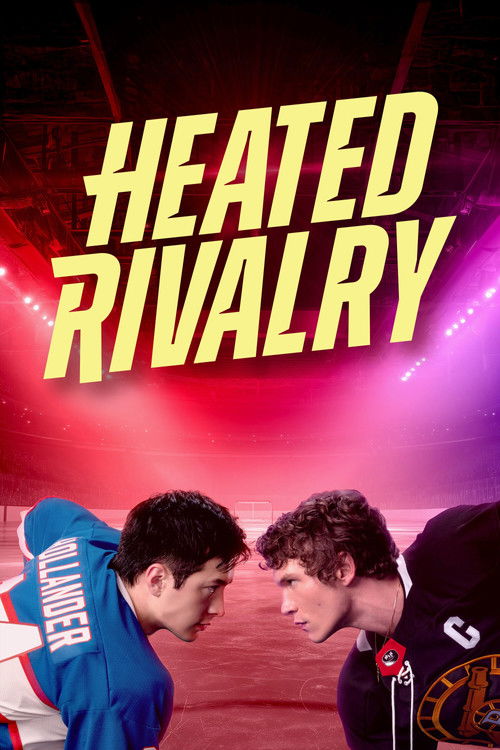
Heated Rivalry
"Fuel the rivalry. Embrace the passion."
Overview
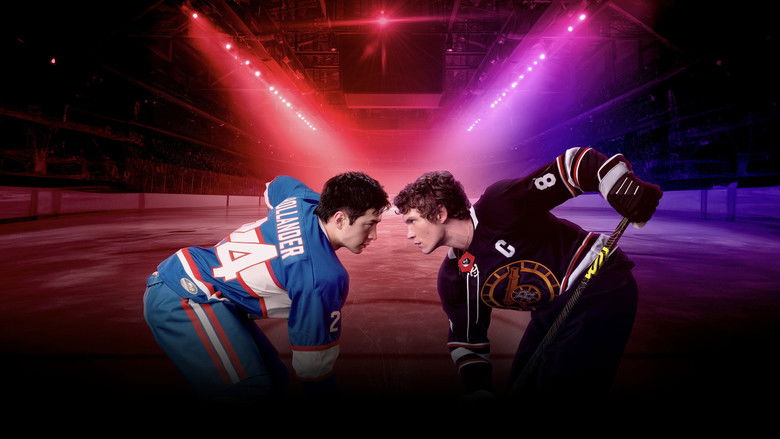
Based on the bestselling novel by Rachel Reid, Heated Rivalry chronicles the intense, decade-spanning relationship between two superstar hockey players: the disciplined, perfectionist Canadian Shane Hollander and the charismatic, brash Russian Ilya Rozanov. Meeting as rookies, their on-ice animosity is immediate and public, fueling a media narrative of bitter rivalry that defines their careers. However, behind closed doors, their hostility transforms into a passionate, secret sexual relationship that neither can quit, even as they play for opposing teams—the Montreal Metros and Boston Raiders.
As the series progresses, what begins as a casual arrangement born of convenience and competition evolves into a profound emotional bond. The story spans several years, jumping through time to highlight key moments in their careers and relationship, from the Olympics to All-Star games. The narrative explores the suffocating pressure of professional sports, the fear of coming out in a hyper-masculine culture, and the struggle to maintain intimacy when the world wants you to be enemies.
Alongside the central pair, the series introduces a parallel storyline involving veteran player Scott Hunter, whose own journey with his sexuality provides a mentor-like reflection for the younger stars. The first season culminates in a fragile but determined commitment, as Shane and Ilya finally confront the reality that they are no longer just rivals with benefits, but partners in love, forcing them to re-evaluate their futures in the league.

Core Meaning
At its heart, Heated Rivalry is a deconstruction of the 'tough guy' myth in sports, arguing that true strength lies in vulnerability and the courage to love in a space designed to suppress it. It posits that the most intense rivalries are often two sides of the same coin, and that in a world obsessed with winning, the only victory that truly matters is the freedom to be oneself.
Thematic DNA
Public Persona vs. Private Self
The series constantly juxtaposes the carefully curated public images of Shane (the golden boy) and Ilya (the villain) with their true selves. This theme reveals how the media constructs narratives that athletes are forced to perform, highlighting the isolation that comes from living a double life where one's deepest connection must be hidden to protect one's career.
Rivalry as Intimacy
The show explores how competition can be a form of bonding. Shane and Ilya's rivalry is the only space where they are truly equals and truly seen by one another. Their on-ice battles are a metaphor for their relationship: aggressive, physical, but ultimately a dance that only they understand. The friction between them drives both their professional excellence and their sexual chemistry.
Toxic Masculinity in Sports
Through the locker room talk, media scrutiny, and the fear of coming out, the series critiques the rigid expectations of masculinity in hockey. It exposes the homophobia internalized by the players and the systemic barriers that keep them closeted, while also celebrating the moments where characters break these molds to find authentic connection.
The Sacrifice for Glory
Both protagonists are shown sacrificing physical health, family time, and personal happiness for the Stanley Cup. The series asks whether the glory of winning is worth the loneliness of the journey, eventually suggesting that professional success is hollow without someone to share it with.
Character Analysis
Shane Hollander
Hudson Williams
Motivation
Initially driven by a need to live up to his 'Golden Boy' image and win the Cup; later motivated by his undeniable love for Ilya and the desire to build a private life that is his own.
Character Arc
Shane starts as a rigid, anxious rookie desperate to please his family and the public. Portrayed as being on the autism spectrum, he struggles with social cues and relies on hockey for structure. Over the season, he learns to loosen his grip on perfection, finding in Ilya not just a lover, but the only person who allows him to be messy and unscripted.
Ilya Rozanov
Connor Storrie
Motivation
To dominate the game and prove his worth to his demanding father; eventually, to secure Shane's love as the one steady thing in his chaotic life.
Character Arc
Ilya begins as an arrogant, flashy superstar who embraces his role as the 'villain' to protect his inner loneliness. Beneath the swagger is a deep fear of rejection and the trauma of leaving his home in Russia. His arc involves dropping the defensive sarcasm to admit that he needs Shane, moving from casual hookups to admitting he is in love.
Scott Hunter
François Arnaud
Motivation
To lead his team and protect his privacy; later, to live authentically before his career ends.
Character Arc
An older captain who has spent his career deeply closeted. Through his relationship with Kip, he realizes that life is passing him by. He moves from fear to courage, eventually coming out (or at least being open with his partner), showing the younger generation that happiness is possible.
Symbols & Motifs
The Hockey Ice
Represents the cold, hard reality of their public lives and the physical barrier between them. It is the stage where they must perform hatred, yet it is also the only place they can legally touch and interact in public.
Used in every episode during game sequences; the visual contrast of their violent checks against the tenderness of their private moments highlights the duality of their existence.
The Cottage
Symbolizes sanctuary, domesticity, and a future where they can just be 'Shane and Ilya' rather than hockey stars. It represents the possibility of a life outside the game.
Featured prominently in the season finale, serving as the setting for their most vulnerable conversations and the first steps toward a real, committed relationship.
The Gold Medal vs. The Stanley Cup
These trophies represent professional validation but also the arbitrary nature of their rivalry. One plays for Canada, one for Russia; the medals are the barriers of nationalism and duty that keep them apart.
Seen during the 'Olympians' episode and referenced throughout as the ultimate goal that justifies their sacrifices, until they realize it's not enough.
Memorable Quotes
You're boring.
— Ilya Rozanov
Context:
First said in their rookie year when they meet; repeated in bed and during text exchanges throughout the series.
Meaning:
A recurring tease that evolves from an insult to a term of endearment. It signifies Ilya's way of challenging Shane's robotic public persona and trying to get a rise out of the real man beneath.
I'm not going to be in the mood to kiss you if you just lost... Ah, but you would be so proud of me.
— Shane Hollander & Ilya Rozanov
Context:
A banter-filled moment in the finale at the cottage, imagining a future where they might have to face each other in the finals.
Meaning:
Encapsulates the central conflict of their relationship: their professional goals are directly at odds, yet their personal connection relies on mutual respect for each other's talent.
Everyone thinks we hate each other. It's perfect.
— Shane Hollander
Context:
Early in the season, establishing the ground rules of their secret arrangement in a hotel room.
Meaning:
Highlights the utility of their public rivalry as a shield for their romance. It underscores the theme of hiding in plain sight.
Episode Highlights
Rookies
The pilot introduces Shane and Ilya at the NHL draft. We see their initial public clashes and the unexpected spark that leads to their first hookup. It establishes the dual timeline structure and the 'enemies' dynamic.
Sets the stage for the entire series, establishing the chemistry and the high stakes of their secret.
Hunter
A pivotal deviation from the main couple, focusing on Scott Hunter and his romance with Kip. It explores the life of an older, closeted player and the domestic happiness that is possible.
Provides a foil to Shane and Ilya's toxic secrecy, showing a healthier, albeit still hidden, relationship that inspires growth in the main characters.
I'll Believe in Anything
The emotional climax of the season. Following a devastating loss or injury (and set to the Wolf Parade song), barriers break down. Ilya confronts Shane about their future, leading to a raw, painful confession of feelings that goes beyond sex.
The turning point where the relationship transitions from 'rivals with benefits' to undeniable love, forcing them to confront the impossibility of their current arrangement.
The Cottage
The finale takes the pair away from the ice to Shane's summer cottage. Stripped of their uniforms and media scrutiny, they navigate domesticity and make a pact to stay together despite the distance. Contains the emotional scene discussing Ilya's mother.
Solidifies them as a committed couple and sets up the stakes for the next season (The Long Game).
Philosophical Questions
Is love possible without truth?
The series asks if a relationship built entirely in the shadows can ever be fully real. It explores the toll that lying to the world takes on the honesty between two partners.
What is the cost of excellence?
Through Shane's rigid discipline and Ilya's isolation, the show questions whether being the 'best' requires stripping away one's humanity and capacity for connection.
Alternative Interpretations
While widely celebrated as a romance, some critics have read the series as a tragedy of capitalism and sports culture, arguing that Shane and Ilya are victims of a system that commodifies their bodies and forces them to repress their humanity for entertainment. Another interpretation focuses on the conservative nature of their 'masculine' presentation—critics have debated whether the show challenges heteronormativity or merely assimilates gay men into traditional masculine ideals (the 'straight-acting' trope) to make them palatable to a mainstream audience.
Cultural Impact
Heated Rivalry arrived as a cultural phenomenon in late 2025, shattering the 'niche' label often applied to MM romance. By treating a gay sports romance with the high production value and seriousness usually reserved for prestige dramas, it validated a genre previously sidelined. The show sparked intense social media engagement, particularly on TikTok and Twitter, where the chemistry between Williams and Storrie became legendary. It also opened up conversations about homophobia in professional sports (specifically the NHL) and the representation of neurodivergence in romantic leads. Its success on HBO Max and Crave proved that audiences were hungry for unabashedly romantic, queer stories that didn't end in tragedy.
Audience Reception
Audience reception was overwhelmingly positive, bordering on obsessive. Season 1 holds a near-perfect audience score on aggregators. Viewers praised the electrifying chemistry between the leads, the faithful adaptation of the book's 'spicy' scenes (handled with an intimacy coordinator), and the emotional depth of the character arcs. The episode 'I'll Believe in Anything' is frequently cited as a masterpiece of television. Criticism was minor but existed, mostly focused on the pacing of the 6-episode run feeling too short for the timeline covered, or debates about the 'soft-core' nature of the sex scenes, though most fans saw the intimacy as essential to the narrative.
Interesting Facts
- Hudson Williams confirmed he portrayed Shane as autistic, drawing inspiration from his own father and receiving confirmation from author Rachel Reid.
- Connor Storrie auditioned shirtless for his chemistry read with Hudson Williams, even though it wasn't required, to prove he was comfortable with the nudity.
- The show became an instant hit with 'wine moms' and gay romance readers, becoming Crave's most-watched original series debut.
- Director Jacob Tierney directed all 6 episodes, describing the production as 'one giant five-hour movie' shot out of order.
- Real hockey players were used as extras to fill out the teams, while the leads had body doubles for complex on-ice plays.
- The lead actors, Hudson Williams and Connor Storrie, were selected to be Olympic torchbearers for the Milano Cortina 2026 Winter Games due to the show's popularity.
Easter Eggs
Wolf Parade's 'I'll Believe in Anything'
The song features prominently in Episode 5, a nod to the Canadian indie rock scene and a thematic echo of the characters' desperation to believe in their impossible relationship.
The 'Groin Stretch'
A specific warm-up move Shane does in the show was suggested by his body double and later demonstrated by Hudson Williams on Jimmy Fallon, becoming a viral meme.
Book Cameos
Subtle references to other couples from the Game Changers book universe are dropped, hinting at future seasons adapting the other novels.
⚠️ Spoiler Analysis
Click to reveal detailed analysis with spoilers
Frequently Asked Questions
Explore More About This Movie
Dive deeper into specific aspects of the movie with our detailed analysis pages
Comments (0)
No comments yet. Be the first to share your thoughts!