The Blues Brothers
"They'll never get caught. They're on a mission from God."
Overview
Jake and Elwood Blues, two paroled petty criminals and musicians, embark on a "mission from God" to save the Catholic orphanage where they were raised from foreclosure. To raise the necessary $5,000 tax bill, they must reunite their old R&B band, which has since disbanded and settled into mundane lives. Their journey across Illinois becomes a chaotic road trip involving high-speed car chases, massive property destruction, and musical numbers.
As they gather their bandmates, the "Blues Brothers" make powerful enemies, including the Illinois State Police, a group of neo-Nazis, a vengeful country and western band, and a homicidal mystery woman armed with military-grade weaponry. The film culminates in a race against time to the Cook County Assessor's office, leaving a trail of wrecked police cars and broken laws in their wake, all set to the pulse of legendary soul and blues performances.
Core Meaning
At its heart, The Blues Brothers is a reverent celebration of African-American musical heritage disguised as an anarchic comedy. Director John Landis and stars Dan Aykroyd and John Belushi created the film as a vessel to honor and revive the careers of blues and soul legends like Aretha Franklin, James Brown, and Ray Charles. The core message suggests that music is a divine force capable of transcending law, order, and logic, and that loyalty to one's roots (family and music) is the highest form of redemption.
Thematic DNA
Divine Purpose vs. Civil Law
The brothers consistently break man-made laws (speeding, destruction of property, evasion of arrest) to fulfill a "higher law" mandated by God. The film suggests that moral righteousness does not always align with legal obedience, framing their chaotic actions as necessary evils for a holy cause.
Musical Redemption and Heritage
Music is not just a soundtrack but the plot's driving force. The film argues for the preservation of culture, specifically the Blues, which is portrayed as a powerful, unifying, and spiritual entity that can save institutions (the orphanage) and souls alike.
Brotherhood and Loyalty
Jake and Elwood operate as a single unit. Their loyalty to each other, their bandmates, and the Penguin (the nun) is absolute. This unspoken bond is the emotional anchor that grounds the absurdity of the surrounding chaos.
Anti-Authority and Anarchy
The film revels in anti-establishment sentiment, mocking every form of authority—from nuns and police to Nazis and country singers. It presents a punk-rock attitude wrapped in soul music, suggesting that true freedom is found in the rejection of societal norms.
Character Analysis
Jake "Joliet" Blues
John Belushi
Motivation
To save the orphanage (penance) and reclaim his identity as a frontman.
Character Arc
Starts as a freshly released convict with no direction; receives a divine vision and transforms into a focused leader who wills the mission into existence through sheer audacity and aggression.
Elwood Blues
Dan Aykroyd
Motivation
Loyalty to his brother and the mission.
Character Arc
Remains a constant, grounding force. While Jake provides the fire, Elwood provides the method (and the car). He is the pragmatic engine that keeps the mission moving without complaint or visible emotion.
Sister Mary Stigmata (The Penguin)
Kathleen Freeman
Motivation
To save the children and maintain moral order.
Character Arc
Serves as the moral compass and the catalyst for the journey. She rejects their "dirty money," forcing them to seek a legitimate (if chaotic) solution.
Mystery Woman
Carrie Fisher
Motivation
Revenge for being left at the altar.
Character Arc
A force of nature representing the consequences of Jake's past. She escalates from shooting at them to blowing up buildings, only to be disarmed by a single romantic gesture from Jake.
Symbols & Motifs
The Bluesmobile
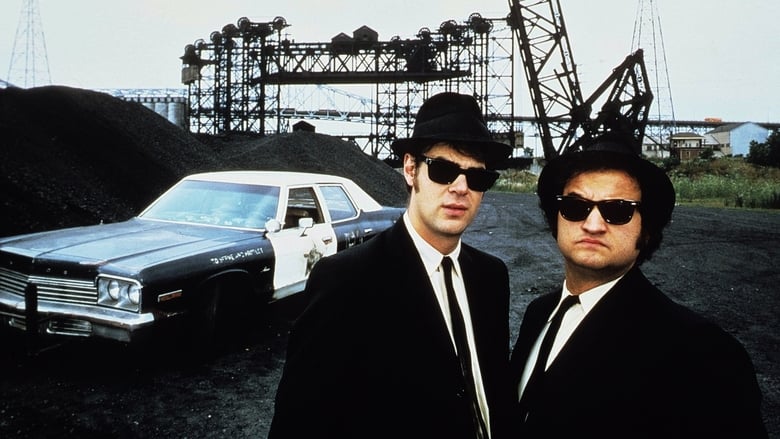
Symbolizes unstoppable resilience and magic. A decommissioned 1974 Dodge Monaco police car that performs impossible feats, it represents the brothers' scrappy, invincible spirit. It falls apart literally the moment their mission is completed, emphasizing its supernatural purpose.
Used throughout the film for transport and chases; notably survives a jump over an open drawbridge and a backflip, only to collapse into a heap of parts once they arrive at the Assessor's office.
Sunglasses and Suits
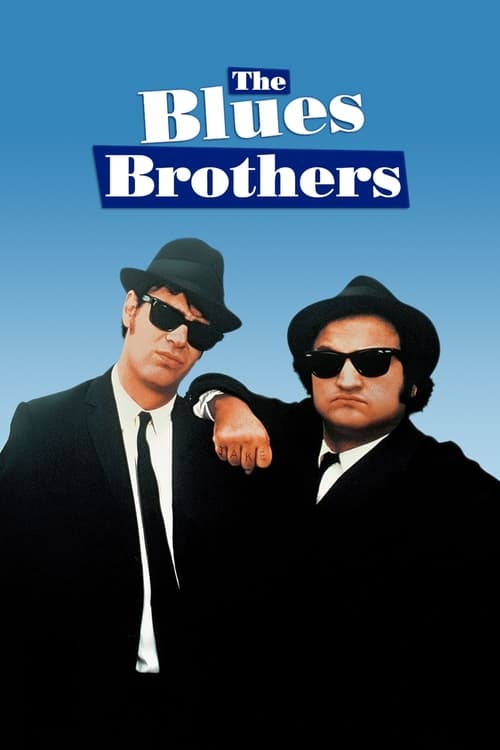
Represents uniformity and stoicism. The outfit (black suit, hat, wayfarers) acts as a mask, stripping away individual ego and turning them into iconic agents of their mission. They never remove their glasses, suggesting their "cool" is a permanent state of being.
Worn in every scene, even at night, in bed (Elwood), and in the sauna. It serves as their armor against the world.
The Divine Light
Symbolizes epiphany and guidance. It visualizes the moment of inspiration where the chaotic path becomes clear and justified.
Appears in the Triple Rock Baptist Church scene when Jake is bathed in a glowing blue light while listening to Reverend Cleophus James, realizing they must get the band back together.
The Orphanage
Represents innocence and roots. It is the only place the brothers respect and the origin of their identity. Saving it means saving their own history.
The catalyst for the entire plot; the film begins and ends with their connection to this location.
Memorable Quotes
We're on a mission from God.
— Elwood Blues
Context:
Spoken multiple times, most notably to excuse their behavior to the police and to convince the band to rejoin.
Meaning:
The film's ultimate mantra. It justifies every illegal and insane action they take, elevating a road trip to a holy crusade.
It's 106 miles to Chicago, we've got a full tank of gas, half a pack of cigarettes, it's dark and we're wearing sunglasses.
— Elwood Blues
Context:
Spoken in the Bluesmobile right before the final, massive chase sequence begins. Jake responds simply: "Hit it."
Meaning:
The definition of "cool under pressure." It summarizes their cavalier attitude toward danger and their readiness for chaos.
I hate Illinois Nazis.
— Jake Blues
Context:
Spoken when their car is blocked by a neo-Nazi rally on a bridge, prompting them to drive through the crowd (forcing the Nazis to jump into the river).
Meaning:
A simple, direct moral statement that aligns the audience with the anti-hero protagonists. It mocks the absurdity of hate groups.
Four fried chickens and a Coke.
— Jake Blues
Context:
Ordered at the Soul Food Cafe run by Aretha Franklin's character; Elwood simultaneously orders "dry white toast."
Meaning:
Highlights the characters' specific, unpretentious, and gluttonous tastes. It reinforces their working-class, no-nonsense identity.
Philosophical Questions
Do the ends justify the means if the mission is divine?
The brothers cause millions of dollars in property damage and endanger countless lives to save a single orphanage. The film asks the audience to suspend conventional morality in favor of a spiritual utilitarianism—the preservation of 'soul' (the orphanage and the music) is worth any amount of material destruction.
Is 'cool' a form of stoic philosophy?
Jake and Elwood endure chaos, violence, and hatred with absolute impassivity. The film presents their 'coolness' not just as a fashion statement, but as a philosophical detachment—a way of moving through a chaotic world without letting it break your spirit or composure.
Alternative Interpretations
The Divine Protection / Angel Theory: A popular fan theory suggests that Jake and Elwood effectively died early in the film (perhaps during the initial bridge jump or the police station siege) or are literal angels. This explains their Looney Tunes-esque invincibility—they survive explosions, falling from skyscrapers, and rocket attacks without a scratch. The 'mission from God' is literal; they are supernatural agents who cannot die until the task is finished. Once the tax is paid, their 'magic' car instantly falls apart, signifying their divine protection has lifted.
The Golem Theory: Some interpret the Bluesmobile as a golem or magical construct, imbued with life solely for the mission. It performs impossible physical feats but disintegrates the moment its purpose is served.
Cultural Impact
The Blues Brothers is a cultural touchstone that transcends its comedy origins. Musically, it is credited with revitalizing the popularity of R&B, soul, and blues in the 1980s, effectively rescuing the careers of Aretha Franklin, James Brown, and Ray Charles from a disco-dominated era. Cinematically, it set the standard for the modern action-comedy, proving that musical numbers and high-octane stunts could coexist. It firmly established Chicago as a viable filmmaking hub and remains a beloved symbol of the city. The film's fashion (suits and sunglasses) became an instantly recognizable pop culture costume, synonymous with 'cool rebellion.'
Audience Reception
Praised: Audiences adore the infectious musical numbers, the chemistry between Belushi and Aykroyd, and the practical stunt work (real cars, real crashes). It is widely considered one of the best comedies of all time.
Criticized: Upon release, some critics (like Pauline Kael) found it bloated, expensive, and self-indulgent. There were accusations that the chaos overshadowed the comedy. Modern re-evaluations sometimes debate the 'white savior' aspect of two white men saving black music, though most agree the film operates from a place of deep reverence rather than appropriation.
Verdict: A cult classic that overcame initial mixed reviews to become a beloved cinematic legend.
Interesting Facts
- The film held the world record for the most cars destroyed in a movie (103 cars) until its own sequel broke it in 1998.
- The production budget included a specific allowance for cocaine for night shoots, reflecting the rampant drug use on set.
- The shopping mall chase was filmed in the real, abandoned Dixie Square Mall in Harvey, Illinois, which was briefly refurbished just to be destroyed.
- Aretha Franklin had difficulty lip-syncing to her own pre-recorded track for 'Think' because she never sang the song the same way twice; she eventually just sang it live on set.
- John Belushi disappeared during filming one night and was found asleep on the sofa of a random nearby house, having raided their fridge.
- The 'Bluesmobile' was a 1974 Dodge Monaco. The production used 13 different cars to portray it, some rigged for speed, others for jumps.
- The Vatican officially recognized the film as a 'Catholic classic' on its 30th anniversary due to its themes of redemption.
- Dan Aykroyd's original script was titled 'The Return of the Blues Brothers' and was 324 pages long—nearly three times the length of a standard script.
- John Landis had to gain a Special Airworthiness Certificate from the FAA to drop the Ford Pinto from a helicopter for the Nazi car crash scene.
Easter Eggs
See You Next Wednesday
A recurring gag in John Landis films. In this movie, it appears on a billboard featuring a gorilla and later on a movie theater marquee where the Nazi car crashes. It references a line from 2001: A Space Odyssey.
Steven Spielberg Cameo
The legendary director appears as the clerk at the Cook County Assessor's Office who eats a sandwich and finally stamps the tax receipt.
Frank Oz Cameo
The voice of Yoda and Miss Piggy plays the Corrections Officer at the beginning who returns Jake's personal effects (one prophylactic, soiled).
Joe Walsh Cameo
The guitarist for the Eagles is the first prisoner to jump up on the table during the closing 'Jailhouse Rock' performance.
⚠️ Spoiler Analysis
Click to reveal detailed analysis with spoilers
Frequently Asked Questions
Explore More About This Movie
Dive deeper into specific aspects of the movie with our detailed analysis pages
Comments (0)
No comments yet. Be the first to share your thoughts!