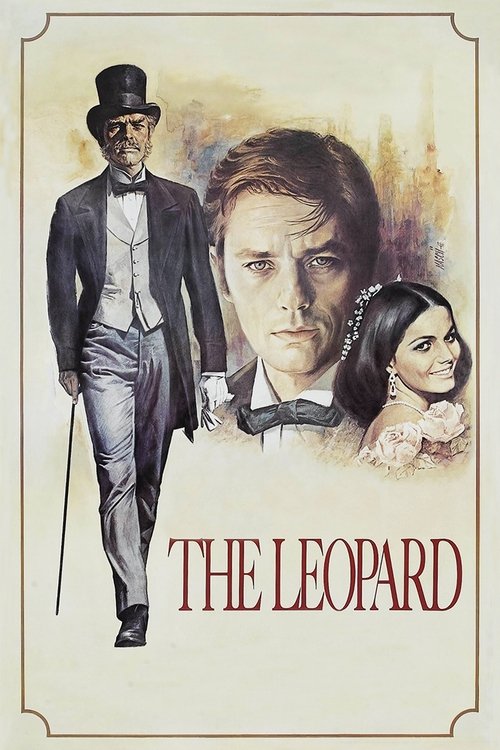
The Leopard
Il gattopardo
"Luchino Visconti's enduring romantic adventure"
Overview
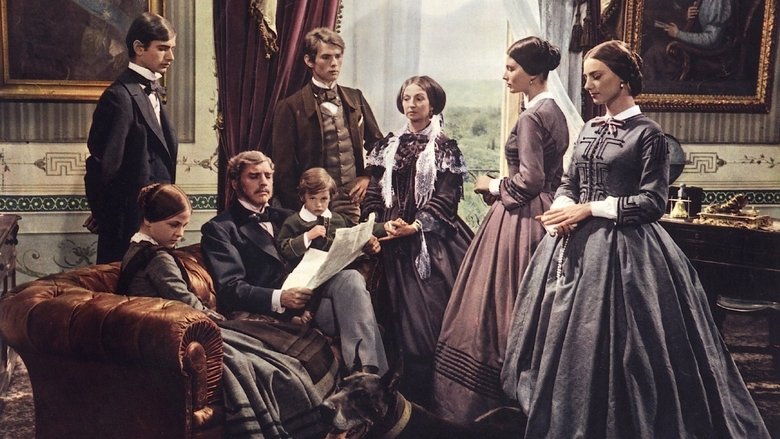
Set in Sicily during the 1860s Risorgimento (Italian Unification), the film follows Don Fabrizio Corbera, Prince of Salina (Burt Lancaster), a noble patriarch who witnesses the crumbling of his class's dominance. As Garibaldi's revolutionary 'Redshirts' sweep across the island to overthrow the Bourbon kingdom, the Prince's beloved but opportunistic nephew, Tancredi (Alain Delon), joins the rebels to ensure a place in the new regime. The Prince pragmatically accepts this shift, understanding that the old world is dying.
To secure his family's future, the Prince approves Tancredi's marriage not to his own daughter, Concetta, but to Angelica (Claudia Cardinale), the stunningly beautiful daughter of Don Calogero Sedara, a wealthy but uncouth bourgeois mayor. This union symbolizes the compromise between the fading prestige of the aristocracy and the financial vitality of the rising middle class. The narrative is a slow, meditative observation of rituals, politics, and the quiet acceptance of obsolescence.
The film culminates in a legendary, nearly hour-long ballroom sequence where the Prince moves through a lavish party, surrounded by the ghosts of his past and the vulgarity of the future. It is here that he fully grasps his own mortality and the finality of the social transition, leading to a poignant, solitary walk into the dawn.
Core Meaning
The Leopard is a meditation on the passage of time, mortality, and the cynical nature of political change. Visconti, a Marxist aristocrat himself, uses the film to explore the concept of trasformismo—the idea that political revolutions in Italy often result in the old elites co-opting the new forces to maintain power.
The central message is encapsulated in the paradox: "If we want things to stay as they are, things will have to change." The film argues that survival requires adaptation, but this adaptation comes at the cost of authenticity and grace. Ultimately, it is a eulogy for a dying world, acknowledging its flaws but mourning the loss of its aesthetic and spiritual grandeur in the face of a crasser, mediocre modernity.
Thematic DNA
The Decay of Aristocracy vs. The Rise of the Bourgeoisie
The film contrasts the refined, dying world of the Salinas with the energetic, vulgar rise of the Sedaras. The Prince represents the old Leopard—noble but obsolete—while Don Calogero represents the 'jackals'—shrewd, money-minded, and lacking class. The intermarriage of Tancredi and Angelica seals this transition.
Mortality and The Passage of Time
Don Fabrizio is constantly aware of his aging body and the approaching end of his lineage. The film is saturated with symbols of death (dust, the Prince's fainting spells, the painting of the deathbed). The grand ball is essentially a funeral wake for his era, where he sees death in the beautiful faces of the young.
Political Opportunism (Trasformismo)
Tancredi embodies the cynical adaptability required to survive. He switches from a Garibaldian revolutionary to a soldier in the King's army seamlessly. The film critiques how the 'revolution' changes nothing for the common people, merely swapping one ruling class for a hybrid of the old and new elite.
Isolation and Solitude
Despite being the head of a large family and a respected figure, the Prince is profoundly alone. His intellect and awareness isolate him from his devout, hysterical wife, his shallow peers, and the grasping new class. His only solace is in astronomy—the stars, which are distant, eternal, and undemanding.
Character Analysis
Prince Don Fabrizio Salina
Burt Lancaster
Motivation
To preserve the dignity of his family name and ensure their survival, even if it means sacrificing tradition and his own happiness.
Character Arc
He begins as a commanding figure holding his family together amidst war. Slowly, he withdraws into resignation, facilitating the rise of the new class while consciously detaching himself from the future. He ends the film accepting his mortality, walking away from the celebration of the new Italy.
Tancredi Falconeri
Alain Delon
Motivation
To survive and maintain his status and comfort by any means necessary ("To stay the same, everything must change").
Character Arc
Starts as a dashing rebel fighting for Garibaldi, then pragmatically shifts allegiance to the Savoy monarchy. He trades his youthful idealism (if he ever had it) for political power and a wealthy marriage, embodying the cynical future of Italy.
Angelica Sedara
Claudia Cardinale
Motivation
To ascend the social ladder and be accepted into the nobility.
Character Arc
Enters as the breathtaking daughter of a peasant-turned-mayor. She uses her beauty and father's money to secure a place in high society. While she genuinely cares for Tancredi, she represents the vitality and crass ambition that seduces the old aristocracy.
Don Calogero Sedara
Paolo Stoppa
Motivation
Accumulation of wealth and power.
Character Arc
He rises from a clever peasant to a powerful mayor and landowner. He successfully marries his daughter into the Salina family, effectively buying the prestige he lacks in blood.
Symbols & Motifs
The Leopard
Symbolizes the Prince and the old Sicilian aristocracy: powerful, solitary, and predatory, but now an endangered species facing extinction.
Appears in the family crest, the title, and the Prince's references to himself as a 'lion' or 'leopard' in contrast to the coming 'jackals'.
The Jackals and Hyenas
Represent the new bourgeois class (like Calogero Sedara) who are taking over—opportunistic, scavenging, and lacking the nobility of the old predators.
Used in the Prince's famous monologue: "We were the Leopards, the Lions; those who'll take our place will be little jackals, hyenas."
The Stars
Symbolize eternity, perfection, and escape from the messy, decaying reality of human history.
The Prince is an amateur astronomer; he gazes at the stars to find comfort and perspective, famously yearning for them at the film's end.
The Greased Pig
Symbolizes the vulgarity and decline of dignity accompanying the new social order.
At the ball, a group of young men run through the palace rooms like a 'greased pig', disturbing the Prince and signaling the loss of decorum.
Mirrors
Represent self-reflection, vanity, and the confrontation with aging and death.
During the ball, the Prince stares into a mirror, seeing his own aged face and weeping, contrasting his decay with the youth around him.
Memorable Quotes
Se vogliamo che tutto rimanga come è, bisogna che tutto cambi.
— Tancredi Falconeri
Context:
Spoken by Tancredi to his uncle while shaving, explaining why he is joining the rebels.
Meaning:
"If we want things to stay as they are, things will have to change." This is the film's central thesis. It encapsulates the strategy of the aristocracy: to accept superficial political revolution (unification) to maintain their underlying social dominance.
Noi fummo i Gattopardi, i Leoni; quelli che ci sostituiranno saranno gli sciacalletti, le iene; e tutti quanti gattopardi, sciacalli e pecore, continueremo a crederci il sale della terra.
— Prince Don Fabrizio
Context:
The Prince speaking to the Piedmontese official, Chevalley, refusing a seat in the new Senate.
Meaning:
"We were the Leopards, the Lions; those who'll take our place will be little jackals, hyenas; and the whole lot of us, Leopards, jackals, and sheep, we'll all go on thinking ourselves the salt of the earth." A prophetic lament about the decline of greatness and the rise of mediocrity.
L'amore? Fuoco e fiamme per un anno, cenere per trenta.
— Prince Don Fabrizio
Context:
Spoken during a conversation with Father Pirrone.
Meaning:
"Love? Fire and flames for a year, ashes for thirty." Reflects the Prince's cynicism regarding romantic love and his own passionless marriage.
Philosophical Questions
Is progress real, or is it just a rotation of power?
The film explores the cyclic nature of history (Giambattista Vico's philosophy). It questions whether the Unification of Italy brought true liberty or just replaced the 'Lions' with 'Jackals', leaving the poor as 'Sheep' to be sheared by whoever is in charge.
How should one face inevitable obsolescence?
Through the Prince, the film asks how to die with dignity when your values are no longer respected. He chooses detachment and observation rather than desperate fighting or denial.
Alternative Interpretations
Marxist vs. Nostalgic Reading: Critics have long debated whether the film is a Marxist critique of the aristocracy (showing their decadence and inevitable fall) or a nostalgic love letter to them. Visconti, a communist member of the nobility, likely intended both: a condemnation of the class structure but a personal mourning for the loss of its aesthetic values.
The 'Passive' Hero: Some view the Prince as a failure who refuses to act, while others see his passivity as the only dignified response to an unbeatable historical tide—a form of Stoic resistance.
Cultural Impact
The Leopard is widely considered one of the greatest films in history and the crowning achievement of Italian cinema's transition from Neorealism to operatic grandeur. Martin Scorsese has cited it as a major influence, particularly on The Age of Innocence and The Godfather (in its depiction of rituals).
Historically, it shaped the visual understanding of the Risorgimento, replacing heroic myths with a more complex, cynical reality. It won the Palme d'Or at Cannes in 1963. While initially cut and poorly dubbed for the US market (a version Lancaster hated), the restored Italian version is now revered as a masterpiece of production design, costume (by Piero Tosi), and cinematography (by Giuseppe Rotunno).
Audience Reception
Praised: The film is universally acclaimed for its stunning visual beauty, the chemistry between Delon and Cardinale, and Burt Lancaster's towering, subtle performance. The ballroom sequence is frequently cited as one of the best in cinema history.
Criticized: Upon release, some American critics found it too slow and talky, especially in the butchered English cut. Some modern audiences may struggle with the pacing and the 45-minute ball scene if they expect a typical war epic.
Verdict: A masterpiece of world cinema that demands patience but rewards with immense emotional depth.
Interesting Facts
- Burt Lancaster was not Visconti's first choice; the director wanted Laurence Olivier or Nikolay Cherkasov. The producers insisted on a Hollywood star for funding. Visconti was initially cold to Lancaster but they eventually became lifelong friends.
- The famous ballroom scene runs for approximately 45 minutes in the final cut and took weeks to film.
- Visconti was obsessive about authenticity; he filled the chests and drawers on set with authentic period laundry and items that would never be seen by the camera, just to create the right atmosphere for the actors.
- The film was shot in English (for Lancaster) and Italian, but in the Italian version, Lancaster is dubbed by Corrado Gaipa. In the English version, everyone else is dubbed.
- During the ball scene, the guests are played by real members of the Sicilian aristocracy.
- The production had to rebuild the floors of the Palazzo Valguarnera-Gangi to support the weight of the equipment and cast for the ballroom sequence.
- The title 'Il Gattopardo' technically refers to the Serval (a smaller African wild cat), but is universally translated as 'The Leopard' in English, which fits the heraldic imagery better.
Easter Eggs
Visconti's cameo sensibility
While not a direct cameo, the director (a descendant of the ruling Visconti family of Milan) infused the Prince with his own personal traits and memories, effectively making Burt Lancaster play Visconti himself.
The Chamber Pots
In the ball scene, there is a blink-and-you-miss-it moment involving chamber pots being used behind screens, highlighting the lack of modern plumbing and the 'earthy' reality behind the opulent facade.
The Battle of Palermo
Visconti staged the street battles with such precision that he removed modern asphalt to reveal the original cobblestones beneath, a detail barely noticeable but essential for his realism.
⚠️ Spoiler Analysis
Click to reveal detailed analysis with spoilers
Frequently Asked Questions
Explore More About This Movie
Dive deeper into specific aspects of the movie with our detailed analysis pages
Comments (0)
No comments yet. Be the first to share your thoughts!