Skip to content
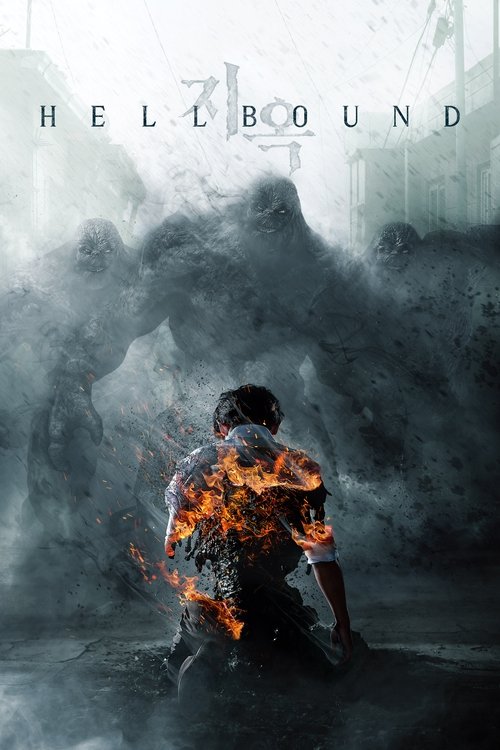
Hellbound
A grim supernatural noir suffocated by existential dread and collective hysteria, where morality fractures under the crushing smoke of sudden damnation and burning human ashes.
Hellbound
Hellbound

지옥

"They were resurrected into a hellbound world."

19 November 2021 — 25 October 2024 South Korea 2 season 12 episode Canceled 7.3 (1,013)

Cast: Kim Hyun-joo, Kim Shin-rock, Yang Ik-june, Lee Dong-hee, Lee Re

Drama Sci-Fi & Fantasy Mystery Weaponization of Faith and Ideological Manipulation Cosmic Nihilism and the Illusion of Divine Justice Mob Hysteria, Cyber-Tribalism, and Cancel Culture Human Dignity, Free Will, and Sacrificial Agency Grief, Guilt, and the Cycle of Vengeance

Hellbound — Ending Explained

⚠️ Spoiler Analysis

The Secret of Jung Jin-su (Season 1, Ep 3): Jin-su reveals that 20 years prior, as an orphan with no heinous sins, he received a decree sentencing him to death. The entire New Truth theology—that God punishes only sinners—was an elaborate lie constructed because he could not bear the terror of being arbitrarily condemned alone. He dies in secret during his own demonstration.

Baby Toughie’s Survival (Season 1, Ep 6): When a newborn infant receives a decree, parents Young-jae and So-hyun physically bind themselves around the baby. The executors incinerate the parents, but when the smoke clears, the baby survives unharmed. This shatters the New Truth's theological foundation, proving decrees can be physically disrupted and do not target conscious sin.

Resurrection of the Damned (S1 finale & Season 2): Park Jung-ja and later Jung Jin-su physically reconstitute from charred ashes back into living human bodies.

Divergent Afterlife Experiences: In Season 2, it is revealed that Hell is experienced subjectively. Jin-su spent his death trapped in an agonizing, infinite loop of his own terrifying demonstrations, driving him insane with paranoia. Conversely, Park Jung-ja experienced a calm, meditative state anchored by memories of her children, granting her prophetic foresight.

The Mutation of Jin-su (Season 2, Ep 6): Desperately seeking answers from Jung-ja, Jin-su realizes she did not share his torment. Overwhelmed by existential despair and the manifestation of his inner demons, Jin-su's body grotesquely mutates into one of the shadowy, three-fingered Executor monsters.

The Mass Decrees and Series Climax (Season 2, Ep 6): As Secretary Lee Su-gyeong attempts to engineer a state-controlled narrative, an angel appears in the presidential office and delivers a decree to her. Immediately after, thousands of angels appear simultaneously across South Korea, issuing random, mass decrees to ordinary citizens everywhere. Sodo collapses as an organized group, but Min Hye-jin successfully escapes Seoul with Park Jung-ja and young Jae-hyeon, preserving the spark of human dignity amidst the onset of global apocalypse.

Alternative Interpretations

The series supports multiple viewing frameworks:

  • The Purely Absurdist/Existentialist Interpretation: The decrees and executors are not divine judgments, but arbitrary natural disasters (akin to lightning strikes or terminal cancer). The entire religious framework is purely a human construct manufactured to cope with the absurdity of random suffering.
  • The Sociological/Media Critique: The series is primarily a political satire of modern mass media and algorithmic outrage culture. The true monsters are the Arrowhead internet streamers and institutional elites who capitalize on collective anxiety to gain followers, ad revenue, and authoritarian control.
  • The Gnostic/Malevolent Demiurge Reading: The supernatural entity is not a benevolent God, but a sadistic, cosmic entity (or indifferent alien/dimensional mechanism) experimenting on humanity. Resurrections and sudden mass decrees are arbitrary disruptions designed to watch humans devour themselves through ideology.
  • The Transformation/Metaphysical Cycle: Season 2's ending suggests the executors themselves are former condemned humans who completely lost their identity to terror (as seen in Jung Jin-su's mutation), while those who maintain love and selfhood (like Park Jung-ja) retain their humanity and gain transcendence.

Explore More About This Movie

Dive deeper into specific aspects of the movie with our detailed analysis pages

Similar Movies