Skip to content
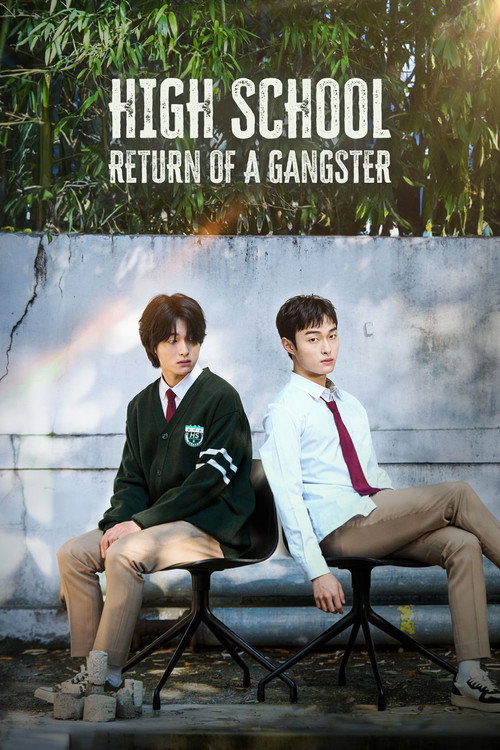
High School Return of a Gangster
A high-energy fantasy-drama steeped in cathartic warmth, where a hardened criminal’s soul awakens inside a broken teenager's vessel, shattering the dark shadows of school violence like sunlight piercing a fractured classroom window.
High School Return of a Gangster

High School Return of a Gangster

조폭인 내가 고등학생이 되었습니다

29 May 2024 — 19 June 2024 South Korea 1 season 8 episode Ended 8.5 (109)

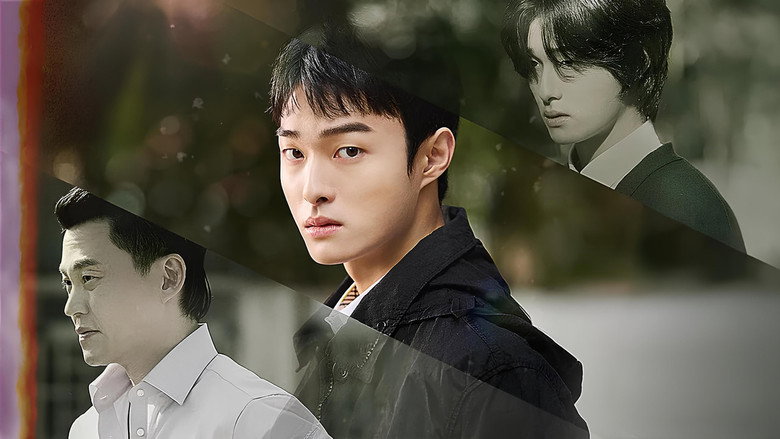
Cast: Yoon Chan-young, Bong Jae-hyun, Won Tae-min, Lee Seo-jin, Seo Tae-hwa

Drama Sci-Fi & Fantasy Redemption & Self-Improvement Through Education Adult Mentorship & Surrogate Fatherhood Confronting Bullying & Systemic Youth Abuse Identity, Body-Swapping & Soul Reclamation Unlikely Friendship & Deep Bonds (Bromance)

Overview

High School Return of a Gangster (조폭인 내가 고등학생이 되었습니다) is an 8-episode South Korean fantasy youth drama that centers on Kim Deuk-pal, a 47-year-old high-ranking mob boss in the Chilsung Gang. Despite his feared status in the underworld, Deuk-pal harbors a secret lifelong dream: to obtain an education and go to university, an opportunity denied to him during an impoverished childhood. His life takes a shocking turn when he witnesses 19-year-old high school student Song Yi-heon attempting suicide by jumping off a highway overpass. In a desperate move to save the boy, Deuk-pal intervenes and is struck by a vehicle. Upon regaining consciousness in the hospital, Deuk-pal discovers his soul has possessed Yi-heon’s body, while his own original body has died.

Determined to honor the boy whose body he now inhabits, Deuk-pal reads Yi-heon’s personal diary and suicide note, uncovering a history of relentless, brutal bullying and emotional isolation. Leveraging decades of street smarts, physical combat conditioning, and mature adult perspective, Deuk-pal returns to school disguised as Yi-heon. He sets out to dismantle the campus bully hierarchy, protect Yi-heon’s vulnerable, sick mother, and fulfill both his own and Yi-heon’s dream of academic achievement. Along the way, he builds an unexpected alliance with Choi Se-kyung, a model student dealing with his own hidden domestic abuse.

Across its tight 8-episode narrative, the series weaves together martial arts action, comedic fish-out-of-water moments, and coming-of-age drama. Deuk-pal acts not only as an avenger against school violence but as a protective mentor and surrogate father figure to troubled teenagers. The overarching story charts Deuk-pal's transition from a life defined by criminal violence to one defined by protection, education, and moral purpose.
Core Meaning

The core thesis of High School Return of a Gangster is that redemption, self-improvement, and human connection are never out of reach, regardless of age or past missteps. Through Deuk-pal’s journey, the creators convey that true strength is not demonstrated through violence or coercion, but through the courage to protect the vulnerable, seek knowledge, and extend empathy to those in pain.

The show serves as a critique of societal neglect, highlighting how both school violence and domestic abuse flourish when adults fail to intervene. By placing an experienced adult mind into a victimized adolescent body, the series demonstrates the transformative power of mentorship and emotional maturity. It sends a message that a single supportive presence can break cycles of trauma and give troubled youth the courage to build a meaningful future.

Thematic DNA

Redemption & Self-Improvement Through Education 30%
Adult Mentorship & Surrogate Fatherhood 25%
Confronting Bullying & Systemic Youth Abuse 20%
Identity, Body-Swapping & Soul Reclamation 15%
Unlikely Friendship & Deep Bonds (Bromance) 10%

Redemption & Self-Improvement Through Education

Throughout his mob career, Deuk-pal carried shame over his lack of formal schooling. Trapped in a high school student's body, he treats studying not as a chore, but as a privilege and a path to spiritual rebirth. This theme evolves from a personal desire into an inspiring philosophy that motivates the teenagers around him to take control of their own futures.

Adult Mentorship & Surrogate Fatherhood

Deuk-pal constantly operates with the mindset of a mature, protective adult among impressionable teens. He steps in to offer guidance where biological parents have failed—protecting Se-kyung from an abusive father, guiding the bully Hong Jae-min toward genuine remorse, and shielding Yi-heon’s mother.

Confronting Bullying & Systemic Youth Abuse

The series presents school violence not merely as teenage conflict, but as a destructive force that erodes a victim's humanity. Deuk-pal tackles this problem using physical deterrence and moral re-education, exposing how fear-based hierarchies collapse when confronted by genuine courage and solidarity.

Identity, Body-Swapping & Soul Reclamation

The supernatural premise tests who "Song Yi-heon" truly is. Deuk-pal must navigate living in a body that carries psychological trauma and social stigma. The theme progresses as Deuk-pal transforms Yi-heon’s physical health and reputation, earning the right—and eventually the explicit blessing of Yi-heon’s original spirit—to carry the name forward.

Unlikely Friendship & Deep Bonds (Bromance)

Replacing the explicit romance of the original web novel, the series explores deep emotional solidarity between young men who carry heavy burdens. The bond between Deuk-pal (in Yi-heon’s body) and Choi Se-kyung becomes an anchor for both characters, proving that mutual trust can heal emotional scars.

Character Analysis

Song Yi-heon / Kim Deuk-pal

Yoon Chan-young (Original Deuk-pal: Lee Seo-jin)

Archetype: The Antihero Mentor Key Trait: Unshakeable authority disguised in a teenager's frame.

Motivation

Initially driven to survive inside a teen's body and achieve his own dream of going to college; evolves into a dedicated protector determined to restore justice for Yi-heon.

Character Arc

Evolves from a hardened, uneducated mob leader into a compassionate mentor who uses his physical and mental toughness to save victimized youth and pursue an academic path.

Choi Se-kyung

Bong Jae-hyun

Archetype: The Troubled Perfectionist / Loyal Ally Key Trait: High intelligence combined with keen observational skill.

Motivation

Motivated by a desire to hide his home trauma; evolves into seeking true personal freedom and preserving his deep bond with Deuk-pal/Yi-heon.

Character Arc

Shifts from an emotionally guarded, top-ranking student crushed by domestic abuse into a confident young man who confronts his father and stands up for his friend.

All 5 characters and cast

Symbols & Motifs

The Highway Overpass/Bridge

Meaning:

Symbolizes the thin threshold between life and death, despair and second chances.

Context:

It is the physical setting of Yi-heon’s suicide attempt and Deuk-pal’s fatal accident, marking the boundary where Deuk-pal’s old gangster identity dies and his new path begins.

Yi-heon’s Diary and Suicide Note

Meaning:

Serves as the emotional blueprint and moral compass for Deuk-pal’s mission.

Context:

Reading the diary gives Deuk-pal direct insight into the pain Yi-heon endured, turning the text into a contract of responsibility.

Textbooks and Study Notes

Meaning:

Symbolizes Deuk-pal’s lifelong yearning for intellectual growth and a legitimate place in society.

Context:

Unlike typical students who view studying as a burden, Deuk-pal handles textbooks with reverence, treating academic study as a sacred vehicle for self-betterment.

Physical Training & Boxing Gloves

Meaning:

Represents the active conversion of helplessness into personal power.

Context:

Deuk-pal subjects Yi-heon’s frail, neglected body to rigorous physical workouts and combat training, visually representing the internal fortitude taking root within.

The High School Uniform vs. Leather Mob Jacket

Meaning:

Juxtaposes Deuk-pal’s violent past with his potential future.

Context:

Wearing the high school uniform signifies his commitment to living a clean, legitimate life, while his mob-style fighting technique inside that uniform creates a striking visual contrast.

Memorable Quotes

어떻게 알았냐? 나 칠성파 2인자 김득팔이다.
— Kim Deuk-pal (in Yi-heon’s body)

Context

Season 1, Episode 2. Se-kyung confronts Yi-heon about his sudden shift in speech, demeanor, and combat skills. Deuk-pal casually admits his true mob identity.

Meaning

Establishes the unique dynamic between the two leads and sets the stage for their central alliance.

어른이라면 아이들을 보호해야지, 이용해 먹으면 안 된다.
— Kim Deuk-pal

Context

Season 1, Episode 4. Spoken during a confrontation regarding adult mistreatment of teenagers.

Meaning

Sums up Deuk-pal’s core personal philosophy and highlights the systemic failure of the adults around Yi-heon and Se-kyung.

All 4 quotes

Episode Highlights

The Fatal Encounter

S1E1

Kim Deuk-pal dies while preventing Song Yi-heon’s suicide attempt and wakes up in the hospital inhabiting Yi-heon’s body.

Significance:

Sets up the central premise, establishes Deuk-pal’s discovery of Yi-heon’s severe school bullying, and sets his mission in motion.

Fists and Textbooks

S1E2

Deuk-pal returns to high school, shocking his bullies with mob-style fighting tactics and an insistence on studying.

Significance:

Shifts the power dynamic in the classroom and catches the attention of top student Choi Se-kyung.

Breaching the Wall

S1E3

Choi Se-kyung suspects that "Yi-heon" is an entirely different person. Deuk-pal reveals his mob identity to Se-kyung.

Significance:

Establishes the central partnership of the series, moving Se-kyung from a passive bystander to an active ally.

Shadows at Home

S1E4

Deuk-pal confronts Se-kyung’s abusive father, intervening directly in Se-kyung’s private home life.

Significance:

Deepens the emotional bond between the two leads and reinforces Deuk-pal’s role as an adult protector.

Reunion with the Brotherhood

S1E5

Deuk-pal encounters his former Chilsung Gang lieutenants, Kim Dong-soo and Han Jong-chul. Dong-soo recognizes his deceased boss's distinct fighting style and mannerisms.

Significance:

Bridges Deuk-pal’s underworld past with his high school present, gaining him muscle support off campus.

Unraveling the Conspiracy

S1E6

Deuk-pal uncovers the broader plot orchestrated by Lee Mi-kyung, the mistress of Yi-heon’s wealthy biological father, who hired bullies to push Yi-heon into isolation.

Significance:

Elevates the narrative stakes from local high school bullying to a corporate inheritance battle.

Cornered

S1E7

Lee Mi-kyung frames Yi-heon for legal trouble, putting his academic future and safety at risk.

Significance:

Forces the core alliance—Se-kyung, Dong-soo, and repentant bully Hong Jae-min—to execute a risky counter-plan.

A Blessing for the Future

S1E8

Hong Jae-min steals the laptop containing crucial bullying evidence and hands it over to clear Yi-heon, willingly surrendering to the police to atone for his past actions. Deuk-pal exposes Lee Mi-kyung, cuts ties with Yi-heon’s toxic father, and receives a final farewell from Yi-heon’s ghost, who grants Deuk-pal his blessing to live on in his body and take his college entrance exams.

Significance:

Resolves all major plot threads, securing Deuk-pal’s permanent commitment to living a clean life as a student alongside Se-kyung.

Philosophical Questions

What constitutes true identity—the physical vessel or the spirit within?

The series challenges whether identity is defined by age and body, or by character, memories, and choices.

Can a life built on violence be redeemed through the education and protection of others?

Through Deuk-pal's journey, the show examines whether past criminal misdeeds can be atoned for by nurturing the next generation.

Where does adult responsibility begin when societal and institutional systems fail youth?

The narrative questions the moral failure of educational systems and absent parents, asking who is obligated to step in when a child is driven to despair.

Alternative Interpretations

The Psychological Allegory Reading: Under a psychological lens, the fantasy soul-swap can be interpreted as an allegory for severe trauma recovery. "Kim Deuk-pal" represents a protective ego defense mechanism constructed by the broken Song Yi-heon. In this view, the "gangster inside" is the embodiment of Yi-heon's suppressed fight response, built to shield him from unbearable bullying and reclaim his self-worth.

Full ending explanation

Cultural Impact

High School Return of a Gangster was produced during a period of heightened public discourse in South Korea regarding school violence (hakpok) and severe domestic pressure surrounding university admissions. Korea’s entertainment industry saw a surge in anti-bullying revenge narratives (such as The Glory, Weak Hero Class 1, and Pyramid Game), and this series subverted the genre by infusing lighthearted comedy, fantasy body-swapping, and mature adult guidance into the high school setting.

The show also stirred significant discussion within online culture regarding webtoon adaptations. The choice to remove explicit BL romance in favor of bromance sparked debates on mainstream broadcast censorship in South Korea, balancing commercial accessibility against faithful source adaptation. Despite these debates, the series gained strong international popularity across Asian streaming platforms (such as Viu and TVING), praised for its action choreography and heartwarming emotional core.

Audience Reception

Praise: Viewers and critics universally lauded Yoon Chan-young’s lead performance, highlighting his ability to shift between a timid teen and a tough, middle-aged gangster. The action choreography, satisfying anti-bullying revenge moments, and genuine emotional chemistry between Yoon Chan-young and Bong Jae-hyun were praised for keeping the 8-episode run engaging and filler-free.

Criticism: The main point of contention came from fans of the original webtoon, who criticized the decision to remove the BL romance and replace it with bromance, viewing it as safe commercial censorship. Some reviewers also noted that secondary villains (such as Lee Mi-kyung) felt somewhat melodramatic and caricatured.

Overall Verdict: Despite adaptation controversies, the show achieved high audience ratings across Asian streaming services, earning a solid reputation as an entertaining, action-packed, and emotionally uplifting youth fantasy drama.

Interesting Facts

  • The series is based on the popular web novel and manhwa 'I, a Gangster, Became a High School Student' ('조폭인 내가 고등학생이 되었습니다') by author Horol.
  • The original source webnovel belonged to the Boys' Love (BL) genre, featuring an explicit gay romantic storyline between the leads, but the TV adaptation shifted to a 'bromance' and youth-drama format to secure wider streaming investment and broadcast distribution.
  • Lead actor Yoon Chan-young performed a demanding dual role: portraying the meek, depressed, and soft-spoken Song Yi-heon in flashbacks, alongside the swaggering, rough-spoken, 47-year-old mobster Kim Deuk-pal inhabiting the same physical body.
  • Renowned veteran actor Lee Seo-jin made a high-profile special appearance as the real, 47-year-old Kim Deuk-pal in Episode 1, and Yoon Chan-young studied his vocal cadence and mannerisms during pre-production.
  • Before its digital streaming debut on TVING, Wavve, and Watcha, the first two episodes received a special premiere on the big screen at CGV Theaters on February 22, 2024.
  • Bong Jae-hyun, who delivered a performance as top student Choi Se-kyung, is an active member of the K-pop boy group Golden Child.
  • Principal photography took place between April 2023 and October 2023 under a fully pre-produced model directed by Lee Seong-taek.

Easter Eggs

Lee Seo-jin’s Cameo Voiceovers

Beyond his physical appearance in Episode 1, Lee Seo-jin provides brief vocal cameos as Deuk-pal's internal monologue during key moments, reinforcing the presence of an older man's spirit inside the teenage protagonist.

Lingering BL Homages

Despite straightwashing the original romantic storyline into a bromance, the director retained visual framing, intense eye-contact shots, and banter between Deuk-pal and Se-kyung that serve as subtle references to the source manhwa’s romance.

CSAT Study Prep Materials

High school textbooks, study planners, and mock CSAT (Suneung) exam papers are placed prominently throughout Deuk-pal’s bedroom, serving as a running visual reminder of his core dream of receiving an education.

Frequently Asked Questions

Explore More About This Movie

Dive deeper into specific aspects of the movie with our detailed analysis pages

Comments (0)

Leave a comment

No comments yet. Be the first to share your thoughts!

Similar Movies