Skip to content
Parasyte: The Grey
A grim urban nightmare where visceral body horror meets the yearning for human connection, unfolding like a fractured mirror that reflects mankind's hidden monstrosity and fragile capacity for empathy.
Parasyte: The Grey

Parasyte: The Grey

기생수: 더 그레이

"The parasites hidden amongst us."

05 April 2024 — 05 April 2024 South Korea 1 season 6 episode Ended 7.4 (338)

Cast: Jeon So-nee, Koo Kyo-hwan, Lee Jung-hyun, Kwon Hae-hyo, Kim In-kwon

Drama Sci-Fi & Fantasy Action & Adventure Coexistence vs. Parasitism Social Alienation and Chosen Family Institutional Hierarchy and Corruption of Power Identity, Otherness, and the Definition of a "Monster"

Overview

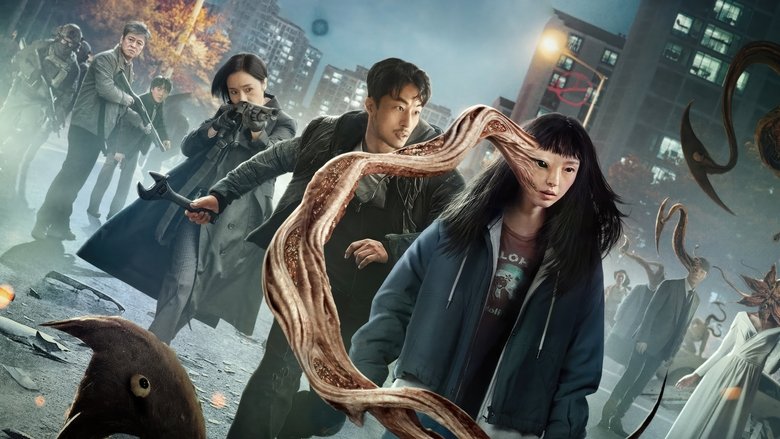
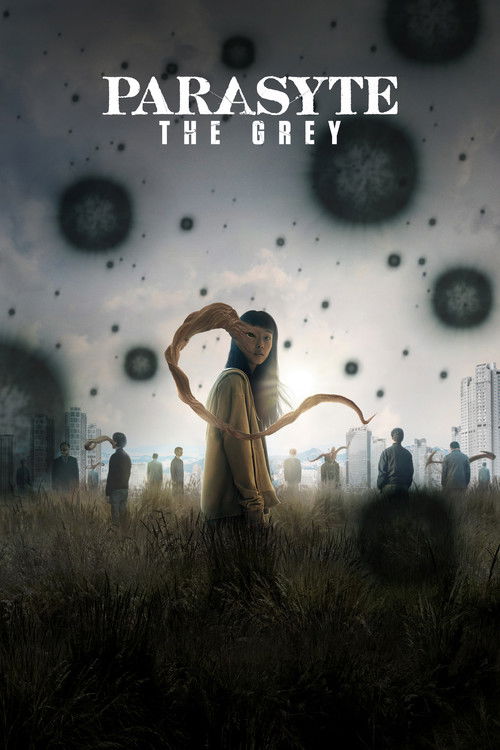
Parasyte: The Grey is a 2024 South Korean sci-fi horror thriller directed and co-written by Yeon Sang-ho alongside screenwriter Ryu Yong-jae. Expanding on the fictional universe established by Hitoshi Iwaaki’s iconic manga Parasyte, the series transposes the alien invasion premise onto contemporary South Korea, shifting focus to a wholly original group of characters navigating societal alienation and biological existential dread.

The narrative centers on Jeong Su-in, an isolated supermarket cashier whose life is upended when she suffers a near-fatal assault. An extraterrestrial parasite enters her body, but because it is forced to heal her grievous wounds to keep its host alive, it fails to consume her brain entirely. Instead, Su-in enters a unique symbiotic state with the parasite—later nicknamed "Heidi"—forming a mutant coexistence where the creature takes over Su-in's consciousness for brief periods to ensure their mutual survival.

As these lethal, flesh-shifting entities covertly infiltrate society by consuming human hosts and forming organized cells, a militarized police task force known as Team Grey, spearheaded by the ruthless Captain Choi Jun-kyung, is established to hunt them down. Pursued by both human authorities who view her as a lethal threat and parasite leaders who consider her an anomaly that must be eliminated, Su-in forms an uneasy alliance with Seol Kang-woo, a rogue petty criminal looking for his missing sister. Together, they navigate treachery within human institutions and the parasitic underground to thwart a plot threatening the highest levels of civic leadership.

Core Meaning

The core thesis of Parasyte: The Grey explores how the collective structures humans build—organizations, institutions, families, and emotional bonds—define our survival and humanity. While individual human beings can be physically weak, selfish, and treacherous, their capacity to coexist, trust, and sacrifice for one another gives them strength. Conversely, the parasites, despite their physical superiority and biological intellect, seek to mimic human hierarchy and power dynamics, demonstrating that pure parasitic survival without genuine empathy leads only to self-destruction. Through Su-in's internal journey from profound isolation and childhood trauma to interspecies companionship with Heidi, the series underscores that true survival is found in coexistence rather than solitary endurance.

Thematic DNA

Coexistence vs. Parasitism 30%
Social Alienation and Chosen Family 25%
Institutional Hierarchy and Corruption of Power 25%
Identity, Otherness, and the Definition of a "Monster" 20%

Coexistence vs. Parasitism

Revealed through the dynamic between Su-in and Heidi. Unlike standard parasite infections where the human consciousness is obliterated, Su-in and Heidi must learn to negotiate boundaries and rely on each other. This evolves from mutual distrust into mutual respect and protection, contrasting sharply with the destructive parasitism of the rogue creatures.

Social Alienation and Chosen Family

Both Su-in and Kang-woo are marginalized figures: Su-in carries childhood trauma from familial abuse and abandonment, while Kang-woo is a low-level gang runaway betrayed by his peers. Throughout their ordeal, they construct an unconventional support network alongside Detective Kim Chul-min, showing that human connection transcends bloodlines.

Institutional Hierarchy and Corruption of Power

The parasites quickly deduce that to control humans, they must conquer human hierarchies—attempting to infiltrate churches, police departments, and mayoral offices. This theme illustrates how bureaucratic and social power structures can become parasitic vehicles when empathy is replaced by systemic dominance.

Identity, Otherness, and the Definition of a "Monster"

Captain Jun-kyung and the corrupt Detective Kang Won-seok demonstrate that human beings are capable of monstrous cruelty and betrayal, while the alien parasite Heidi displays a protective ethic toward her host. The show deconstructs simplistic binary views of good and evil.

Character Analysis

Jeong Su-in

Jeon So-nee

Archetype: The Reluctant Mutant / Outcast Hero Key Trait: Resilient yet emotionally guarded

Motivation

Initially bare survival; evolves into defending those who show her kindness and finding peace with her dual existence.

Character Arc

Begins as an emotionally numb, isolated woman burdened by childhood trauma and ready to succumb to despair. As she learns to share her physical body with Heidi, she discovers self-worth, courage, and the value of human connection, ultimately taking a stand to save society.

Heidi

Voiced / Embodied by Jeon So-nee

Archetype: Symbiotic Other / Rational Pragmatist Key Trait: Monotone, hyper-rational, and lethal in combat

Motivation

Mutual self-preservation evolving into active guardianship over Su-in.

Character Arc

Initially operates on cold, calculating biological preservation. As she experiences Su-in's memories and observes human emotional bonds, she develops an understated compassion, leaving a parting message affirming that Su-in is not alone.

All 5 characters and cast

Symbols & Motifs

The Split Face / Tentacle Blade

Meaning:

Symbolizes the duality of identity and hidden violence. The split head exposes the biological weapon beneath mundane human features, illustrating that danger lurks behind civilized facades.

Context:

Manifests during parasite transformations throughout combat and infiltration sequences.

The Hunting Dog (Chained Parasite)

Meaning:

Serves as a visual motif for unresolved grief, human ruthlessness, and the exploitation of living beings as tactical tools.

Context:

Captain Jun-kyung keeps the parasitic body of her husband alive with an iron helmet to detect other parasites.

Letters and Recorded Voice Messages

Meaning:

Represents indirect intimacy, bridging the communication gap between two minds inhabiting one body.

Context:

Because Su-in and Heidi cannot converse directly in real time, they communicate through diary notes and video messages recorded on phones.

The Abandoned Church (The Church of Saejin)

Meaning:

Symbolizes false salvation, ideological manipulation, and the ironic subversion of spiritual communion by emotionless invaders.

Context:

Serves as the initial gathering place and operational base for the parasite cell.

The Mayor's Commemorative Music Festival

Meaning:

A motif of societal blindness and vulnerability, where mass celebration conceals life-and-death power struggles beneath cheerful pop melodies and crowds.

Context:

The public festival in Namil where the parasite leader attempts a high-profile takeover amidst public celebrations.

Memorable Quotes

우리는 살기 위해 머리를 빼앗아야만 했다. 하지만 너는 달랐지.
— Parasite Pastor Kwon Hyuk-joo (Lee Hyun-kyun)

Context

Spoken in Episode 2 during an interaction regarding Su-in's incomplete transformation.

Meaning

Highlights Su-in's unique status as a "mutant" outlier among both human and parasite societies.

이 짓은 전쟁이 아니야. 이건 해충 방제 작업이지.
— Captain Choi Jun-kyung (Lee Jung-hyun)

Context

Spoken in Episode 1 while leading Team Grey operations.

Meaning

Encapsulates Jun-kyung's dehumanizing attitude toward the creatures at the start of the series.

All 5 quotes

Episode Highlights

Episode 1

S1E1

The alien spores descend on South Korea; Su-in survives a murderous assault when the parasite fuses with her to repair her organs; Team Grey is introduced clearing out an infected music venue using a captured parasite "Hunting Dog".

Significance:

Establishes the visual language, the biological rules of Su-in’s anomaly, and the high-stakes militarized conflict.

Episode 2

S1E2

Kang-woo discovers his elder sister has been infected and that his younger sister was killed; he encounters Su-in and witnesses Heidi's lethal combat capabilities.

Significance:

Ties Kang-woo's personal quest to Su-in's predicament, establishing the show's core partnership.

Episode 4

S1E4

An ambush at an abandoned theme park results in the tragic capture of Su-in by Team Grey; Detective Kim Chul-min fights to keep Su-in from being executed; the corrupt double-agent cop Kang Won-seok's collusion with the parasites is revealed.

Significance:

Shakes the stability of the police force and shifts the narrative into high-velocity suspense.

Episode 5

S1E5

A high-octane prisoner transport heist occurs; Detective Chul-min is murdered and his body is commandeered by the Parasite Leader; Jun-kyung begins questioning the loyalties within her own ranks.

Significance:

Delivers the emotional low-point for Su-in, as her mentor becomes the literal face of the enemy.

Episode 6

S1E6

The climax at the Namil Folk Festival, where Su-in, Kang-woo, and Jun-kyung stop the Parasite Leader from taking over the Mayor; Heidi and Su-in reach emotional reconciliation in their mindscape; Masaki Suda cameos as Japanese parasite specialist Shinichi Izumi.

Significance:

Resolves the Korean story arc while expanding the franchise into an international canon.

Philosophical Questions

What distinguishes a biological parasite from a societal one?

The series compares alien organisms feeding on flesh to corrupt politicians, gang leaders, and institutions feeding on the labor and obedience of the vulnerable.

Can coexistence exist without shared consciousness?

Because Su-in and Heidi cannot speak face-to-face, their harmony relies entirely on trust, demonstrating that solidarity requires mutual benefit and goodwill rather than total uniformity.

Is human collectivism an evolutionary strength or a vulnerability?

The show demonstrates that while collective unity gives humans power over predators, centralized hierarchy makes entire populations vulnerable if the leadership is compromised.

Alternative Interpretations

Critics and analysts have approached the series through several distinct lenses:

Full ending explanation

Cultural Impact

Parasyte: The Grey sits at the intersection of Korean genre storytelling and Japanese pop-culture heritage. Rather than executing a standard frame-by-frame remake, director Yeon Sang-ho utilized the premise to explore Korean social institutions, such as regional municipal politics, the power dynamics of pseudo-religious cults, and localized law enforcement.

Upon its release in April 2024, the series reached No. 1 on Netflix's Global Non-English TV charts, earning praise for revitalizing the body-horror subgenre within mainstream K-drama formats. It stands as one of the few live-action manga adaptations that successfully expands the original universe without retreading old storylines.

Audience Reception

Parasyte: The Grey debuted to strong viewership numbers and generally positive reviews, holding high ratings across aggregators such as Rotten Tomatoes and IMDb.

Critics and viewers widely praised the brisk pacing (6 concise episodes), convincing CGI action sequences, and the grounded emotional anchor provided by Jeon So-nee and Koo Kyo-hwan. The Shinichi Izumi cameo generated massive excitement across the anime and manga community.

Conversely, some purists noted that philosophical dialogue regarding humanity’s impact on nature was less prominent than in Hitoshi Iwaaki’s original manga, leaning more into high-tempo police-action and creature-feature tropes. Lee Jung-hyun’s early theatrical acting choices as Captain Jun-kyung also drew polarized responses before her arc stabilized in later episodes. Overall, it was regarded as a confident, thrilling expansion of the franchise.

Interesting Facts

  • Director Yeon Sang-ho was a dedicated fan of Hitoshi Iwaaki's manga since his college years and personally pitched the idea of a Korean spin-off to Kodansha.
  • Original manga author Hitoshi Iwaaki reviewed the scripts and gave full approval to Yeon's original Korean story, expressing excitement over the new cultural setting.
  • Unlike Migi in the original manga who lives on the host's hand, Heidi manifests periodically from Su-in's head to balance CGI budget constraints with concentrated action choreography.
  • Jeon So-nee underwent extensive stunt training to coordinate head-whipping movements that blended seamlessly with post-production CGI tentacle blades.
  • Screenwriter Ryu Yong-jae co-wrote the series with Yeon Sang-ho, specifically refining the political thriller and police procedural elements.

Easter Eggs

Shinichi Izumi Cameo

In the final scene of Episode 6, Masaki Suda appears as Shinichi Izumi, introducing himself as a Japanese parasite researcher and extending his right hand (the vessel for Migi), explicitly linking the series to the original manga timeline.

"Heidi" Moniker

The name "Heidi" given to Su-in's parasite is a deliberate Korean phonetic and literary nod to Dr. Jekyll and Mr. Hyde, referencing their dual-personality coexistence.

Haircut Transformation

Su-in’s physical haircut and stylistic shift midway through her journey subtly echo Shinichi’s physical and psychological hardening after his heart was reconstructed in the original manga.

The "Hair Plucking" Test

Team Grey verifies humans by plucking hair to check for pain and physical decay, a direct tactical callback to the detection method discovered in the original manga.

Frequently Asked Questions

Explore More About This Movie

Dive deeper into specific aspects of the movie with our detailed analysis pages

Comments (0)

Leave a comment

No comments yet. Be the first to share your thoughts!

Similar Movies