Skip to content
Hwarang: The Poet Warrior Youth
Set against ancient Silla's opulent dawn, Hwarang is a vibrant coming-of-age fusion sageuk alive with camaraderie and tragic longing, mirroring young cherry blossoms braving fierce courtly storms to bloom into unyielding steel.
Hwarang: The Poet Warrior Youth

Hwarang: The Poet Warrior Youth

화랑

19 December 2016 — 21 February 2017 South Korea 1 season 20 episode Ended 7.9 (282)

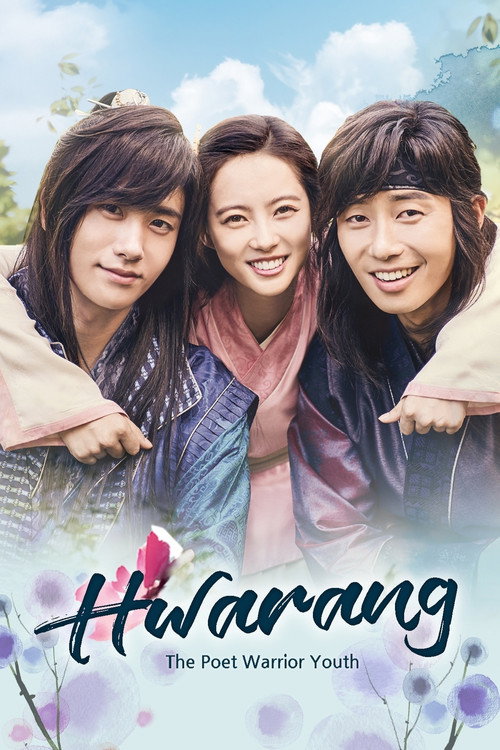
Cast: Park Seo-jun, Go Ara, Park Hyung-sik, Do Ji-han, Minho

Drama Action & Adventure Comedy Social Hierarchy vs. Human Worth Brotherhood, Found Family, and Unity Identity, Leadership, and True Kingship Sacrifice and the Cost of Maturation

Overview

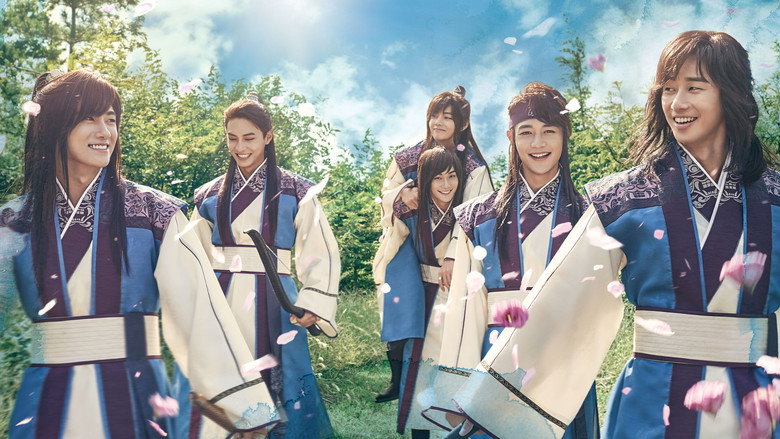
Hwarang: The Poet Warrior Youth is a 20-episode South Korean historical drama set during the 6th-century Kingdom of Silla under the regency of Queen Mother Ji-so. Fearing assassination attempts and power-hungry aristocrats who seek to overthrow the royal lineage, the Queen Mother keeps her young son, King Sammaekjong, hidden as a 'faceless king'. To consolidate royal authority and tame unruly noble factions, she establishes the Hwarang ('Flowering Knights')—an elite military and philosophical academy composed of the kingdom's most gifted and handsome noble youths.

The narrative traces the convergence of contrasting destinies within the Hwarang House. Moo-myung, an orphaned, lowborn young man nicknamed 'Dog-Bird,' infiltrates the capital in search of answers after his close friend is killed by royal guards. Assuming his fallen friend’s identity, Sun-woo, he enters the Hwarang academy alongside the hidden young monarch, who has secretly enrolled under the alias 'Ji-dwi' to discover what it truly means to rule. Amid rigorous physical training, cultural education, and philosophical debates led by mentor Wi Hwa-gong, the youths must navigate treacherous internal rivalries, rigid societal divides, and outside military threats.

As the bonds between the boys deepen into profound brotherhood, their personal conflicts intertwine with national politics. A romantic rivalry for the affections of Ah-ro—a resilient half-caste storyteller and physician—strains the budding friendship between Sun-woo and the hidden king. Ultimately, the series chronicles how a fractured cohort of aristocratic youths transcends ancestral animosities and the oppressive Bone-Rank system, evolving into a unified vanguard that reshapes the future of Silla.

Core Meaning

The overarching message of Hwarang is that genuine leadership and true nobility are not determined by inherited bloodlines or oppressive caste systems, but forged through shared adversity, empathy for the common people, and moral courage. The creators used the legendary mythos of the Silla Flowering Knights to critique entrenched social hierarchies, suggesting that a nation's renewal requires the youth to reject the corrupt paradigms of the previous generation in favor of genuine brotherhood and shared purpose.

Thematic DNA

Social Hierarchy vs. Human Worth 30%
Brotherhood, Found Family, and Unity 25%
Identity, Leadership, and True Kingship 25%
Sacrifice and the Cost of Maturation 20%

Social Hierarchy vs. Human Worth

The rigid Silla Bone-Rank System (Golpum) dictates power, privilege, and destiny throughout the story. The drama challenges this caste framework through characters like Sun-woo (a lowborn peasant rising among 'sacred bones') and Dan-se (a talented half-caste brother held down by status), illustrating the tragic cost of systemic prejudice.

Brotherhood, Found Family, and Unity

Starting as hostile adversaries divided by factional politics (such as Soo-ho and Ban-ryu), the young men gradually build an unbreakable solidarity through shared trials, sword dances, and mutual protection, proving that human connection transcends political tribalism.

Identity, Leadership, and True Kingship

The parallel journeys of Sun-woo and Sammaekjong explore what qualifies an individual to wear the crown. Sammaekjong evolves from an insecure, hidden monarch into an assertive leader who learns to rule for his subjects rather than out of fear.

Sacrifice and the Cost of Maturation

Youthful innocence inevitably collides with adult political cruelty. The characters learn that genuine growth requires painful sacrifice, epitomized by young Han-sung’s willingness to give his life to protect those he loves and break the cycle of hatred.

Character Analysis

Moo-myung / Kim Sun-woo

Park Seo-joon

Archetype: Reluctant Hero / Folk Champion Key Trait: Unflinching courage and instinctual loyalty

Motivation

Initially revenge and protecting Ah-ro; evolves into creating a Silla where commoners are not sacrificed for noble greed.

Character Arc

Begins as 'Dog-Bird,' a feral peasant from the outlands driven solely by vengeance for his murdered friend Mak-moon. Assuming Sun-woo’s identity, he masters martial and scholarly arts in Hwarang, embraces leadership, discovers his royal bloodline, and ultimately chooses to be the kingdom’s protector rather than usurping the throne.

Sammaekjong / Kim Ji-dwi / King Jinheung

Park Hyung-sik

Archetype: The Hidden Monarch / Shadow Prince Key Trait: Quiet vulnerability evolving into regal dignity

Motivation

Escaping his gilded cage and stepping out of the shadows to prove his legitimacy as king.

Character Arc

Begins as a bitter, sleepless ruler forced into hiding by his overbearing mother. Disguised as nobleman 'Ji-dwi,' he learns humility, military discipline, and the realities of his people, eventually confronting his mother and court to claim his rightful throne.

All 6 characters and cast

Symbols & Motifs

The Dragon Bracelet / King's Token

Meaning:

Symbolizes the burden, concealment, and isolation of kingship; cutting or relinquishing it marks the monarch's transition from a fugitive into an autonomous sovereign.

Context:

Worn by the hidden King Sammaekjong throughout his journey to mark his hidden royal heritage.

The Wooden Dice / Game Pieces

Meaning:

Represents fate, chance, and the arbitrary nature of social division.

Context:

Featured in dice games during early episodes, showcasing how aristocratic leaders gamble with human lives.

The Poisoned Sword / Family Blade

Meaning:

Symbolizes generational malice and oppressive family expectations forced upon the younger generation by older patriarchal figures.

Context:

Used by Dan-se under the coercive orders of his and Han-sung's grandfather to attempt an assassination.

The Blue Silk Hwarang Uniforms

Meaning:

Embody elegance, youthful idealism, and the duality of the poet-warrior ethos ('Flowering Knights'), standing distinct from traditional martial armor.

Context:

Worn by the members of the Hwarang House during their official assemblies and training.

Medicine and Stories (Ah-ro's Storytelling)

Meaning:

Symbolizes healing and emotional connection, offering emotional relief to scarred warriors and restless monarchs alike.

Context:

Practiced by Ah-ro through her romantic street fables and medicinal treatments across the capital.

Memorable Quotes

내가 바로 신라의 왕이다!
— Moo-myung / Sun-woo

Context

Said in Episodes 14 and 15 when facing the volatile Crown Prince of Baekje, who demands to know which hostage is Silla's hidden king to execute innocent Silla peasants.

Meaning

Demonstrates Sun-woo's selfless willingness to sacrifice his life to save innocent people, showing true kingly leadership regardless of official titles.

내가 바로 신라의 왕, 진흥이오.
— Sammaekjong / Jinheung

Context

Confronting Queen Mother Ji-so in the royal court in full king's regalia in Episodes 18 and 19 before the astonished council.

Meaning

Marks the pivotal climax of Sammaekjong's character arc as he steps out of hiding and reclaims his sovereign authority from his mother.

All 4 quotes

Episode Highlights

The Dog-Bird of Makmangchon

S1E1

Introduces the fractured world of Silla, Queen Mother Ji-so’s regency, and Moo-myung’s bond with Mak-moon.

Significance:

Establishes the catalyst for the entire series when Mak-moon catches a fatal glimpse of the hidden king.

Entering the Hwarang

S1E4

Depicts the official founding and chaotic induction of the Hwarang candidates into the academy.

Significance:

Shifts the series tone into camaraderie and marks the beginning of the ensemble's collective journey.

The Mid-Autumn Festival Performance

S1E8

Showcases the iconic sword dance presentation where the Hwarang overcome internal sabotage.

Significance:

Proves their capability to perform as a cohesive, unified unit beyond aristocratic squabbling.

Tension in Baekje

S1E14

Follows the Hwarang peace delegation to neighboring Baekje as they encounter deep hostility.

Significance:

Allows Sun-woo to step forward and take charge as an organic leader in high-stakes international diplomacy.

I Am the King

S1E15

Sun-woo falsely claims to be the King of Silla to halt Baekje's executions, engaging in a duel against the Crown Prince of Baekje.

Significance:

Directly tests the core ethos of kingship, sacrifice, and loyalty between Sun-woo and Sammaekjong.

The Flower Falls / Wonhwa

S1E18

Han-sung intercepts Dan-se's poisoned sword aimed at Sun-woo and tragically dies in Sun-woo's arms.

Significance:

Serves as the emotional zenith of the drama, shocking the Hwarang into mature unity and prompting Sammaekjong to finally reveal his identity.

The King's Entrance

S1E19

Sammaekjong enters the royal court in full crown regalia to declare himself King Jinheung, while Ah-ro takes an arrow meant for Sun-woo.

Significance:

Brings long-simmering court tensions to the brink of rebellion and reclaims the throne from the Queen Mother.

The Sovereign of Silla - Series Finale

S1E20

Sun-woo and the Hwarang feign support for Minister Park's coup, only to turn their swords on the corrupt ministers and pledge loyalty to King Jinheung.

Significance:

Solidifies Silla’s political stability and establishes the Hwarang as the eternal protectors of the kingdom and its people.

Philosophical Questions

Does true authority derive from blood or actions?

The drama repeatedly interrogates whether the 'Sacred Bone' heritage gives anyone the moral right to rule, answering through Sun-woo and Jinheung that legitimate power is earned through sacrifice and care for subjects.

Can individuals break free from familial and systemic sins?

Characters like Ban-ryu and Dan-se struggle against ancestral dishonor and parental manipulation, demonstrating the moral duty of youth to defy unjust legacy orders.

What is the price of peace?

Explored through Queen Mother Ji-so’s Machiavellian suppression of rivals versus Sammaekjong’s vision of mutual alliance, asking whether authoritarian control ever truly guarantees national safety.

Alternative Interpretations

Critics and scholars offer several distinct readings of the series:

Full ending explanation

Cultural Impact

Hwarang is set in the 6th-century Silla Kingdom during the reign of King Jinheung the Great, one of Korea's most consequential historical rulers who expanded Silla’s borders and laid the foundations for the eventual unification of the Three Kingdoms (Silla, Goguryeo, and Baekje).

Within contemporary Hallyu culture, the drama solidified the 'flower boy sageuk' subgenre, following the trailblazing paths of shows like Sungkyunkwan Scandal and Love in the Moonlight. While domestic television ratings fluctuated between 7% and 13% due to fierce competition in its timeslot, the drama became an international streaming sensation, bolstered by its ensemble star power and Kim Tae-hyung’s global fandom. It has since maintained a lasting cultural footprint through the enduring public legacy of the real-life 'Wooga Squad'.

Audience Reception

Audiences and critics widely praised the charismatic chemistry of the young male ensemble cast, the energetic comedic timing, the bromance arcs (especially the enemies-to-friends dynamic between Soo-ho and Ban-ryu), and the emotional weight of Episode 18 featuring Han-sung’s tragedy. The original soundtrack received universal acclaim.

Conversely, the main romantic love triangle between Moo-myung, Ah-ro, and Sammaekjong faced significant criticism for dragging the pacing and sidelining the political and Hwarang training plotlines. Ah-ro's character development drew negative reviews for relying excessively on the 'damsel in distress' trope in later episodes.

Overall, it is regarded as an entertaining, visually lavish fusion youth sageuk with standout character dynamics and memorable performances, even if its narrative pacing occasionally suffered from romantic melodrama.

Interesting Facts

  • The set of Hwarang served as the founding ground for the famous South Korean celebrity friend group, the 'Wooga Squad' (Park Seo-joon, Park Hyung-sik, Kim Tae-hyung, Choi Woo-shik, and Peakboy).
  • This drama marked BTS member V's acting debut under his real name, Kim Tae-hyung.
  • Unlike the majority of South Korean historical dramas of that era, Hwarang was 100% pre-produced between March and September 2016 before airing in December.
  • The production filmed during a severe South Korean summer heatwave, forcing the cast to endure rigorous swordplay and horseback riding in multi-layered ancient silk garments and long wigs.
  • BTS members Jin and V sang the popular theme song 'It's Definitely You' (죽어도 너야), which garnered multiple award nominations, while lead actors Park Seo-joon and Park Hyung-sik also contributed solo tracks to the soundtrack.
  • The main cast underwent intensive two-month pre-production training in traditional Korean swordsmanship, horseback archery, and synchronized group choreography.

Easter Eggs

Lee Kwang-soo Cameo

Variety and film star Lee Kwang-soo makes a pivotal guest appearance in Episodes 1 and 2 as Mak-moon (the real Sun-woo and Ah-ro's brother), setting the entire series plot in motion.

Modern Dance Integration

The Hwarang dance performance in Episode 8 subtly incorporates modern K-pop synchronization and hip-hop body isolations blended into traditional Korean sword dance forms.

Historical Silla Football (Chukguk)

Episode 3 features a comedic match of ancient Korean football (chukguk), parodying modern soccer broadcasts with stylized slow-motion drama.

Name Puns and Allusions

Moo-myung literally translates to 'No Name' (무명), signifying his initial status as an invisible outcast beneath the aristocratic caste system.

Frequently Asked Questions

Explore More About This Movie

Dive deeper into specific aspects of the movie with our detailed analysis pages

Comments (0)

Leave a comment

No comments yet. Be the first to share your thoughts!

Similar Movies