Yona of the Dawn
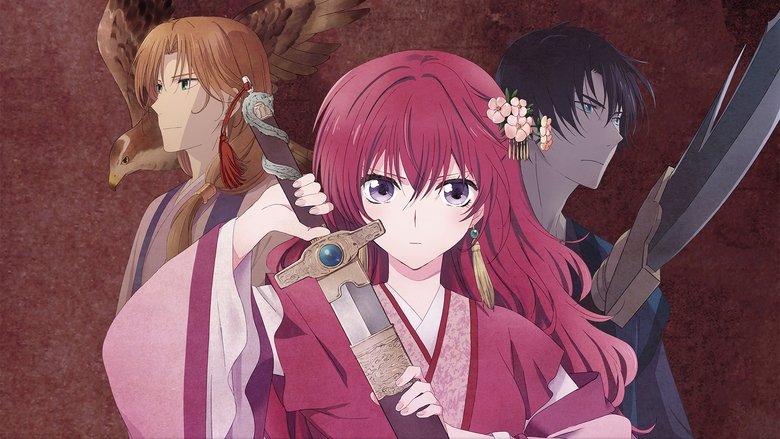
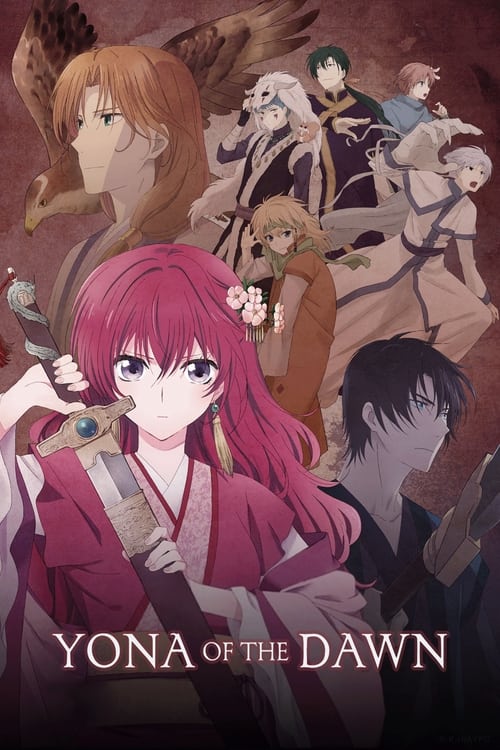
A sheltered princess with hair red as the dawn is cast from her throne into a world of blood and betrayal. Driven by a legendary destiny, she transforms from a pampered doll into a warrior queen, gathering dragon warriors to reclaim her kingdom and protect her people.
Yona of the Dawn

Yona of the Dawn

暁のヨナ

07 October 2014 — 24 March 2015 Japan 1 season 24 episode Ended ⭐ 8.4 (285)
Cast: Chiwa Saito, Tomoaki Maeno, Yusuke Kobayashi, Eiichiro Tokumoto, Junichi Yanagita
Drama Animation Sci-Fi & Fantasy Action & Adventure Comedy
Metamorphosis and Growth Fate vs. Free Will Betrayal and Moral Ambiguity Loyalty and Devotion

Overview

Yona of the Dawn (Akatsuki no Yona) is a high-fantasy epic that begins in the kingdom of Kouka, where Princess Yona lives a life of luxury, shielded from the world's harsh realities by her pacifist father, King Il, and her childhood friend and bodyguard, Hak. Her world shatters on her sixteenth birthday when her beloved cousin, Soo-won, orchestrates a coup d'état, murdering her father to seize the throne. Forced to flee the castle with only Hak by her side, Yona is thrust into the wild, stripped of her title and naive worldview.

As fugitives, Yona and Hak follow the guidance of an exiled priest who reveals a prophecy: to survive and save her country, Yona must find the four legendary Dragon Warriors who once served the Crimson Dragon King. The series follows their harrowing journey across the kingdom as Yona witnesses the poverty and suffering of her people—issues ignored during her father's reign. Along the way, she gathers a motley crew of warriors, each with unique supernatural abilities and tragic pasts.

The narrative is less about revenge and more about Yona's profound evolution. She refuses to be a helpless victim, learning to wield a bow and sword while grappling with the moral weight of violence. The series deftly balances political intrigue, intense action, and character-driven drama, exploring whether a ruler's legitimacy comes from bloodline or the will to serve the people. While the anime concludes after the gathering of the dragons, it sets the stage for a larger rebellion to restore Kouka's glory.
Core Meaning

At its heart, Yona of the Dawn challenges the definition of true strength and leadership. The series posits that ignorance is a sin for a ruler; true power comes not from divine right or military might, but from empathy and the willingness to see the suffering of the voiceless. Yona's red hair, initially a symbol of her hatred and vanity, becomes a burning symbol of hope and revolution, suggesting that one's perceived weaknesses can become their greatest strengths when fueled by a purpose larger than oneself.

Thematic DNA

Metamorphosis and Growth 30%
Fate vs. Free Will 25%
Betrayal and Moral Ambiguity 25%
Loyalty and Devotion 20%

Metamorphosis and Growth

The central pillar of the series is Yona's transformation. She begins as a spoiled, helpless princess concerned only with her hair and love life. Through loss and hardship, she evolves into a warrior who commands respect not by rank, but by action. Her growth is physical (learning archery) and ideological (understanding politics and poverty), proving that anyone can rise above their circumstances.

Fate vs. Free Will

The series constantly juxtaposes destiny with choice. The four dragons are bound by dragon blood to serve Yona, yet the narrative emphasizes that they choose to follow her because of her character, not just the prophecy. Even Yona, the reincarnated Crimson Dragon King, must actively choose to fight rather than succumb to despair, highlighting that destiny offers a path, but will drives the journey.

Betrayal and Moral Ambiguity

Soo-won's betrayal serves as the catalyst for the story, but the series avoids painting him as a one-dimensional villain. It explores the tension between personal loyalty and national duty. Soo-won believes his treacherous actions were necessary to save the kingdom from ruin, forcing the audience and Yona to question if a 'good' outcome can justify 'evil' means.

Loyalty and Devotion

Contrasting the betrayal is the unwavering loyalty of Hak. His devotion to Yona goes beyond duty; it is a choice to sacrifice his own happiness and freedom. The theme expands to the dragons, who struggle with the instinctual loyalty in their blood versus their desire for autonomy, ultimately finding a middle ground in genuine camaraderie.

Character Analysis

Yona

Chiwa Saito

Archetype: The Hero / Reincarnated Leader
Key Trait: Fiery Determination

Motivation

Initially survival; later, to protect Hak and her friends, and ultimately to heal the wounds of her kingdom and understand the reason behind the betrayal.

Character Arc

Starts as a naive, sheltered princess. After her father's murder, she is forced into exile. Over the series, she sheds her weakness, learning archery and swordplay. She transitions from seeking protection to becoming the protector, realizing her duty is to the people of Kouka, not just the throne. She embraces her destiny as the Crimson Dragon King's reincarnation but retains her human empathy.

Son Hak

Tomoaki Maeno

Archetype: The Loyal Guardian / Lancer
Key Trait: Unwavering Loyalty

Motivation

To keep Yona alive and happy, even at the cost of his own life. His hatred for Soo-won is a secondary, darker fuel.

Character Arc

The former General of the Wind Tribe and Yona's childhood friend. He suppresses his love for Yona to support her happiness with Soo-won. After the coup, he becomes a fugitive to protect her. His arc revolves around managing his consuming rage toward Soo-won and learning to trust others (the dragons) to help protect Yona, moving from a solitary guardian to a team player.

Soo-won

Yusuke Kobayashi

Archetype: The Anti-Villain / Utilitarian Ruler
Key Trait: Ruthless Pragmatism

Motivation

To restore the Kouka Kingdom to its former glory and strength, believing King Il's pacifism was destroying it.

Character Arc

Yona's cousin and first love. He murders King Il to save the country from what he views as weak rule. Throughout the series, he works tirelessly to strengthen Kouka, often showing competence and charisma. He is not evil for the sake of evil; he has sacrificed his humanity and personal connections for the 'greater good' of the nation.

Yoon

Junko Minagawa

Archetype: The Brains / Mother Hen
Key Trait: Intellect

Motivation

To see the world and gain knowledge, while keeping his reckless found family alive.

Character Arc

A self-proclaimed 'handsome genius' orphan who initially hates nobles. He joins Yona after seeing her resolve. He acts as the group's medic, cook, and strategist. His arc involves overcoming his prejudice against royalty and realizing he can use his intellect to change the world alongside Yona.

Jae-ha (Green Dragon)

Junichi Suwabe

Archetype: The Reluctant Ally / Flirt
Key Trait: Love of Freedom

Motivation

To pursue beauty and freedom; he follows Yona because he finds her spirit beautiful, not just because of duty.

Character Arc

Initially values his freedom above all and resists the 'dragon's blood' destiny. He refuses to join Yona at first, wanting to be a pirate. However, witnessing Yona's bravery convinces him to follow her of his own free will, reconciling his desire for freedom with his destiny.

Symbols & Motifs

Red Hair

Meaning:

Initially a source of insecurity for Yona, her red hair evolves into a symbol of the Crimson Dragon King, fire, passion, and the dawn itself. It represents her acceptance of her destiny and her burning will to live.

Context:

Soo-won once complimented it, making her love it; later, she cuts it off to save Hak, symbolizing the severance of her past self and her pampered life. Enemies eventually come to fear the 'red-haired princess.'

The Hairpin

Meaning:

Symbolizes Yona's lingering attachment to Soo-won and her inability to fully let go of her past love, despite his betrayal.

Context:

Soo-won gives it to her just before the coup. Throughout the series, she keeps it, representing the complex, unresolved grief and love she still holds for the man who killed her father.

The Four Dragons

Meaning:

They represent the different facets of power needed to rule: strength (White), vision (Blue), freedom/agility (Green), and resilience (Yellow).

Context:

They are scattered across the kingdom, each isolated by their power. Their gathering symbolizes the unification of the fractured country under a true leader.

Dawn (Akatsuki)

Meaning:

Symbolizes a new beginning after a dark night. Yona is the 'dawn' that will end the darkness of corruption in Kouka.

Context:

Used in the title and visual imagery, often appearing when Yona makes a pivotal realization or saves a village from despair.

Memorable Quotes

I want to become stronger. Teach me to use a sword and bow. I'll learn. I don't want to die in this absurd state!

— Yona

Context:

Spoken to Hak in the mountains after they escape the castle, realizing she cannot rely on him forever.

Meaning:

The pivotal moment Yona decides to stop being a victim. She rejects passivity and chooses to arm herself, marking the beginning of her transformation into a warrior.

Inability to overcome fear is human.

— Yoon

Context:

Spoken during a moment of peril, reminding the group that vulnerability doesn't equal weakness.

Meaning:

Validates fear as a natural emotion, contrasting with the superhuman strength of the dragons and Hak. It emphasizes that courage is acting despite fear.

A heaven that only watches has no meaning for me. I do not want gods, but the power of people.

— Soo-won

Context:

Reflecting on his decision to kill the King and take the throne by force to save the country.

Meaning:

Encapsulates Soo-won's philosophy. He rejects divine right and tradition (King Il's way) in favor of human action and tangible strength, justifying his coup.

Even if I have no power, I want to become a human being who can help others.

— Yona

Context:

After witnessing the suffering in the Fire Tribe's territory and feeling powerless to stop it.

Meaning:

Shows the shift in her motivation from personal survival to altruism. She wants to be useful to her people, regardless of her royal status.

Episode Highlights

The Princess Yona

S1E1

The shocking pilot that sets the stage. We see Yona's sheltered life crumble in a single night when she witnesses Soo-won killing her father. The contrast between the colorful, happy birthday celebrations and the bloody betrayal is stark.

Significance:

Establishes the central conflict and the 'Inciting Incident' that drives the entire series. It poses the question: How will this fragile girl survive?

The Wind Tribe

S1E4

Yona and Hak arrive at the Wind Tribe. Yona sees the impact of her father's weak rule—the tribe is suffering from pressure by the Fire Tribe. To protect Hak's people, she decides to leave, sacrificing her only safe haven.

Significance:

The first major decision Yona makes for the sake of others, marking the first step in her maturity and leadership.

Roar

S1E6

Cornered by the Fire Tribe, Hak is overwhelmed. Yona, refusing to just watch him die, cuts off her long red hair to escape a soldier's grasp and rushes to his aid with a fierce look in her eyes.

Significance:

A visual and symbolic turning point. Cutting her hair represents severing ties with her pampered past. It is the moment she gains the 'eyes of a beast' and saves Hak.

Blindfolded Dragon

S1E12

Yona meets the Blue Dragon, Shin-ah, who has been isolated in a dark cave and feared by his village. She enters his darkness and accepts him, giving him the name 'Shin-ah' (Moonlight).

Significance:

Showcases Yona's extreme empathy. She doesn't command him; she saves him from his loneliness, solidifying the theme that she heals the dragons as much as they protect her.

From Now On

S1E24

The season finale. Yona encounters the Yellow Dragon, Zeno, completing the group. Returning to Kouka, she vows not to retake the throne immediately, but to protect the people from the shadows.

Significance:

Solidifies Yona's resolve. Instead of a revenge-driven princess, she has become a grassroots protector. The final shot of the group looking at the sunrise symbolizes the 'Dawn' of a new era.

Philosophical Questions

Does the end justify the means?

Soo-won murders a kind man (King Il) to save a nation. The series asks if a stable, prosperous country built on the blood of a betrayer is valid, and if Yona has the right to destabilize that peace for the sake of personal justice.

What is the duty of a ruler?

Is a ruler's duty to maintain peace at all costs (King Il) or to ensure strength and prosperity, even through war (Soo-won)? Yona finds a third path: ruling through understanding and protecting the most vulnerable, suggesting that a ruler must first be a servant of the people.

Alternative Interpretations

Soo-won: Hero or Villain?
A major point of debate is whether Soo-won is the true hero of the story. Critics argue that King Il's pacifism was actually negligence that allowed human trafficking and poverty to fester. From a utilitarian perspective, Soo-won's coup saved the kingdom from collapse. Thus, Yona's journey isn't just about reclaiming her right, but realizing her father's failures.

The Hairpin as a Shackle
Some interpret Yona keeping Soo-won's hairpin not as simple lingering love, but as a symbol of her trauma. It represents the innocence she can never get back. Discarding it (or not) becomes a barometer for her healing process throughout the series.

Cultural Impact

Yona of the Dawn is widely considered a modern classic of the shoujo genre, credited with revitalizing the 'warrior princess' trope. Unlike traditional shoujo that focuses heavily on romance in a high school setting, Yona blended high-stakes political fantasy with character-driven romance, appealing to a demographic much wider than teenage girls. It challenged the notion that shoujo protagonists must be passive, presenting a heroine who physically trains and fights.

The series maintained a dedicated cult following for over a decade despite the lack of a second season (until the 2025 announcement), driven by the manga's long-running success and high sales. It paved the way for other female-led fantasy series like Snow White with the Red Hair and The Saint's Magic Power is Omnipotent. Yona herself is frequently cited in 'Best Female Characters' lists for her realistic and earned character development.

Audience Reception

Universal Praise: The anime holds a high rating (over 8/10 on most platforms). Audiences almost universally praise Yona's character arc, citing it as one of the best examples of 'weak-to-strong' development in anime. The animation by Studio Pierrot and the soundtrack by Kunihiko Ryo are also highlights.

The 'Read the Manga' Frustration: For years, the primary criticism was the abrupt ending. The 24-episode run covers only the prologue of the larger story (the gathering of the dragons), leaving the actual rebellion and confrontation with Soo-won unresolved. This led to massive frustration and constant calls for a Season 2.

Legacy: Despite the cliffhanger, the show is beloved. The chemistry between Hak and Yona is frequently voted as a top 'power couple' in anime communities. The 2025 announcement of a sequel was met with explosive enthusiasm on social media, validating the fanbase's decade-long loyalty.

Interesting Facts

  • The manga author, Mizuho Kusanagi, depicts herself in the volume notes as a meerkat or sometimes a llama.
  • A sequel to the anime was finally announced in December 2025, over a decade after the first season aired, coinciding with the manga's conclusion.
  • The voice actors for the four dragons (Kija, Shin-ah, Jae-ha) also voice their ancient dragon ancestors in the flashbacks, highlighting the connection through bloodlines.
  • The series was inspired by Korean history, specifically the Three Kingdoms period, rather than the more common Japanese or Chinese settings in anime. This is reflected in the names, clothes (Hanbok-style), and architecture.
  • In the original manga pilot, Yona had a different personality and the tone was darker, but the editor suggested making her more relatable and the story more adventure-focused.
  • The anime adaptation is incredibly faithful to the first 47 chapters of the manga, adding very little filler.

Easter Eggs

Fire Emblem Similarities

Fans often describe the series as 'Fire Emblem: The Anime' due to the plot of a displaced royal gathering colorful warriors to reclaim a kingdom, which mirrors the plot of many Fire Emblem games (specifically Genealogy of the Holy War and Sacred Stones). The red hair and dragon motifs strengthen this comparison.

Cultural Naming Conventions

The names of the tribes (Sky, Earth, Water, Wind, Fire) and characters (Hak, Soo-won) use Korean-sounding pronunciations in the Japanese dub, a deliberate choice to ground the fantasy setting in a Korean-inspired aesthetic, distinct from the typical feudal Japan setting.

⚠️ Spoiler Analysis

Click to reveal detailed analysis with spoilers

Frequently Asked Questions

Explore More About This Movie

Dive deeper into specific aspects of the movie with our detailed analysis pages

Comments (0)

Leave a comment

No comments yet. Be the first to share your thoughts!