Skip to content
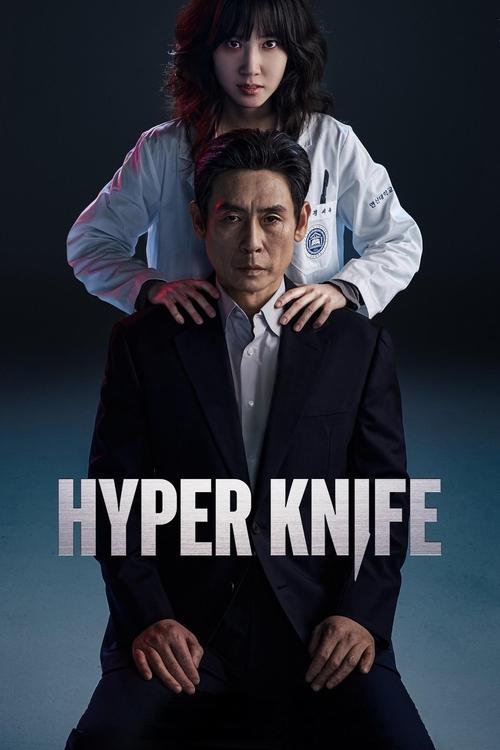
Hyper Knife
A razor-sharp psychological crime thriller where two brilliant neurosurgeons descend into madness, clashing in a volatile dance of surgical supremacy, dark obsession, and mutual destruction.
Hyper Knife

Hyper Knife

하이퍼나이프

"Wishing you nothing but a speedy death."

19 March 2025 — 09 April 2025 South Korea 1 season 8 episode Ended 7.8 (101)

Cast: Park Eun-bin, Sul Kyung-gu, Yoon Chan-young, Park Byung-eun, Lee Jung-sic

Drama Crime Genius vs. Madness & Psychopathy Toxic Mentorship & Generational Pathology The God Complex & Ethical Boundaries of Neuroscience Obsession, Retribution, and Mutual Destruction

Overview

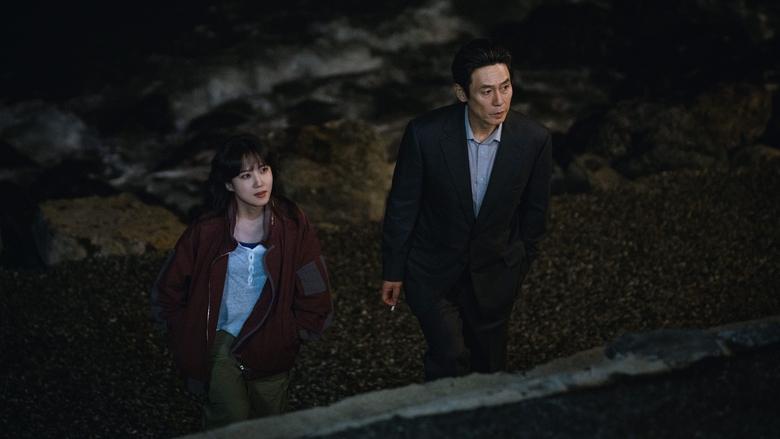
Hyper Knife (하이퍼나이프) is an eight-episode medical crime thriller directed by Kim Jung-hyun and written by Kim Sun-hee, released globally on Disney+ and Hulu in early 2025. The narrative follows Dr. Jung Se-ok, a medical prodigy who entered university at age seventeen, whose once-stellar neurosurgical career was violently derailed when her revered mentor, Dr. Choi Deok-hee, expelled her from his operating theater and stripped her of her medical future. Exiled into the criminal underworld, Se-ok reinvents herself as a shadow doctor, performing clandestine, high-risk neurosurgeries for black-market clients while harboring an all-consuming thirst for vengeance.

The tension escalates when Dr. Choi Deok-hee—widely considered the foremost neurosurgeon in the world—unexpectedly resurfaces in her life. Rather than seeking retribution through legal channels, Deok-hee confronts Se-ok on intimate psychological terrain, drawing her into a dangerous game of surgical supremacy and mutual destruction. Surrounding their volatile dynamic are Han Hyun-ho, an anesthesiologist tethered to Se-ok’s past who regards her with profound concern, and Seo Young-joo, a loyal companion fiercely committed to guarding her safety.

Across its tight narrative arc, Hyper Knife rejects traditional medical procedural tropes in favor of an unrelenting character study. Moving fluidly between past trauma and present hostility, the series examines the claustrophobic rivalry between mentor and protégé, exposing their shared psychopathy, ethical corruption, and the thin boundary separating surgical genius from absolute monstrosity.

Core Meaning

The fundamental thesis of Hyper Knife is that unrestrained intellectual brilliance decoupled from human empathy inevitably breeds mutual destruction and megalomania. The creators deliberately subvert the romanticized "healer" archetype of medical dramas to explore how high-stakes neurosurgery can function as an arena for god complexes and predatory dominion.

Through the fractured relationship between Choi Deok-hee and Jung Se-ok, the series demonstrates how toxic mentorship can replicate pathology: the mentor does not merely teach technical skill, but instills and validates dark, antisocial tendencies. Ultimately, the show delivers a stark message about ego and legacy—suggesting that when genius views human life solely as anatomical canvas or leverage, the scalpel ceases to save and becomes an instrument of existential slaughter.

Thematic DNA

Genius vs. Madness & Psychopathy 30%
Toxic Mentorship & Generational Pathology 25%
The God Complex & Ethical Boundaries of Neuroscience 25%
Obsession, Retribution, and Mutual Destruction 20%

Genius vs. Madness & Psychopathy

The series continuously interrogates whether extraordinary intellect inherently alienates an individual from normative morality. Se-ok’s cold detachment and Deok-hee’s megalomania illustrate how medical mastery can mask severe personality disorders. The boundary between cutting-edge innovation and unhinged experimentation erodes as each character uses their cognitive superiority to evade consequences.

Toxic Mentorship & Generational Pathology

Rather than a conventional master-apprentice bond, the dynamic between Deok-hee and Se-ok functions as an emotional mirror where both seek to dominate and reshape the other. Deok-hee recognizes his own psychopathic ruthlessness in Se-ok, sparking both fascination and terror. The story traces how trauma inflicted by a mentor reproduces vicious cycles of abuse and vengeance.

The God Complex & Ethical Boundaries of Neuroscience

The human brain is presented as the ultimate frontier of control. Both neurosurgeons treat human consciousness as malleable code, rationalizing hazardous black-market procedures and dubious experimental operations in pursuit of neurosurgical transcendence, challenging the core Hippocratic imperative to "do no harm".

Obsession, Retribution, and Mutual Destruction

The narrative drives home that revenge in Hyper Knife is not an equalizer, but a shared descent into the abyss. Neither protagonist desires a simple apology; they demand the complete psychological capitulation and existential ruin of the other, turning their operating theaters into colosseums of mutual annihilation.

Character Analysis

Jung Se-ok

Park Eun-bin

Archetype: Antiheroine / Psychopathic Prodigy Key Trait: Brilliant, antisocial, emotionally detached, and relentless.

Motivation

To assert undeniable neurosurgical dominance, punish the mentor who humiliated her, and operate without institutional restraints.

Character Arc

Beginning as an ostracized former prodigy forced into performing clandestine surgeries, Se-ok's cold exterior conceals deep-seated trauma and unbridled fury. When forced to re-engage with Deok-hee, her repressed desire for dominance erupts, shifting her from a survival-driven shadow doctor into an unapologetic force willing to burn down the medical hierarchy to establish her supremacy.

Choi Deok-hee

Sul Kyung-gu

Archetype: Dark Mentor / Calculating Villain Key Trait: Calculating, charismatic, narcissistic, and authoritarian.

Motivation

To preserve his legendary legacy, maintain psychological control over Se-ok, and push the limits of neuroscience regardless of the human cost.

Character Arc

Introduced as a world-renowned, untouchable titan of neurosurgery, Deok-hee's polished exterior hides an arrogant, manipulative mastermind. His reunion with Se-ok unravels his carefully maintained composure, forcing him to reckon with physical vulnerability and the terrifying monster he personally forged in his former protégé.

All 4 characters and cast

Symbols & Motifs

The Scalpel (Hyper Knife)

Meaning:

Represents supreme power, life-giving capability, and lethal violence. It is the primary extension of Se-ok and Deok-hee’s egos.

Context:

Used as it transitions from a clinical healing tool in pristine hospital operating rooms to an underground weapon of coercive control and existential rivalry.

The Underground Shadow Clinic

Meaning:

Symbolizes Se-ok’s moral demotion and mental descent into antisocial isolation.

Context:

Plunged in murky, subterranean shadows, this illicit operating space serves as the physical manifestation of her exile from the medical establishment.

The Human Brain / Craniotomy Imagery

Meaning:

Represents the fragile seat of human identity, consciousness, and vanity.

Context:

Operating on exposed brains serves as a recurring motif of absolute intimacy, extreme vulnerability, and invasive violation between rival neurosurgeons.

Mirrors and Symmetrical Framing

Meaning:

Signifies that Se-ok and Deok-hee are two sides of the same pathological coin—master and student reflecting each other’s darkest impulses.

Context:

Employed consistently throughout confrontation sequences and split-diopter compositions between the two lead characters.

Memorable Quotes

그냥 죽어버렸으면 좋겠어.
— Dr. Jung Se-ok

Context

Spoken directly to Choi Deok-hee during a tense, intimate confrontation.

Meaning

Crystallizes Se-ok's raw, unvarnished hatred and absolute refusal to offer submission or remorse to her former mentor.

천재와 미치광이는 칼 한 자루 차이다.
— Dr. Choi Deok-hee

Context

Reflecting on the thin line dividing medical genius from psychotic obsession.

Meaning

Encapsulates the core philosophical thesis of the drama, defining how surgical prowess easily degenerates into madness when unrestrained by morality.

All 4 quotes

Episode Highlights

The Prodigy in the Shadows

S1E1

Introduces Jung Se-ok operating in the grimy underworld after her expulsion from the hospital, establishing her chilling detachment and surgical genius.

Significance:

Establishes the premise, setting up the sharp contrast between elite hospital institutions and illegal black-market medical operations.

The Shadow of the Master

S1E2

Dr. Choi Deok-hee rediscovers Se-ok’s whereabouts, sparking an intense reunion charged with unresolved malice.

Significance:

Locks the two lead characters into their collision course and reveals the deep psychological scars left by her expulsion.

Cut from the Bone

S1E3

Flashbacks unearth the specific incident in the operating room that led Deok-hee to permanently destroy Se-ok's license, accompanied by a startling confession from Se-ok.

Significance:

Reveals that Se-ok's expulsion was rooted in both Deok-hee's fear of her superior skill and her unsettling ethical recklessness.

Symbiosis and Spite

S1E4

Deok-hee presents Se-ok with a high-stakes, ethically compromised surgical proposition that only she possesses the skill to execute, prompting Han Hyun-ho to mediate.

Significance:

Shifts the dynamic from straightforward avoidance to forced, toxic interdependence.

The Point of No Return

S1E6

Secrets surrounding underground clinical trials and past cover-ups explode into the open, while Young-joo takes drastic measures to protect Se-ok from hospital enforcers.

Significance:

Destroys any lingering possibility of legal reconciliation, pushing the characters toward violent confrontation.

Hyper Knife / Finale

S1E8

The climactic surgical and psychological duel between Se-ok and Deok-hee unfolds under extreme conditions as dark truths culminate in a brutal finale.

Significance:

Delivers a messy, dark, and visceral climax that seals the fate of mentor and pupil without resorting to conventional redemption.

Philosophical Questions

Can extraordinary genius be separated from moral accountability?

The series examines whether exceptional cognitive and technical ability grants individuals an unspoken license to act beyond ethical boundaries and human empathy.

Are monsters born, or are they engineered by their mentors?

The narrative explores whether Se-ok's psychopathy was an intrinsic innate trait or cultivated and validated by Deok-hee’s abusive tutelage.

When does the pursuit of life-saving innovation cross into predatory hubris?

The show questions the point at which neurosurgical advancement ceases to serve humanity and begins serving the operator’s narcissistic god complex.

Alternative Interpretations

Several distinct interpretations of the series have emerged among critics and scholars:

Full ending explanation

Cultural Impact

Historically, South Korean medical dramas (such as Hospital Playlist, Dr. Romantic, and Good Doctor) have heavily celebrated humanism, institutional sacrifice, and the romantic nobility of physicians. Hyper Knife arrived in 2025 as part of a darker, revisionist wave of Korean content that critically deconstructs elite medical authority, institutional corruption, and the myth of altruistic genius.

By debuting directly on global streaming networks (Disney+/Hulu) with an explicit 19+ rating, the series bypassed traditional domestic broadcast restrictions on graphic surgical gore and morally reprehensible protagonists. It sparked extensive cultural commentary in Korea and internationally regarding the boundaries of empathy in antihero stories and proved that leading Hallyu actresses could headline unapologetically monstrous roles.

Audience Reception

Critical reviews widely praised the electric acting performances of Park Eun-bin and Sul Kyung-gu, applauding their fierce on-screen chemistry and willingness to commit to deeply unsympathetic personas. The series' bold break from standard K-drama medical conventions was commended. However, critical reviews from outlets like the South China Morning Post and indie drama critics noted that the narrative suffered from pacing irregularities in its final third, pointing out that the ending felt convoluted with excessive twists.

Audiences celebrated the intense pacing, Park Eun-bin’s jarring acting transformation, atmospheric cinematography, and visceral operating room sequences. Conversely, the bleak, unyielding nihilism left some viewers wanting more emotional resolution, with fans expressing discomfort over the lack of a traditional moral protagonist to root for. Overall, it was regarded as a dark, polarizing, and ambitious eight-episode duel.

Interesting Facts

  • Following widely acclaimed, warm-hearted roles in Extraordinary Attorney Woo (2022) and Castaway Diva (2023), Park Eun-bin intentionally chose Hyper Knife to break typecasting and portray an uncompromising psychopath.
  • Park Eun-bin explicitly noted during the Disney+ press conference that she did not want viewers to "root for" or "relate to" Se-ok, emphasizing that the character is fundamentally antisocial and morally detached.
  • Renowned primarily as a powerhouse in South Korean cinema (Peppermint Candy, Silmido, The Book of Fish, Kill Boksoon), Sul Kyung-gu’s starring role in Hyper Knife represented a rare, high-profile OTT series commitment.
  • The series was helmed by director Kim Jung-hyun (Awaken, Crazy Love) and penned by screenwriter Kim Sun-hee, who aimed to construct a tight, fast-paced 8-episode psychological thriller rather than an elongated 16-episode procedural.
  • The lead cast underwent rigorous medical consultations and technical training with actual neurosurgeons to master realistic scalpel handling, surgical clamps, and craniotomy procedures for high-definition close-up shots.
  • Upon its premiere on March 19, 2025, Hyper Knife achieved the number-one streaming position on Disney+ in South Korea and across multiple Asia-Pacific territories, marking Disney+’s most-viewed Korean drama premiere globally for the first quarter of 2025.

Easter Eggs

Subversion of Extraordinary Attorney Woo

Park Eun-bin playing an antisocial, cold-blooded surgical prodigy who entered medical school at 17 deliberately mirrors and subverts Woo Young-woo's brilliant legal savant archetype, turning cognitive genius into a chilling, menacing force.

Homage to Korean Vengeance Cinema

The visual tone, macabre black humor, and morally bankrupt dual-protagonist structure echo Park Chan-wook's Vengeance Trilogy and Kim Jee-woon's I Saw the Devil, framing the medical feud as mutual existential butchery.

Color Temperature Storytelling

The visual architecture consistently contrasts the sterilizing blue-white hues of legitimate university hospital ORs with the rusted green and amber undertones of underground clinics, emphasizing institutional sterility versus primal survival.

Frequently Asked Questions

Explore More About This Movie

Dive deeper into specific aspects of the movie with our detailed analysis pages

Comments (0)

Leave a comment

No comments yet. Be the first to share your thoughts!

Similar Movies