Skip to content
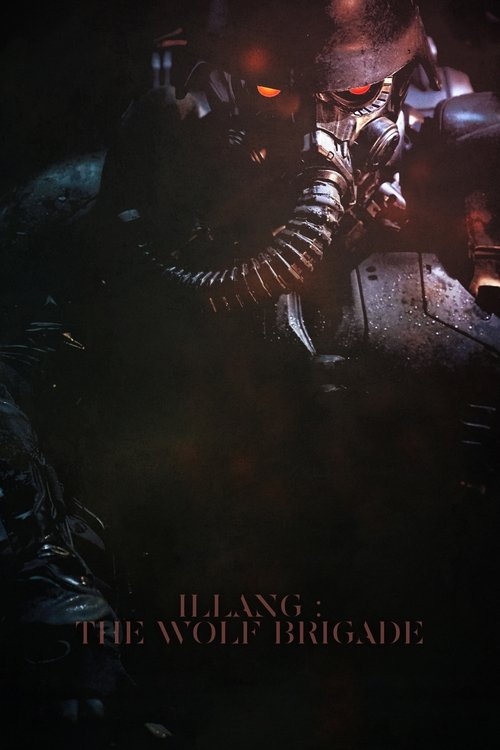
Illang: The Wolf Brigade
Draped in a rain-slicked, neon-noir dystopia, this brutal science-fiction tragedy bleeds profound isolation; it is an iron beast staring through glowing red lenses, silently yearning to remember the warmth of a human heartbeat.
Illang: The Wolf Brigade

Illang: The Wolf Brigade

인랑

25 July 2018 Hong Kong 138 min 6.3 (335)

Director: Kim Jee-woon

Cast: Gang Dong-won, Han Hyo-joo, Jung Woo-sung, Kim Moo-yul, Han Ye-ri

Drama Action Thriller Science Fiction The Dehumanization of State Instruments (Man vs. Beast) Political Manipulation and Bureaucratic Intrigue Guilt, Trauma, and the Search for Redemption Divided Identity and the Cost of Reunification
Budget: $16,723,043

Overview

Set in the year 2029, Illang: The Wolf Brigade envisions an unstable geopolitical climate in East Asia where territorial tensions drive North and South Korea to announce a five-year bilateral plan for national reunification. The decision provokes international economic sanctions and domestic unrest, spawning an extremist anti-reunification terrorist militia known as "The Sect". In response, the South Korean government forms the "Special Unit," an elite, heavily armored paramilitary police force tasked with ruthlessly crushing the insurgency with mechanized efficiency.

The narrative follows Lim Joong-kyung, a battle-hardened officer within the Special Unit who suffers from deep psychological trauma after witnessing a young female courier from The Sect—nicknamed a "Red Riding Hood"—detonate an explosive vest right before his eyes. Plagued by guilt and alienated by the violence he is commanded to inflict, Lim tracks down Lee Yoon-hee, the older sister of the deceased bomber. An unexpected, fragile bond begins to develop between the two traumatized souls.

However, their growing connection becomes entangled in a cutthroat political conspiracy. The government's Public Security Department—rivals of the Special Unit—plots to engineer a public relations scandal to dismantle the Special Unit permanently. As Lim and Yoon-hee find themselves hunted by both security factions and underground operatives, rumors surface of a shadowy, mythical counter-intelligence squad operating deep inside the Special Unit: "Illang," the Wolf Brigade.
Core Meaning

Director Kim Jee-woon uses the framework of high-concept dystopian action to examine the systemic dehumanization inherent to state apparatuses. The film poses a core question: Can an individual retain their humanity when the system forces them to become a monster for the sake of political order?

Through the lens of Korean reunification politics, Kim explores how ordinary citizens and soldiers alike are reduced to expendable cogs and political instruments in bureaucratic power struggles. The movie critiques authoritarian systems that train men to be wolves, arguing that true resistance lies in the painful, courageous choice to reclaim one's conscience and empathy in a world engineered to extinguish them.

Thematic DNA

The Dehumanization of State Instruments (Man vs. Beast) 35%
Political Manipulation and Bureaucratic Intrigue 25%
Guilt, Trauma, and the Search for Redemption 20%
Divided Identity and the Cost of Reunification 20%

The Dehumanization of State Instruments (Man vs. Beast)

The soldiers of the Special Unit are stripped of personal identity, armored in steel, and trained to act as ruthless pack predators. The narrative centers on Lim's internal war between the merciless beast his commanders demand and the compassionate human being he seeks to remain.

Political Manipulation and Bureaucratic Intrigue

The fierce turf war between the Special Unit and the Public Security Department exposes how state institutions weaponize vulnerable people for institutional survival. Human lives are treated merely as tactical bait and collateral damage.

Guilt, Trauma, and the Search for Redemption

Lim is haunted by past atrocities, including the "Bloody Friday" incident where his unit mistakenly massacred innocent schoolgirls. His relationship with Yoon-hee is propelled by a desperate attempt at penance and emotional survival.

Divided Identity and the Cost of Reunification

The backdrop of Korean reunification mirrors the split identities of the characters. The film questions whether unity can ever be achieved through violence, echoing the ideological fractures within modern Korean history.

Character Analysis

Lim Joong-kyung

Gang Dong-won

Archetype: Tragic Hero / Reluctant Enforcer Key Trait: Stoic, lethally skilled, inwardly tortured.

Motivation

Seeks redemption and the survival of his humanity.

Character Arc

Starts as an emotionally repressed weapon of the state; through grief and love, he defies his programming to claim moral autonomy.

Lee Yoon-hee

Han Hyo-joo

Archetype: Femme Fatale / Tragic Pawn Key Trait: Vulnerable, emotionally resilient, conflicted.

Motivation

Protect her ailing brother and escape the cycle of extortion.

Character Arc

Transitions from an exploited informant manipulated by Public Security into an active participant fighting for personal agency and survival.

All 4 characters and cast

Symbols & Motifs

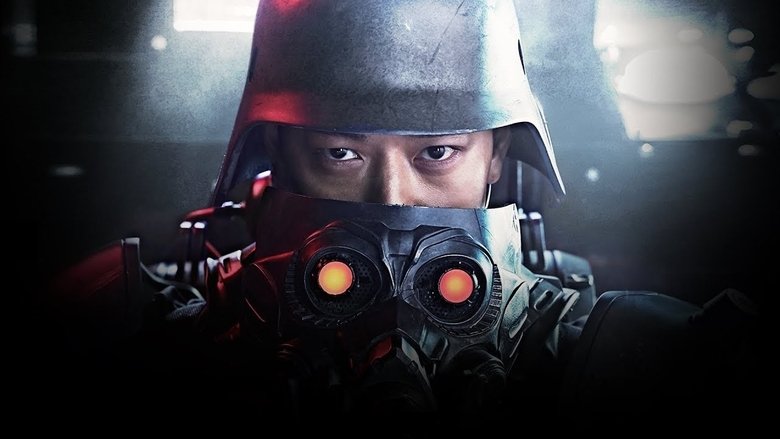
Protect Gear Armor and Glowing Red Goggles

Meaning:

Symbolizes the complete erasure of humanity and morality. Looking through the crimson lenses transforms men into predatory beasts incapable of empathy.

Context:

Worn by the Special Unit operatives and the Wolf Brigade during high-intensity tactical suppression and combat operations.

The Red Cloak / Little Red Riding Hood

Meaning:

Represents innocence weaponized and led to slaughter. The fable is inverted to question whether the girl or the wolf is the real victim of the predatory forest.

Context:

Seen in Lee Jae-hee's crimson coat and referenced through the illustrated German fairy tale book motif shared between characters.

The Underground Sewers

Meaning:

Reflects subconscious guilt, moral rot, and clandestine warfare operating beneath the polished surface of society.

Context:

Serves as the subterranean labyrinth where terrorist couriers operate and the climactic ambushes unfold.

The MG42 Machine Gun

Meaning:

Represents industrial violence and indiscriminate destruction commanded by political elites.

Context:

The heavy, mechanical firepower wielded by the Wolf Brigade during tactical fire engagements.

The Train Platform

Meaning:

Embodying both separation and the fragile hope of personal liberation and departure from institutional cycles.

Context:

A recurring visual motif of departure and transition, featured critically in the film's climax.

Memorable Quotes

우리는 늑대의 탈을 쓴 인간이 아니라, 인간의 탈을 쓴 늑대다.
— Jang Jin-tae / Special Unit ethos

Context

Spoken to reinforce the lethal identity required of the Wolf Brigade operatives.

Meaning

Defines the film's central struggle between primal violence and human conscience, reinforcing the lethal identity required of the Wolf Brigade.

왜... 왜 그런 짓을 한 거야?
— Lim Joong-kyung

Context

Lim whispers this in hesitation to the young courier in the sewers right before she detonates the bomb.

Meaning

Represents the spark of human conscience that halts Lim's trigger finger and shatters his conditioning.

All 3 quotes

Philosophical Questions

Can a weapon possess a conscience?

The film explores whether individuals trained purely as destructive state instruments can preserve their ethical agency when commanded to commit violence.

Is collective order worth the sacrifice of individual morality?

Through the conflict between state stability and civil liberties, the film asks if maintaining peace through brutal, covert suppression delegitimizes the state itself.

Does the nature of the beast define the man, or does choice?

Playing on the central wolf metaphor, the narrative examines determinism versus free will in a rigid, militarized society.

Alternative Interpretations

Several interpretive angles exist regarding the film's narrative resolution and subtext:

Full ending explanation

Cultural Impact

Transposing the story from an alternate 1950s post-WWII Japan to a near-future 2029 unified Korea brought sharp contemporary resonance. Kim Jee-woon utilized the real-world socio-political tensions surrounding the Sunshine Policy and North-South Korean reunification debates to ground the sci-fi setting in authentic national anxieties.

While the film received mixed critical reviews upon release—critics praised its technical polish and action choreography while criticizing its bloated narrative and romantic melodrama—it retains a cult following among cyberpunk and anime enthusiasts for its visual realization of the Kerberos Panzer Cop universe.

Audience Reception

Audience and critical reception for the film highlighted several key strengths and weaknesses:

  • Praised Elements: Outstanding cinematography by Lee Mo-gae, masterclass production design, brutal close-quarters gunplay and action set-pieces, and the tactile realization of the Protect Gear armor. Kim Moo-yul's performance as Han Sang-woo was widely singled out as a standout.
  • Criticisms: Convoluted geopolitical exposition, pacing drags in the middle act, and an underdeveloped romantic melodrama that weakened the psychological bite of the source material.
  • Overall Verdict: A visually spectacular and atmospheric live-action adaptation that excels in tactical action and aesthetic worldbuilding, even if it softens the original anime's bleak narrative precision.

Interesting Facts

  • The iconic Protect Gear suits were custom-designed in collaboration with Hollywood creature and armor effects legend Eddie Yang (known for Iron Man and RoboCop), weighing around 30–40 kg per suit, forcing Gang Dong-won to perform heavy stunts under extreme physical strain.
  • The film was fully financed and produced with backing from Warner Bros. Pictures Korea alongside Lewis Pictures, with a substantial budget of approximately US$17 million (over 20 billion KRW).
  • The shoot lasted nearly eight months—an unusually long and grueling production schedule for a South Korean genre film due to complex practical stunt work and set designs.
  • The film marked a major reunion for superstar actors Gang Dong-won and Han Hyo-joo, who had previously co-starred in the 2018 thriller Golden Slumber.
  • The atmospheric, pulse-pounding electronic-orchestral score was composed by Mowg, Kim Jee-woon's long-time musical collaborator on films like I Saw the Devil and The Age of Shadows.
  • Despite heavy anticipation and a high-profile ensemble cast, the film grossed only about US$6.2 million domestically, leading Warner Bros. to sell global streaming rights to Netflix.

Easter Eggs

Mamoru Oshii's Kerberos Saga

The movie is a direct live-action adaptation of the 1999 anime masterpiece Jin-Roh: The Wolf Brigade (directed by Hiroyuki Okiura, written by Mamoru Oshii).

Shot-for-Shot Sewer Homage

Key sequences—such as the Special Unit soldier emerging from shadows with glowing red lenses and firing the MG42 in dark drainage tunnels—are meticulously staged shot-for-shot tributes to the original 1999 anime.

Grimm Brothers' Little Red Riding Hood (Rotkäppchen)

The film directly incorporates the original, darker oral/literary folklore variant where the beast deceives and consumes the heroine, mirroring the political espionage plot.

Gwangju Uprising & Korean Democratic Protests

The visual framing of riot police clashing with civilian protestors in Seoul streets evokes South Korea's historical democratization struggles during the 1980s.

Frequently Asked Questions

Explore More About This Movie

Dive deeper into specific aspects of the movie with our detailed analysis pages

Comments (0)

Leave a comment

No comments yet. Be the first to share your thoughts!

Similar Movies