Skip to content
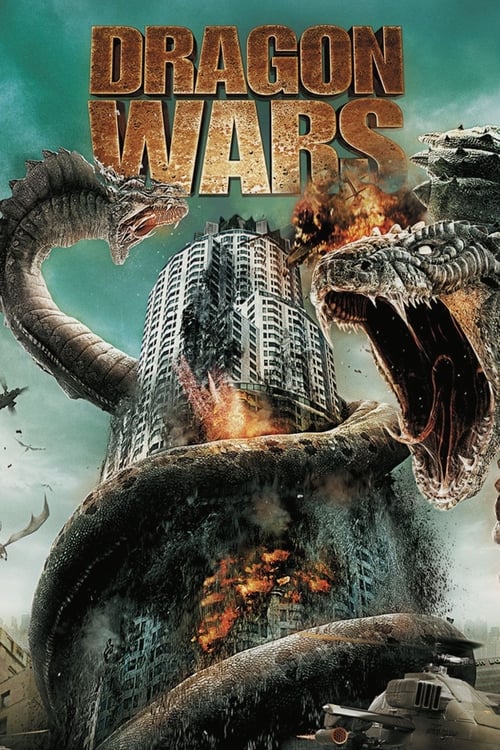
Dragon Wars: D-War
An apocalyptic urban fantasy pulsating with thunderous, primal dread, where ancient Eastern myth crashes into a concrete modern skyline like a rampaging serpent coiling around glass towers.
Dragon Wars: D-War

Dragon Wars: D-War

디 워

"They've made our world their battleground."

01 August 2007 South Korea 90 min 4.6 (478)

Director: Shim Hyung-rae

Cast: Jason Behr, Amanda Brooks, Robert Forster, Craig Robinson, Aimee Garcia

Drama Fantasy Action Thriller Science Fiction Horror Destiny and Reincarnation Self-Sacrifice vs. Personal Attachment Ancient Myth vs. Modern Military Might Cosmic Balance (Good vs. Evil Dualism)
Budget: $32,000,000
Box Office: $75,108,998

Overview

Dragon Wars: D-War (2007) is a cross-cultural monster action epic directed by South Korean filmmaker and former slapstick comedian Shim Hyung-rae. Rooted in Korean folklore, the narrative centers on the Imoogi—giant serpent-like proto-dragons that aspire to transform into true Celestial Dragons by consuming the Yeouiju, a sacred mystical life force manifested in a human vessel once every 500 years. Five centuries after a catastrophic failure in Joseon-era Korea, the ancient prophecy reawakens in contemporary Los Angeles.

The story follows Ethan Kendrick (Jason Behr), an investigative television journalist who was enlightened during his youth by an enigmatic antique shop owner about his past life as a heavenly guardian. When unexplainable geological devastation and giant serpentine tracks tear through downtown Los Angeles, Ethan realizes that the evil Imoogi, Buraki, and its dark legions have returned to track down Sarah Daniels (Amanda Brooks), the young woman carrying the reincarnated dragon spirit.

Teaming up to flee across Southern California, Ethan and Sarah attempt to evade local law enforcement, federal agencies, and an advancing army of supernatural prehistoric reptilian beasts. As the city turns into a warzone between military gunships and sky-borne serpents, the two protagonists are thrust toward a showdown to determine whether the sacred power will restore cosmic balance or plunge the world into darkness.

Core Meaning

At its core, Dragon Wars: D-War explores the inevitability of destiny and cosmic responsibility versus individual mortal desire. The narrative illustrates that attempting to flee one's designated role in the universal order—as the original lovers did in 16th-century Joseon—only defers tragedy across generations. The director's underlying message is that genuine love often demands profound self-sacrifice for the greater good of humanity, transforming mortal surrender into celestial transcendence.

Thematic DNA

Destiny and Reincarnation 40%
Self-Sacrifice vs. Personal Attachment 25%
Ancient Myth vs. Modern Military Might 20%
Cosmic Balance (Good vs. Evil Dualism) 15%

Destiny and Reincarnation

The cyclical nature of time dictates that past failures must be resolved; Ethan and Sarah are bound across centuries by a cosmic duty they cannot outrun.

Self-Sacrifice vs. Personal Attachment

The contrast between the lovers choosing suicide to escape their fate in 1507 versus accepting spiritual sacrifice in modern Los Angeles drives the moral arc of the climax.

Ancient Myth vs. Modern Military Might

Conventional contemporary warfare (Apache helicopters, tanks, missiles) proves futile against mythic primal entities, emphasizing humanity’s vulnerability against spiritual cosmic forces.

Cosmic Balance (Good vs. Evil Dualism)

Represented by the good Imoogi and Buraki, power in itself is neutral, but its alignment depends entirely on spiritual virtue and celestial worthiness.

Character Analysis

Ethan Kendrick

Jason Behr

Archetype: The Reluctant Guardian / Reincarnated Hero Key Trait: Resolute and protective

Motivation

Protect Sarah and fulfill his 500-year-old guardian duty.

Character Arc

Transitions from an ordinary skeptical journalist to an accepting protector of the cosmic timeline.

Sarah Daniels

Amanda Brooks

Archetype: The Chosen Sacrifice / Vessel Key Trait: Vulnerable yet spiritually brave

Motivation

Survive the pursuit, then sacrifice herself to save the world.

Character Arc

Evolves from a terrified civilian plagued by illness and nightmares into an empowered martyr who yields her divine power.

All 4 characters and cast

Symbols & Motifs

The Dragon Tattoo / Birthmark

Meaning:

Identifies the female protagonist as the bearer of the Yeouiju and serves as a visual bridge connecting the Joseon maiden Narin to Sarah.

Context:

A shoulder mark present on Sarah Daniels that reveals her divine lineage and ancient reincarnation.

The Medallion / Amulet

Meaning:

Channels ancestral celestial energy to ward off dark spirits and ignite the final awakening.

Context:

Passed from Jack to young Ethan in the antique shop to help him fulfill his destiny as a protector.

The Yeouiju (Dragon Orb)

Meaning:

A glowing sphere of pure celestial essence representing universal enlightenment, supreme authority, and physical evolution.

Context:

Manifested within the chosen mortal woman and required by an Imoogi to ascend into a true Celestial Dragon.

The Imoogi Serpents

Meaning:

The physical embodiment of potential and trial—unrefined draconic beings waiting centuries for spiritual ascension.

Context:

Represented by both the malevolent Buraki and the benevolent Good Imoogi throughout ancient Korea and modern Los Angeles.

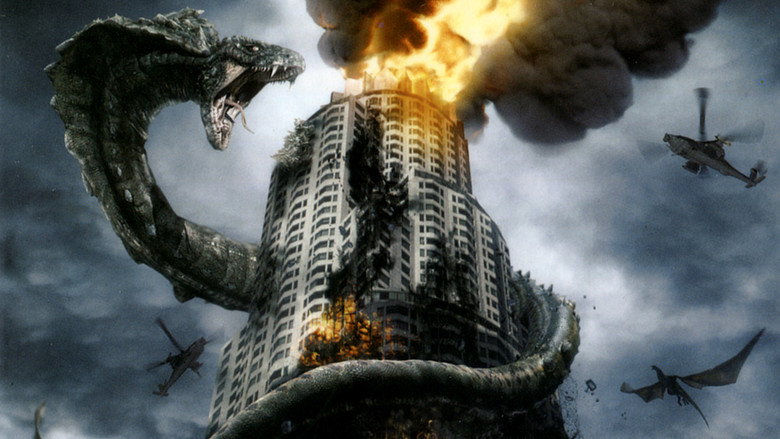
Urban Skyscrapers (US Bank Tower)

Meaning:

Modern monoliths symbolizing the fragility of modern civilization when confronted by ancient mythical deities.

Context:

Coiled around and crushed by Buraki during the devastating downtown Los Angeles assault.

Memorable Quotes

Every 500 years, a young woman is born. A woman who possesses a spirit power that can turn a serpent into the mightiest dragon of all. A good serpent will use this mighty power to protect the universe. An evil serpent will use the mighty power to destroy the world.
— Narrator (Jack / Bochun)

Context

Spoken during the film's opening prologue.

Meaning

Establishes the foundational mythology and stakes of the entire narrative.

This is not your land today... You have awakened them. The prophecy proved true. Hide all your pretty things. This is the end. The beast has risen.
— Street Prophet / Bystander

Context

Spoken during Ethan's news investigation of the first destruction site in Los Angeles.

Meaning

Foreshadows the impending monster apocalypse and the vulnerability of the modern world.

All 3 quotes

Philosophical Questions

Does Duty Override Personal Love?

The film questions whether an individual has an ethical obligation to sacrifice their life and love for the survival of millions, or if requiring such sacrifice constitutes an act of cosmic tyranny.

Is Destiny Absolute?

Through the cyclical conflict across 500 years, the narrative explores whether reincarnated souls can ever break free from ancestral karmic cycles, or if mortal lives are merely repetitive scripts written by heaven.

The Morality of Celestial Power

By contrasting the Good Imoogi with the destructive Buraki, the story examines whether immense divine power is inherently corruptive unless governed by rigorous spiritual purity.

Alternative Interpretations

The film and its conclusion can be viewed through several distinct analytical lenses:

Full ending explanation

Cultural Impact

Dragon Wars: D-War occupies a unique, highly controversial place in South Korean cinema history. Released during the height of the Korean Wave (Hallyu), the film became a national phenomenon not solely on artistic merit, but as a lightning rod for cultural patriotism (Gukppong).

The film sparked widespread public discourse in South Korea, culminating in a dedicated episode of MBC's flagship current affairs debate show 100-Minute Debate (D-War: Is it the hope of Korean cinema?). Cultural critics like Jin Jung-gwon condemned the film's screenplay as amateurish and attacked its marketing strategy for weaponizing blind nationalism, while defenders praised Shim’s ambition to challenge Hollywood's CGI monopoly with homegrown technology. Internationally, the film was received largely as a campy B-movie creature feature, yet it proved that Korean studios could execute massive Hollywood-scale visual effects pipelines.

Audience Reception

Aggregated analysis reveals deeply polarized reactions to Dragon Wars: D-War:

  • Strengths & Praises: Audiences and fans widely praised the downtown Los Angeles destruction sequence, creature animation, scale of the serpent battles, and the nostalgic B-movie monster-brawl energy.
  • Weaknesses & Criticisms: Mainstream critics pointed out the convoluted triple-flashback exposition, stiff dialogue, lack of romantic chemistry between the leads, and abrupt narrative transitions.
  • Controversies: The production faced scrutiny over its overt appeal to Korean nationalism, severe internet backlash against critics who panned the film, and the vast disparity between marketing hype and script coherence.
  • Overall Verdict: Rotten Tomatoes (~28%) and Metacritic (~31/100) reflect critical panning for writing and acting, but the film remains a memorable cult curiosity and VFX milestone in Korean pop cinema.

Interesting Facts

  • Director Shim Hyung-rae was originally one of South Korea’s most famous slapstick comedians (playing the character 'Young-gu') before reinventing himself as a sci-fi/creature feature director.
  • At the time of its completion, it was promoted as one of the most expensive South Korean film productions ever, with budgets reported between $32 million and upwards of $75 million including overblown VFX costs.
  • Rather than contracting established Hollywood VFX powerhouses like ILM, Shim established his own studio, Younggu-Art, training hundreds of Korean digital artists to produce the massive monster battles and CGI in South Korea.
  • The movie achieved one of the widest North American theatrical rollouts for a South Korean production at the time, opening across more than 2,200 US screens via Freestyle Releasing.
  • In South Korea, it drew over 8.4 million admissions, making it the highest-grossing domestic release of 2007 despite fierce critical division.
  • In South Korean theaters, the credits did not just feature Hollywood names; they closed with the Korean folk anthem 'Arirang' playing alongside a personal written letter from director Shim urging national pride in Korean cinema's global ambitions.

Easter Eggs

Nod to George Lucas and Star Wars

The designs of the Atrox Army’s cavalry (the Dawdler and Bulcoo carrying mounted rocket cannons) heavily echo creature designs and artillery beasts from Star Wars: Episode I – The Phantom Menace.

Homage to Classic Kaiju & Godzilla

The sequence where Buraki scales the Liberty / US Bank Building is a direct visual nod to both King Kong and classic Toho monster movies.

Director's Slapstick Roots Cameo/Visual Humor

Minor comedic beats inserted into the panic—such as characters bumping into absurd props or deadpan reactions—reflect Shim Hyung-rae's background in Korean sketch comedy.

Frequently Asked Questions

Explore More About This Movie

Dive deeper into specific aspects of the movie with our detailed analysis pages

Comments (0)

Leave a comment

No comments yet. Be the first to share your thoughts!

Similar Movies