Logan
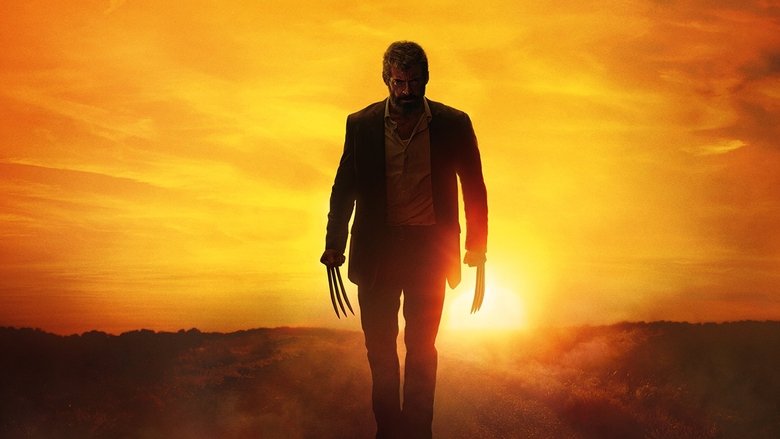
A visceral, sun-drenched Western where a fading legend confronts his own mortality. It is a blood-soaked road trip through a desolate future, serving as a poetic final stand against the ghosts of a violent legacy.
Logan

Logan

"Someone has come along."

28 February 2017 United States of America 137 min ⭐ 7.8 (19,993)
Director: James Mangold
Cast: Hugh Jackman, Dafne Keen, Patrick Stewart, Elizabeth Rodriguez, Boyd Holbrook
Drama Action Science Fiction
Mortality and Aging Fatherhood and Family Legacy and Passing the Torch Violence and its Consequences Social Marginalization
Budget: $97,000,000
Box Office: $619,021,436

Overview

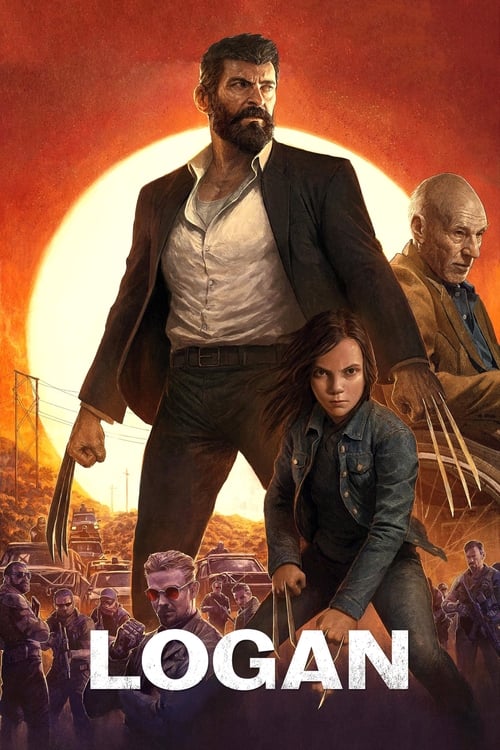
Set in the year 2029, Logan presents a bleak future where mutants are on the verge of extinction. A weary Logan, whose healing factor is failing, spends his days working as a limo driver on the Mexican border while caring for an ailing and unstable Professor Charles Xavier. Their secluded life is upended when a mysterious woman pleads with Logan to escort a young girl named Laura to a sanctuary called Eden in North Dakota.

As they are pursued by a ruthless cybernetic mercenary named Donald Pierce and the shadowy Alkali-Transigen corporation, Logan discovers that Laura possesses abilities remarkably similar to his own. The film transforms from a desperate survival story into an intimate road movie, forcing the iconic loner to grapple with the burdens of fatherhood and the heavy price of a life defined by violence.
Core Meaning

The core meaning of Logan lies in the struggle for redemption and the humanization of a myth. Director James Mangold aimed to strip away the spectacle of the superhero genre to tell a story about the fear of intimacy and the burden of legacy. The film suggests that while one cannot outrun a violent past, one can find peace through sacrifice and by ensuring a better future for the next generation. It is a meditation on mortality, arguing that a hero's true strength is found not in their invulnerability, but in their capacity to love and protect despite their own decay.

Thematic DNA

Mortality and Aging 30%
Fatherhood and Family 25%
Legacy and Passing the Torch 20%
Violence and its Consequences 15%
Social Marginalization 10%

Mortality and Aging

The film explores the physical and psychological toll of a long, violent life. Unlike previous installments, Logan is shown as vulnerable, needing glasses and struggling to heal. This theme highlights the humanity beneath the superhero persona, making the characters' eventual deaths feel earned and profoundly tragic.

Fatherhood and Family

Logan is thrust into a dysfunctional nuclear family dynamic, caring for his surrogate father (Xavier) while reluctantly accepting a daughter figure (Laura). The arc emphasizes that family is built through shared trauma and responsibility rather than just blood.

Legacy and Passing the Torch

The film addresses what remains after a hero falls. Through Laura and the other child mutants, the legacy of the X-Men is preserved not as a military force, but as a group of individuals seeking freedom. The X-Men comic books within the film serve as a meta-commentary on how legends are curated vs. the reality of lived experience.

Violence and its Consequences

Borrowing heavily from the Western genre, the film posits that violence leaves a permanent mark on the soul. The R-rating allows for a raw depiction of the physical cost of Wolverine's claws, reflecting the internal corrosion Logan feels from years of killing.

Social Marginalization

The setting on the U.S.-Mexico border and the pursuit of mutant children as political refugees mirrors real-world anxieties regarding immigration and the treatment of the "Other" by powerful corporate and state entities.

Character Analysis

Logan / Wolverine

Hugh Jackman

Archetype: Anti-hero / Fading Legend
Key Trait: Reluctant Heroism

Motivation

Initially motivated by a desire to buy a boat and escape with Charles, his motivation shifts to ensuring Laura reaches safety, even at the cost of his own life.

Character Arc

Logan transitions from a suicidal, isolated man waiting for the end to a father who finds a reason to endure. His journey ends with him finally experiencing the emotional weight of death and the peace of belonging.

Charles Xavier

Patrick Stewart

Archetype: Mentor / Surrogate Father
Key Trait: Failing Wisdom

Motivation

He wants Logan to find the family and intimacy he has spent his life avoiding, believing that Laura is Logan's last chance at humanity.

Character Arc

Once the world's most powerful psychic, he is now a man struggling with dementia. He finds a final purpose in guiding Logan toward Laura, seeking redemption for the "Westchester incident."

Laura / X-23

Dafne Keen

Archetype: The Child / Successor
Key Trait: Fierce Loyalty

Motivation

Escaping her creators at Transigen and finding the mythical "Eden" where she can be safe with her fellow mutant children.

Character Arc

Laura starts as a feral, non-verbal killing machine and gradually learns to express grief and affection. She adopts Logan's legacy while maintaining her own agency.

Donald Pierce

Boyd Holbrook

Archetype: The Enforcer / Hunter
Key Trait: Arrogant Sadism

Motivation

Professional duty and corporate greed; he views the mutants merely as valuable company property that needs to be recovered.

Character Arc

A persistent antagonist who lacks a moral compass, serving as the face of the corporate machine hunting the protagonists. He remains a flat character whose primary role is to drive the plot's tension.

Symbols & Motifs

Adamantium

Meaning:

Symbolizes both Logan's strength and his ultimate downfall. Once his greatest asset, the metal grafted to his bones is now poisoning him, representing how the weapons we use can eventually destroy us.

Context:

Throughout the film, Logan's health declines as his body can no longer fight the toxic effects of the adamantium. He keeps an adamantium bullet as a potential means of suicide, signifying his loss of hope.

The Water Tank

Meaning:

Represents a cage and the decay of the mind. It is a hollowed-out, rusted version of the high-tech Cerebro, symbolizing the fall of the X-Men's idealistic past into a gritty, industrial reality.

Context:

Charles Xavier is kept inside a collapsed, circular water tank to contain his psychic seizures, which have become weapons of mass destruction due to his dementia.

X-24

Meaning:

Symbolizes Logan's darkest, most animalistic self. He is the "Weapon X" version of Logan stripped of a soul, serving as a literal mirror of the monster Logan fears he has always been.

Context:

X-24 is a younger, mindless clone of Logan who kills Charles Xavier and eventually mortally wounds Logan, forcing Logan to fight his own shadow to protect the future.

The Cross / The 'X'

Meaning:

Symbolizes the transition from a traditional religious blessing to a specific mutant legacy. It marks the end of the X-Men as a group and the birth of a new path for the survivors.

Context:

In the final scene, Laura turns the wooden cross on Logan's grave on its side to form an 'X', honoring his identity as the last X-Man.

Memorable Quotes

So, this is what it feels like.

— Logan

Context:

Logan's final words to Laura as he dies in her arms at the end of the film.

Meaning:

This line carries a dual meaning: the literal feeling of finally dying after centuries of life, and the emotional feeling of dying as a father surrounded by love. It signifies his ultimate peace.

A man has to be what he is, Joey. Can't break the mould. I tried. Right or wrong, it's a brand. A brand sticks.

— Laura (quoting 'Shane')

Context:

Laura recites these lines from the film Shane during Logan's funeral, drawing a direct parallel between the classic Western hero and Logan.

Meaning:

The quote reflects the film's stance on the inescapable nature of one's past and the 'brand' of violence that follows a killer. It highlights the tragedy of Logan's life.

Don't be what they made you.

— Logan

Context:

Logan speaks these words to Laura shortly before he passes away, urging her to live a life of her own choosing.

Meaning:

A final plea for Laura to transcend her origins as a lab-grown weapon. It encapsulates the film's message about self-determination and breaking the cycle of violence.

Nature made me a freak. Man made me a weapon. And God made it last too long.

— Logan

Context:

Found in the promotional material and reflected in Logan's cynical outlook throughout the first act of the movie.

Meaning:

Highlights Logan's deep existential weariness and the curse of his longevity. He views his life as a series of manipulations and a burden he is eager to lay down.

Philosophical Questions

What constitutes the 'soul' of a person?

The film explores this through the contrast between Logan and X-24. Both have the same DNA and abilities, but X-24 lacks the memories, relationships, and moral growth that make Logan a human being. It suggests that our 'self' is built by our history and our capacity for choice, not our biology.

Can redemption be achieved through sacrifice?

Logan spent his life as a weapon, yet his final act is one of pure protection. The film asks if one's final deeds can outweigh a lifetime of killing, eventually answering with the peaceful 'X' on his grave—suggesting that how we finish matters as much as how we lived.

Alternative Interpretations

Some viewers interpret the film through a political lens, viewing Logan as a representative of an older, fading America protecting the 'new' America (represented by the Latina Laura) from a fascistic corporate entity. Another interpretation suggests the entire film is a meta-commentary on the actor's relationship with the role; Logan’s failing body mirrors the physical toll playing the character took on Hugh Jackman over 17 years. A more cynical reading posits that the 'Eden' the children seek doesn't actually exist and that the ending is merely a temporary reprieve in a world that will eventually hunt them down as well.

Cultural Impact

Logan is widely considered a landmark in the superhero genre, proving that 'comic book movies' could function as serious, R-rated character dramas. It broke the formula of world-ending stakes in favor of intimate, grounded storytelling. Culturally, it marked the end of an era for Hugh Jackman's portrayal of Wolverine, a role he had held for nearly two decades, and it paved the way for more experimental and mature superhero projects like Joker. Critics praised it for its emotional depth and its willingness to treat the death of a beloved icon with genuine gravity rather than as a commercial hook.

Audience Reception

The film was a massive critical and commercial success, holding a high approval rating on Rotten Tomatoes. Audiences were particularly moved by the emotional performances of Jackman and Stewart and the breakout debut of Dafne Keen. Some fans were initially shocked by the level of gore, but most found it necessary to convey the reality of the character. The lack of a post-credits scene was praised as a bold choice that respected the film's finality. Minor criticisms were directed at the villains, who some found less compelling than the core trio, but the overall verdict remains that it is one of the greatest superhero films ever made.

Interesting Facts

  • Hugh Jackman took a significant pay cut to ensure the film could be rated R, allowing for a more mature and violent tone.
  • The film was heavily influenced by Westerns like 'Shane' (1953) and 'The Cowboys' (1972).
  • Dafne Keen was only 11 years old during filming and performed many of her own stunts.
  • A black-and-white version of the film, titled 'Logan Noir', was released in theaters following the success of the original color version.
  • The license plate on Logan's limo, 'WER 112', is a nod to Uncanny X-Men #112, a comic featuring a battle against Magneto.
  • This was the first live-action superhero movie to be nominated for an Academy Award for Best Adapted Screenplay.
  • The 'Westchester Incident' referenced in the film is based on a storyline from the 'Old Man Logan' comics where Wolverine accidentally kills the X-Men, though the film changes this to be Charles's fault.

Easter Eggs

The Statue of Liberty Reference

Charles mentions a fight at the Statue of Liberty. This is a direct reference to the climax of the first X-Men (2000) film, grounding this story in the franchise's history despite its standalone feel.

X-Men Comic Books

The comics shown in the film were created specifically for the movie by Dan Panosian and Joe Quesada. They serve to contrast the sanitized, heroic version of the X-Men with the gritty reality the characters are currently living.

The Katana and Dog Tags

In Logan's room, we can see the katana from The Wolverine (2013) and his original dog tags from X-Men Origins: Wolverine (2009), signaling that this is the final chapter of a 17-year journey.

⚠️ Spoiler Analysis

Click to reveal detailed analysis with spoilers

Frequently Asked Questions

Explore More About This Movie

Dive deeper into specific aspects of the movie with our detailed analysis pages

Comments (0)

Leave a comment

No comments yet. Be the first to share your thoughts!