Skip to content
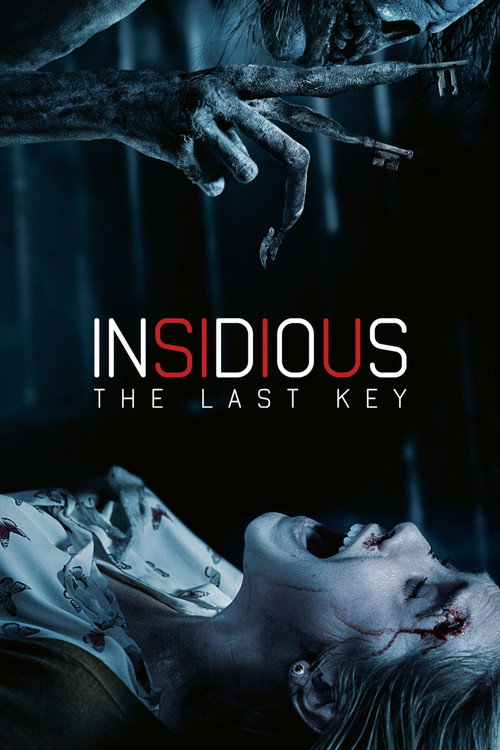
Insidious: The Last Key
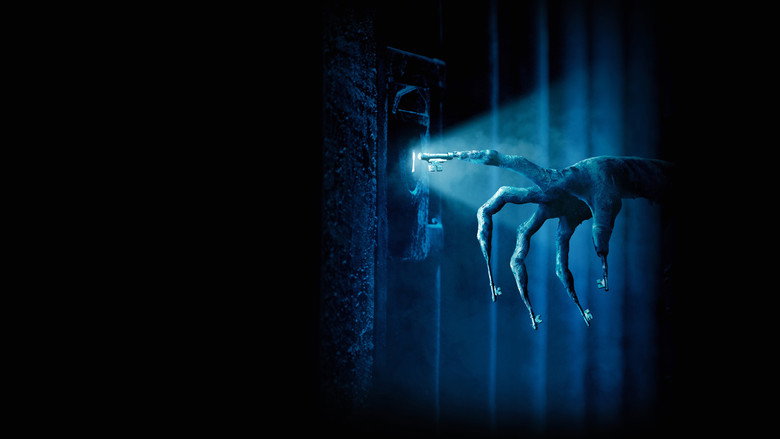
Enveloped in suffocating gothic shadows and bone-deep childhood dread, the film descends into an emotional crucible where repressed familial trauma manifests as a skeletal monster whose skeletal key fingers lock human souls into silent agony.
Insidious: The Last Key

Insidious: The Last Key

"Fear comes home."

03 January 2018 United States of America 103 min 6.3 (3,238)

Director: Adam Robitel

Cast: Lin Shaye, Leigh Whannell, Angus Sampson, Kirk Acevedo, Caitlin Gerard

Thriller Horror Generational Trauma and Domestic Abuse The Symbiosis of Terrestrial and Supernatural Evil Reconciliation, Forgiveness, and Familial Healing The Burden of the Gift / Sensory Isolation
Budget: $10,000,000
Box Office: $172,811,971

Overview

Set chronologically after the events of Insidious: Chapter 3 and prior to the original 2010 Insidious, the story centers on the franchise's spiritual linchpin, Dr. Elise Rainier. Now working as a seasoned parapsychologist alongside her quirky paranormal-hunting associates Steven "Specs" and Tucker, Elise receives a desperate telephone plea from a man named Ted Garza. Garza claims to be besieged by terrifying supernatural forces in his house located in Five Keys, New Mexico—the very home where Elise grew up.

Returning to the site of her darkest childhood memories, Elise must confront the unresolved horror of her early years. As a child in the 1950s living adjacent to a state penitentiary, her innate ability to perceive the dead triggered horrific abuse from her cruel, authoritarian father. A fateful childhood encounter in the basement accidentally unlocked a malevolent entity, leading directly to tragedy within her family.

Revisiting the house forces Elise, Specs, and Tucker to navigate physical and metaphysical perils as they unearth sinister secrets buried within the foundation. Elise must reconcile with her estranged brother's family, protect her nieces from ancestral malevolence, and venture deep into the terrifying astral labyrinth of "The Further" to confront the primal entity that shaped her destiny.


Core Meaning

The fundamental thesis of Insidious: The Last Key is that human trauma and supernatural evil feed off one another, and real healing requires confronting repressed ancestral grief rather than burying it. Demonic possession is framed not simply as an external assault, but as a parasitic force that amplifies human cruelty, shame, and silence. The film asserts that acknowledging vulnerability, breaking the cycle of retaliatory hatred, and embracing familial love are the only true keys to unlocking emotional and spiritual liberation.

Thematic DNA

Generational Trauma and Domestic Abuse 35%
The Symbiosis of Terrestrial and Supernatural Evil 25%
Reconciliation, Forgiveness, and Familial Healing 25%
The Burden of the Gift / Sensory Isolation 15%

Generational Trauma and Domestic Abuse

The narrative highlights how the cycle of violence echoes across generations. Elise's abusive childhood at the hands of her father Gerald mirrors the systemic dehumanization occurring nearby in the prison and the subterranean atrocities occurring in the household.

The Symbiosis of Terrestrial and Supernatural Evil

Unlike earlier franchise entries focusing primarily on astral specters, this film blurs the line between monstrous demons and monstrous human impulses, demonstrating how negative emotions like resentment and hatred become the fuel that allows demons to manipulate mortals.

Reconciliation, Forgiveness, and Familial Healing

Elise's estrangement from her brother Christian is rooted in the guilt of childhood abandonment. Healing comes only through direct emotional accountability, shared bravery, and maternal spiritual guidance.

The Burden of the Gift / Sensory Isolation

Elise's psychic sight is treated as both a curse that isolated her throughout youth and the sacred responsibility she must shoulder to deliver others from eternal damnation.

Character Analysis

Dr. Elise Rainier

Lin Shaye

Archetype: The Archetypal Sage / Wounded Healer Key Trait: Empathic resilience

Motivation

Driven by an unyielding desire to shield innocent souls from demonic predation and resolve her familial guilt.

Character Arc

Elise transitions from running away from her past to returning to the origin point of her trauma, ultimately achieving psychological closure by confronting both the demon and the ghost of her father.

KeyFace Demon

Javier Botet

Archetype: The Shadow / Predatory Demon Key Trait: Sadistic, key-tipped phalanges that mute and lock souls

Motivation

To feed on human misery, hatred, and anguish while manipulating living men into abducting victims.

Character Arc

Maintains an enduring, predatory campaign across decades, feeding on suffering and hatred until being confronted and banished by the Rainier family's collective spiritual resolve.

All 5 characters and cast

Symbols & Motifs

Key-Fingers / The Keys

Meaning:

Symbolize subjugation, silencing, and control.

Context:

The antagonist, KeyFace, inserts his key-finger into victims' necks/throats to lock their voices, rendering them unable to cry for help or express their pain.

The Red Door

Meaning:

The quintessential threshold between the waking world and The Further, representing the gateway to repressed memory, suppressed guilt, and catastrophic metaphysical breaches.

Context:

Encountered throughout astral journeys into The Further, marking thresholds between consciousness, repressed childhood memories, and other dimensional planes.

The Whistle

Meaning:

Represents maternal protection, love, and spiritual communion.

Context:

A silver whistle given to Christian by their mother Audrey; its shrill sound cuts through dimensions to summon aid across the physical plane and The Further.

The Basement / Secret Tunnels

Meaning:

Visual metaphors for the subconscious, buried sins, and suppressed domestic horrors hidden beneath the respectable facade of the family home.

Context:

Located beneath the Rainier home in Five Keys, where childhood encounters occurred and mortal horrors were concealed.

The Cane / Punishment Stick

Meaning:

Represents paternal tyranny and generational abuse. Rejecting its use signifies breaking the generational cycle of hatred.

Context:

Used by Gerald for corporal punishment during Elise's youth, and later confronted by Elise when she refuses to use it to bludgeon her father's spirit in The Further.

Memorable Quotes

I don't have a family... but I do have a home. And it's calling me back.
— Elise Rainier

Context

Elise explains to Specs and Tucker why she must accept the haunting case in Five Keys despite her sheer dread.

Meaning

Acknowledges the inescapable pull of her past and the necessity of confronting the emotional crucible of her childhood.

If you blow into this, no matter where I am, I will come to you. I promise.
— Audrey Rainier

Context

Audrey gives young Christian the tin whistle at bedtime during a flashback to Elise's youth.

Meaning

Establishes the pivotal maternal bond and introduces the spiritual device that transcends dimensional boundaries.

All 4 quotes

Philosophical Questions

Can violent retribution truly resolve past victimization?

Explored when Elise holds the physical cane of her abusive father in The Further; true liberation is only attained when she refuses to perpetuate retaliatory violence.

Where does human accountability end and demonic influence begin?

Examined through the portrayals of Gerald Rainier and Ted Garza as possessed yet consciously complicit abusers, probing moral culpability under malevolent influence.

Does the past ever truly stay buried?

Explored through the physical excavation of hidden basement rooms mirroring the psychological necessity of unearthing repressed trauma to achieve healing.

Alternative Interpretations

Several distinct interpretations of the narrative exist:

Full ending explanation

Cultural Impact

Released in January 2018, The Last Key arrived during a golden box office era for Blumhouse Productions, exemplifying low-budget, high-concept horror. Culturally, it remains notable for featuring Lin Shaye—a septuagenarian actress—as the undisputed action hero, emotional anchor, and lead protagonist of a major Hollywood horror franchise.

Audience Reception

The film received mixed critical reviews (holding a 24% score on Rotten Tomatoes and 57 on Metacritic), with critics citing over-reliance on formulaic jump scares and jarring tonal shifts from comic relief. However, reviews universally praised Lin Shaye's commanding, emotionally vulnerable performance and Javier Botet's creature work. Audiences embraced the prequel, turning it into a massive financial hit that grossed over $167.9 million worldwide.

Interesting Facts

  • Adam Robitel, who broke out with the found-footage horror hit The Taking of Deborah Logan (2014), was handpicked by series creator Leigh Whannell and producer James Wan to helm this fourth installment.
  • KeyFace was portrayed by Spanish creature actor Javier Botet, renowned for his distinct physical agility and hyper-flexible movements resulting from Marfan syndrome.
  • Robitel and Whannell emphasized utilizing practical physical prosthetics and in-camera effects for KeyFace rather than extensive CGI to keep the menace grounded in physical reality.
  • The script serves as a direct bridge connecting the timeline: concluding shortly before the opening scenes of the original 2010 Insidious.
  • Produced on an estimated budget of approximately $10 million by Blumhouse Productions, the film achieved massive commercial success, grossing over $167.9 million worldwide and becoming one of the highest-earning chapters in the saga.
  • Principal photography began in August 2016 and wrapped in September 2016.

Easter Eggs

Direct Tie-in to the 2010 Film via the Red Door

In the astral climax, Elise opens a red door and sees young Dalton Lambert astral projecting while a red-faced demon looms in the background. Leaving the door ajar unintentionally initiates the haunting of the Lambert household in the original film.

The Lipstick-Face Demon Cameo

Joseph Bishara reprises his iconic role as the Lipstick-Face Demon, appearing briefly during the vision connecting the prequel to the original 2010 entry.

The Closing Phone Call

The final scene concludes with Elise waking up and receiving a telephone call from Lorraine Lambert asking for help regarding Dalton, closing the timeline loop directly into the original movie.

Quinn Brenner Reference

Elise keeps a photograph and items from Quinn Brenner, the teenager she rescued in Insidious: Chapter 3, establishing narrative continuity across her investigative career.

Frequently Asked Questions

Explore More About This Movie

Dive deeper into specific aspects of the movie with our detailed analysis pages

Comments (0)

Leave a comment

No comments yet. Be the first to share your thoughts!

Similar Movies