Skip to content
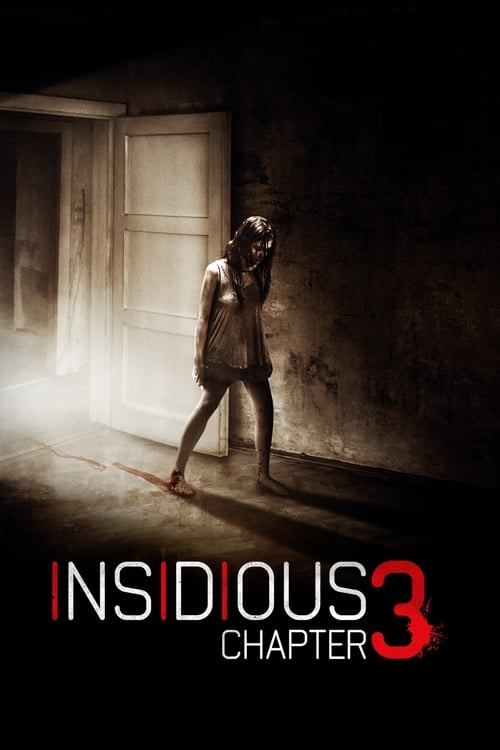
Insidious: Chapter 3
Enveloped in a suffocating atmosphere of supernatural dread and melancholic longing, the film transforms unresolved grief into a shadowy corridor where desperate whispered prayers awaken predatory nightmares lurking just beyond the veil.
Insidious: Chapter 3

Insidious: Chapter 3

"This is how you die."

28 May 2015 Canada 97 min 6.3 (3,715)

Director: Leigh Whannell

Cast: Stefanie Scott, Lin Shaye, Dermot Mulroney, Leigh Whannell, Angus Sampson

Thriller Horror Grief, Bereavement, and Vulnerability Trauma, Isolation, and the Reclaiming of Agency Familial Strain and Reconciliation The Dangers of the Unknown / Spiritual Recklessness
Budget: $10,000,000
Box Office: $120,453,155

Overview

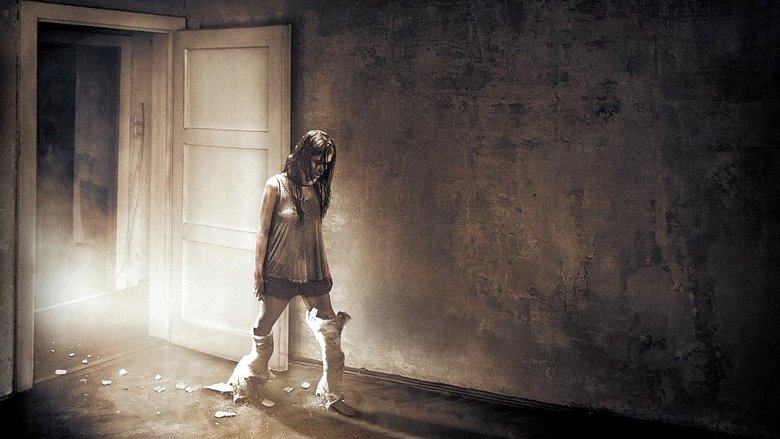
Set years before the haunting of the Lambert family in the original films, Insidious: Chapter 3 functions as a standalone prequel centered on Quinn Brenner, an aspiring teenage drama student coping with the recent death of her mother, Lillith. In her desperation to feel connected to her late mother, Quinn attempts to reach out to the afterlife on her own. Sensing unsettling disturbances, she visits Elise Rainier, a gifted but deeply traumatized psychic medium living in isolation following her own devastating personal losses. Elise warns Quinn of the perils of contacting the dead, cautioning that calling out into the spiritual void invites unintended, malevolent entities to respond.

Shortly after an unexpected and catastrophic car accident leaves Quinn bedridden with broken legs, the subtle paranormal activity turns violently aggressive. Trapped in her own bedroom, Quinn becomes the prime target of a malicious demonic force known as 'The Man Who Can't Breathe.' Her increasingly distressed father, Sean Brenner, struggles to keep his fractured family safe as ordinary reality fractures under supernatural assault.

Desperate for help, Sean eventually hires freelance internet paranormal investigators Specs and Tucker, while Elise is forced to confront her deepest personal fears to enter the dark spiritual realm known as 'The Further' and save Quinn's soul before she is consumed entirely.

Core Meaning

Written and directed by franchise co-creator Leigh Whannell in his feature directorial debut, Insidious: Chapter 3 explores the vulnerability of bereavement. The core message posits that grief, when untethered and unhealed, creates fractures in our emotional armor through which malevolent forces—both literal and psychological—can enter and thrive. The film illustrates that confronting our deepest traumas requires courage and community; running away or walling oneself off from pain only allows darkness to dictate life, whereas reaching through despair with genuine love fosters resilience and spiritual closure.

Thematic DNA

Grief, Bereavement, and Vulnerability 35%
Trauma, Isolation, and the Reclaiming of Agency 25%
Familial Strain and Reconciliation 20%
The Dangers of the Unknown / Spiritual Recklessness 20%

Grief, Bereavement, and Vulnerability

Grief serves as the catalyst for the narrative. Both Quinn's yearning for her deceased mother and Elise's profound mourning over her late husband Jack make them targets for malevolence. The film underscores how the pain of loss can blur boundaries between healthy remembrance and dangerous obsession.

Trauma, Isolation, and the Reclaiming of Agency

Elise represents the journey of regaining one's voice after traumatic retreat. Paralyzed by a premonition of her violent fate, she initially rejects her spiritual gift. Her character arc illustrates how stepping forward to protect others allows one to conquer disabling fear.

Familial Strain and Reconciliation

The Brenner household is fractured; Sean is overwhelmed balancing work, parental duties, and sorrow, initially dismissing Quinn's emotional and physical cries for help. The supernatural siege forces the family to break through their emotional distance and unite.

The Dangers of the Unknown / Spiritual Recklessness

The spirit realm (The Further) is not an innocent conduit for loved ones, but an unforgiving purgatory filled with predators. The film warns against blindly opening doors to cosmic realms without understanding the consequences.

Character Analysis

Elise Rainier

Lin Shaye

Archetype: The Mentor / Reluctant Hero Key Trait: Empathetic spiritual insight and resolute moral bravery.

Motivation

To overcome her fear of death and save an innocent soul from demonic damnation.

Character Arc

Begins as a reclusive, terrified widow living in the shadows of a deadly premonition; transforms into the fearless, empowered psychic medium who embraces her calling.

Quinn Brenner

Stefanie Scott

Archetype: The Imperiled Innocent / Seeker Key Trait: Emotional vulnerability and deep familial devotion.

Motivation

To communicate with her deceased mother and survive demonic possession.

Character Arc

Evolves from a grieving, physically helpless victim into an active participant who reclaims her physical and spiritual agency.

All 4 characters and cast

Symbols & Motifs

The Breathing Mask / Oxygen Tank

Meaning:

Symbolizes clinical suffocation, lingering illness, and the agony of an unnatural, sustained death, reflecting the physical helplessness of terminal disease.

Context:

Worn by the central antagonist (The Man Who Can't Breathe).

Quinn's Leg Casts

Meaning:

Symbolize physical vulnerability, immobility, and entrapment, amplifying the horror of being completely defenseless against an unearthly stalker.

Context:

Used to confine Quinn to a wheelchair and bed following her car accident.

The Ventilator Vents and Tar-Covered Footprints

Meaning:

Represent the invasive nature of demonic corruption staining a sanctuary and evoke the feeling that malevolence is circulating undetected through the very walls of one's home.

Context:

Seen tracking across walls and ceilings and emerging from apartment air vents.

The Crimson / Red Door

Meaning:

Signifies boundaries between consciousness, death, and nightmares.

Context:

A visual motif functioning as doorways into The Further across the Insidious universe.

The Handbell / Broken Thread of Communication

Meaning:

Emphasizes Quinn's inability to communicate effectively and her utter reliance on others during her affliction.

Context:

A small service bell Quinn uses in her bedroom to summon her father.

Memorable Quotes

If you call out to one of the dead, all of them can hear you.
— Elise Rainier

Context

Spoken to Quinn during their opening consultation.

Meaning

Establishes the fundamental supernatural rule and thematic caution of the entire film: spiritual reckless calling attracts unwanted predators.

Come on, bitch!
— Elise Rainier

Context

Delivered during Elise's hand-to-hand confrontation with the Bride in Black inside The Further.

Meaning

Marks the triumphant moment Elise reclaims her courage and refuses to be intimidated by the spirit prophesied to kill her.

All 5 quotes

Philosophical Questions

Is the instinct to hold on to deceased loved ones an act of devotion or a refusal to accept human mortality?

Explored through Quinn's desperate attempts to communicate with her late mother and Elise's longing for her deceased husband, showing how unresolved attachment can leave people vulnerable to predatory forces.

Can destiny and premonitions of our demise be resisted, or does knowledge of death grant us freedom to choose how we live?

Examined through Elise's defiance of the Bride in Black and her refusal to let the premonition of her violent death paralyze her duty to protect the living.

How does physical paralysis alter psychological resilience when facing external threats?

Demonstrated through Quinn's confinement in bed with broken leg casts while facing a supernatural entity, tracing her journey from helpless prey to spiritual resistance.

Alternative Interpretations

The narrative supports multiple symbolic interpretations:

Full ending explanation

Cultural Impact

Released in the summer of 2015, Insidious: Chapter 3 arrived during a boom period for mid-budget supernatural horror produced by Blumhouse Productions. Alongside The Conjuring universe, Insidious helped revitalize theatrical ghost stories and demonic possession cinema in the 2010s, steering mainstream horror away from 2000s 'torture porn' back toward atmospheric dread and classical tension.

The film proved critical for Lin Shaye, elevating a senior actress to the position of central action hero and emotional anchor of a mainstream horror franchise—a rare feat in modern Hollywood. It solidified Leigh Whannell's reputation as a multifaceted director, paving the way for his critically acclaimed directorial efforts Upgrade (2018) and The Invisible Man (2020).

Audience Reception

Insidious: Chapter 3 achieved a moderate to positive prequel consensus among critics (56%–66% on Rotten Tomatoes) and was a strong commercial hit, grossing $113M globally.

Critical praises highlighted:

  • Lin Shaye's commanding performance, which brings emotional weight, gravitas, and charisma to the franchise.
  • Leigh Whannell's confident directorial pacing, efficient atmospheric tension, and memorable practical creature designs.
  • Effective jump scares that rely on staging, timing, and sound design rather than sheer digital noise.

Criticisms pointed to the inevitable narrative predictability common to prequels (since Elise's survival is never in doubt), along with formulaic haunted house jump-scare mechanics and thin characterization of the supporting teenage cast. Overall, it was regarded as one of the stronger horror prequels of its era.

Interesting Facts

  • Insidious: Chapter 3 marked the directorial feature debut of Leigh Whannell, who had written the previous two installments and co-created both the Insidious and Saw franchises with James Wan.
  • After James Wan departed the director's chair to helm Furious 7, Whannell felt exploring Elise's backstory as a prequel was the most organic narrative choice, given her demise in the climax of the first film.
  • Michael Reid MacKay portrayed 'The Man Who Can't Breathe' using elaborate practical makeup and prosthetics rather than CGI, maintaining the gritty aesthetic established by earlier films.
  • Stefanie Scott spent time confined to dark rooms listening to intense ambient music in complete isolation to evoke Quinn's feelings of sensory deprivation and claustrophobia.
  • The violent car accident scene that breaks Quinn's legs was executed with a mix of practical stunt driving and precise digital stitching to create a sudden, visceral jolt for the audience.
  • Produced on a modest budget of approximately $11 million, the film grossed over $113 million worldwide, maintaining Blumhouse's high-margin business model.

Easter Eggs

James Wan Cameo

Former series director James Wan makes a cameo appearance as the theater school casting director/judge during Quinn's drama school audition.

Formation of Spectral Sightings

The film details the canonical meeting and origin story of how Elise, Specs, and Tucker first teamed up, leading into the partnership seen in Insidious (2010).

The Bride in Black (Parker Crane)

The franchise's recurring antagonist makes a significant appearance in The Further, establishing why Elise is perpetually wary of this specific entity.

The Red-Faced Demon Cameo

In the final frames of the film, the Lipstick-Faced Demon makes a brief jump-scare appearance over Elise's shoulder, directly foreshadowing the Lambert haunting.

'Tiptoe Through the Tulips' Motif

The soundtrack incorporates variations and nods to Tiny Tim's eerie song, maintaining sonic continuity across the franchise.

Frequently Asked Questions

Explore More About This Movie

Dive deeper into specific aspects of the movie with our detailed analysis pages

Comments (0)

Leave a comment

No comments yet. Be the first to share your thoughts!

Similar Movies