INVINCIBLE
A brutal, animated saga where the vibrant colors of classic superheroism bleed into the grim realities of power, betrayal, and the violent cost of a fractured family legacy.
INVINCIBLE

INVINCIBLE

"Almost there."

25 March 2021 — 13 March 2025 Canada 3 season 24 episode Returning Series ⭐ 8.6 (5,113)
Cast: Steven Yeun, Sandra Oh, J.K. Simmons, Grey DeLisle, Walton Goggins
Drama Animation Sci-Fi & Fantasy Action & Adventure
Deconstruction of Superhero Tropes Family, Legacy, and Betrayal Coming of Age Under Extreme Duress The Nature of Power and Morality

Overview

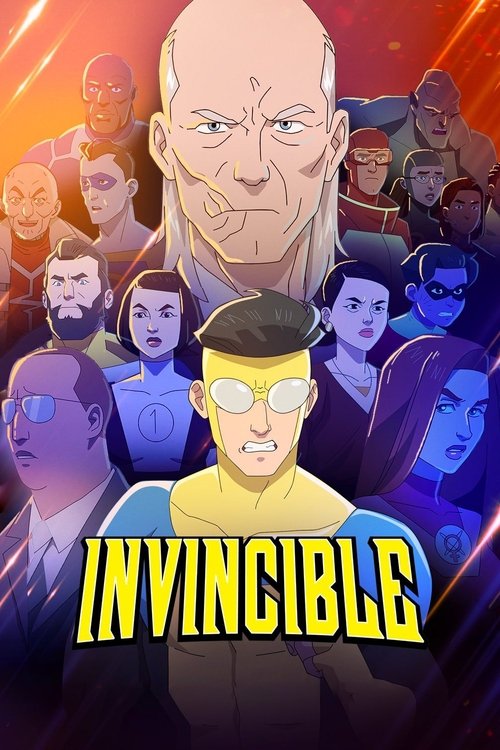
"Invincible" chronicles the tumultuous coming-of-age of Mark Grayson, a seemingly average teenager who inherits superhuman abilities from his father, Omni-Man, the most powerful being on Earth. As Mark joyfully embraces his new identity as the hero Invincible, he is mentored by his father in the complex world of crime-fighting. However, this idyllic journey into heroism is violently shattered by a shocking revelation that forces Mark to confront the horrifying truth about his lineage and his father's true mission on Earth.

Across its seasons, the series follows Mark's struggle to forge his own identity in the shadow of his father's devastating legacy. He must navigate the treacherous landscape of superhero politics, interplanetary threats, and personal relationships, all while grappling with the immense trauma of betrayal. The series expands its scope beyond Earth, introducing a vast cosmos of alien civilizations, galactic empires, and the looming threat of the Viltrumite Empire, forcing Mark to make impossible choices that have galaxy-altering consequences.
Core Meaning

"Invincible" is a profound deconstruction of the superhero mythos, stripping away the simplistic binary of good versus evil to explore the messy, often brutal, reality of power and its consequences. At its heart, the series is an intimate and violent family drama about the shattering of ideals and the search for identity in the wake of immense trauma. It posits that true strength isn't invulnerability or physical might, but the resilience to endure unimaginable pain, question ingrained ideologies, and choose one's own path, even when it leads to suffering. The creators use the superhero framework to explore deeply human themes of legacy, betrayal, and the capacity for change, suggesting that heroism is not an inherited mantle but a difficult, conscious choice made every day.

Thematic DNA

Deconstruction of Superhero Tropes 35%
Family, Legacy, and Betrayal 30%
Coming of Age Under Extreme Duress 20%
The Nature of Power and Morality 15%

Deconstruction of Superhero Tropes

The series systematically dismantles classic superhero conventions. Unlike traditional narratives, "Invincible" explores the realistic, gory consequences of super-powered battles, the psychological toll of violence on its heroes, and the moral ambiguity behind heroic actions. The idealistic 'alien savior' trope, embodied by Omni-Man, is violently subverted to reveal a colonial conqueror, forcing both the characters and the audience to question the very foundations of the genre.

Family, Legacy, and Betrayal

The central pillar of the series is the complex and tragic relationship between Mark and his father, Nolan. The narrative explores the weight of parental expectations and the devastating impact of betrayal on a family's foundation. Mark's entire journey is a reaction to his father's legacy, as he struggles to define himself outside of Omni-Man's shadow and reconcile his love for the father he knew with the monster he was revealed to be.

Coming of Age Under Extreme Duress

Mark Grayson's journey is a hyper-violent and traumatic coming-of-age story. He is forced to mature at an accelerated rate, grappling not only with newfound powers and responsibilities but also with profound grief, moral crises, and the burden of saving the world. His arc focuses on his loss of innocence and the difficult process of forging an identity separate from his father's influence, all while navigating typical teenage struggles like romance and high school.

The Nature of Power and Morality

"Invincible" constantly questions the relationship between power and morality. It scrutinizes the Viltrumite philosophy that might makes right, contrasting it with Mark's developing humanistic values. The series explores whether absolute power corrupts absolutely and presents characters who grapple with complex ethical dilemmas, often forcing them to make choices with no clear right answer, blurring the lines between hero and villain.

Character Analysis

Mark Grayson / Invincible

Steven Yeun

Archetype: The Reluctant Hero
Key Trait: Resilience

Motivation

Initially, Mark is motivated by a simple desire to be like his father and use his powers for good. After the betrayal, his motivation shifts to a desperate need to prove he is *not* like his father. He is driven by a deep-seated love for humanity and his mother, and a profound sense of responsibility to protect Earth from the threats his father's actions have unleashed, especially the Viltrumite Empire.

Character Arc

Mark begins Season 1 as an enthusiastic, idealistic teenager thrilled to inherit his father's powers and follow in his footsteps. His arc is defined by the traumatic shattering of this idealism upon discovering his father's true nature. The rest of the series is a painful journey of rebuilding his identity, not as Omni-Man's son, but as his own hero. He grapples with immense PTSD, rage, and the fear of becoming his father. Season 2 sees him attempting to balance a normal life with his escalating responsibilities, culminating in a brutal confrontation with Angstrom Levy that pushes him to a moral breaking point, forcing him to confront the Viltrumite violence he is capable of.

Nolan Grayson / Omni-Man

J.K. Simmons

Archetype: The Fallen Mentor / Anti-Villain
Key Trait: Conflicted

Motivation

Nolan's primary motivation is his duty to the Viltrumite Empire, an ideology of strength and conquest that was brutally indoctrinated into him from birth. However, his centuries on Earth and his love for Debbie and Mark create a conflicting motivation: a desire for connection and family. This internal war between duty and love defines his character.

Character Arc

Omni-Man is introduced as the archetypal Superman figure: a benevolent, powerful protector of Earth. This persona is revealed to be a facade for his true mission as a Viltrumite conqueror. His arc throughout the series is one of internal conflict between his ingrained Viltrumite ideology and the genuine love he developed for his family on Earth. After nearly killing Mark, he abandons his post, unable to complete his mission. In Season 2, he is shown to have started a new family on another planet, but is captured by the Viltrumites. His arc becomes one of grappling with immense regret, culminating in him admitting to Allen the Alien that he misses his wife, Debbie, signifying a potential shift toward redemption.

Debbie Grayson

Sandra Oh

Archetype: The Survivor
Key Trait: Endurance

Motivation

Debbie's motivation is consistently centered on her family. Initially, it is to support her husband and son. After the betrayal, her motivation becomes twofold: to survive the immense psychological trauma and to protect Mark from being consumed by the legacy of his father. She is driven by a powerful maternal instinct and a refusal to be just a footnote in a superhero's story.

Character Arc

Debbie begins as a supportive wife and mother, fully integrated into the superhero world. Her arc is one of the most harrowing as she transitions from blissful ignorance to horrifying realization. She becomes a detective in her own home, piecing together the evidence of Nolan's betrayal. After the truth is revealed, she is shattered by grief and trauma, struggling with alcoholism and the loss of her husband and the life she knew. Her journey through Season 2 is about slowly, painfully piecing her life back together, finding strength not from superpowers, but from her own resilience and her fierce love for her son, becoming Mark's essential emotional anchor.

Symbols & Motifs

Omni-Man's Suit vs. Invincible's Suit

Meaning:

Omni-Man's pristine white, red, and yellow suit initially symbolizes the purity, hope, and power of the classic superhero archetype. Invincible's yellow and blue suit represents a newer, more optimistic generation. After Nolan's betrayal, his suit becomes a symbol of terror and colonial oppression, while Mark's suit, often torn and bloodied, represents a flawed but resilient humanity striving to do good in a violent world.

Context:

This contrast is present from the first episode. The meaning shifts dramatically after Omni-Man's slaughter of the Guardians of the Globe. In Season 2, Mark's brief adoption of a darker blue and black suit reflects his internal struggle with his father's legacy and the darkness within himself.

Blood-Spattered Title Cards

Meaning:

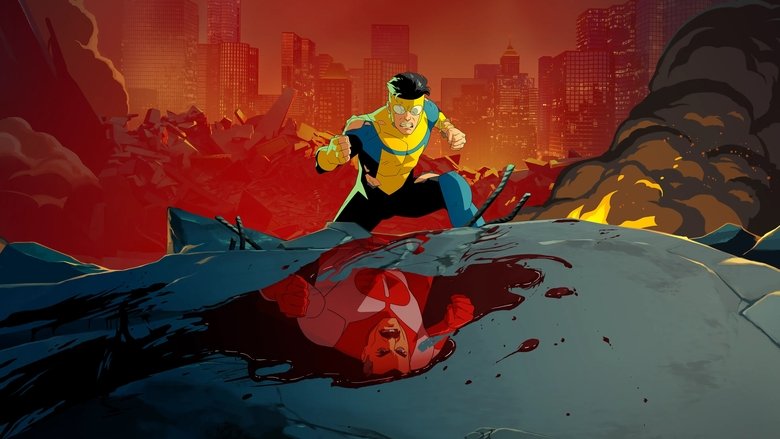
The increasing amount of blood splattering across the "Invincible" title card in each episode of Season 1 symbolizes the progressive decay of the series' initial innocence and the escalating brutality Mark is forced to confront. It visually represents the stripping away of the clean, four-color comic book fantasy to reveal the bloody reality underneath.

Context:

This is a recurring motif throughout the first season. Early episodes have minimal blood, but by the finale, after the devastating fight between Mark and Omni-Man, the title card is almost completely drenched in blood, signifying a point of no return for Mark and the series' tone.

Memorable Quotes

Think, Mark! You'll outlast every fragile, insignificant being on this planet. You'll live to see this world crumble to dust and blow away! What will you have after 500 years?!

— Omni-Man

Context:

This is said during the climax of their devastating fight in the Season 1 finale, "Where I Really Come From," after Nolan has beaten Mark to a pulp and is trying to force him to accept the Viltrumite agenda.

Meaning:

This quote encapsulates the core of Omni-Man's Viltrumite philosophy and his desperate, brutal attempt to break Mark's spirit. It highlights the profound gulf between his cosmic, cold perspective on life and Mark's deeply human attachments, framing immortality as a curse rather than a gift.

I'd still have you, Dad.

— Mark Grayson

Context:

This is Mark's reply to Omni-Man's question, "What will you have after 500 years?" in the Season 1 finale, "Where I Really Come From."

Meaning:

Mark's simple, heartbreaking response to his father's tirade is the emotional climax of their conflict. It demonstrates his unwavering humanity and love, even in the face of unimaginable pain and betrayal. This is the line that finally breaks through Nolan's indoctrination, causing him to flee Earth.

You don't seem to understand. Earth isn't yours to conquer.

— Omni-Man

Context:

Omni-Man says this to the Guardians of the Globe right before he systematically and brutally murders them all in the shocking cliffhanger of Season 1, Episode 1, "It's About Time."

Meaning:

This quote, spoken in the final moments of the first episode, is the shocking twist that redefines the entire series. It takes the familiar image of a Superman-like hero and twists it into something terrifying, setting the stage for the show's dark, deconstructive tone.

Episode Highlights

It's About Time

S1E1

This episode masterfully establishes a classic, hopeful superhero origin story for Mark Grayson, filled with joy and excitement. It introduces the key characters and the seemingly idyllic world. The final five minutes violently subvert all expectations as Omni-Man ambushes and massacres the Guardians of the Globe in a silent, brutal sequence, creating one of modern television's most shocking cliffhangers.

Significance:

The pilot's ending is the series' mission statement. It immediately signals that "Invincible" is not a standard superhero show but a dark, violent deconstruction of the genre. This single event creates the central mystery and conflict that drives the entire first season.

That Actually Hurt

S1E5

Mark, growing more confident, teams up with the villain Titan to take down a crime lord, only to be ambushed by powerful mercenaries, including the formidable Battle Beast. Invincible and the new Guardians of the Globe are brutally defeated, leaving Mark hospitalized. The episode starkly demonstrates that Mark is far from invincible and that the world is much more dangerous than he imagined. Meanwhile, Debbie's investigation into Nolan deepens.

Significance:

This episode serves as Mark's first true failure and a brutal reality check. It introduces the concept that there are threats far beyond his and even the Guardians' capabilities, expanding the scale of the universe and highlighting Mark's vulnerability.

We Need to Talk

S1E7

The tension that has been building all season finally boils over. Debbie confronts Nolan, who confesses to killing the Guardians. Cecil unleashes all of his resources against Omni-Man in a futile and destructive battle. The episode ends with a bloodied and enraged Omni-Man telling Mark they need to talk, setting the stage for the finale.

Significance:

This is the point of no return. All the secrets are out in the open, leading to the complete collapse of the Grayson family and Nolan's public break from humanity. It directly precedes the season's ultimate confrontation.

Where I Really Come From

S1E8

Omni-Man reveals the truth about the Viltrumite Empire's mission to conquer Earth. When Mark refuses to join him, a horrifically violent and emotionally devastating battle ensues across the globe. Nolan uses Mark's body to demonstrate the fragility of human life, slaughtering thousands. Ultimately, a memory of Mark's childhood causes Nolan to abandon his mission and fly away into space, leaving a traumatized Mark and a devastated world behind.

Significance:

Widely considered the show's most iconic and harrowing episode, the finale is the emotional and thematic climax of the entire series thus far. It cements the show's reputation for unflinching brutality and deep emotional storytelling, defining Mark's character arc for the foreseeable future.

I Thought You Were Stronger

S2E8

The season finale focuses on the long-awaited confrontation between Mark and Angstrom Levy. Levy holds Debbie and Oliver hostage, sending Mark hurtling through various dimensions in a brutal, disorienting fight. Pushed beyond his limits, Mark gives in to his rage and beats Levy to death, stranding himself in a desolate dimension. He is rescued by a future version of the Guardians, who warn him of a dark future, before being returned home, deeply traumatized by his own actions.

Significance:

This episode is a critical turning point for Mark's character. For the first time, he kills an enemy, and the act horrifies him, making his fear of becoming his father a tangible reality. It concludes the main arc of Season 2 and sets up Mark's internal conflict for Season 3.

Philosophical Questions

What is the true cost of power and responsibility?

The series consistently explores the immense physical and psychological toll of being a hero. Unlike many superhero stories that gloss over collateral damage, "Invincible" shows the horrifying consequences of every battle. Mark's journey is defined by loss, pain, and trauma. The show asks whether the responsibility to use great power is a noble calling or an unbearable curse that inevitably destroys any chance of a normal, happy life.

Can one escape their nature and heritage?

This is the central question of Mark and Nolan's arcs. Mark, half-Viltrumite, is terrified of the violent nature he may have inherited, and his entire life becomes a struggle to prove he can choose humanity over his genetic programming. Conversely, Nolan's story explores the opposite: can a being indoctrinated into a brutal, imperialistic culture for millennia learn empathy and love, and escape the nature of his people? The series suggests that while heritage is a powerful force, the capacity for choice remains.

Alternative Interpretations

One alternative interpretation views the central conflict through a political lens, seeing the Viltrumite Empire as a metaphor for imperialism and colonialism. Omni-Man's mission is not just a personal choice but the execution of a manifest destiny-style doctrine, where a technologically and physically superior civilization imposes its will on a "lesser" one for its own version of the greater good. Mark's rejection of his father is therefore a rejection of this colonialist heritage and an embrace of a multicultural, self-determined Earth.

Another reading focuses on the series as an allegory for surviving generational trauma and abuse. Nolan's relationship with Mark, especially in the Season 1 finale, mirrors the dynamics of a deeply abusive parent-child relationship. Mark's physical and emotional scars, his fear of inheriting his father's worst traits, and his struggle to form a healthy identity are classic symptoms of a trauma survivor. His journey is less about being a superhero and more about breaking a cycle of abuse.

Cultural Impact

"Invincible" premiered in 2021 to critical acclaim, arriving at a time when the cultural landscape was saturated with superhero content, particularly from the Marvel Cinematic Universe. Its success demonstrated a strong audience appetite for more mature, complex, and subversive takes on the genre. The series is frequently discussed alongside "The Boys," another Prime Video hit, as a leader in the deconstructionist superhero subgenre. Its unflinching portrayal of violence, combined with deep character-driven drama, has been praised by critics and audiences for pushing the boundaries of mainstream animation. The series has had a significant impact on pop culture, with memes from the show, particularly the "Think, Mark, Think!" scene, becoming widely circulated online. By refusing to reset the status quo and ensuring that every brutal action has a lasting consequence, "Invincible" has established a legacy as a sophisticated and emotionally resonant narrative that uses the superhero framework to explore the darkest corners of humanity and heroism.

Audience Reception

"Invincible" has received widespread critical and audience acclaim since its debut. On review aggregation sites like Rotten Tomatoes and Metacritic, both seasons hold exceptionally high ratings. Audiences have overwhelmingly praised the series for its mature storytelling, complex character development, stellar voice cast (particularly the performances of Steven Yeun, J.K. Simmons, and Sandra Oh), and its shocking, high-stakes plot twists. The brutal and realistic action sequences are frequently cited as a highlight. The main point of criticism, especially surrounding the second season, has been the release schedule, with a long gap between Season 1 and 2, and a mid-season break in Season 2, which some viewers found disruptive to the narrative momentum. Despite this, the overall verdict from audiences is that "Invincible" is a refreshing, compelling, and essential entry in the superhero genre.

Interesting Facts

  • The creator of the "Invincible" comic book series, Robert Kirkman, is also the creator of "The Walking Dead".
  • Steven Yeun, who voices Mark Grayson/Invincible, famously played Glenn Rhee in "The Walking Dead" TV series.
  • J.K. Simmons (Omni-Man) and Steven Yeun (Invincible) recorded their lines for the emotional final confrontation of Season 1 in the same room to enhance the authenticity of their performances.
  • The high school Mark attends is named Reginald VelJohnson High School. Reginald VelJohnson, famous for his role in "Die Hard" and "Family Matters", voices the school's principal.
  • The animation style was intentionally designed to evoke the look of a classic Saturday morning superhero cartoon, which creates a stark contrast with the series' extreme violence and mature themes.
  • Amazon renewed the series for a second and third season simultaneously shortly after the first season's successful debut.

Easter Eggs

Multiverse Crossovers and Homages

During Mark's fight with Angstrom Levy in the Season 2 finale, he is thrown through multiple dimensions. In one, he briefly encounters a hero named "Agent Spider" fighting a tentacled villain, a clear homage to Spider-Man and Doctor Octopus. Another portal shows a caped figure reminiscent of Batman. Mark also lands in a dimension filled with zombies, a direct reference to Robert Kirkman's other famous creation, "The Walking Dead".

Science Dog / Seance Dog

Mark is often seen reading a comic book called "Seance Dog." In the original "Invincible" comics, his favorite comic was "Science Dog." The character of Science Dog is an homage that connects to Kirkman's other work; Carl from "The Walking Dead" TV show wore a shirt with the Science Dog logo.

Young Mark's 'Canada' T-Shirt

In a flashback in the first episode, a young Mark Grayson wears a red t-shirt with "Canada" written on it. This is a nod to actress Sandra Oh, who voices his mother Debbie Grayson and is a Canadian native.

Guardians of the Globe as Justice League Analogs

The original Guardians of the Globe are direct pastiches of DC's Justice League. The Immortal mirrors Superman, War Woman is Wonder Woman, Darkwing is Batman, Red Rush is The Flash, Aquarus is Aquaman, and Green Ghost is Green Lantern. This makes their shocking murder by the Superman-esque Omni-Man a powerful meta-commentary on the deconstruction of these iconic archetypes.

⚠️ Spoiler Analysis

Click to reveal detailed analysis with spoilers

Frequently Asked Questions

Explore More About This Movie

Dive deeper into specific aspects of the movie with our detailed analysis pages

Comments (0)

Leave a comment

No comments yet. Be the first to share your thoughts!