The Avengers
A high-octane, hero-filled spectacle where disparate, powerful individuals clash and unite against an otherworldly threat, painting a vibrant, explosive mural of teamwork.
The Avengers

The Avengers

"Some assembly required."

25 April 2012 United States of America 143 min ⭐ 7.8 (33,872)
Director: Joss Whedon
Cast: Robert Downey Jr., Chris Evans, Mark Ruffalo, Chris Hemsworth, Scarlett Johansson
Action Adventure Science Fiction
Teamwork and Unity Heroism and Sacrifice Power and Responsibility Freedom vs. Security
Budget: $220,000,000
Box Office: $1,518,815,515

Overview

When an unexpected enemy, the Asgardian Loki, emerges and threatens global safety and security, Nick Fury, director of the international peacekeeping agency S.H.I.E.L.D., finds himself in need of a team to pull the world back from the brink of disaster. Loki gains access to the Tesseract, a cube of immense power, and plans to use it to open a portal for an alien army to invade Earth.

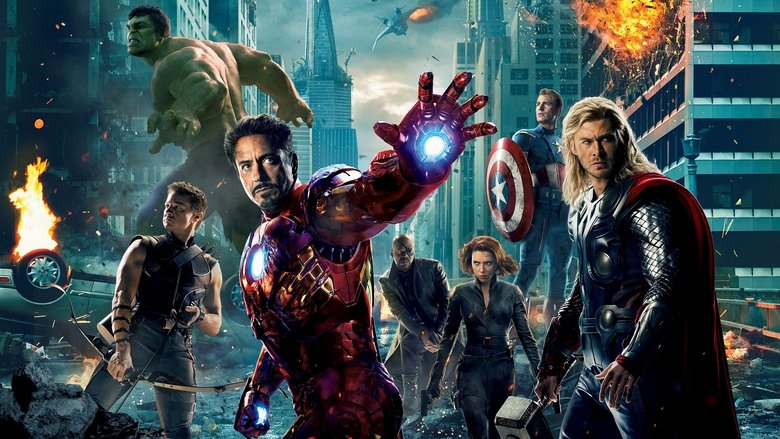
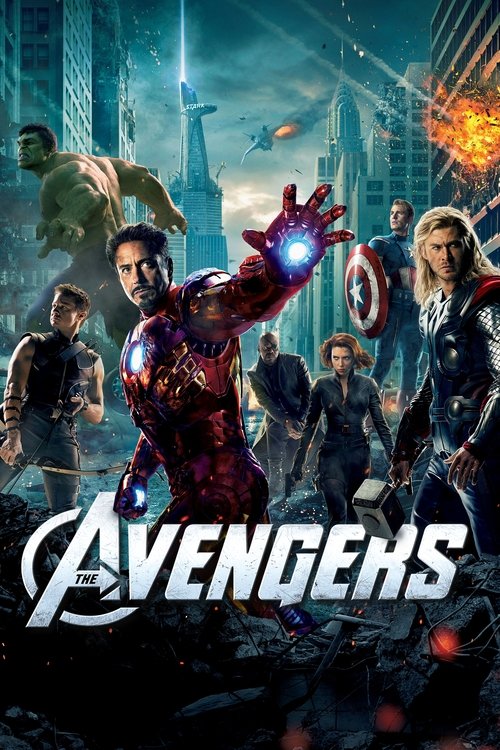
Fury reactivates the 'Avengers Initiative', a plan to bring together a group of remarkable people. He recruits Tony Stark (Iron Man), Steve Rogers (Captain America), Dr. Bruce Banner (The Hulk), Thor, Natasha Romanoff (Black Widow), and Clint Barton (Hawkeye). Initially, the heroes clash, their powerful personalities and differing ideologies making teamwork seem impossible. They must learn to fight together as a team to stop Loki and his alien army, the Chitauri, from enslaving humanity.

Core Meaning

The central message of "The Avengers" revolves around the idea of unity in diversity and the power of teamwork. Director Joss Whedon stated, "Ultimately these people don't belong together and the whole movie is about finding yourself from community. And finding that you not only belong together but you need each other, very much." The film explores the idea that individual heroes, despite their immense power, are flawed and incomplete on their own. It is only by overcoming their egos, distrust, and personal conflicts that they can combine their strengths to become something greater than the sum of their parts—Earth's Mightiest Heroes. The narrative champions the concept that even the most disparate and dysfunctional individuals can unite for a common good, suggesting that collaboration is the ultimate superpower needed to overcome overwhelming threats.

Thematic DNA

Teamwork and Unity 35%
Heroism and Sacrifice 30%
Power and Responsibility 20%
Freedom vs. Security 15%

Teamwork and Unity

The primary theme is the struggle and eventual triumph of teamwork. The film initially showcases the heroes' inability to cooperate due to their conflicting egos and ideologies. Tony Stark's individualism clashes with Steve Rogers' old-fashioned sense of duty, while Thor's personal connection to the villain complicates matters. The turning point for their unification is the apparent death of Agent Phil Coulson, which Fury uses to give them a personal stake in avenging him and working together. The climactic Battle of New York is a testament to their eventual synergy, with Captain America directing the team and each member using their unique abilities in concert to defend the city.

Heroism and Sacrifice

The film explores different facets of heroism, from Captain America's selfless sense of duty to Tony Stark's reluctant journey towards becoming a true hero. A key moment highlighting this theme is when Rogers tells Stark he's not the one to "make the sacrifice play." Stark later proves him wrong by flying a nuclear missile through a wormhole to destroy the Chitauri mothership, a seemingly one-way trip. This act of ultimate self-sacrifice solidifies his character's arc from a self-obsessed billionaire to a hero willing to die for others. Agent Coulson's death also serves as a powerful symbol of sacrifice, inspiring the heroes to unite.

Power and Responsibility

The film delves into the immense power held by the heroes and the responsibility that comes with it. Bruce Banner's struggle to control the Hulk is a literal representation of this theme. He lives in constant fear of the destruction he can cause, but learns to direct that power for good, revealing his secret is that he's "always angry." S.H.I.E.L.D. also grapples with this, secretly attempting to weaponize the Tesseract, which causes internal conflict within the team. The World Security Council's decision to launch a nuke at New York demonstrates the dangerous and irresponsible use of power, contrasting with the Avengers' efforts to protect civilian life.

Freedom vs. Security

The antagonist, Loki, presents a core philosophical conflict. He argues that humanity secretly craves subjugation because "freedom is life's great lie." He believes that by ruling over them, he is offering peace and purpose. The Avengers, in contrast, fight to preserve humanity's freedom, even if it means living in an unruly and chaotic world. This theme is further explored through S.H.I.E.L.D.'s questionable methods, such as creating weapons of mass destruction in the name of security, forcing the heroes to question the price of safety.

Character Analysis

Tony Stark / Iron Man

Robert Downey Jr.

Archetype: The Genius, Billionaire, Playboy, Philanthropist
Key Trait: Arrogant Genius

Motivation

Initially, Stark's motivation is driven by his ego and a desire to prove his technological superiority. As the threat escalates, his motivation shifts to protecting the world and, more personally, his friends and Pepper Potts. He is ultimately motivated by the challenge Loki presents and the realization that some threats are too big for him to handle alone.

Character Arc

Tony Stark begins the film as a self-described "volatile, self-obsessed" individual who "doesn't play well with others." He is dismissive of the team concept. Throughout the film, his experiences, particularly his conflict with the dutiful Steve Rogers and the sacrifice of Agent Coulson, force him to look beyond himself. His arc culminates in the ultimate act of self-sacrifice, as he flies a nuclear missile into the wormhole to save New York, proving he is more than just a suit of armor.

Steve Rogers / Captain America

Chris Evans

Archetype: The Righteous Hero
Key Trait: Moral Integrity

Motivation

Driven by a powerful sense of duty and morality, Captain America is motivated to do the right thing and protect the innocent. He feels a responsibility to use his abilities to fight bullies, a conviction that has remained with him since his pre-serum days. His motivation is pure and unwavering: to stop the threat and save lives.

Character Arc

Steve Rogers is a man out of time, struggling to find his place in a modern world he doesn't understand. Initially, he is rigid and clashes with Stark's modern sensibilities and Fury's morally gray methods. His arc involves learning to be a leader in this new era, not just a soldier. During the Battle of New York, he steps up to command the team, effectively using their individual strengths to create a cohesive fighting force, solidifying his role as the team's tactical and moral center.

Bruce Banner / The Hulk

Mark Ruffalo

Archetype: The Reluctant Monster
Key Trait: Controlled Rage

Motivation

Banner's primary motivation is to avoid conflict and keep the Hulk from emerging. He is a reluctant participant, driven by a desire to help locate the Tesseract through his scientific expertise. Ultimately, he is motivated by the immediate need to protect innocent people from a massive threat, forcing him to embrace the one thing he fears most about himself.

Character Arc

Bruce Banner lives a life of fear and avoidance, constantly trying to suppress the 'other guy'. He is brought into the fold for his scientific intellect, not his alter ego. His arc is about accepting and gaining a measure of control over the Hulk. The turning point is when he chooses to become the Hulk during the Battle of New York, revealing his secret: "I'm always angry." This signifies his acceptance of the Hulk as a part of him that can be aimed for a heroic purpose, rather than just a destructive force.

Thor

Chris Hemsworth

Archetype: The Mighty God
Key Trait: Noble Power

Motivation

Thor's initial motivation is entirely personal: to apprehend his brother Loki and retrieve the Tesseract to protect both Asgard and Earth. He feels a great deal of responsibility for the chaos Loki unleashes. This evolves into a commitment to his newfound teammates and the defense of Earth as his second home.

Character Arc

Thor's journey in this film is deeply personal. He arrives on Earth not to save it, but to stop his brother, Loki. His arc involves moving from a familial responsibility to a broader responsibility as a protector of Earth (Midgard). He learns that his brother is beyond his reach for redemption at this point and must be treated as a genuine threat to others. He transitions from acting as an Asgardian prince dealing with a family issue to a fully-committed member of the Avengers.

Loki

Tom Hiddleston

Archetype: The Scheming Villain
Key Trait: Mischievous Intellect

Motivation

Loki is motivated by a deep-seated inferiority complex and a lust for power. He wants to rule a kingdom of his own to prove his worth, especially in comparison to his brother, Thor. He tells Thor he was promised a throne, and he believes subjugating Earth will give him the respect and fear he craves.

Character Arc

Loki is the film's central antagonist. His arc is not one of redemption but of descent. Having learned of his Frost Giant heritage in Thor, he now seeks a throne and validation through conquest. His plan is not just to rule Earth but to prove his superiority over his brother, Thor. His arc sees him go from a cunning manipulator who successfully divides the heroes to a defeated and petulant "puny god" after being thoroughly smashed by the Hulk.

Symbols & Motifs

The Tesseract (Space Stone)

Meaning:

The Tesseract symbolizes ultimate power and the immense danger that comes with it. It is a coveted object that drives the film's plot, representing a power that is difficult to control and which attracts those who would abuse it for conquest, like Loki and his benefactor, Thanos.

Context:

Loki steals the Tesseract from S.H.I.E.L.D. at the beginning of the film. He then uses it to open a wormhole above Stark Tower to allow the Chitauri army to invade Earth. Its containment and control are the central objectives for both the heroes and the villains throughout the movie.

Loki's Scepter (Mind Stone)

Meaning:

The scepter symbolizes manipulation, control, and the insidious nature of evil. It has the power to corrupt and control the minds of others, turning friends into enemies. It represents Loki's primary method of sowing discord and division, not through brute force, but through deceit and psychological warfare.

Context:

Loki uses the scepter to brainwash Hawkeye and Dr. Erik Selvig at the start of the film. Aboard the Helicarrier, the scepter's presence amplifies the Avengers' existing tensions and mistrust, causing them to argue and fight amongst themselves, which was Loki's plan.

The Avengers 'A' Logo

Meaning:

The circular 'A' logo, seen on Stark Tower at the end of the film, symbolizes the formation and unity of the team. It represents the successful culmination of the 'Avengers Initiative' and the establishment of a new guard of heroes for the world.

Context:

In the final scenes of the movie, after the Battle of New York, Tony Stark and Pepper Potts are looking at blueprints for a rebuilt Stark Tower. The plans prominently feature the Avengers' 'A' logo, signifying that the tower will become the team's headquarters.

Agent Coulson's Captain America Trading Cards

Meaning:

The vintage, blood-stained Captain America trading cards symbolize the human cost of conflict and serve as a powerful catalyst for the team's unification. They represent the innocent belief in heroism that Agent Coulson embodied, and their defilement gives the heroes a personal reason to 'avenge' his death.

Context:

After Loki kills Agent Coulson, Nick Fury presents the blood-stained cards to a distraught Captain America and Iron Man, claiming Coulson had them on him when he died. This emotional manipulation galvanizes the team, providing them with the push they needed to set aside their differences and fight as one.

Memorable Quotes

Puny god.

— Hulk

Context:

Inside Stark Tower, after Loki has been cornered by the Avengers, he angrily declares, "I am a god, you dull creature! And I will not be bullied by--" before the Hulk grabs him by the legs and repeatedly smashes him into the floor, finishing with this dismissive line.

Meaning:

This quote signifies the ultimate humbling of Loki. After a film spent boasting of his divine power and superiority, he is effortlessly and comically defeated by the Hulk's raw, brutish strength, completely stripping him of his dignity and menace.

That's my secret, Captain. I'm always angry.

— Bruce Banner

Context:

During the Battle of New York, as a massive Chitauri Leviathan approaches, Captain America tells Bruce Banner that now would be a good time to get angry. Banner calmly replies with this line before transforming into the Hulk and single-handedly stopping the creature.

Meaning:

This line is a pivotal moment for Bruce Banner's character, revealing that he has finally gained control over his transformations. It shows he no longer fights the Hulk but has integrated it, able to unleash it at will for a heroic purpose, marking a significant step in his character's evolution.

We have a Hulk.

— Tony Stark

Context:

During their confrontation in Stark Tower, Loki threatens Tony Stark, boasting, "I have an army." Stark, unflustered, pours himself a drink and counters with, "We have a Hulk."

Meaning:

This is a succinct and confident retort that encapsulates the Avengers' ultimate trump card. It's a moment of pure swagger that dismisses Loki's threat of an army by pointing out they have an uncontrollable force of nature on their side, a fact that proves decisive.

If we can't protect the Earth, you can be damn sure we'll avenge it.

— Tony Stark

Context:

In his confrontation with Loki at Stark Tower, Tony Stark outlines the futility of Loki's plan, culminating in this powerful statement of intent which gives the team its name and mission.

Meaning:

This line provides the thematic core of the team's name and purpose. It's a declaration of defiance and resolve, stating that even in failure, they will not give up; they will fight to bring justice for any loss, establishing the team's unwavering commitment.

There's only one God, ma'am. And I'm pretty sure he doesn't dress like that.

— Steve Rogers

Context:

Aboard the Quinjet, after capturing Loki, Black Widow comments that Loki and Thor come from legend and are "basically gods." Captain America, overhearing, delivers this classic, deadpan line.

Meaning:

This quote perfectly captures Captain America's man-out-of-time personality and his steadfast, old-fashioned values. It's a moment of levity that also highlights the clash of worlds and beliefs within the team, contrasting his grounded, 1940s American perspective with the cosmic, mythological elements introduced by Thor and Loki.

Philosophical Questions

Does humanity secretly desire subjugation over freedom?

The film directly confronts this question through its antagonist, Loki. He proclaims that freedom is "life's great lie" and that humanity, burdened by choice, secretly yearns to be ruled. He stages a public scene in Stuttgart, forcing a crowd to kneel before him, symbolizing his philosophy. The Avengers stand as the direct refutation of this idea. Their entire purpose is to fight for humanity's right to self-determination, even if humans are, as The Other says, "unruly." The film ultimately sides with the value of freedom, suggesting that even with its inherent chaos, it is preferable to ordered submission.

Can fundamentally different individuals unite for a common cause?

This question is the core of the film's character dynamics. The Avengers are a collection of individuals who, on paper, should not be able to work together: a god, a super-soldier from the past, a genius billionaire, a rage monster, and two master assassins. The first half of the film is dedicated to showing why they don't belong together, as their egos, values, and methods clash violently. However, the narrative argues that a shared threat and a shared loss (the death of Agent Coulson) can forge a bond stronger than their individual differences, demonstrating that unity can be born from diversity when the stakes are high enough.

Alternative Interpretations

One alternative reading of the film frames it as a piece of American exceptionalist propaganda. The narrative of a diverse, powerful team of predominantly American heroes defending the world from a foreign, otherworldly invader can be seen as an allegory for American military and cultural dominance. The 'good vs. evil' format, with the 'evil' force being distinctly foreign, reinforces this narrative, and the climax focuses on the heroes' victory without dwelling on the catastrophic destruction of New York City.

Another interpretation views the film through a political lens, focusing on Loki's assertion that humanity desires subjugation. Some critics see this as a commentary on the tension between freedom and security in a post-9/11 world. Loki offers absolute security in exchange for freedom, a tempting proposition that the heroes must reject. This reading suggests the film explores whether true freedom is worth the chaos and danger that comes with it, a question mirrored by S.H.I.E.L.D.'s own morally ambiguous actions to protect the world.

Cultural Impact

"The Avengers" was a watershed moment in cinematic history, transforming Hollywood's economic and cultural landscape. Released in 2012 as the culmination of Marvel Studios' 'Phase One', it was the first film of its kind to successfully unite multiple characters from their own standalone franchises into a single, cohesive narrative. Its unprecedented box office success, grossing over $1.5 billion worldwide, obliterated records and proved that the 'shared cinematic universe' model was not just viable, but extraordinarily profitable.

This success fundamentally changed the blockbuster formula, inspiring nearly every other major studio to attempt to replicate it by creating their own interconnected universes, such as the DC Extended Universe, the MonsterVerse, and others. "The Avengers" solidified the superhero genre as the dominant force in 21st-century pop culture and cemented Marvel Studios' position as an entertainment juggernaut. The film's blend of action, humor, and character-driven storytelling, expertly balanced by writer-director Joss Whedon, became the tonal blueprint for many subsequent MCU films. The iconic 360-degree shot of the team assembled in New York became a defining image of the decade in film and a powerful symbol of this new era of blockbuster filmmaking.

Audience Reception

"The Avengers" was met with overwhelmingly positive reactions from both critics and audiences, who hailed it as an epic and highly entertaining blockbuster. The film was widely praised for Joss Whedon's witty and character-focused screenplay, the spectacular action sequences, and the impressive visual effects. A key point of praise was the film's ability to successfully juggle its large ensemble cast, giving each hero a moment to shine while fostering compelling and humorous interactions between them. Mark Ruffalo's performance as Bruce Banner/The Hulk was singled out as a highlight, with many considering it the definitive portrayal of the character. Criticisms were generally minor, with some pointing to a simplistic plot and underdeveloped villains (the Chitauri army). Some viewers also found the pacing slow in the first half as it took a significant amount of time for the team to actually assemble. Overall, it was considered a triumphant culmination of Marvel's ambitious cinematic experiment and one of the most enjoyable superhero films ever made.

Interesting Facts

  • The iconic post-credits scene where the Avengers eat shawarma was filmed the day after the movie's world premiere. Chris Evans had to wear a prosthetic jaw to hide the beard he had grown for his role in 'Snowpiercer'.
  • Robert Downey Jr. was known for hiding snacks all over the set of the Helicarrier lab, and his on-screen eating was often unscripted.
  • The voice of the Hulk is a blend of sounds from Mark Ruffalo, original TV Hulk Lou Ferrigno, and a few others.
  • The Pentagon was consulted for the film but declined to be involved after they found the concept of S.H.I.E.L.D. and its command structure to be implausible and unrealistic.
  • In an early draft of the script, writer-director Joss Whedon included The Wasp, with Zooey Deschanel in mind for the role, as a backup in case Scarlett Johansson was unavailable to return as Black Widow.
  • Tom Hiddleston asked Chris Hemsworth to actually hit him for a scene to make it look more authentic, a decision he said he immediately regretted.
  • Jeremy Renner was initially unhappy with Hawkeye's brainwashed role for most of the film and expressed a desire for the character to be killed off.
  • The role of Thanos in the mid-credits scene was played by actor Damion Poitier, as Josh Brolin had not yet been cast for the part.

Easter Eggs

Thanos's First Appearance

The mid-credits scene provides the first-ever glimpse of the MCU's ultimate villain, Thanos. The Other reports to his master about the failed invasion, revealing a greater power pulling the strings. This set the stage for the entire 'Infinity Saga' that would dominate the next decade of MCU films.

Project P.E.G.A.S.U.S.

The S.H.I.E.L.D. facility where the Tesseract is being studied at the beginning of the film is part of 'Project P.E.G.A.S.U.S.' In the comics, this is a research facility that studies alternative and unusual energy sources, which is a fitting place to be experimenting on the Tesseract.

Black Sabbath T-Shirt

During the scene on the Helicarrier, Tony Stark is wearing a Black Sabbath t-shirt. This is a nod to the fact that the pioneering heavy metal band is famous for their song titled "Iron Man".

Harry Dean Stanton Cameo

After the Hulk falls from the Helicarrier and reverts to Bruce Banner, he is discovered by a security guard played by veteran actor Harry Dean Stanton. When Banner asks where he is, Stanton asks, "Are you an alien?" This is a fun meta-reference, as Stanton famously starred in the classic 1979 sci-fi horror film Alien.

Budapest Reference

During the Battle of New York, Black Widow says to Hawkeye, "This is just like Budapest all over again!" to which Hawkeye replies, "You and I remember Budapest very differently." This teases a shared history and a previous mission, which became a long-running inside joke for fans and was later explored in the Black Widow solo film.

⚠️ Spoiler Analysis

Click to reveal detailed analysis with spoilers

Frequently Asked Questions

Explore More About This Movie

Dive deeper into specific aspects of the movie with our detailed analysis pages

Comments (0)

Leave a comment

No comments yet. Be the first to share your thoughts!