Skip to content
It Follows
A dread-soaked suburban nightmare where teenage desire curdles into a death sentence, and the horror is simply a figure on the horizon — walking, never running, never stopping, always closer.
It Follows

It Follows

"It doesn't think. It doesn't feel. It doesn't give up."

04 February 2015 United States of America 101 min 6.6 (7,131)

Director: David Robert Mitchell

Cast: Maika Monroe, Keir Gilchrist, Daniel Zovatto, Jake Weary, Olivia Luccardi

Mystery Horror Mortality and the inescapable pursuit Sex as transmission, intimacy as burden The end of adolescence Friendship and collective defense Decay, place and a hollowed-out Detroit
Budget: $2,300,000
Box Office: $23,374,076

Overview

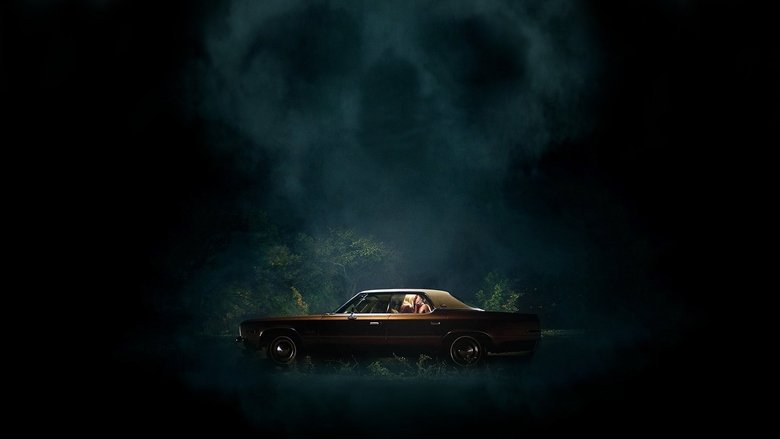
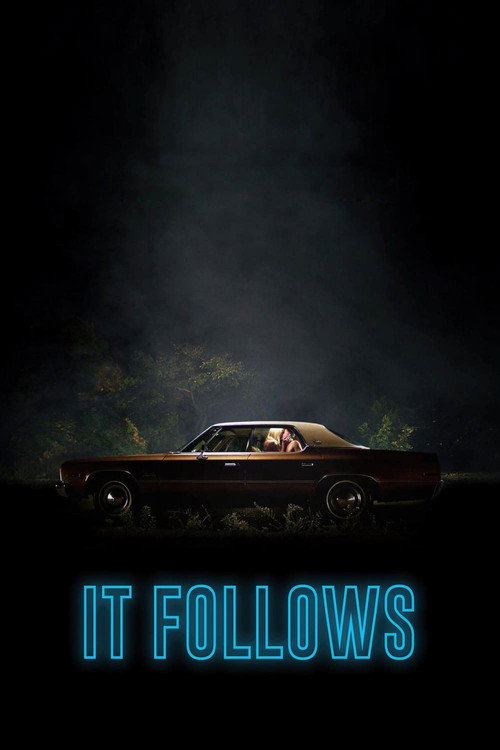
Jay Height is a nineteen-year-old in the quiet suburbs outside Detroit, drifting through a late-summer haze of above-ground pools, card games with her sister and friends, and a promising new boyfriend named Hugh. After a date that ends in the back seat of his car, Jay wakes to discover that the evening has cost her far more than she imagined: something has been handed to her, and it will not be handed back.

From that point on, Jay is followed. The thing that pursues her can look like anyone — a stranger in a crowd, a friend, a family member — and only she can see it. It never runs. It walks, patiently, in a straight line, and it never, ever stops. The only way to pass it on is to sleep with someone else, an escape that is also a condemnation, and one that offers no permanent safety: if the new carrier dies, the entity turns back down the line toward her.

What follows is less a monster movie than a slow dissolve of adolescence itself. Jay's sister Kelly, her friends Yara and Paul, and the boy next door Greg orbit her with a mixture of loyalty, skepticism and desire, improvising defenses against a threat none of them can see. David Robert Mitchell films this dread in wide, unhurried compositions and a pulsing synthesizer score, turning empty streets, beaches and abandoned Detroit blocks into a landscape where the worst thing in the world is always somewhere on foot, heading your way.
Core Meaning

At its center, It Follows is a film about the inescapability of death and the way human intimacy is used to hold it briefly at bay. Mitchell has framed the film as a confrontation with mortality, describing sex and love as ways to temporarily push death away — there is no real escape from it, but there are moments.

The curse works because it literalizes something everyone already knows: the instant you become a sexual adult, you also become a mortal one, aware of a clock that started running the day you were born. The entity does not sprint, ambush or negotiate. Its horror is its patience — it is the unglamorous arithmetic of time, walking toward you at a steady pace while you go to school, swim, flirt and sleep.

The film is also a lament for a specific American adolescence. Its suburban Detroit, suspended somewhere between the 1970s and the present, is a place where the promise of freedom — a car, a date, a night with no curfew — is discovered to be a corridor with a door at the end. The message is neither moralistic nor nihilistic: you cannot outrun it, but you can choose whom you walk beside while it comes.

Thematic DNA

Mortality and the inescapable pursuit 32%
Sex as transmission, intimacy as burden 24%
The end of adolescence 18%
Friendship and collective defense 14%
Decay, place and a hollowed-out Detroit 12%

Mortality and the inescapable pursuit

The entity is death made pedestrian. It never hurries because it doesn't need to; distance only ever buys time, never safety. Jay's arc is a compressed education in this fact — she flees to a lake house, to another state, to a hospital bed, and each time the horizon eventually produces a walking figure.

Mitchell has explicitly linked the film to a confrontation with our own mortality, and the film's most articulate expression of the idea is literary: Yara's reading from Dostoevsky's The Idiot about the agony of knowing for certain that within an hour, then ten minutes, then this very instant, your soul will leave your body.

Sex as transmission, intimacy as burden

The curse passes through sex, which turns every act of intimacy into a transaction with terrible weight. Jay can save herself only by endangering someone else, and the film refuses to let that be simple: Greg takes it on out of bravado and disbelief, Paul offers out of love, and neither gesture is clean.

Crucially, the film avoids the old slasher morality in which promiscuity is punished. Passing it on is the only survival mechanism available, which reframes sex not as sin but as the terrifying, necessary way humans share both comfort and consequence.

The end of adolescence

Jay's world before the curse is one of pools, television, cigarettes and unstructured summer afternoons. Afterward, she can never again occupy that world without scanning its edges. The film treats the loss of innocence as a one-way door: the friends still play cards, but one of them now knows what is out there.

Her wistful memory of daydreaming about being old enough to drive and go on dates — imagining freedom rather than any particular destination — reads in retrospect as the film's epitaph for childhood.

Friendship and collective defense

Against an enemy only one person can see, the group's willingness to believe Jay is itself an act of love. Kelly, Yara, Paul and Greg mount defenses that are improvised and often absurd — the pool plan that Mitchell himself called "the stupidest plan ever," comparing it to something Scooby-Doo might devise.

That absurdity is the point: these are teenagers with no tools for the unfathomable, and their solidarity, not their strategy, is what the film honors.

Decay, place and a hollowed-out Detroit

Shot in Detroit and its suburbs, the film maps its dread onto real geography: manicured lawns give way to ruined blocks, and Jay recalls a childhood rule about not going south of 8 Mile. The city's visible decline becomes a backdrop about entropy — houses, neighborhoods and bodies all eventually go.

The setting's deliberate temporal blur, mixing period cars and CRT televisions with an impossible clamshell e-reader, extends the theme: this is not one decade's story but any adolescence, anywhere, at any time.

Character Analysis

Jay Height

Maika Monroe

Archetype: Final girl / reluctant hero Key Trait: Watchful vulnerability hardening into resolve

Motivation

Survival first, and then something harder: the wish to remain a person rather than only prey, and to protect the people she loves from the thing she has brought into their lives.

Character Arc

She begins as a dreamy, passive suburban nineteen-year-old, floating in a pool and waiting for life to start. The curse strips her of drift: she moves through denial, terror and a desperate attempt to pass the burden on, and emerges hardened into someone capable of choosing how to face what cannot be defeated.

By the final act she is no longer running blindly — she is deciding who to be while it comes.

Paul Bolen

Keir Gilchrist

Archetype: Devoted friend / romantic idealist Key Trait: Earnest, awkward devotion

Motivation

To be chosen by Jay, and to prove that his love is more than the harmless crush everyone assumes it to be.

Character Arc

The boy who has loved Jay since childhood, Paul spends the film hovering at the edge of her crisis, offering himself as both bodyguard and solution. His arc is the transformation of unrequited adolescent longing into an adult act with real consequences.

Whether his final choice is heroism, sacrifice or self-interest is left deliberately unsettled.

All 5 characters and cast

Symbols & Motifs

The walking figure

Meaning:

Death itself, or more precisely the awareness of death: shapeless enough to wear any face, slow enough to be ignored for long stretches, certain enough that ignoring it changes nothing.

Context:

It appears in deep focus at the edges of frames — across a school lawn, at the end of a beach, on a rooftop — often before the characters or the audience consciously register it, training viewers to scan every composition for movement.

Water and the swimming pool

Meaning:

Water carries the film's linked associations of sex, maternity and death. The above-ground pool is both womb and grave: the place Jay retreats to feel safe, and later the arena where the group tries to kill the unkillable.

Context:

Jay floats in her backyard pool in the film's early, idyllic scenes; the climax stages the electrocution plan in a public swimming pool, where the water that soothed her becomes a conductor for violence.

The seashell e-reader

Meaning:

A beautiful, anachronistic object that stands for the film's refusal of a fixed era — and, as a shell, for the sea, the ear and the voice of something older whispering to the living.

Context:

Yara carries it throughout, reading passages from Dostoevsky's The Idiot that function as a chorus commenting on the action, including the novel's famous meditation on the certainty of execution.

Cars and the open road

Meaning:

Adolescent freedom and its limits. A car promises escape and delivers only delay; the entity walks, and walking is enough.

Context:

The opening sequence begins with a girl fleeing to a car and driving to the beach to die; Jay's flights by car structure the middle of the film, each one buying hours rather than deliverance.

Suburban thresholds — doors, windows, fences

Meaning:

The illusion of safety. Every barrier in the film is theatrical; the thing can open doors, climb through windows, and cross any line drawn by property or propriety.

Context:

Mitchell repeatedly frames characters behind glass or in doorways, and the camera's slow 360-degree pans reveal that the perimeter the teenagers imagine simply does not exist.

Ruined Detroit

Meaning:

Collective mortality: what happens to a body, a family or a city when time is allowed to walk toward it unimpeded.

Context:

Jay and her friends cross into abandoned neighborhoods, and her memory of the 8 Mile boundary marks the moment the film's private dread meets a public, historical one.

Memorable Quotes

And the most terrible agony may not be in the wounds themselves, but in knowing for certain that within an hour, then within ten minutes, then within half a minute, and now at this very instant your soul will leave your body and you will no longer be a person, and that this is certain; the worst thing is that it is certain.
— Yara (reading Fyodor Dostoevsky's The Idiot)

Context

Read aloud from Yara's seashell e-reader near the end of the film, laid over the group's dwindling options as commentary rather than dialogue.

Meaning

The film's thesis stated outright: the horror is not pain but certainty. Dostoevsky's condemned man is the entity's victim, and by extension everyone in the audience.

It could look like someone you know or it could be a stranger in a crowd. Whatever helps it get close to you.
— Hugh

Context

Spoken to a bound, panicking Jay immediately after he has passed the curse to her, as he explains the rules he learned from his own carrier.

Meaning

Establishes the entity's cruelest tactic — that it weaponizes familiarity and love, so that recognition itself becomes unsafe.

All 4 quotes

Philosophical Questions

If death is certain, does knowing when it comes change how one should live?

The Dostoevsky passage Yara reads locates the true agony not in the wound but in the certainty. Jay is given what the rest of us lack — a visible, approaching deadline — and the film watches what that knowledge does to ordinary teenage life: it destroys drift, collapses time, and forces every remaining hour to mean something.

Is it ethical to save yourself at someone else's expense?

The curse's only escape route requires endangering another person. Hugh does it to Jay with deception; Jay does it in fear; Greg accepts out of disbelief; Paul offers out of love. The film presents four different moral temperatures for the same act and declines to grade them, asking instead whether survival ever comes without transfer of harm.

Can intimacy be separated from consequence?

By making sex the vector of the curse, the film literalizes the way closeness binds people to one another's fates. Nobody in the story gets to sleep with someone and remain unentangled; the chain of carriers is a diagram of how human connection works — accumulative, irreversible and shared.

Does an unseen threat exist if no one else can perceive it?

Only the cursed can see the follower, which places Jay in the classic position of the disbelieved witness. The film resolves the epistemology socially rather than logically: her friends act as though it is real because they love her, suggesting that trust, not evidence, is what makes a shared world possible.

What is freedom worth if there is nowhere to escape to?

Jay's daydream of driving with a boy on an autumn road was never about a destination, only about freedom. The film strips the destination away entirely — every drive ends with a figure on the horizon — leaving only the question of who is in the car with you.

Alternative Interpretations

The STI reading. The most immediate interpretation treats the entity as a sexually transmitted infection: it passes through intercourse, can be given away but not cured, and follows the chain backward if the next carrier dies. Detractors consider this reading reductive and faintly puritanical; defenders note the film never punishes desire, since transmission is the only available remedy.

Full ending explanation

Cultural Impact

It Follows arrived at a hinge moment for the genre. Premiering at the Cannes Film Festival in May 2014 and released widely in 2015 through Radius-TWC, it helped define what would soon be labelled the "elevated horror" wave — low-budget, auteur-driven, thematically legible films that critics could praise without apology. Its numbers made the case commercially as well: a picture costing roughly $1.3 million returned around $23.3 million.

Critically it was a landmark. The film holds a 95% Tomatometer score on Rotten Tomatoes from 271 reviews, with a consensus calling it "Smart, original, and above all terrifying... a rare modern horror film that works on multiple levels — and leaves a lingering sting."

Its most durable legacy may be sonic. Disasterpeace's synthesizer score — his first for a feature, written in three weeks before Cannes — became a touchstone, accelerating the revival of Carpenter-style analog synth soundtracks across horror and beyond, and standing as one of the most acclaimed genre scores of the decade. Mike Gioulakis's compositions, with their slow pans and threats lurking in deep focus, were widely imitated; the "figure walking in the background" shot became instantly legible film grammar.

Culturally, the film has been read through the lens of sexual anxiety, STI metaphor, consent and the end of adolescence, and it has been repeatedly revisited in essays and video analyses for its Dostoevsky citations and its portrait of a decaying Detroit. Initially a cult object, it broadened into mainstream familiarity through streaming, and a sequel — They Follow, with Mitchell directing and both Disasterpeace and Gioulakis returning — has kept it in active conversation more than a decade on.

Audience Reception

Critics were close to unanimous: the film carries a 95% Tomatometer score from 271 reviews, with praise concentrated on its originality, its sustained dread, and the rare ability to work simultaneously as visceral scare machine and as metaphor. Reviewers repeatedly singled out Disasterpeace's synth score and Mike Gioulakis's widescreen compositions, whose deep-focus backgrounds turn the audience into anxious lookouts, as well as Maika Monroe's grounded, unaffected lead performance.

General audiences were more divided — the film's Rotten Tomatoes audience score sits at 66% from tens of thousands of ratings, a notable gap from the critical figure. The common complaints are familiar for this kind of horror: the pace is slow by multiplex standards, the characters make baffling decisions (most infamously the swimming-pool plan, which even the director has called ridiculous), the curse's rules are loosely and inconsistently applied, and the ending refuses to resolve. Some viewers arrived expecting jump-scare horror and found a mood piece instead.

The most contested elements are the third-act confrontation, the deliberately blurred time period, and the closing shot. Yet the same ambiguity that frustrated some viewers is precisely what gave the film its afterlife: it accumulated a cult following before broadening into mainstream popularity via streaming, and it remains one of the most discussed and dissected horror films of its decade. The overall verdict: an atmospheric, intelligent modern classic whose power comes from restraint, and whose flaws are inseparable from its ambitions.

Interesting Facts

  • The film was made for a budget of roughly $1.3 million and went on to gross about $23.3 million worldwide, making it one of the most profitable independent horror releases of its year.
  • Principal photography took place in September 2013 on location in Detroit and in the Michigan communities of Clawson and Sterling Heights.
  • It premiered at the 2014 Cannes Film Festival on May 17, 2014, and was subsequently acquired for distribution by Radius-TWC, reaching general audiences in 2015.
  • The score was composed by Rich Vreeland, who works under the name Disasterpeace, in his first feature film credit.
  • David Robert Mitchell had temped the film with Vreeland's music from the video game Fez, which is how the composer came to be hired.
  • Vreeland wrote the score under a tight three-week deadline because the film was about to premiere at Cannes.
  • The synthesizer-driven soundtrack was widely compared to the scores John Carpenter composed for his own horror films of the 1970s and 1980s.
  • Cinematographer Mike Gioulakis shot the film; his high-resolution, meticulously composed imagery gave the picture a frozen, hyperreal quality that reviewers singled out.
  • Director David Robert Mitchell has described the teenagers' climactic swimming-pool scheme as "the stupidest plan ever," likening it to something the Scooby-Doo gang would come up with.
  • Mitchell has explained the film's premise as a confrontation with mortality, framing sex and love as ways of temporarily pushing death away — there is no escape, but there are moments.
  • A sequel, They Follow, is in the works with Mitchell returning, and both Disasterpeace and cinematographer Mike Gioulakis have been confirmed to return as well; Mitchell has said it is "its own unique thing."
  • The film built a cult following after its theatrical run and later reached a much wider mainstream audience through streaming services.

Easter Eggs

Yara's clamshell e-reader

A device that does not exist, shaped like a seashell and used exclusively by one character. It is the clearest signal that the film's world is deliberately untethered from any single decade, sitting alongside period cars and boxy televisions.

Fyodor Dostoevsky's The Idiot

Yara's repeated readings come from Dostoevsky's 1869 novel, whose passages on the condemned man's certainty of death supply the film's intellectual spine and effectively narrate the entity's meaning without ever describing it.

The Disasterpeace score's Fez lineage

Mitchell temporarily scored his cut with Rich Vreeland's music from the indie puzzle game Fez before hiring him. The finished soundtrack keeps that video-game-adjacent, synth-driven aesthetic, giving the film a texture unusual for horror at the time.

John Carpenter homage in sound and framing

The pulsing analog synths and wide, patient widescreen compositions consciously evoke Carpenter's Halloween-era suburban horror, positioning the film as an heir to that tradition rather than to the shaky-cam and torture styles dominant in the 2000s.

The 8 Mile boundary

Jay's recollection of a childhood rule about not going south of 8 Mile anchors the film's abstract dread in the real history of Detroit's racial and economic segregation, letting a ghost story double as a portrait of a hollowed-out city.

Frequently Asked Questions

Explore More About This Movie

Dive deeper into specific aspects of the movie with our detailed analysis pages

Comments (0)

Leave a comment

No comments yet. Be the first to share your thoughts!

Similar Movies