Skip to content
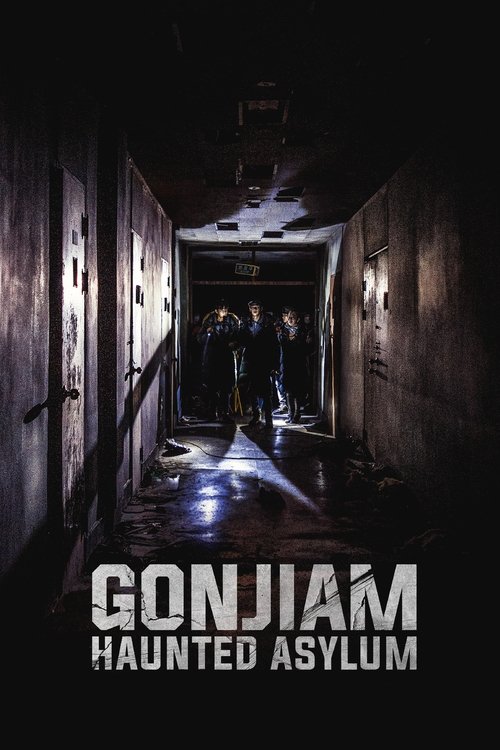
Gonjiam: Haunted Asylum
A claustrophobic found-footage horror nightmare where modern digital hubris collides with raw, suffocating terror, descending like a flickering lens into an inescapable, pitch-black abyss of madness and spectral retribution.
Gonjiam: Haunted Asylum

Gonjiam: Haunted Asylum

곤지암

"Experience the horror."

28 March 2018 South Korea 95 min 7.3 (974)

Director: Jung Bum-shik

Cast: Wi Ha-jun, Park Ji-hyun, Oh Ah-yeon, Moon Ye-won, Park Sung-hoon

Mystery Horror Greed and the Obsession with Digital Clout The Fragility of Technological Dominance Inescapable Historical Trauma Mass Hysteria and Psychological Isolation
Box Office: $21,041,950

Overview

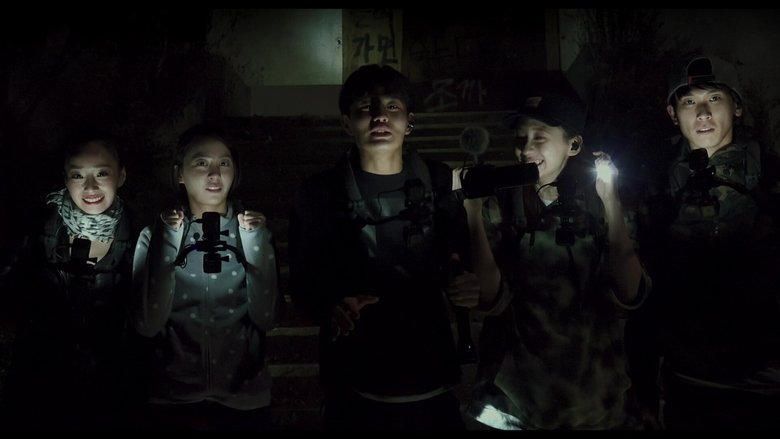
Gonjiam: Haunted Asylum (2018), directed by Jung Bum-shik, follows Ha-joon, the ambitious host of "Horror Times," a popular YouTube channel dedicated to paranormal exploration. To mark the anniversary of the mysterious 1979 closure of the abandoned Gonjiam Psychiatric Hospital—a location infamously dubbed one of the world's most terrifying sites—Ha-joon recruits a team of six young thrill-seekers and technicians. Outfitted with state-of-the-art broadcasting equipment, GoPros, facial cameras, motion sensors, and drones, the crew embarks on a midnight expedition to livestream their trek through the cursed facility. Their ultimate goal is to break open "Room 402," an intensive care unit that has remained permanently sealed since forty-two patients allegedly committed mass suicide and the hospital director vanished.

Driven by the promise of hitting one million views and securing lucrative sponsorship deals, the team sets up a base camp outside while six members venture into the crumbling, dark corridors. Initially, minor scares are staged by the show runners to artificially inflate viewer engagement. However, as they penetrate deeper into the building's haunting layout, the boundary between controlled spectacle and unholy reality disintegrates. Authentic, terrifying supernatural anomalies begin to manifest, turning their quest for viral fame into a desperate, claustrophobic trap where technology fails and malevolent entities hunt them one by one.
Core Meaning

At its core, Gonjiam: Haunted Asylum serves as a sharp, biting critique of modern social media obsession, clout culture, and commercial greed. Director Jung Bum-shik uses the found-footage medium to expose how the desperate pursuit of online validation and ad revenue can strip individuals of empathy, ethics, and basic self-preservation. Ha-joon’s willingness to ignore severe injuries and obvious supernatural threats for the sake of view metrics mirrors society's broader desensitization to real-world harm when filtered through digital screens.

Additionally, the film examines the illusion of technological control. The crew enters the asylum armed with cutting-edge devices, believing that cameras and live feeds provide a protective barrier or mastery over the unknown. Instead, the spiritual realm easily corrupts, manipulates, and weaponizes their technology against them. On a deeper level, the narrative confronts unresolved historical trauma in South Korea—specifically the dark legacy of institutional abuse and political oppression during authoritarian regimes—suggesting that tragic histories cannot be casually commodified for cheap digital entertainment without triggering severe moral and psychological retribution.

Thematic DNA

Greed and the Obsession with Digital Clout 35%
The Fragility of Technological Dominance 25%
Inescapable Historical Trauma 20%
Mass Hysteria and Psychological Isolation 20%

Greed and the Obsession with Digital Clout

The primary narrative engine is the relentless drive for viral success. Ha-joon and his crew view the haunted hospital not with respect or caution, but as a commercial product. Ha-joon’s descent into madness is driven not by ghosts initially, but by the sight of view counters rising, leading him to sacrifice the lives of his team members for financial gain.

The Fragility of Technological Dominance

The characters rely heavily on cameras, face-cams, and signal transmitters to maintain a sense of safety and distance from danger. The film systematically strips away this technological security blanket as ghosts manipulate video feeds, alter digital coordinates, and turn face-cam lenses into claustrophobic portals of horror.

Inescapable Historical Trauma

The asylum embodies South Korea's hidden, dark past—rumors of patient torture, political prisoner containment under military dictatorship, and mass deaths. The ghosts represent a collective force of suppressed suffering that refuses to be exploited as a background novelty for internet viewers.

Mass Hysteria and Psychological Isolation

As real paranormal threats emerge, the illusion of group solidarity collapses. The film shows how fear acts as a contagious force, isolating characters within their own distorted perceptions until logic and survival instincts break down completely.

Character Analysis

Ha-joon

Wi Ha-jun

Archetype: Antihero / Corrupted Ringmaster Key Trait: Cold, manipulative ambition masked by calm authority.

Motivation

Achieving 1,000,000 live views to secure 100 million KRW in ad revenue.

Character Arc

Starts as a confident, charismatic leader operating the live stream from base camp. As paranormal chaos erupts, his moral decay deepens as he deceives his crew to keep streaming. Ultimately, his extreme avarice drives him into the asylum himself, leading to his horrific demise.

Ji-hyun

Park Ji-hyun

Archetype: The Bold Pioneer turned Spectral Vessel Key Trait: Bold curiosity that transforms into intense physical possession.

Motivation

Seeking adventure and supporting the channel's broadcast.

Character Arc

Initially acts as the courageous, pragmatic big sister figure of the exploration team. She fearlessly sticks her arm into dark wall openings, but after being attacked by a ghost, she becomes possessed and turns into a terrifying entity that dooms her companion.

All 5 characters and cast

Symbols & Motifs

Room 402

Meaning:

Symbolizes the impenetrable, unknowable core of repressed trauma and death. It is a physical space that defies geometry and physics—once entered, escape is impossible.

Context:

An intensive care unit that has remained permanently sealed since forty-two patients allegedly committed mass suicide and the hospital director vanished.

The Dual GoPro / Face-Cam Rig

Meaning:

Symbolizes modern narcissism and vulnerability. By capturing both the character’s direct line of sight and their facial reaction simultaneously, it exposes their terror in raw detail while locking the audience into their claustrophobic perspective.

Context:

Worn by the exploration team members during their livestream trek inside the hospital.

The Ping-Pong Ball / Sound

Meaning:

Symbolizes the lingering presence of the missing hospital director, who allegedly played table tennis with patients before their deaths. The sound serves as an eerie harbinger of spectral manifestation.

Context:

Heard echoing through the quiet, abandoned corridors of the asylum as supernatural activity intensifies.

The Chest-Hole Coffin / Torture Box

Meaning:

Symbolizes the history of medical experimentation and institutional dehumanization inflicted upon patients.

Context:

Encountered by the exploration team inside the treatment rooms of the asylum.

"살자" (Let's Live) / "자살" (Suicide) Graffiti

Meaning:

A visual motif representing reality inversion and loss of hope.

Context:

Early in the tour, the writing reads "Let's Live," but as the spirits take control, the Korean characters rearrange themselves into "Suicide".

The Flooded Floor in Room 402

Meaning:

Symbolizes drowning in subconscious horror and acts as a subtle director homage to real-world maritime tragedies (specifically the Sewol Ferry incident).

Context:

Appears when characters enter Room 402, where water covers the ceiling and floor while light beams fail to penetrate the mist.

Memorable Quotes

가지 말라는 곳에는 반드시 이유가 있다.
— Narrative Tagline / Promotional Voiceover

Context

Featured in the opening sequence and marketing materials to establish the asylum's forbidden nature.

Meaning

Captures the central warning of the film regarding human hubris and boundary-crossing.

402호 사람들이... 402호 사람들이...
— Ji-hyun (Park Ji-hyun)

Context

Ji-hyun stands frozen in the dark forest with pitch-black eyes, muttering these words at hyper-speed directly into her face-cam.

Meaning

The iconic line behind the viral "Shaba-Shaba Ghost" scene, representing total spiritual possession by dead patients.

All 5 quotes

Philosophical Questions

What are the moral boundaries of human exploitation in the age of digital media?

The film explores how the commercialization of human suffering and horror desensitizes creators and audiences alike, questioning whether society is willing to sacrifice human lives for viral entertainment.

Does technology grant mastery over the unknown, or merely create a false sense of security?

Gonjiam asks whether modern humans rely too heavily on technological lenses to shield themselves from raw, visceral dangers, leaving them utterly helpless when technology is stripped away or inverted.

Can historical tragedies be buried, or will repressing dark pasts inevitably lead to societal collapse?

The narrative examines how attempting to trivialize or profit from historical trauma (the suffering of institutionalized patients) triggers an inevitable, inescapable reckoning.

Alternative Interpretations

Perspective 1: Absolute Vengeful Entity & Spatial Black Hole
In this interpretation, the asylum is a supernatural death trap controlled by the vengeful Director Ghost and patient spirits. Once the entrants cross the threshold with disrespectful commercial motives, the entity manipulates reality itself—creating endless hallway loops, telekinetically altering doors, and trapping victims inside impossible spatial pockets like Room 402.

Full ending explanation

Cultural Impact

Historical Context: The film draws upon urban legends surrounding the real Gonjiam Psychiatric Hospital in Gwangju, Gyeonggi Province, which gained international notoriety after CNN featured it on its 2012 list of "7 Freakiest Places on Earth". The narrative taps into South Korea's military dictatorship era (1960s–1970s), when psychiatric facilities were occasionally weaponized to quietly detain and silence political dissidents.

Influence on Cinema: Gonjiam revolutionized the found-footage horror subgenre in Asian cinema by modernizing it for the digital streaming era. It demonstrated how incorporating YouTube aesthetics, live comment overlays, face-cams, and multi-angle setups could make found-footage feel fresh, terrifying, and deeply immersive.

Pop Culture & Reception: Beyond its box office success, the film became a major pop culture phenomenon in South Korea, inspiring countless viral memes, YouTube parodies of the "Shaba-shaba" ghost, and boosting actor Wi Ha-jun into mainstream prominence before his breakout role in Squid Game.

Audience Reception

Praised Aspects: Critics and audiences universally praised the film's masterclass in tension building, particularly its terrifying final 30 minutes. The dual face-cam setup, immersive sound design (muffled whispers, ambient creaks, table tennis sounds), and nightmare-inducing jump scares (most notably Park Ji-hyun's possessed close-up) were widely hailed as modern horror milestones.

Main Points of Criticism: Critics noted that the first 35-40 minutes were relatively slow, relying on familiar found-footage tropes and character archetypes seen in Western predecessors like The Blair Witch Project or Grave Encounters. Some reviewers also pointed out that certain high-tech props introduced early on, such as the drone and VR camera, had minimal payoff in the third act.

Controversial Elements: The abrupt, bleak ending—where every single character perishes without any chance of escape or narrative resolution—left some casual viewers frustrated, while horror purists celebrated its uncompromising horror.

Overall Verdict: A major critical and commercial success that revitalized found-footage horror in South Korea, earned high praise internationally, and remains widely regarded as one of the scariest Asian horror films of the 2010s.

Interesting Facts

  • Shot in an Abandoned High School, Not the Real Hospital: Filming took place at the abandoned Maritime High School in Busan, which was painstakingly remodeled to replicate the real asylum's layout.
  • Actors Shot Most Footage Themselves: To create authentic found-footage realism, the actors wore custom camera rigs and personally shot approximately 90% of the footage used in the final movie cut.
  • Real-Life Lawsuit: The owner of the actual Gonjiam Psychiatric Hospital filed a lawsuit seeking an injunction against the film's release, but Korean courts dismissed it.
  • Massive Box-Office Hit: Made on a modest budget of around $2.2 million, the film grossed over $21 million globally, becoming the 3rd highest-grossing domestic horror film in South Korean cinema history.
  • Real Actor Names Used: All cast members used their actual real-life names for their characters to enhance the mockumentary realism for viewers.
  • The Popcorn Rain Phenomenon: Terrified viewers repeatedly jumped and spilled popcorn everywhere during jump scares, leading to the film being nicknamed the 'Popcorn Rain Movie'.
  • Subtle Tribute to Maritime Tragedy: Director Jung Bum-shik confirmed that design choices like the yellow ribbon sticker on Ji-hyun's phone and Room 402 being flooded with water were intentional tributes to the 2014 Sewol Ferry disaster.

Easter Eggs

Park Geun-hye Political Allegory

The film sets the asylum's closure date as October 26, 1979—the exact date South Korean dictator Park Chung-hee was assassinated. The hospital director's framed photograph strongly resembles Park Chung-hee's daughter, former President Park Geun-hye, while the number "402" references her prisoner inmate number during her trial.

The Yellow Ribbon

During the initial restaurant scene, Ji-hyun's mobile phone displays a yellow ribbon sticker—a national Korean symbol honoring victims of the Sewol Ferry tragedy. Director Jung specifically asked her to place the phone facing the camera.

Foreshadowing Wall Drawings

The wall art on the 4th floor near Room 402 shows two figures being dragged into darkness, exactly foreshadowing the fate of the two high school boys in the prologue scene.

Director Cameo / Horror Royalty Cast

Veteran horror actress Park Ji-a, famous for her iconic role as the mother's ghost in Jung Bum-shik's acclaimed 2007 horror film Epitaph, makes a cameo as the ghost of the Gonjiam Hospital Director.

Frequently Asked Questions

Explore More About This Movie

Dive deeper into specific aspects of the movie with our detailed analysis pages

Comments (0)

Leave a comment

No comments yet. Be the first to share your thoughts!

Similar Movies