Skip to content
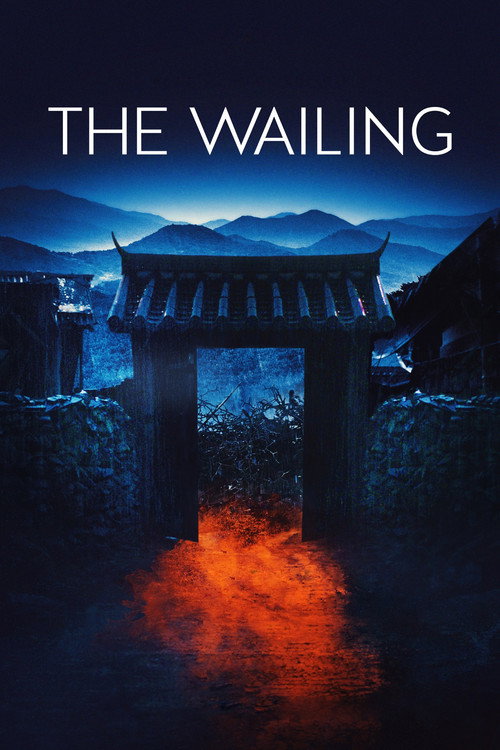
The Wailing
A rain-drenched, folk-horror nightmare of suffocating dread and spiritual paranoia, where a desperate father’s agonizing doubt acts as the very bait that lures an ancient, incomprehensible evil into his sanctuary.
The Wailing

The Wailing

곡성

"Never be tempted."

12 May 2016 South Korea 156 min 7.4 (2,106)

Director: Na Hong-jin

Cast: Kwak Do-won, Hwang Jung-min, Chun Woo-hee, Jun Kunimura, Kim Hwan-hee

Mystery Horror Faith, Doubt, and Misjudgment Fear of the Foreigner and Xenophobia The Arbitrary Nature of Evil and Victimhood Paternal Helplessness and Desperation Institutional and Spiritual Impotence
Budget: $10,951,000
Box Office: $49,851,770

Overview

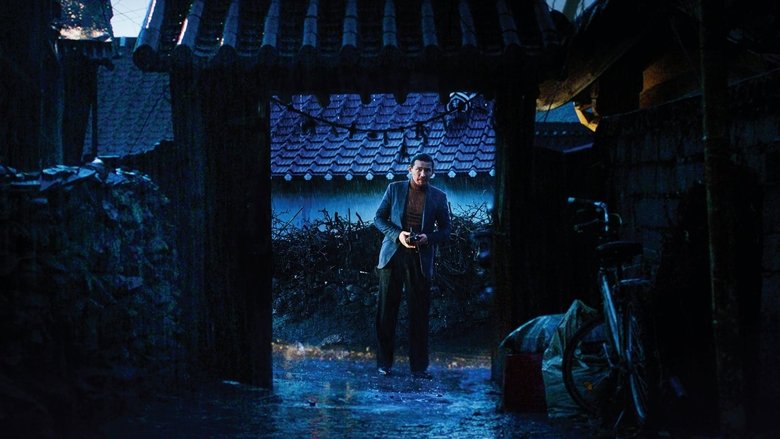
The Wailing (Korean: Gokseong / 곡성), directed by Na Hong-jin, is set in a quiet, mist-shrouded mountain village in South Korea. The peaceful routine of the community is shattered when a horrific rash of violent family murders erupts, committed by previously gentle villagers who have turned erratic, covered in gruesome skin lesions. Local police initially attribute the outbreak to toxic wild mushrooms, but wild rumors spread that the madness began right after the arrival of a mysterious Japanese stranger living in seclusion in the surrounding woods.

Jong-goo, an oafish and indecisive local police officer, is drawn into the investigation. Initially skeptical of supernatural claims, his perspective drastically shifts when his young daughter, Hyo-jin, begins displaying identical violent symptoms and strange behavioral changes. Desperate to protect his family, Jong-goo investigates the stranger's remote cabin, where he finds sinister shrines and personal effects belonging to the afflicted victims—including his own daughter's shoe.

As Hyo-jin’s condition worsens, her frantic family hires a high-profile shaman, Il-gwang, to perform complex rituals to purge the curse. Concurrently, Jong-goo encounters a mysterious woman dressed in white, Moo-myeong, who offers cryptic warnings. Caught between conflicting spiritual advice, mounting hysteria, and his own terrifying nightmares, Jong-goo must decipher who is trying to save his family and who is orchestrating their destruction before it is too late.
Core Meaning

Director Na Hong-jin stated that the film originated from his personal anguish over the sudden, tragic deaths of people around him, sparking the haunting question: "Why did they have to become victims of all people?" The core meaning of The Wailing centers on human vulnerability when confronted with incomprehensible, unprovoked evil.

Unlike classic Western horror narratives where victims are punished for specific sins or transgressions, Na Hong-jin presents evil as an arbitrary, predatory force—much like a fisherman casting a line into a lake without targeting any specific fish. The film highlights how fear, suspicion, and panic dismantle human reason, leading people to jump to conclusions, embrace xenophobia, and destroy the very things they wish to protect. Ultimately, the movie demonstrates how evil preys upon doubt and misjudgments, weaponizing human mistrust to ensure tragedy.

Thematic DNA

Faith, Doubt, and Misjudgment 30%
Fear of the Foreigner and Xenophobia 25%
The Arbitrary Nature of Evil and Victimhood 20%
Paternal Helplessness and Desperation 15%
Institutional and Spiritual Impotence 10%

Faith, Doubt, and Misjudgment

The narrative revolves around Jong-goo’s struggle to discern truth amid chaos. Evil thrives not merely by physical force, but by provoking doubt. Jong-goo's inability to maintain faith in the divine guardian and his tendency to act on paranoia lead directly to his family's downfall.

Fear of the Foreigner and Xenophobia

The villagers immediately scapegoat the Japanese stranger based on rumors, outsider status, and lingering historical animosity. The film explores how societal prejudice creates a fertile ground for paranoia, blinding people to true threats while justifying vigilante violence.

The Arbitrary Nature of Evil and Victimhood

The film rejects the moralized logic of traditional religious narratives where suffering is earned. Evil casts 'bait' indiscriminately, and victimhood is depicted as an existential lottery rather than divine judgment.

Paternal Helplessness and Desperation

Jong-goo represents the classic tragic father figure. His deep love for Hyo-jin drives every action, yet his flawed judgment, impulsiveness, and panic render his protective efforts counterproductive.

Institutional and Spiritual Impotence

Neither civil authorities (the bumbling police force), medical science (blaming mushrooms), institutional Christianity (the Catholic priest advising reliance on doctors), nor mercenary rituals can stem the tide of ancient demonic decay.

Character Analysis

Jong-goo

Kwak Do-won

Archetype: Bumbling Antihero / Tragic Everyday Father Key Trait: Impulsive, indecisive, deeply loving, easily swayed by fear

Motivation

Protect his daughter Hyo-jin from supernatural destruction at any cost.

Character Arc

Starts as an inept, lazy, and somewhat cowardly rural cop; transforms into a fiercely desperate, emotionally shattered father driven to vigilante action and fatal doubt.

The Japanese Stranger / The Demon

Jun Kunimura

Archetype: The Foreign Outsider / The Demonic Trickster Key Trait: Enigmatic, quiet, visually eerie, highly deceptive

Motivation

Spread spiritual chaos, corrupt innocent souls, and harvest victim photographs.

Character Arc

Appears initially as a quiet, persecuted elderly hermit living in the woods; steadily reveals his true nature as an ancient demonic entity taking human souls.

All 5 characters and cast

Symbols & Motifs

Fishing, Bait, and Hooks

Meaning:

The recurring metaphor for demonic recruitment, representing how evil casts bait into the world, waiting to see who bites.

Context:

Both the Japanese Stranger and the shaman Il-gwang are explicitly linked to fishing imagery.

Wild Mushrooms (Gwangdae Beosat)

Meaning:

Symbolizes society's desperate attempt to apply scientific logic and rational explanations to spiritual decay.

Context:

Offered by local authorities as the official, rational explanation for the outbreak of violent madness.

Camera and Photography

Meaning:

Represents the capturing and trapping of human souls.

Context:

Used by both the Stranger and Il-gwang to photograph their victims before and after death.

Snapdragon Flowers (Go-sa-seong)

Meaning:

Protective wards hung at house entrances; they dry into shapes resembling miniature human skulls, indicating when faith fails and protection is broken.

Context:

Hung by Moo-myeong at house entrances as protective wards. When faith fails, the flowers wither completely.

Rooster Crows

Meaning:

A test of faith that directly evokes the Biblical motif of Saint Peter denying Jesus three times before the cock crows.

Context:

At the film's climax, Moo-myeong commands Jong-goo to wait until the rooster crows three times before returning home.

Throwing Stones

Meaning:

References Jesus’ line ("Let he who is without sin cast the first stone"), marking the character's role as an otherworldly entity attempting to awaken conscience.

Context:

Moo-myeong first appears throwing rocks at Jong-goo.

Memorable Quotes

뭣이 중헌디! 뭣이 중헌지도 모르면서!
— Hyo-jin

Context

Screamed hysterically at her father during dinner when he angrily confronts her about her missing belongings and her sudden strange behavior.

Meaning

Translates to "What is important?! You don't even know what's important!" It became a massive cultural catchphrase in South Korea, serving as a warning that Jong-goo is missing the spiritual reality of his daughter's soul while obsessing over earthly leads.

그놈은 그냥 미끼를 던져분 것이고, 자네 딸내미는 고것을 확 물어분 것이여.
— Il-gwang

Context

Spoken to Jong-goo while explaining the spiritual nature of the curse affecting his daughter.

Meaning

Translates to "He just threw out a bait, and your daughter snapped it right up." Directly expresses the director's core philosophical concept regarding the non-discriminatory nature of evil.

All 4 quotes

Philosophical Questions

Why Do the Innocent Suffer?

The film interrogates the concept of divine justice, asking why catastrophic suffering strikes innocent families who have done nothing to invite it.

How Does Fear Distort Perception?

It explores how human anxiety and fear impair rational judgment, causing individuals to mistake enemies for saviors and guardians for monsters.

Is Free Will an Illusion Under Existential Dread?

The story questions whether Jong-goo ever had a genuine chance to save his family, or if human cognitive limits make failure inevitable when facing cosmic forces.

What Are the Limits of Faith and Rationality?

It challenges whether institutional religion or scientific explanations can offer true comfort or protection when confronted with existential dread.

Alternative Interpretations

Interpretation A: The Unholy Alliance (Literal Supernatural Dualism)
The Japanese Stranger is an evil spirit (or human turned demon), and Il-gwang is his hired shaman accomplice. Moo-myeong is the benevolent local mountain spirit (sanshin) trying to protect the village. Jong-goo's failure to trust Moo-myeong allows the evil forces to complete their takeover.

Full ending explanation

Cultural Impact

The film explores deep historical and post-colonial tensions, as the immediate suspicion directed toward the Japanese hermit taps into centuries of deep-seated post-colonial tension between South Korea and Japan. Na Hong-jin deliberately leverages this cultural bias to lead both the protagonist and the audience down a path of prejudice.

It also highlights religious syncretism, mixing Korean Muism (Shamanism), Catholic exorcism traditions, and animistic nature folklore into a uniquely East Asian spiritual landscape where multiple belief systems exist simultaneously.

The Wailing premiered Out of Competition at the 2016 Cannes Film Festival to widespread international acclaim and became a domestic box-office hit, drawing nearly 7 million viewers in South Korea. It sparked a revival in Asian folk-horror, paving the way for occult blockbusters like Svbaha: The Sixth Finger (2019) and Exhuma (2024).

Audience Reception

Critics and audiences praised the film’s atmospheric dread, immersive cinematography by Hong Kyung-pyo, seamless blending of genres (police procedural, dark comedy, folk horror), and stellar performances—particularly from Kwak Do-won and child actress Kim Hwan-hee.

Common points of criticism cite the 156-minute runtime, deliberately confusing cross-cutting sequences, and jarring tonal shifts in the first act (moving from slapstick comedy to dark horror).

Debates persist over whether the film leans into xenophobic tropes or critiques them, as well as the ambiguous cross-cutting during the exorcism scene that leaves first-time viewers confused about character motivations. Overall, it is considered a modern horror classic and a masterclass in psychological manipulation and atmospheric world-building.

Interesting Facts

  • Director Na Hong-jin spent over two years writing and polishing the screenplay, followed by a six-month shooting period on location in remote areas of Gokseong County.
  • Hwang Jung-min’s intense kut (exorcism) performance was shot in continuous takes up to 15 minutes long, leading real shamans present on set to express concern that his dancing might induce a genuine spiritual trance.
  • Japanese actor Jun Kunimura made his South Korean film debut, performing physically grueling scenes including crawling through freezing mud, running through mountain terrain, and consuming actual raw deer meat during night shoots.
  • Cinematographer Hong Kyung-pyo avoided artificial studio lighting whenever possible, waiting hours for genuine overcast weather, fog, and rain to capture the authentic atmosphere.
  • Young actress Kim Hwan-hee spent six months working with physical movement coaches to perform her character's contortions and seizures without relying on CGI body doubles.

Easter Eggs

The Epigraph Subversion

The film opens with text from Luke 24:37-39. At the climax, the demon recites these exact words back to the Catholic deacon, turning holy text into a tool of terror.

Il-gwang’s Wardrobe Hint

When Il-gwang changes clothes after getting sick, he briefly displays a traditional Japanese fundoshi (loincloth). This is the exact same traditional undergarment worn by the Japanese Stranger during his mountain ritual, subtly signaling their alliance early on.

The Victim Photographs in the Trunk

When Il-gwang flees at the end, he accidentally drops a box from his trunk containing rolls of film and photographs of all the village victims—identical to the photo wall in the Japanese Stranger’s cabin.

Moo-myeong's Clothes

Moo-myeong wears items taken from various victims throughout the film (a cardigan from one deceased woman, a jacket from another victim). Rather than being a killer, she collects their personal effects as a spiritual record and guardian of the village dead.

Pig Trotters as Weapons

When Jong-goo and his friends march off to confront the stranger, they grab raw pig legs from a butcher shop as improvised clubs. This serves as a dark comedic reference to Na Hong-jin’s previous violent thriller The Yellow Sea (2010).

Frequently Asked Questions

Explore More About This Movie

Dive deeper into specific aspects of the movie with our detailed analysis pages

Comments (0)

Leave a comment

No comments yet. Be the first to share your thoughts!

Similar Movies