Skip to content
Rubber
An absurdist horror-comedy steeped in surreal existential dread, where a lonely tire’s deadly telepathic awakening turns scorching desert sands into a cinema screen reflecting humanity’s obsession with meaningless spectacle.
Rubber

Rubber

"Are you TIRED of the expected?"

09 November 2010 France 82 min 5.9 (1,130)

Director: Quentin Dupieux

Cast: Thomas F. Duffy, David Bowe, Stephen Spinella, Roxane Mesquida, Jack Plotnick

Drama Fantasy Comedy Mystery Horror The "No Reason" Philosophy / Absurdism Meta-Cinema and Audience Voyeurism Deconstruction of Genre Conventions Anthropomorphism and Desire Authorial Control vs. Narrative Independence
Budget: $500,000
Box Office: $98,017

Overview

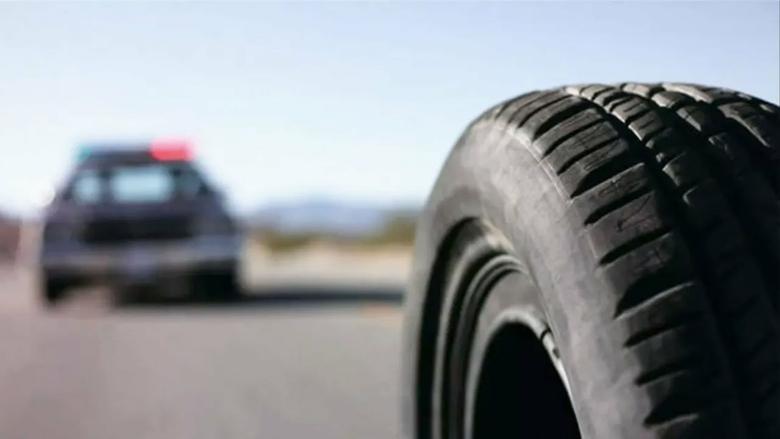
Set in the sun-drenched, desolate expanse of the Mojave Desert, Rubber follows an abandoned car tire that mysteriously springs to life. As it awkwardly pushes itself up out of the dirt, it learns to roll and navigate the desert terrain. Soon, the tire—named Robert—discovers a terrifying psychokinetic power: by vibrating violently, it can telepathically explode small animals, objects, and eventually human heads. Upon spotting a beautiful young woman named Sheila driving along a desert highway, Robert becomes obsessed and follows her to a secluded roadside motel, igniting a bizarre, bloody killing spree.

Running parallel to Robert's violent journey is an equally surreal meta-narrative. A group of diverse spectators standing on a desert ridge are handed binoculars by an anxious accountant to watch the action unfold in real-time as an in-universe audience. Meanwhile, local police officer Lieutenant Chad directly addresses both these spectators and the film's viewers, framing the entire narrative as an explicit homage to the cinematic philosophy of "no reason".

Core Meaning

Directed, written, shot, and edited by Quentin Dupieux, Rubber is an aggressive satire on traditional cinematic conventions, narrative cause-and-effect, and passive audience consumption. The director's core thesis—encapsulated in Lieutenant Chad's opening monologue—is the "philosophy of no reason". Dupieux argues that art, storytelling, and life itself are fundamentally filled with arbitrary, unexplainable events.

By turning an inanimate industrial byproduct into a murderous protagonist and placing a literal audience inside the film, Dupieux mocks Hollywood's obsession with over-explaining plot lore and subverts viewer expectations. The movie serves as a declaration of creative freedom, proving that a film does not need logical justification or studio formulas to evoke emotion or generate spectacle.

Thematic DNA

The "No Reason" Philosophy / Absurdism 35%
Meta-Cinema and Audience Voyeurism 25%
Deconstruction of Genre Conventions 20%
Anthropomorphism and Desire 10%
Authorial Control vs. Narrative Independence 10%

The "No Reason" Philosophy / Absurdism

Established during Lt. Chad’s opening monologue breaking the fourth wall. It justifies the unexplainable awakening and psychokinetic powers of Robert the tire without offering backstory or scientific rationale.

Meta-Cinema and Audience Voyeurism

Explored through the desert spectators watching through binoculars. They mirror real-world filmgoers who demand instant entertainment, complain about slow pacing, and passively consume whatever media (or literal food) is placed before them.

Deconstruction of Genre Conventions

The film relentlessly parodies slasher and creature-feature tropes (such as Scanners, Christine, or Duel) by replacing a typical masked killer with an object devoid of face or voice, while openly exposing the artificial mechanics of movie-making.

Anthropomorphism and Desire

Robert exhibits human-like emotions—curiosity, vanity, jealousy, lust, and fatigue—despite being a rubber circle. He bathes in a motel shower, watches television, and becomes obsessed with Sheila.

Authorial Control vs. Narrative Independence

Lt. Chad and the Accountant try to abruptly force the movie to end by poisoning the audience. However, the narrative refuses to stop rolling, demonstrating that once a story is put in motion, it escapes the creator's full control.

Character Analysis

Robert (The Tire)

Played by a physical tire operated via puppetry, wires, and internal mechanics

Archetype: Antihero / Monster / Protagonist Key Trait: Telepathic head-exploding psychokinesis

Motivation

Self-discovery, obsession with Sheila, and destruction of obstacles.

Character Arc

Awakens in the desert sand, learns to balance and roll, discovers psychokinetic powers, becomes obsessed with Sheila, goes on a killing spree, gets shot by police, and reincarnates as a tricycle.

Lieutenant Chad

Stephen Spinella

Archetype: Fourth-Wall Breaker / Director Surrogate Key Trait: Complete awareness of being inside a fictional movie

Motivation

To dictate narrative rules and conclude the movie as quickly as possible.

Character Arc

Begins as a philosophical narrator explaining "no reason" to the audience; transitions into an in-universe police chief; becomes frustrated when the film refuses to end, eventually executing the tire himself.

All 5 characters and cast

Symbols & Motifs

The Tire (Robert)

Meaning:

Symbolizes the ultimate absurdity of monster tropes and the arbitrary nature of narrative agency.

Context:

Serves as the main protagonist and killer throughout the story, awakening in the desert to embark on a psychokinetic killing spree.

Binoculars

Meaning:

Symbolizes cinematic voyeurism, critical distance, and the artificial lens through which audiences consume screen violence.

Context:

Handed to the desert spectators by the Accountant so they can watch the narrative events unfold in real time.

Poisoned Turkey

Meaning:

Symbolizes the toxic, mass-produced "junk food" entertainment fed to passive audiences by studio executives.

Context:

Fed to the desert spectators by the Accountant in an attempt to abruptly terminate the production and send everyone home.

The Desert

Meaning:

Symbolizes a narrative clean slate—a barren wasteland free from social logic, legal boundaries, or conventional narrative rules.

Context:

Serves as the primary backdrop for both Robert's journey and the spectators' vantage point in the Mojave Desert.

Exploding Heads

Meaning:

Symbolizes visceral thrill-seeking in horror cinema and the literal destruction of logic and rational thought.

Context:

Occurs throughout the film whenever Robert vibrates violently to telepathically destroy animals, objects, and people.

The Tricycle

Meaning:

Symbolizes reincarnation, the cyclical nature of storytelling, and Hollywood's endless appetite for sequels and reboots.

Context:

Appears at the climax of the film after Robert's tire body is shot, inheriting his consciousness to continue the rampage.

Memorable Quotes

All great films, without exception, contain an important element of 'no reason'. And you know why? Because life itself is filled with 'no reason'.
— Lieutenant Chad

Context

Opening monologue delivered directly to the camera after climbing out of a police car boot.

Meaning

Outlines the central philosophical manifesto of the movie.

In Steven Spielberg's E.T., why is the alien brown? No reason. In Love Story, why do the two characters fall in love with each other? No reason. In Oliver Stone's JFK, why is the president assassinated by some guy he's never met? No reason.
— Lieutenant Chad

Context

Part of the fourth-wall-breaking speech citing famous Hollywood titles.

Meaning

Illustrates how arbitrary choices exist across acclaimed mainstream cinema.

All 5 quotes

Philosophical Questions

Does art require logical justification to have value?

Explored via Lt. Chad's manifesto arguing that unexplained choices enhance artistic style.

What is the moral responsibility of the spectator when consuming violence?

Explored through the spectators eagerly watching deaths through binoculars.

Where does fiction end and reality begin when narrative boundaries collapse?

Explored as characters cross between actors and audience observers.

Can an inanimate object possess agency and emotional experience?

Explored through Robert's human-like vanity, attraction, and fatigue.

Alternative Interpretations

Satire on Hollywood & Studio Mechanics: The Accountant represents studio executives trying to cut budgets and wrap production early; the spectators represent passive consumers fed toxic media; Lt. Chad represents an exhausted director trapped in genre formulas.Existential Nihilism: The universe operates without logic or inherent meaning. Looking for deeper symbolism in a movie about a killer tire...

Full ending explanation

Cultural Impact

Rubber emerged in 2010 during an era defined by high-concept viral internet cinema (such as Snakes on a Plane or Hobo with a Shotgun). While marketed as a B-movie gimmick about a "killer tire," it proved to be an arthouse French absurdist critique. Drawing influence from French Surrealism, Dada, and Samuel Beckett’s theatre of the absurd (notably Waiting for Godot’s desolate setting and waiting observers), Rubber polarized viewers.

Critical response was positive regarding its technical ingenuity and satirical bravery (74% on Rotten Tomatoes), whereas general audiences often expressed frustration with its refusal to tell a traditional story (31% audience score). It firmly established Quentin Dupieux as a leading voice in modern absurdist cinema (Wrong, Deerskin, Mandibles).

Audience Reception

Praised: Uniquely original high-concept premise; crisp handheld DSLR visual composition; memorable opening monologue; synth soundtrack by Mr. Oizo & Gaspard Augé.

Criticized: High-concept premise wears thin across 82 minutes (feels like an extended short film); deliberate refusal to deliver a satisfying narrative resolution; mid-section story beats feel repetitive.

Controversial Elements: The abrupt poisoning of the spectator group; mocking the audience's desire for story logic.

Overall Verdict: A polarizing, fiercely clever cult classic that delights lovers of meta-cinema while infuriating viewers seeking a straightforward horror movie.

Interesting Facts

  • Shot on a Prosumer DSLR: Dupieux shot the entire feature film on a handheld Canon EOS 5D Mark II camera with basic prime lenses, helping pioneer high-definition DSLR filmmaking for theatrical releases.
  • One-Man Crew: Quentin Dupieux served as writer, director, cinematographer, camera operator, editor, and co-composer.
  • Low-Tech Practical Effects: To make Robert move, Dupieux used simple 1930s-style puppetry techniques—fishing line held by crew members off-camera and hand manipulation—with only ~20 shots relying on a custom, internal remote-controlled motor prototype.
  • Electro Royalty Score: The electronic musical score was co-composed by Dupieux (performing under his electronic music moniker Mr. Oizo) and Gaspard Augé of the French electronic duo Justice.
  • Micro Budget: The entire movie was shot on an $800,000 budget in California's desert regions near Palmdale.
  • Cannes Premiere: Premiered at the International Critics' Week section of the 2010 Cannes Film Festival to immediate cult fascination.

Easter Eggs

David Cronenberg's Scanners (1981)

The violent telepathic head explosions directly homage Cronenberg's iconic sci-fi horror scanner kills.

Steven Spielberg's Duel (1971) & John Carpenter's Christine (1983)

Parodies classic "vehicular horror" movies by stripping away the truck/car, leaving only a lone, solitary tire.

The Chair Slalom

The opening sequence where a car intentionally drives down a dirt road knocking over wooden chairs references Dadaist performance art and avant-garde theater.

Wings Hauser Cameo

Cult B-movie icon Wings Hauser playing the Man in the Wheelchair serves as a tribute to grindhouse and straight-to-video cinema history.

"Rise of the Planet of the Tires" Climax

The final shot of tires marching down the road toward Hollywood spoofs apocalyptic creature feature sequels.

Frequently Asked Questions

Explore More About This Movie

Dive deeper into specific aspects of the movie with our detailed analysis pages

Comments (0)

Leave a comment

No comments yet. Be the first to share your thoughts!

Similar Movies