Skip to content
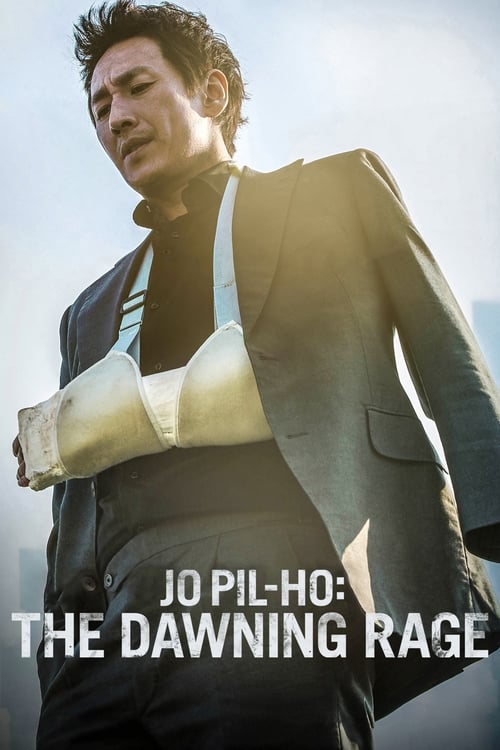
Jo Pil-ho: The Dawning Rage
A rain-slicked Korean noir where a rotten cop and a hardened schoolgirl drag each other through the wreckage of a city that never stopped grieving — rage burning where mourning should be.
Jo Pil-ho: The Dawning Rage

Jo Pil-ho: The Dawning Rage

악질경찰

"The bad meets the worst."

20 March 2019 South Korea 127 min 6.1 (129)

Director: Lee Jeong-beom

Cast: Lee Sun-kyun, Jeon So-nee, Park Hae-joon, Lee You-young, Park Byung-eun

Drama Crime Action Thriller Institutional corruption and the conglomerate state Unresolved national grief (the Sewol legacy) The antihero without redemption Adults failing children Truth, evidence and erasure

Overview

Jo Pil-ho is a homicide detective in Ansan who has long since stopped pretending to be one of the good guys: he shakes down suspects, skims from evidence, and runs petty thefts with hired help. When an explosion tears through a police storehouse and incinerates a cache of highly classified evidence, his accomplice Han Ki-chul dies in the blast and Pil-ho walks out as the only survivor — which makes him the prosecution's favorite suspect.

Cornered by internal affairs and by the people who actually lit the fuse, Pil-ho starts pulling at the thread and finds a conspiracy that runs up through the Taesung Group and the officials on its payroll. His only lead is Mina, a defiant teenage girl who knows more than she should and trusts him not at all. Their alliance is transactional, abrasive, and mutually exploitative — and it is the only thing either of them has.

Director Lee Jeong-beom, returning five years after No Tears for the Dead, sets the story in Ansan, the city that lost a generation of high schoolers in the Sewol ferry disaster, and lets that grief bleed into a hard-boiled crime thriller about money, cover-ups, and who gets to be believed. Lee Sun-kyun plays the detective as a man scraping bottom; newcomer Jeon So-nee matches him note for note as the girl who refuses to be saved on anyone else's terms.

Core Meaning

Lee Jeong-beom's argument is that corruption is not a few bad men but a machine — one that runs on conglomerate money, prosecutorial discretion, and a press that reports what it is handed. Jo Pil-ho is himself a small, greedy cog in that machine, which is precisely the point: the film denies us a clean hero and asks whether justice can be dragged out of a system by someone with no moral standing at all.

The deeper current is grief that has curdled into rage. By setting the film in Ansan and folding in the Sewol ferry tragedy, the director — who has said he was unable to forget the shock of visiting Danwon High School and finding reality to be nothing like the news coverage — insists that institutional lies do not end when the cameras leave. They keep killing people, quietly, for years afterward. The title's "dawning rage" is what remains when mourning is denied its object: an anger with nowhere legitimate to go, which the film follows all the way to its self-destructive conclusion.

Ultimately the film suggests that exposure is not the same as repair. The truth can come out, the guilty can fall, and the person you were trying to protect can still be gone.

Thematic DNA

Institutional corruption and the conglomerate state 28%
Unresolved national grief (the Sewol legacy) 24%
The antihero without redemption 20%
Adults failing children 18%
Truth, evidence and erasure 10%

Institutional corruption and the conglomerate state

The conspiracy Pil-ho uncovers runs through the Taesung Group and the officials who launder its interests, a structure in which police, prosecutors and capital are functionally the same organism. The film stages this not as a shocking revelation but as the ordinary weather of the world — Pil-ho's own petty graft is the entry-level version of what the men above him do at scale.

Unresolved national grief (the Sewol legacy)

Set in Ansan, the film has its characters mourning one of their own, and threads the Sewol ferry disaster through the plot as a wound that the official story never closed. This was the film's most controversial choice: critics argued the tragedy was used as a plot device, while defenders read it as the film's reason for existing — a refusal to let a commercial thriller pretend the city is just a backdrop.

The antihero without redemption

Jo Pil-ho is introduced as genuinely contemptible — a thief with a badge — and the film resists the usual arc where suffering launders a bad man into a good one. What changes is not his morality but his target. His rage acquires a direction, and the film asks whether that is a redemption story or merely a more photogenic form of self-destruction.

Adults failing children

Mina is a teenager forced to negotiate with predatory adults on their terms, using the only leverage she has. Every institution designed to protect her — school, police, family, the law — is either absent or actively extractive, and Pil-ho himself begins by using her. The film's harshest indictment is that the girl's survival depends entirely on the conscience of the least trustworthy man in the story.

Truth, evidence and erasure

The inciting event is the destruction of classified evidence in a police storehouse — the literal incineration of the record. From there the film is a chase after proof: recordings, documents, testimony, anything that can survive the people who want it burned. The pursuit of a paper trail becomes a moral quest, and the film is clear-eyed about how little a paper trail is worth against power.

Character Analysis

Jo Pil-ho

Lee Sun-kyun

Archetype: Antihero / corrupt investigator Key Trait: Unrepentant, sardonic tenacity

Motivation

Initially pure self-preservation — clearing his name and staying out of prison. This hardens into a need to make the people above him answer for what they did, long after saving himself has stopped being possible.

Character Arc

Begins as a thoroughly rotten homicide detective running thefts on the side. The storehouse explosion strips him of his protections and makes him the fall guy, forcing him into an investigation he never wanted. His trajectory is less redemption than reorientation: the same appetite for violence and self-interest, turned against the men who set him up. By the end he has traded survival for vengeance, and pays for it completely.

Mina

Jeon So-nee

Archetype: Wounded survivor / reluctant partner Key Trait: Hard-shelled defiance masking exhaustion

Motivation

Survival first, then a stubborn refusal to let what happened be buried — even when carrying that knowledge costs her more than she can bear.

Character Arc

A defiant teenage girl who holds a piece of the truth and has learned that adults only ever want something from her. Her alliance with Pil-ho starts as mutual exploitation and grinds, unevenly, into something closer to trust — the only real connection either of them has. The film gives her the hardest ending of anyone, and her performance was widely singled out as the film's emotional core.

All 3 characters and cast

Symbols & Motifs

The burning evidence storehouse

Meaning:

The state destroying its own memory. Evidence is the institutional form of truth, and the explosion turns it into ash while conveniently killing the only other witness — a cover-up rendered as spectacle.

Context:

The inciting incident: Han Ki-chul dies inside the storehouse during Pil-ho's scheme, the classified evidence burns, and Pil-ho emerges as sole survivor and prime suspect. The blast retroactively reframes everything he thought he was doing.

Ansan itself

Meaning:

A city as an open wound. Ansan is not a neutral setting but the film's thesis in geography: an industrial, working-class place that bore the human cost of the Sewol disaster and was then expected to move on.

Context:

The director deliberately located the story here after visiting Danwon High School; the characters' mourning for one of their own is woven into the criminal plot rather than kept separate from it.

The badge and the bribe

Meaning:

Twinned objects that represent the same thing. Pil-ho's authority and his corruption are inseparable — the badge is what makes the graft possible, and the graft is what the badge is for in this world.

Context:

Established in the opening stretch through Pil-ho's shakedowns and evidence-skimming, so that his later crusade is always shadowed by the question of what right he has to it.

Height and the fall

Meaning:

Verticality as the film's moral map: power sits at the top of towers, the powerless are driven to the edges of roofs. Falling is what happens to people the system has run out of uses for.

Context:

Recurs through the corporate and urban geography of the film and culminates devastatingly in Mina's fate, which reframes every earlier image of rooftops and high places.

Rain, night and neon

Meaning:

Moral fog made visible. The film's perpetual wet darkness is noir shorthand, but here it also signals a place where nothing can be seen clearly and everyone is soaked in the same filth.

Context:

Sustained across the investigation and chase sequences, keeping the palette bruised and low-key until the violent, exposed clarity of the finale.

Philosophical Questions

Can a corrupt person deliver justice, and does the result count if they do?

The film deliberately gives its truth-seeking to the least deserving man available. Pil-ho's methods are indistinguishable from those of his enemies — coercion, theft, violence — and his success neither cleanses him nor repairs the damage. The film leaves open whether outcome or agent determines the moral value of an act.

What is owed to a grief that the official record refuses to acknowledge?

By placing the story in Ansan and letting the Sewol legacy sit inside a crime plot, the film asks what survivors are supposed to do when institutions close a case that is not closed. Its answer — rage, and rage's tendency to destroy the person carrying it — is bleak and was itself the source of the film's controversy.

Is exposing the truth the same as achieving justice?

Taesung's corruption is ultimately dragged into the light, yet the ending pointedly withholds relief: the dead stay dead and the man who exposed it is in custody and unravelling. The film separates revelation from remedy and suggests that conflating them is how societies talk themselves into moving on.

Who is responsible when a child is failed by every adult in reach?

Mina is used, bargained with, and endangered by nearly everyone, including the protagonist. The film spreads culpability across school, police, business and family rather than locating a single villain, implying that catastrophic harm to the young is usually a collective, distributed act of negligence.

Alternative Interpretations

The ending as tragedy versus the ending as indictment. One reading takes Pil-ho's final rampage as a classic noir self-immolation: he gets his revenge, exposes Taesung, and is destroyed by it — a man who was never good enough to survive doing one good thing. Another reading treats the finale as deliberately unsatisfying by design: the conspiracy is exposed but Mina is still dead and Pil-ho is arrested and broken, which argues that vigilante catharsis is a lie the genre tells and the film is refusing to tell it.

Full ending explanation

Cultural Impact

The film arrived in March 2019, five years after the Sewol ferry sank off Jindo and killed hundreds of Danwon High School students from Ansan — a disaster that became the defining political wound of a decade in South Korea, contributing to the mass protests and the eventual impeachment of President Park Geun-hye. A wave of Korean films and documentaries had already engaged the tragedy, but almost always in a documentary or elegiac register. Lee Jeong-beom's decision to metabolise it inside a hard-boiled, violent commercial thriller was the film's most consequential choice, and its most contested.

The reaction was harsh. Many viewers and critics judged that the film used the sinking as a plot line rather than confronting it, and the writing was widely criticised even by reviewers who praised the action and the performances. The Korea Herald's review was headlined that the film "is enraging." Commercially it collapsed, selling just over 261,000 tickets — a conspicuous failure for a Warner Bros.-distributed vehicle starring Lee Sun-kyun.

Its lasting significance is therefore less as an influential text than as a case study in the ethics of adapting national trauma for genre entertainment — a cautionary reference point in Korean film discourse about what commercial cinema may and may not do with real grief. Secondarily, it served as a breakout showcase for Jeon So-nee, and its afterlife on Netflix gave it an international audience that encountered it with little knowledge of the Sewol context, producing a notably split reception between domestic and foreign viewers.

Audience Reception

Overall verdict: mixed to negative, with a strongly divided domestic and international response. The film currently sits around a 6.4 user rating on IMDb, and reviewers consistently separated its craft from its script.

Praised: Lee Sun-kyun's committed, unglamorous turn as a genuinely repellent protagonist; the action sequences and the grimy, kinetic direction; and above all Jeon So-nee, whose performance as the teenage Mina was repeatedly called the film's heart. The chemistry between the two leads was the single most cited strength, with multiple critics arguing the film would have been better had it committed fully to that relationship instead of the sprawling conspiracy.

Criticised: the writing, almost universally — an over-plotted, tonally erratic script that buries its best material. The nihilistic brutality and relentless unpleasantness alienated a portion of the audience, and the ending struck many as punishing rather than purposeful.

Most controversial: the Sewol ferry subplot. Many Korean viewers gave the film negative reviews specifically for using the sinking as a plot line, viewing it as tonally inappropriate for a violent commercial thriller. International Netflix audiences, largely unaware of that context, tended to judge it simply as a bleak Korean crime film and were markedly more forgiving. The commercial verdict was unambiguous: 261,248 admissions, a clear flop.

Interesting Facts

  • The film marked director Lee Jeong-beom's return to features after a five-year gap, following No Tears for the Dead (2014).
  • Lee Jeong-beom both wrote and directed the film; it runs 127 minutes and was released in South Korea on 20 March 2019.
  • The director deliberately set the story in Ansan, the city most affected by the Sewol ferry disaster, and folded that grief into the crime plot.
  • Lee Jeong-beom has said he was initially hesitant to handle the Sewol ferry incident in a commercial film, but could not forget the shock he felt after visiting Danwon High School and finding the situation different from what news coverage was presenting.
  • The film was produced by Kim-Jho Gwangsoo and distributed by Warner Bros. Pictures, part of the studio's short-lived run of locally produced Korean films.
  • It was a commercial failure, selling 261,248 tickets in its theatrical run for roughly US$2 million at the box office.
  • Jeon So-nee was a relative newcomer when cast; critics repeatedly singled out her performance and her chemistry with Lee Sun-kyun as the film's strongest element, with several arguing the film should have focused more tightly on the two of them.
  • Lee Sun-kyun appeared in Bong Joon-ho's Palme d'Or and Best Picture winner Parasite the same year, making 2019 a stark contrast in the reception of his two releases.
  • The Korean title 악질경찰 translates roughly as 'Vicious Cop' or 'Bad Police'; the film is also known internationally as Bad Police.
  • The film reached a much wider audience internationally through Netflix than it did in Korean theatres.

Frequently Asked Questions

Explore More About This Movie

Dive deeper into specific aspects of the movie with our detailed analysis pages

Comments (0)

Leave a comment

No comments yet. Be the first to share your thoughts!

Similar Movies