Skip to content
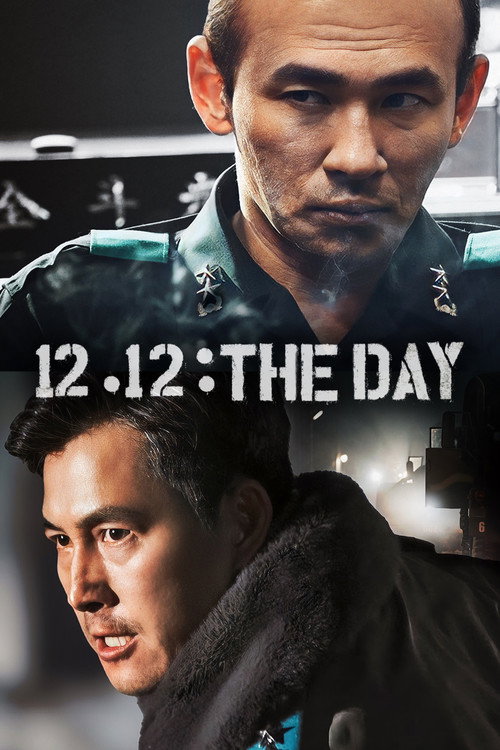
12.12: The Day
A suffocating political crime thriller infused with visceral fury, where the fragile flickering light of democracy is swallowed whole by a shadow-cloaked serpent slithering through the claustrophobic corridors of power.
12.12: The Day

12.12: The Day

서울의 봄

"The worst historical day in Korean democracy."

22 November 2023 South Korea 142 min 7.6 (148)

Director: Kim Sung-soo

Cast: Hwang Jung-min, Jung Woo-sung, Lee Sung-min, Park Hae-joon, Kim Sung-kyun

Drama Crime War History Action Thriller Duty vs. Personal Ambition Cowardice, Hesitation, and Institutional Failure Factionalism and Systemic Corruption The Fragility of Democratic Hope The Illusion of Legitimacy and History Written by Victors

Overview

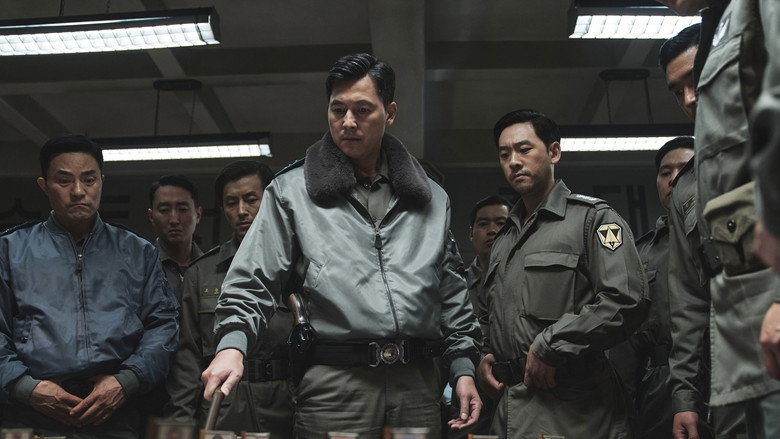
Set against the backdrop of late 1970s South Korea, 12.12: The Day (서울의 봄, Spring in Seoul) dramatizes the fateful nine hours of December 12, 1979. In the volatile power vacuum following the assassination of long-time authoritarian President Park Chung-hee on October 26, 1979, the nation stands on the precipice of democratic reform—a brief period hopeful citizens term the "Seoul Spring". However, ambitious military officer Major General Chun Doo-gwang (Hwang Jung-min), appointed to head the investigation into the assassination, covertly mobilizes Hanahoe, a secret faction of loyal officers within the military, to launch an unauthorized military coup d'état.

To consolidate power, Chun orders the illegal abduction and arrest of Army Chief of Staff General Jeong Sang-ho (Lee Sung-min) without authorization from President Choi Han-kyu. Recognizing the grave threat to national security and constitutional order, Major General Lee Tae-shin (Jung Woo-sung), the newly appointed Commander of the Capital Security Command, refuses to fall in line. Bound by an unyielding sense of duty and military honor, Lee organizes loyalist forces to defend Seoul and suppress the insurrection.

What follows is a tense, claustrophobic war of nerve and strategy fought through secure telephone lines, backroom machinations, urban troop movements, and high-stakes standoffs across the frozen winter night of the capital. As indecisive military superiors waffle and political leaders cower, Lee Tae-shin and a handful of loyal officers wage a desperate, against-all-odds struggle to prevent Chun Doo-gwang from hijacking the nation's future.
Core Meaning

Director Kim Sung-soo crafts 12.12: The Day as a stark warning about the fragile nature of democratic institutions and the terrifying speed with which democracy can be dismantled when opportunistic power-hungry factions exploit institutional weakness. The film demonstrates that grand historical tragedies are rarely driven by coherent political philosophies; rather, they are propelled by personal ambition, tribalism, vanity, and greed.

Crucially, the director highlights the banality of evil and systemic complicity. The coup succeeds not merely because Chun Doo-gwang is ruthless, but because those in power—superiors, cabinet members, and fence-sitting military officers—choose self-preservation, fear, and bureaucratic passivity over moral obligation. The film's message is an urgent call for democratic vigilance: rights and freedom are easily usurped when decent people fail to act boldly against tyranny.

Thematic DNA

Duty vs. Personal Ambition 30%
Cowardice, Hesitation, and Institutional Failure 25%
Factionalism and Systemic Corruption 20%
The Fragility of Democratic Hope 15%
The Illusion of Legitimacy and History Written by Victors 10%

Duty vs. Personal Ambition

The narrative core of the film is the ideological collision between Lee Tae-shin's unyielding soldier's oath and Chun Doo-gwang's rapacious ambition. Lee views the military as an instrument strictly subordinate to the constitution and the nation, whereas Chun views the military as a stepping stone to personal dictatorship. This conflict reveals how personal greed can corrupt military discipline and turn guardians of the state into traitors.

Cowardice, Hesitation, and Institutional Failure

The film places heavy emphasis on the weakness of higher command. The Defense Minister flees at the first sound of gunfire, hiding in fear, while senior generals waffle and seek compromises with the insurgents. This reveals how institutional paralysis and cowardly leadership actively enable aggressive usurpers to triumph over righteous defenders.

Factionalism and Systemic Corruption

Through Hanahoe (the "Group of One"), the film explores how private, mafia-like patronage networks inside state institutions undermine democratic governance. Chun leverages personal loyalty, promises of rapid promotion, and shared complicity to keep his co-conspirators aligned, demonstrating how tribalism overrides legal and ethical codes.

The Fragility of Democratic Hope

The tragic backdrop of the "Seoul Spring" underscores how quickly a nation's aspirations for freedom can be crushed. The film contrasts the hopeful democratic awakening of the public with the dark, insidiously orchestrated military takeover occurring behind closed doors.

The Illusion of Legitimacy and History Written by Victors

Chun Doo-gwang understands that force creates facts on the ground. By securing physical control of Seoul and coercing political authority, the rebels retroactively legitimize an illegal treasonous act, demonstrating how power can manipulate legal frameworks to sanitize corruption.

Character Analysis

Major General Chun Doo-gwang

Hwang Jung-min

Archetype: Villianous Usurper / Machiavellian Mastermind Key Trait: Ruthless audacity, manipulative charisma, and complete lack of ethical constraint.

Motivation

Absolute power, political control, and securing the dominance of his secret military clique, Hanahoe.

Character Arc

Evolves from a calculating internal conspirator into a manic, untouchable military dictator who realizes that no authority can stop him.

Major General Lee Tae-shin

Jung Woo-sung

Archetype: Tragic Hero / Duty-Bound Guardian Key Trait: Rigid moral integrity, quiet dignity, and stubborn courage.

Motivation

Uphold his oath as a soldier, protect the capital, and preserve constitutional order against illegal insurrection.

Character Arc

Initially a reluctant officer who accepts command out of obligation, he becomes an isolated, uncompromising champion fighting a losing battle to preserve the nation's integrity.

All 5 characters and cast

Symbols & Motifs

Chun Doo-gwang’s Hair Loss / Balding Transformation

Meaning:

Symbolizes naked vanity, moral corruption, and unmasked tyranny.

Context:

Hwang Jung-min's distinct physical transformation highlights the character's terrifying, monstrous presence throughout the film.

The Barricade and Razor Wire

Meaning:

Visually represents the boundary between constitutional order and military lawlessness.

Context:

Appears prominently during the climax at Gwanghwamun Plaza. When Lee Tae-shin physically climbs over the razor wire to confront Chun, it symbolizes his solitary moral stand against tyranny.

The Telephone / Communication Switchboard

Meaning:

A recurring motif representing power and control.

Context:

Used throughout the coup, demonstrating that power is not held by whoever has the most bullets, but by whoever controls phone lines, intercepts calls, and manipulates information.

The Victorious Group Photo

Meaning:

Symbolizes the chilling arrogance of the usurpers and the tragic reality of historical injustice.

Context:

Seen at the end of the film, recreating the real historical photograph taken at the Defense Security Command.

Claustrophobic Night and Winter Cold

Meaning:

Serves as a visual metaphor for the dark era descending upon South Korea.

Context:

The film takes place entirely over a freezing December night in a dark, cold atmosphere.

Memorable Quotes

실패하면 반역, 성공하면 혁명 아닙니까!
— Chun Doo-gwang

Context

Said during a heated confrontation when Hanahoe officers panic about facing execution for staging a coup.

Meaning

Defines Chun's cynical ethos: power creates its own law, and history belongs solely to the victor.

야 이 반란군 놈의 새끼야! 너희들 거기 꼼짝 말고 있어. 내가 지금 탱크를 몰고 가서 네놈들 대갈통을 다 뭉개줄 테니!
— Lee Tae-shin

Context

Delivered over the telephone when insurgent generals attempt to persuade Lee to surrender.

Meaning

Directly adapted from real historical audio of General Jang Tae-wan, expressing fiery indignation against traitors.

All 5 quotes

Philosophical Questions

Does power determine its own moral truth?

Explored through Chun Doo-gwang's assertion that success turns rebellion into revolution. The film asks whether legality is merely a tool dictated by whoever holds military force.

Where does a soldier’s true loyalty lie?

Examined through the contrasting choices of military commanders: loyalty to brotherhood (Hanahoe) versus loyalty to the constitution and state.

How does individual cowardice accumulate into historical tragedy?

Explored through secondary figures like the Defense Minister and passive generals whose refusal to take personal risks causes a catastrophic collapse of democratic order.

Alternative Interpretations

Classical Moral Tragedy: The dominant reading views the film as a moral tragedy where a righteous man standing up for democratic principles is betrayed and overwhelmed by Machiavellian forces.Systemic Critique of Bureaucratic Apathy: Another perspective posits that the film is less about individual "good vs. evil" and more about how institutional hierarchies, fence-sitting, and passive obedience e...

Full ending explanation

Cultural Impact

The December 12, 1979 military coup d'état was a pivotal turning point in modern South Korean history. Major General Chun Doo-hwan's faction (Hanahoe) seized control of the military, crushed the democratic "Seoul Spring," and established the Fifth Republic military dictatorship, directly leading to the bloody suppression of the Gwangju Democratization Movement in May 1980.

The film was met with overwhelming critical acclaim and commercial success, dominating the 60th Baeksang Arts Awards and 45th Blue Dragon Film Awards, where it won Grand Prize (Daesang), Best Film, and Best Actor awards.

In December 2024, when South Korean President Yoon Suk Yeol declared a brief emergency martial law, citizens and international media heavily cited 12.12: The Day during news coverage, highlighting how the film served as a cultural touchstone for recognizing authoritarian overreach.

Audience Reception

Praised Aspects: Viewers praised the film for maintaining edge-of-your-seat suspense even though the historical outcome was already known. Hwang Jung-min's spine-chilling portrayal of Chun Doo-gwang and Jung Woo-sung's dignified performance were universally acclaimed. The rapid pacing and claustrophobic sound design further enhanced the sense of real-time panic.

Points of Criticism & Controversies: Some viewers found the experience deeply upsetting, leaving theaters with a feeling of profound injustice and helplessness. A few critics noted that figures like the Defense Minister felt somewhat caricatured or one-dimensional in their cowardice.

Overall Verdict: 12.12: The Day is widely celebrated as one of the finest political thrillers in South Korean cinema history—a masterclass in dramatic tension, historical weight, and acting.

Interesting Facts

  • Director Kim Sung-soo was a 19-year-old high school student in December 1979 living in Hannam-dong near the Army Chief of Staff's official residence, where he personally heard the gunshots ring out on December 12, 1979.
  • Actor Hwang Jung-min spent 3.5 to 4 hours in the makeup chair every single shooting day to apply prosthetics and a bald cap to mimic the real-life appearance of Chun Doo-hwan.
  • The film pulled in over 13 million theatergoers in South Korea, becoming the highest-grossing Korean film of 2023 and earning nearly $98 million worldwide against a $17 million budget.
  • The film sparked a viral smartwatch trend on Korean social media (TikTok, Instagram), where audience members posted screenshots of their Apple Watches showing elevated heart rates (130–170 BPM) and high stress levels caused by rage during the screening.
  • The film reunited director Kim Sung-soo with Hwang Jung-min and Jung Woo-sung, who previously starred together in Kim's acclaimed 2016 neo-noir film Asura: The City of Madness.
  • Selected as South Korea's official submission for Best International Feature Film at the 97th Academy Awards.

Easter Eggs

Jung Hae-in’s Cameo (Major Oh Jin-ho)

The character is based on real-life martyr Major Kim Oh-rang, who refused to abandon Special Warfare Commander Gong Soo-hyuk and was shot dead defending his commander against insurgent troops.

Lee Joon-hyuk’s Cameo (Captain Kwon Hyung-jin)

Actor Lee Joon-hyuk plays Captain Kwon Hyung-jin, the chief bodyguard of Army Chief of Staff Jeong Sang-ho, who is shot while attempting to protect his commander during the abduction.

Cinematic Modern History Tetralogy

Film critics frequently pair 12.12: The Day alongside The Man Standing Next (2020), A Taxi Driver (2017), and 1987: When the Day Comes (2017). Together, these four mainstream Korean blockbusters chronologically cover the fall of Park Chung-hee, the 12.12 coup, the Gwangju Uprising, and the 1987 June Democratic Struggle.

Direct Recreation of the Real Group Photo

The final shot of Hanahoe officers celebrating their coup directly mirrors the exact composition, positioning, and poses of the infamous real-life photograph taken at the Defense Security Command on December 13, 1979.

Frequently Asked Questions

Explore More About This Movie

Dive deeper into specific aspects of the movie with our detailed analysis pages

Comments (0)

Leave a comment

No comments yet. Be the first to share your thoughts!

Similar Movies