Skip to content
Jurassic World Rebirth
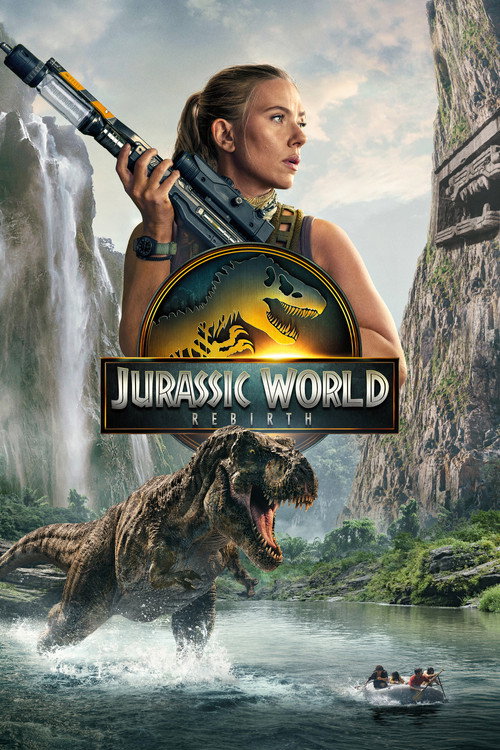
Enveloped in a rain-drenched survival thriller atmosphere, the film evokes raw primal dread and awe as human vulnerability collides with monumental, ancient titans in a misty, forgotten jungle.
Jurassic World Rebirth

Jurassic World Rebirth

"A new era is born."

23 June 2025 United States of America 134 min 6.3 (3,612)

Director: Gareth Edwards

Cast: Scarlett Johansson, Mahershala Ali, Jonathan Bailey, Rupert Friend, Manuel Garcia-Rulfo

Action Adventure Science Fiction Corporate Greed vs. Public Good Human Hubris & Environmental Incompatibility Survival Instincts & Found Family Democratization of Scientific Knowledge
Budget: $180,000,000
Box Office: $869,146,189

Overview

Set five years after the events of Jurassic World Dominion, Jurassic World Rebirth finds the planet's remaining dinosaurs struggling to survive in modern climates. Relegated to isolated equatorial regions—the only environment mirroring their prehistoric habitat—these creatures exist in heavily restricted zones where human entry is strictly forbidden.

When pharmaceutical representative Martin Krebs contracts seasoned covert operations expert Zora Bennett, a high-stakes expedition is launched. Joined by paleontologist Dr. Henry Loomis and team leader Duncan Kincaid, the crew travels to Ile Saint-Hubert—a secret, abandoned InGen research facility in the Atlantic Ocean. Their mission is to harvest genetic material from the world’s three largest prehistoric species (terrestrial, marine, and aerial) to develop a breakthrough drug capable of curing human heart disease.

The expedition takes an unexpected turn when the team rescues the Delgado family, whose sailboat was destroyed in equatorial waters. Stranded on the forbidden island, both groups must navigate crumbling industrial ruins, deadly natural predators, and horrifying genetic secrets left behind by past corporate experiments.
Core Meaning

Director Gareth Edwards and original Jurassic Park screenwriter David Koepp pivot the franchise away from grand spectacle and back to its core themes: the peril of human hubris, the ruthlessness of corporate exploitation, and nature's uncontrollable force. The film explores how commercial greed converts natural miracles into proprietary commodities. Through the contrast between corporate extraction and public health, Rebirth argues that scientific breakthroughs belong to humanity as a whole, rather than private corporations driven by profit margins.

Thematic DNA

Corporate Greed vs. Public Good 40%
Human Hubris & Environmental Incompatibility 25%
Survival Instincts & Found Family 20%
Democratization of Scientific Knowledge 15%

Corporate Greed vs. Public Good

Personified by Martin Krebs and ParkerGenix, this theme drives the plot. The mission is framed as a humanitarian effort, but Krebs' true motivation is monopolizing a billion-dollar cure.

Human Hubris & Environmental Incompatibility

Revealed through the decline of de-extinct species across the globe and the failed genetic mutations abandoned on Ile Saint-Hubert. Humanity's attempt to control life results in ecological rejection and dangerous monstrosities.

Survival Instincts & Found Family

Explored through Zora's mercenary team colliding with the stranded Delgado family. In the face of raw prehistoric terror, professional cynicism melts into empathy and collective protection.

Democratization of Scientific Knowledge

Highlighted by Dr. Henry Loomis, who constantly challenges the idea that nature's secrets should be intellectual property.

Character Analysis

Zora Bennett

Scarlett Johansson

Archetype: Hardened Antihero → Heroic Leader Key Trait: Pragmatic grit, sharp tactical reflexes, and underlying empathy.

Motivation

Completing high-risk extraction jobs for financial security.

Character Arc

Transitions from a cynical, cash-driven mercenary to a moral protector who values human life over financial reward.

Dr. Henry Loomis

Jonathan Bailey

Archetype: Idealist Scholar / Academic Mentor Key Trait: Intellectual curiosity, sharp wit, and strong ethical integrity.

Motivation

Uncovering paleontology truths and making science accessible to all.

Character Arc

Evolves from a passive museum consultant into a courageous field actor who defends scientific ethics.

All 5 characters and cast

Symbols & Motifs

The Snickers Wrapper

Meaning:

Symbolizes human carelessness and how minor oversights cause catastrophic systemic failure.

Context:

Appears in the prologue. A single thrown wrapper gets sucked into a ventilation system, triggering a facility containment breach.

The DNA Extraction Syringe Case

Meaning:

Serves as a visual motif of commodification versus life-saving salvation.

Context:

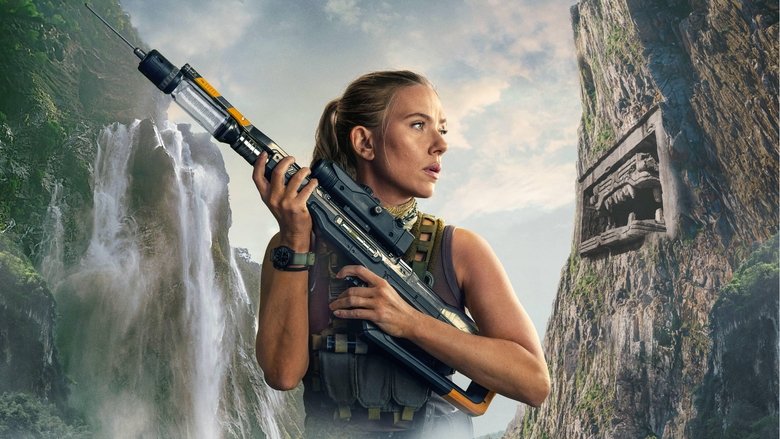
Used by Zora's team to gather samples throughout the expedition.

The "Objects in Mirror" Side Mirror

Meaning:

A direct nod to the original film, symbolizing how the consequences of past mistakes are always closer than they appear.

Context:

Seen early in New York City on Krebs' vehicle.

Red Emergency Flares

Meaning:

Symbolizes human vulnerability, defiance, and self-sacrifice in the dark.

Context:

Used in key action set-pieces, particularly by Duncan during the climax.

The Falling Banner

Meaning:

Mirrors the famous "When Dinosaurs Ruled the Earth" banner, symbolizing the ruin of human arrogance.

Context:

A physical banner inside the dilapidated InGen lab that falls as characters talk.

Memorable Quotes

We don't rule the Earth. We just think we do.
— Dr. Henry Loomis

Context

Spoken to the crew while discussing humanity's place on the planet.

Meaning

Highlights the central thesis of the film regarding human arrogance and ecological reality.

Science is for all of us, not some of us.
— Dr. Henry Loomis

Context

Loomis arguing against corporate exclusivity for the life-saving DNA cure.

Meaning

Encapsulates the film's moral conflict over medical profiteering.

All 5 quotes

Philosophical Questions

Is human intelligence an evolutionary advantage or a tool for self-destruction?

Dr. Loomis points out that dinosaurs survived 167 million years with small brains, whereas humans, despite their intellect, have created tools capable of self-annihilation in a fraction of that time.

Who owns the evolutionary miracles of nature?

The core conflict over the "Paleodioxin" DNA samples pits corporate patent ownership against global human healthcare, asking whether life-saving natural compounds should ever be commercialized for private profit.

Can moral responsibility survive in raw biological survival conditions?

Characters like Zora and Duncan are tested on whether they will prioritize financial payout and self-preservation or put themselves in mortal danger to save strangers.

Alternative Interpretations

Anti-Capitalist Allegory: One reading sees the mutated dinosaurs of Ile Saint-Hubert not as monsters, but as tragic victims of corporate exploitation. The Distortus rex (D-Rex), deformed and abandoned by InGen, represents the grotesque byproduct of pursuing profit over ethical responsibility.The Environmental Rejection Reading: Another perspective focuses on the extinction of dinosaurs outside the...

Full ending explanation

Cultural Impact

Released in July 2025 as a fresh entry separate from the Owen Grady/Claire Dearing story arc, Jurassic World Rebirth aimed to recalibrate a franchise suffering from spectacle fatigue. Critics generally recognized the film as a grounded stylistic improvement over Jurassic World Dominion, praising Gareth Edwards' signature sense of visual scale and tactile monster movement.

While some reviews criticized the overstuffed cast and formulaic plot structures, audiences praised the film's return to survival horror elements, practical-looking CGI, and Alexandre Desplat's score. The film was a global box office success, grossing over $872 million worldwide and proving the enduring popularity of dinosaur cinema when anchored by strong directorial craft.

Audience Reception

Praised Aspects:

  • Gareth Edwards’ mastery of scale, weight, and creature perspective.
  • Scarlett Johansson's lead performance and onscreen dynamic with Jonathan Bailey.
  • Tense set-pieces: T-Rex river raft sequence, Mosasaurus sea attacks, and convenience store stalk.
  • Alexandre Desplat's grounded orchestral score.

Main Points of Criticism:

  • Thin characterization for secondary characters and members of the mercenary team.
  • The civilian Delgado family subplot occasionally slowing down narrative momentum.
  • Narrative predictability adhering strictly to traditional franchise beats.

Overall Verdict: A visually impressive, thrilling standalone entry that restores atmospheric tension and monster dread to the series, even if its narrative follows familiar tracks.

Interesting Facts

  • Screenwriter David Koepp, who wrote the original 1993 Jurassic Park and 1997's The Lost World, returned to write the script, crafting a grounded survival story.
  • Director Gareth Edwards stated that Star Wars and Jurassic Park were the only two established franchises he would drop everything to direct; having made Rogue One, Rebirth fulfilled his childhood dream.
  • Principal photography took place across tropical locations in Thailand (including Trang, Krabi, and Koh Kradan), water tanks in Malta, and soundstages at Elstree Studios in the UK.
  • Jurassic World Rebirth was nominated for Best Visual Effects at the 98th Academy Awards, making it the first film in the franchise since The Lost World: Jurassic Park (1997) to receive an Oscar nomination.
  • In David Koepp's initial draft, Duncan Kincaid (Mahershala Ali) was scripted to die heroically. However, during filming, Edwards and Ali agreed that Duncan’s character arc was more compelling if he survived the climax.
  • Alexandre Desplat composed the film's score, stepping in to replace Michael Giacchino, who scored the previous Jurassic World trilogy.
  • The script incorporates several key set-pieces originally written in Michael Crichton's novels that never made it to earlier films, including the T-Rex river raft sequence and gas station survival moments.

Easter Eggs

Driver's Side Mirror

A side mirror on Krebs' vehicle reads "Objects in mirror are closer than they appear" on the driver's side—a deliberate recreation of the iconic mistake from the original 1993 T-Rex chase scene.

Crichton Tribute

As characters drive through New York, a school bus passes by with the name "Crichton" displayed on the side, honoring original author Michael Crichton.

The Falling Banner

An InGen facility banner drops in the background behind a dinosaur skull, mirroring the famous climax shot from Jurassic Park.

Convenience Store Stalk Sequence

The sequence where the Delgado family hides from a Mutadon in an island convenience store homages the famous 1993 kitchen raptor scene and The Lost World novel's gas station scene.

Spielberg Homages

Ocean attacks by the Mosasaurus explicitly replicate camera angles, tension building, and boat framing from Steven Spielberg's Jaws.

Frequently Asked Questions

Explore More About This Movie

Dive deeper into specific aspects of the movie with our detailed analysis pages

Comments (0)

Leave a comment

No comments yet. Be the first to share your thoughts!

Similar Movies