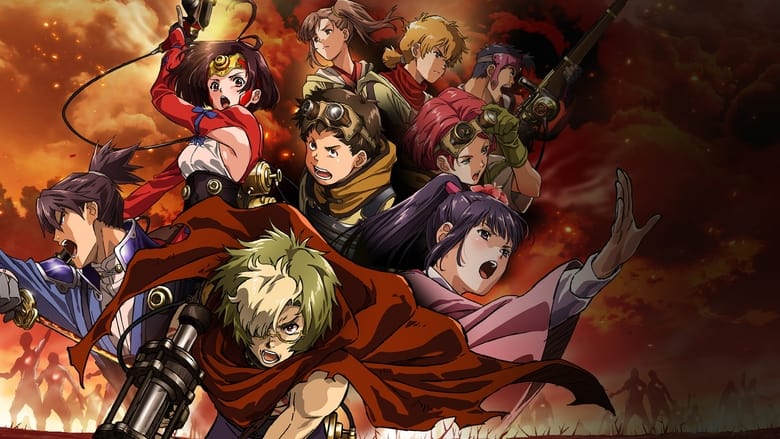
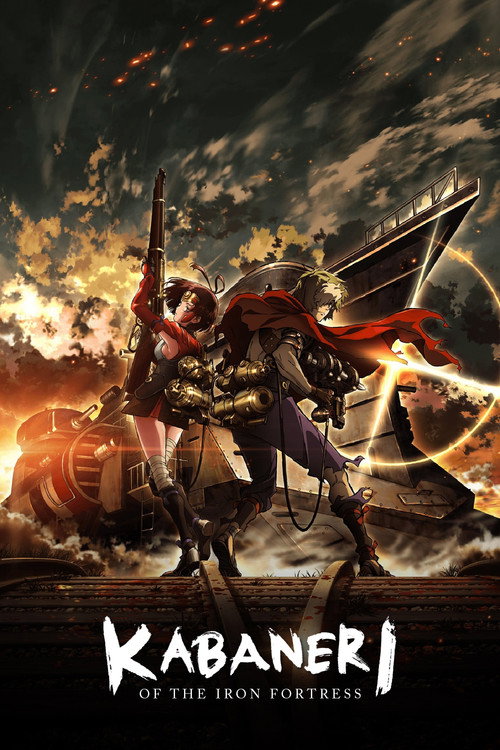
Set on the island of Hinomoto during an alternate Industrial Revolution in the age of the samurai, Kabaneri of the Iron Fortress imagines a Japan overrun twenty years earlier by a mysterious virus that turns the dead into Kabane — aggressive reanimated corpses whose hearts are sheathed in near-impenetrable cages of iron. What remains of humanity huddles inside fortified stations, and the only thread connecting them is the armored steam locomotive, the lifeline and the last frontier at once.
The story follows Ikoma, a young steam smith who lost his sister five years ago and has poured his grief into building a weapon capable of piercing a Kabane's heart. When he is bitten while proving that weapon works, he chooses to die rather than turn — and is saved at the last second by the enigmatic girl Mumei, who shows him what he has become: a Kabaneri, a hybrid of human and Kabane, monstrous enough to fight monsters and human enough to be feared by the living.
Across twelve episodes the fortress-train Kotetsujo carries a fragile community of survivors, nobles, soldiers and refugees through hostile country, while Ikoma and Mumei are forced to earn a place among people who see their glowing eyes as a death sentence. What begins as a survival-horror chase gradually turns inward, into a story about who decides which lives count — and about how easily the fear of monsters manufactures new ones. A pair of compilation films followed in December 2016 and January 2017, and a sequel feature, Kabaneri of the Iron Fortress: The Battle of Unato, set six months after the series, premiered in May 2019.



Comments (0)
No comments yet. Be the first to share your thoughts!