Skip to content
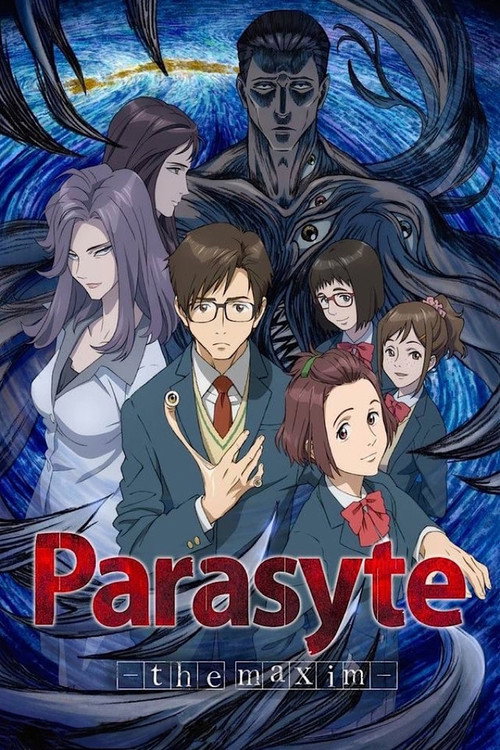
Parasyte -the maxim-
A cold, intimate sci-fi horror drama in which a teenager's own hand becomes a stranger, and humanity is measured in blood, tenderness and the thin skin between predator and prey.
Parasyte -the maxim-

Parasyte -the maxim-

寄生獣 セイの格率

09 October 2014 — 26 March 2015 Japan 1 season 24 episode Ended 8.3 (1,491)

Cast: Nobunaga Shimazaki, Aya Hirano, Takuma Suzuki, Kana Hanazawa, Rena Maeda

Drama Animation Sci-Fi & Fantasy Action & Adventure What makes someone human Symbiosis and coexistence Humanity as predator and part of nature Change and metamorphosis Family, love and loss

Overview

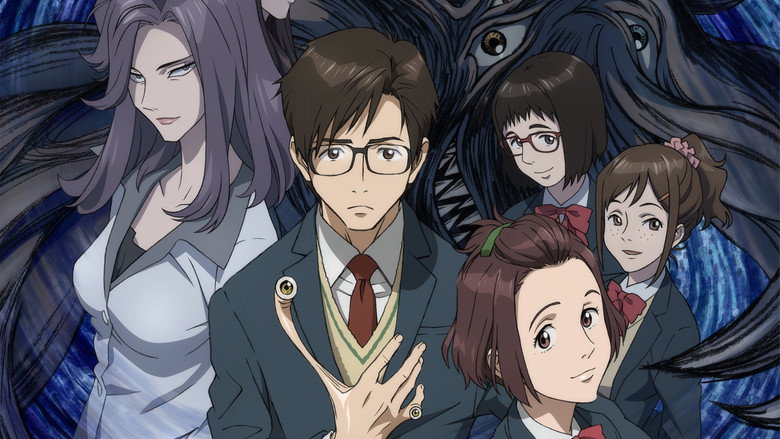
Alien spores quietly descend on Earth and burrow into human heads. They take over the brain and body of the host, and they feed on other people. Shinichi Izumi is a quiet high-school student. A parasite tries to enter through his ear, but he stops it, and it ends up lodged in his right hand instead. He names it Migi ("right"). Because the parasite never reaches his brain, the two keep separate minds and have to share one body in order to survive.

The series follows this uneasy partnership as the two are drawn into a hidden war. Other Parasytes, who pass as ordinary neighbors, teachers and officials, hunt for them. Shinichi tries to protect the people he loves. Alongside the action, the show is a character study of two beings who each change the other. Migi is logical and amoral, and learns about feeling. Shinichi is human, and is pulled toward something colder.

It is based on Hitoshi Iwaaki's manga and was produced by Madhouse. It mixes body horror, thriller pacing and quiet philosophical drama, and keeps asking what separates a monster from a person.

Core Meaning

The series is a meditation on what "humanity" means and on humans' place among other living things. The Parasytes treat humans as food without any malice, much as people treat cattle. That reflection makes the audience question the human claim to moral superiority. The title in Japanese, "Sei no Kakuritsu" ("the maxim of life"), suggests a rule that applies to all life: everything changes in order to survive. Shinichi and Migi change each other, and neither can go back to what he was.

The show does not offer a simple answer. Compassion, which the parasites lack at first, turns out to be what makes someone human. It also turns out to be something the parasites can learn, and something humans can lose. The creators want viewers to hold humanity's cruelty and humanity's capacity for love in the same frame.

Thematic DNA

What makes someone human 30%
Symbiosis and coexistence 25%
Humanity as predator and part of nature 20%
Change and metamorphosis 15%
Family, love and loss 10%

What makes someone human

Shinichi gradually becomes colder and more capable of violence, while Migi learns empathy, curiosity and attachment. The line between human and monster blurs from both sides as the series goes on.

Symbiosis and coexistence

The central relationship starts as host and parasite and grows into a friendship between equals. Each depends on the other to survive, and each is changed by it.

Humanity as predator and part of nature

The Parasytes' feeding on people mirrors how humans treat other species. The later episodes raise the question of who the real parasite on the planet is.

Change and metamorphosis

The title's 'maxim' is that all life transforms. The first episodes are named after literary works about transformation, and Shinichi's body and mind keep changing throughout.

Family, love and loss

The attack on Shinichi's mother, his bond with Satomi, and the Parasytes' attempts to imitate family show that emotional bonds, not biology, define people.

Character Analysis

Shinichi Izumi

Nobunaga Shimazaki

Archetype: Reluctant hero Key Trait: Compassion under pressure

Motivation

First simple survival, then protecting his family and Satomi, and finally trying to remain human while living with the alien.

Character Arc

A timid, ordinary student is forced into a war he never wanted. Trauma, loss and the fusion with Migi harden him and make him stronger, and he risks losing his emotions. He eventually has to reconcile the new, colder part of himself with his human heart.

Migi

Aya Hirano

Archetype: Alien companion / the logical foil Key Trait: Cold logic that learns feeling

Motivation

Survival first; later understanding humans and protecting his partner.

Character Arc

Starts as a pragmatic, emotionless parasite that sees humans as resources, and slowly develops curiosity, humor and genuine attachment to Shinichi. He is changed by living inside a human.
All 4 characters and cast

Symbols & Motifs

Migi (the right hand)

Meaning: The foreign 'other' inside the self; the alien within human identity. Migi also stands for pure reason, which is gradually humanized.
Context: Migi lives in Shinichi's right hand from the first episode and speaks, changes shape and even detaches from the body. His name simply means 'right', which shows how impersonal he is at first.

Shapeshifting blades and tentacles

Meaning: The fragility of the human face, and the monstrous nature hidden under ordinary appearances.
Context: The Parasytes' heads split open into weapons to attack, then return to a normal human look as they pass in society.

The wounded heart

Meaning: Emotional vulnerability and the cost of love. Shinichi lives on through a piece of the alien that now stays in his body.
Context: After his mother, taken over by a Parasyte, stabs him through the heart, Migi spreads his cells through Shinichi's body to seal the wound. This explains Shinichi's enhanced hearing, speed and reflexes.

Literary episode titles

Meaning: They place the story in a long human tradition of tales about transformation, duality and monstrosity.
Context: The titles of the first 20 episodes correspond to published novels, novellas, plays and poetry; the first, 'Metamorphosis', ties into the series' central idea of change.

Philosophical Questions

Is humanity defined by biology or by compassion?

Parasytes look and move like people but lack empathy, while Shinichi gains inhuman abilities yet keeps caring. The series suggests that feeling, not form, makes someone human.

Are humans the real parasites of Earth?

The Parasytes' predation on humans parallels human exploitation of other species. Characters debate whether a species that destroys its habitat has a right to claim moral superiority.

Can reason alone sustain a moral life?

Migi begins as a purely logical being who sees no problem in sacrificing others. As he spends time with Shinichi he comes to value attachment, suggesting reason needs emotion.

How much can you change and still be yourself?

Shinichi's body and temperament keep changing after the fusion, and he fears he is losing himself. The series treats change as unavoidable and asks what must be preserved through it.

How It Ends

Alternative Interpretations

Some viewers read the series as an environmental allegory in which the Parasytes are a mirror of humanity's own impact on the planet. Others read it more personally, as a coming-of-age story in which the "parasite" is the unwelcome change that adolescence brings: a body and a self one does not fully control. A third reading focuses on the friendship between Shinichi and Migi as a story about empathy across difference, showing that understanding comes from living alongside the other.

Full ending explanation

Cultural Impact

The anime adapted a manga that ran from 1988 to 1995 and is counted among the best-selling manga series of all time. The 2014 adaptation brought it to a new generation and to a worldwide streaming audience through simultaneous releases. It was followed by two Japanese live-action films and, later, the South Korean series Parasyte: The Grey (2024). A further series, Parasyte: Tamiya, is announced for 2027, which shows the lasting life of the franchise.

The series is often mentioned beside other dark sci-fi and body-horror anime such as Tokyo Ghoul, and some reviewers compared it favorably to Attack on Titan for its concept and its characters. Its use of literary titles and its themes of transformation (one reviewer compared it to Ovid's Metamorphoses) reflect a thoughtful, literary approach to genre storytelling.

Audience Reception

Reception has been strongly positive. The show scores around 8.3 out of 10 on MyAnimeList, with more than two million members and a top-50 popularity ranking, and a Rotten Tomatoes audience score of 89%. Viewers praise the premise, the fluid animation, the art direction, the music and above all the unusual friendship between Shinichi and Migi. IMDb reviewers call the characters its strongest asset and its protagonist far from the typical hero.

Criticisms include predictability at times, a view that the middle drifts from action into melodrama and romance (one complaint singles out the love triangle), and plot holes that carry over from the manga. A minority call it overrated. The overall verdict is that it is a gripping, thoughtful and emotionally effective sci-fi horror with a memorable central pair.

Interesting Facts

  • The anime aired on Nippon TV between October 9, 2014, and March 26, 2015, and was simulcast by Crunchyroll outside of Asia.
  • It was directed by Kenichi Shimizu at Madhouse, with screenplay by Shoji Yonemura and Shinzo Fujita.
  • The opening theme is 'Let Me Hear' by Fear, and Loathing in Las Vegas, and the ending theme is 'It's the Right Time' by Daichi Miura.
  • The titles of the first 20 episodes correspond to published literary works, including novels, novellas, plays and poetry.
  • The original manga by Hitoshi Iwaaki was reportedly planned as a short three-chapter series before it grew into a long run, and it ran from 1988 to 1995.
  • In North America it is licensed by Sentai Filmworks, and it aired on Adult Swim's Toonami block from October 4, 2015, to April 10, 2016.
  • Two live-action films (2014 and 2015) were made from the manga, and a Korean series, Parasyte: The Grey, followed in 2024.

Frequently Asked Questions

Explore More About This Series

Dive deeper into specific aspects of the series with our detailed analysis pages

Comments (0)

Leave a comment

No comments yet. Be the first to share your thoughts!

Similar Movies