Skip to content
Keep Your Hands Off Eizouken!
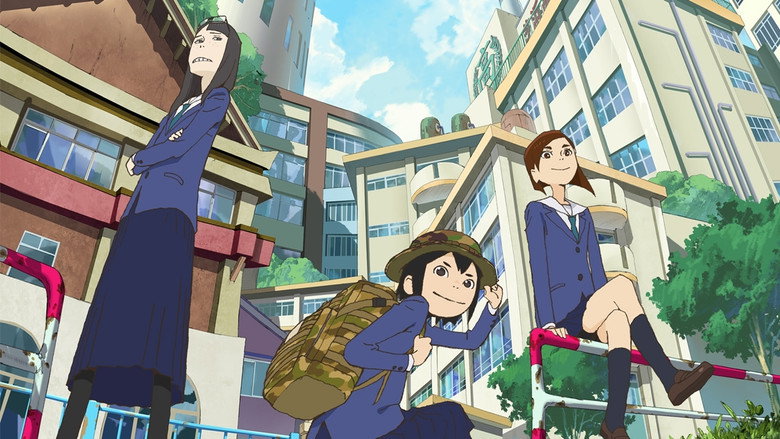
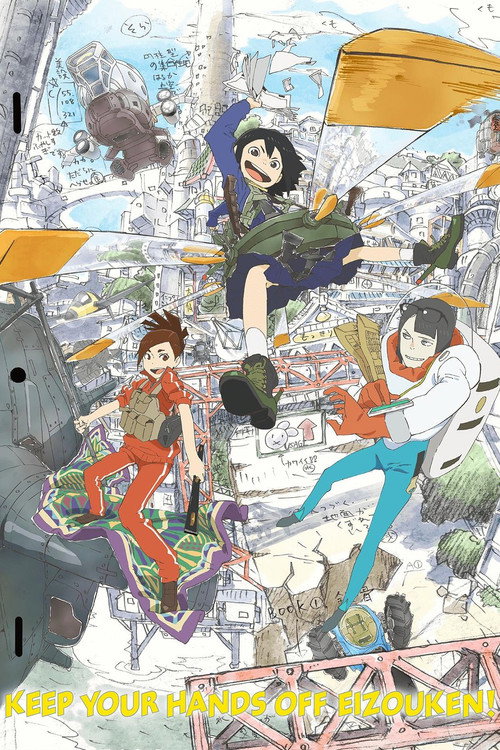
An exuberant explosion of inventive coming-of-age comedy and meta-artistic wonder, where raw childhood daydreaming transforms mundane architecture into dynamic, watercolor flying machines propelled purely by relentless creative passion.
Keep Your Hands Off Eizouken!

映像研には手を出すな!

05 January 2020 — 22 March 2020 Japan 1 season 12 episode Ended 8.1 (117)

Cast: Sairi Ito, Mutsumi Tamura, Misato Matsuoka, Yumiri Hanamori, Mikako Komatsu

Animation Action & Adventure Comedy The Symbiosis of Art and Commerce The Mechanics of the Creative Process Childlike Imagination vs. Material Reality Collaboration, Compromise, and Communication

Keep Your Hands Off Eizouken! — Ending Explained

⚠️ Spoiler Analysis

The narrative progresses through several key structural milestones:

  • The Formation Trick (Episodes 1–3): Kanamori exploits a school loophole to bypass Mizusaki’s parental ban on animation, registering the club as "Motion Picture" (Film) rather than Anime, obtaining the school’s oldest dilapidated storehouse as their workspace.
  • The Student Council Climax (Episode 4): Facing budget revocation, they unveil their first short sword-versus-tank film, securing club legitimacy through overwhelming crowd reaction.
  • The Robot Club Commission (Episodes 5–8): Tasked with making a promotional film for the Robot Club, Asakusa and Mizusaki clash over design philosophy vs. kinetic truth. In Episode 8, Mizusaki’s parents attend the screening, expecting to pull her away, but are moved to tears upon recognizing her signature hand gestures and personal gait embedded in the animated protagonist, giving her their blessing.
  • The Climax and Ending (Episodes 9–12): Eizouken creates Shibahama UFO Wars for an indie festival, but faces student council scrutiny, missing audio tracks, and severe production backlogs. In Episode 12, Asakusa restructures the climax at the last minute to tie the story to local history. When the film screens, the audience is mesmerized. Afterward, instead of resting on their laurels, the trio immediately sits down with notes, identifying every single flaw and planning their next production with the iconic realization: "There is still plenty of room for improvement".

Alternative Interpretations

The series is widely viewed through multiple critical lenses:

  • The "Science SARU Self-Portrait" Reading: Critics interpret the series as Masaaki Yuasa and Eunyoung Choi’s reflection on Science SARU itself—a studio constantly balancing artistic indie experimentalism with the commercial reality of production budgets.
  • ADHD and Neurodiversity Representation: Many viewers and critics analyze Asakusa’s character through the lens of neurodivergence, noting her hyper-fixations, sensory processing reactions, and reliance on structured social buffers (Kanamori).
  • Deconstruction of the "Moe" Genre: Rather than portraying high school girls through traditional fan-service or passive "cute girls doing cute things" tropes, Eizouken portrays them with physical gremlin-like energy, unvarnished ambition, and serious professional friction.

Explore More About This Movie

Dive deeper into specific aspects of the movie with our detailed analysis pages

Similar Movies