Skip to content
Keep Your Hands Off Eizouken!
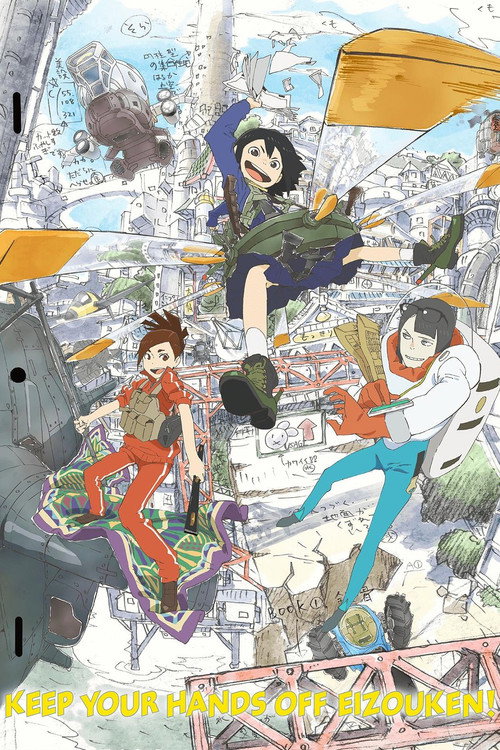
An exuberant explosion of inventive coming-of-age comedy and meta-artistic wonder, where raw childhood daydreaming transforms mundane architecture into dynamic, watercolor flying machines propelled purely by relentless creative passion.
Keep Your Hands Off Eizouken!

Keep Your Hands Off Eizouken!

映像研には手を出すな!

05 January 2020 — 22 March 2020 Japan 1 season 12 episode Ended 8.1 (117)

Cast: Sairi Ito, Mutsumi Tamura, Misato Matsuoka, Yumiri Hanamori, Mikako Komatsu

Animation Action & Adventure Comedy The Symbiosis of Art and Commerce The Mechanics of the Creative Process Childlike Imagination vs. Material Reality Collaboration, Compromise, and Communication

Overview

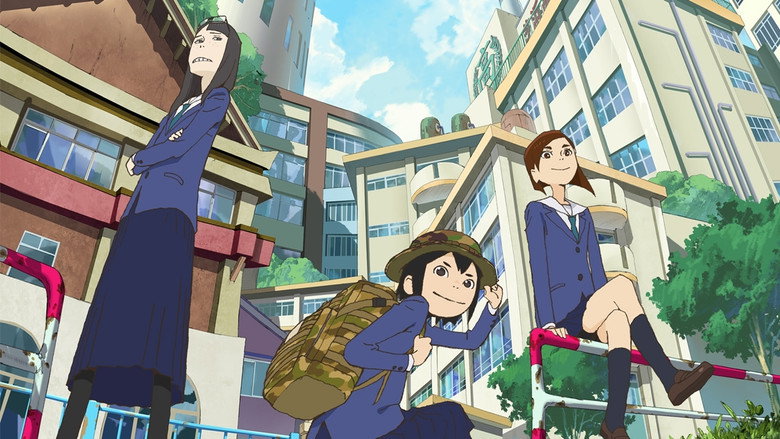
Keep Your Hands Off Eizouken! (映像研には手を出すな!, Eizōken ni wa Te o Dasu na!) is a 12-episode anime television series directed by Masaaki Yuasa and produced by Science SARU, based on the manga by Sumito Ōwara. The story follows three very distinct first-year high school students at Shibahama High School—a sprawling, labyrinthine campus built across waterways and hillside steps. Midori Asakusa is an imaginative concept designer obsessed with setting and world-building; Tsubame Mizusaki is a charismatic teenage model pressured by her parents to act, though her true passion is animating nuanced physical motion; and Sayaka Kanamori is a tall, cynical pragmatist driven by profit, resource management, and ruthless efficiency.

To bypass school regulations and Mizusaki’s strict parental prohibitions against joining the official Anime Club, the trio establishes the "Motion Picture Club" (Eizouken) under the guise of producing live-action films. In reality, their derelict clubhouse becomes an independent animation studio where Asakusa’s expansive concepts and Mizusaki’s character animation are disciplined and monetized through Kanamori’s producer mindset.

Across the single 12-episode season, the narrative documents the arduous lifecycle of creating independent short animated films under extreme budgetary, institutional, and technical constraints. The trio navigates student council budget hearings, collaborates with the school’s eccentric Robot Club, recruits audio savant Parker Doumeki, and takes on an ambitious municipal commission for a local festival. The overarching arc celebrates the raw, unglamorous friction between creative genius and commercial pragmatism.
Core Meaning

The core thesis of Keep Your Hands Off Eizouken! is that art does not spring fully formed from isolated genius; it is forged through intense manual labor, collaborative friction, technical compromise, and logistical grit. Masaaki Yuasa and Sumito Ōwara celebrate animation as the "ultimate playground" of the human mind, yet they demystify the romanticized myth of the artist. The series argues that pure artistic vision (Asakusa) and obsessive technical craft (Mizusaki) are meaningless without pragmatic structure, production management, and audience connection (Kanamori). Creativity is framed as a communal, physical, and disciplined struggle to pull transcendent worlds out of ordinary reality.

Thematic DNA

The Symbiosis of Art and Commerce 30%
The Mechanics of the Creative Process 25%
Childlike Imagination vs. Material Reality 25%
Collaboration, Compromise, and Communication 20%

The Symbiosis of Art and Commerce

The series thoroughly dismantles the trope of the pure starving artist. Through Kanamori, the show argues that financial compensation, deadlines, and project management do not taint art; they validate and protect it, giving abstract ideas tangible form and sustainable existence.

The Mechanics of the Creative Process

Rather than skipping the labor, the series meticulously highlights the physical and technical reality of animation: storyboard drafts, frame rates, keyframing, cel layering, sound effects design, and sound-to-picture synchronization.

Childlike Imagination vs. Material Reality

The story contrasts the mundane, decaying structures of Shibahama with vivid, sketch-styled "delusion sequences". It shows how real-world observations—wind turbine rotation, machete swings, water currents—fuel authentic fiction.

Collaboration, Compromise, and Communication

No single member could make a film alone. The series shows how creators must negotiate with peers, clients, student councils, and their own limitations to produce a finished work before the deadline.

Character Analysis

Midori Asakusa

Sairi Ito

Archetype: The Eccentric Visionary / Creator Key Trait: Boundless curiosity coupled with hyper-detailed observational skills.

Motivation

To explore uncharted territory and realize "the greatest world" (最強の世界) through animation.

Character Arc

Starts as a socially anxious, reclusive girl who retreats into notebooks to escape social overwhelm. Over the course of the projects, she learns to defend her creative choices, lead a team, accept sound engineering and music critiques, and communicate her concepts directly to general audiences.

Sayaka Kanamori

Mutsumi Tamura

Archetype: The Pragmatic Producer / Realist Key Trait: Uncompromising pragmatism, dry wit, and sharp business acumen.

Motivation

Efficiency, monetizing creative labor, and proving that artistic endeavors must be sustained by economic viability.

Character Arc

Initially interested in Asakusa and Mizusaki only as assets for personal gain and school politics, Kanamori grows into a fiercely protective producer who deeply understands the artistic process. She acts as the shield against institutional exploitation and burnout.

All 4 characters and cast

Symbols & Motifs

The Sketchbook / "Setting Bible" (設定資料)

Meaning:

Represents the unfiltered imagination and the conceptual foundation of world-building. It functions as both an emotional comfort zone and the actionable roadmap for productions.

Context:

Asakusa carries her battered sketchbook everywhere, constantly updating it with technical mechanisms, creature designs, and world layouts.

The Machete / Tool Motif

Meaning:

Symbolizes the artist as an active explorer carving meaning out of raw, uncharted space.

Context:

Used during the imaginary delusion sequences where Asakusa wields a machete or utility tools to hack through wilderness or repair mechanisms.

Kanamori’s Shoes / Glasses

Meaning:

Symbolizes pragmatic foresight, rootedness in physical reality, and unwavering clarity amid chaotic artistic daydreaming.

Context:

Exemplified by Kanamori's tall posture, resting geta clogs, and glasses stationed purposefully on her forehead.

The Shibahama Architecture

Meaning:

Mirrors the complex, layered architecture of an animated production pipeline.

Context:

The town and school are depicted as a chaotic, multi-tiered sprawl of bridges, waterways, and ad-hoc additions that the characters constantly navigate.

The Sound Effect "Mouth Foley"

Meaning:

Emphasizes that imagination begins as tactile, childlike play.

Context:

Occurs during imaginative brainstorming sessions when the characters vocalize engine whirs, explosions, and mechanical gears using their own mouths.

Memorable Quotes

アニメは設定が命だ!
— Midori Asakusa

Context

Spoken in Episode 1 when defining her foundational creative mindset regarding anime production.

Meaning

Sets up Asakusa's core design philosophy that a richly realized world with logical rules generates the drama naturally.

表現を金に換えることがそんなに卑しい仕事ですか?
— Sayaka Kanamori

Context

Delivered in Episode 4 during the clash over the value and monetization of artistic work.

Meaning

Confronts the classic purist stigma that associating artistic creation with financial profit degrades its value.

All 4 quotes

Episode Highlights

The Greatest World!

S1E1

Introduces Asakusa’s past encounter with Future Boy Conan and stages the first breathtaking "delusion sequence" where the three girls take off inside a concept helicopter.

Significance:

Establishes the visual language, core dynamic, and thematic foundation of the entire show.

Hold That Machete Tight!

S1E4

Features the high-stakes Student Council Budget Hearing showdown where the Eizouken presents their completed short action film.

Significance:

Proves that dynamic animation can sway hostile bureaucrats, establishing the club's institutional legitimacy.

I Have to Do It for Myself!

S1E7

Presents a deep dive into Mizusaki’s childhood memories with her grandmother and examines how her acting training informs her animation.

Significance:

Unpacks the foundational motivation behind Mizusaki's obsession with kinetic truth and character movement.

The Great Shibahama Festival!

S1E8

Presents the culmination and public screening of the Robot Anime project made in collaboration with the Robot Club.

Significance:

Mizusaki’s parents watch the screening, finally recognize their daughter’s unique artistic talent, and accept her pursuit of animation.

Against Our Independent World!

S1E10

Explores the economic tensions of creative industries as Kanamori negotiates a commission with the local chamber of commerce while Asakusa wrestles with scope creep.

Significance:

Deepens the exploration of external commercial demands colliding with internal creative ambitions.

Shibahama UFO Wars!

S1E12

The season finale covering the frantic final hours and screening of their ambitious festival film despite missing frames and audio hurdles.

Significance:

Concludes the season's primary arc as the screening succeeds and the trio immediately resolves to critique flaws and refine their future craft.

Philosophical Questions

Does commercialization compromise artistic authenticity?

Explored through Kanamori and Mizusaki’s debates over whether working to satisfy client specifications diminishes personal expression.

What defines "completion" in art?

Addressed by the recurring tension between endless perfectionism and fixed release deadlines.

Can imagination replace lived experience?

Explored through Asakusa discovering that great fictional worlds require grounding in physical, everyday observations.

Alternative Interpretations

The series is widely viewed through multiple critical lenses:

Full ending explanation

Cultural Impact

Keep Your Hands Off Eizouken! premiered in January 2020 on NHK General TV to widespread critical and audience acclaim. It was celebrated alongside works like Shirobako as one of the definitive modern portrayals of anime creation, yet praised for prioritizing creative joy over corporate office drama.

The New York Times named it one of the Best TV Shows of 2020 (the only anime on the list), and it won the Grand Prize in the Animation Division at the 24th Japan Media Arts Festival, as well as Anime of the Year at the 2021 Tokyo Anime Award Festival (TAAF). The opening theme dance became a viral internet sensation, cementing its place in contemporary pop-cultural memory.

Audience Reception

The series was universally lauded for its inventive animation switches (shifting between clean anime reality and rough, crayon/watercolor concept drafts), exceptional sound design, sharp pacing, and the chemistry between the three leads.

A minor critique from casual audiences was the absence of a high-stakes dramatic antagonist or traditional romance plot, as the series focuses almost entirely on production methodology and club operations. Overall, it is regarded as an essential masterpiece of modern animation and one of the finest meta-creative shows ever produced.

Interesting Facts

  • Director Masaaki Yuasa chose Sumito Ōwara’s manga as his first TV manga adaptation in several years because Science SARU’s studio ethos mirrored the improvisational, high-energy spirit of Eizouken.
  • Science SARU utilized Adobe Animate/Flash extensively in their digital hybrid pipeline, animating complex camera panning, tweening, and fluid perspective shifts efficiently.
  • Director Yuasa cast live-action actress Sairi Ito as Midori Asakusa rather than a traditional anime voice actress to give her a distinctively raspy, boyish, and authentic adolescent cadence.
  • The opening song by hip-hop duo chelmico, combined with Science SARU’s stylized, rotoscope-inspired character dancing, became a viral meme across international social media platforms.
  • Creator Sumito Ōwara studied film production and animation before making manga, which provided the authentic technical vocabulary (focal lengths, layout composition, cel timing) embedded throughout the series.

Easter Eggs

Future Boy Conan (未来少年コナン) Homage

In Episode 1, the anime clip that fundamentally changes young Asakusa’s life is a direct homage to Hayao Miyazaki’s 1978 seminal anime masterpiece Future Boy Conan.

Classic Mecha Tropes

Episodes 5–8 pay tribute to vintage mecha classics such as Mazinger Z, Mobile Suit Gundam, and Tetsujin 28-go, highlighting debates over impractical designs versus hard science realism.

Sakuga Culture and Famous Animators

Mizusaki’s animation styles reference legendary real-world animators celebrated for mechanical and natural physics, including Yoshinori Kanada and Norio Matsumoto.

Kaiju and Crustacean Biology

The monster created for the Robot film ("Crabtle") incorporates real biological physics, specifically pistol shrimp cavitation bubbles and plasma temperatures.

Frequently Asked Questions

Explore More About This Movie

Dive deeper into specific aspects of the movie with our detailed analysis pages

Comments (0)

Leave a comment

No comments yet. Be the first to share your thoughts!

Similar Movies