Skip to content
Keeper
A folk-horror chamber piece in which an anniversary weekend curdles into dread: a woman alone in a glass house in the woods, watching her reflection multiply until she no longer recognizes which one is prey.
Keeper

Keeper

""Like a surreal David Lynch movie.""

12 November 2025 Canada 99 min 5.7 (331)

Director: Osgood Perkins

Cast: Tatiana Maslany, Rossif Sutherland, Birkett Turton, Eden Weiss, Cassandra Ebner

Mystery Horror Toxic masculinity and patriarchal predation Inherited cycles and the house that remembers Gaslighting and the unreliability of one's own senses Motherhood, pregnancy and reproductive dread Preservation, immortality and the cost of not dying
Budget: $6,000,000
Box Office: $6,223,404

Overview

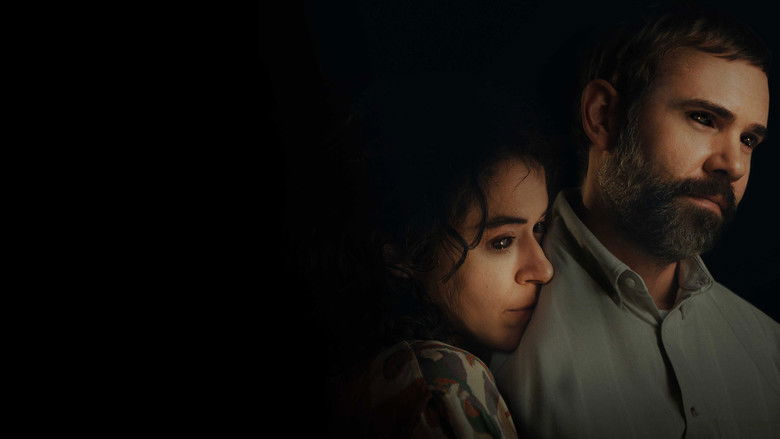
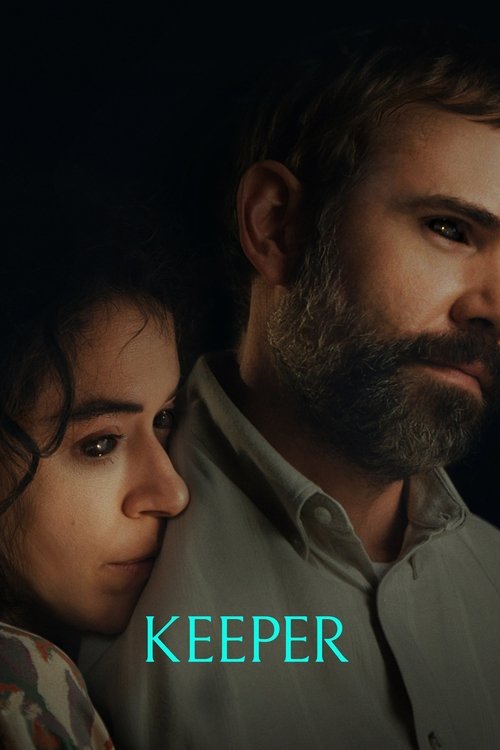
Keeper (2025) is a folk-horror mystery directed by Osgood Perkins from a screenplay by Canadian writer Nick Lepard. Liz (Tatiana Maslany) travels with her boyfriend Malcolm (Rossif Sutherland) to his family's remote, glass-walled cabin in the woods to mark their first anniversary. What is meant to be a romantic retreat becomes something colder almost immediately: the house has a history Malcolm does not care to explain, and the trees outside seem to be paying attention.

When Liz finds herself alone at the cabin, the weekend collapses into a surreal spiral. She glimpses figures that should not be there, loses her grip on the sequence of hours, and begins to suspect that the property's ugly past is not past at all. Perkins stages the film as a two-hander turned one-woman siege — a relationship drama and a haunted-house picture braided so tightly that it becomes impossible to say whether the threat is supernatural or simply the man who brought her here.

Running lean and impressionistic — Variety described it as an "impressionistic" serial-killer film — Keeper is less interested in explaining its horrors than in letting them accumulate. It is grief horror, relationship horror and folk horror at once, held together by Maslany's performance as a woman being asked, politely and then not politely, to accept the role she has been chosen for.

Core Meaning

At its center, Keeper is about how domestic love can function as a harvesting mechanism. Perkins takes the oldest horror setup available — a couple, a cabin, a weekend — and uses it to argue that the cabin was never the trap. The man was.

The film's argument is generational rather than personal: unhealthy patterns are inherited, houses keep records, and each woman who arrives at this property is preceded by all the women who arrived before her. The supernatural apparatus literalizes what an abusive relationship already feels like from the inside — the disorientation, the sense of being told your own perceptions are unreliable, the growing suspicion that your partner's charm is a maintenance ritual for something older and hungrier than affection.

What Perkins ultimately proposes is that the horror is not being consumed but being kept: preserved, stored, made useful. And the film's final gesture insists that the machinery of preservation can be turned around — that the discarded can become the ones who decide who gets kept.

Thematic DNA

Toxic masculinity and patriarchal predation 30%
Inherited cycles and the house that remembers 22%
Gaslighting and the unreliability of one's own senses 18%
Motherhood, pregnancy and reproductive dread 17%
Preservation, immortality and the cost of not dying 13%

Toxic masculinity and patriarchal predation

The film's central engine is a man who has organized his entire long life around the disposal of women. Malcolm's performance of stability — the dependable partner, the family cabin, the anniversary gesture — is revealed as recruitment. Critics have read the film explicitly as an examination of the cycle of toxic relationships men perpetuate and of patriarchal power structures designed to entrap women and render them helpless.

Crucially, Malcolm is never presented as a monster in appearance. The horror is that he is legible, pleasant, and socially unremarkable — the predator as a person one would introduce to friends.

Inherited cycles and the house that remembers

The cabin is a ledger. Its history is not backstory but active mechanism: what happened here two hundred years ago is still happening, with new participants. Liz is not the first woman brought to this room, and the film's dread comes from her slow realization that she is occupying a position rather than a relationship.

The theme extends beyond the supernatural into the ordinary observation that patterns of harm get passed down — that people repeat the roles they were handed, and that breaking a cycle requires recognizing that you are inside one.

Gaslighting and the unreliability of one's own senses

Much of the film is structured around Liz doubting what she has seen. Perkins keeps the audience inside her perceptual uncertainty, so that the surreal imagery functions simultaneously as haunting and as the psychological texture of being disbelieved. Reviewers noted that the supernatural events mirror Liz's doubts about her partner and about the role she is expected to play in their future.

The film refuses, for most of its runtime, to adjudicate — which is precisely the experience it is dramatizing.

Motherhood, pregnancy and reproductive dread

The film's mythology is rooted in a pregnant woman from two centuries earlier whose resemblance to Liz becomes the hinge of the story. Motherhood here is neither sentimental nor purely monstrous: it is the source of the only real power in the film, and it arrives in a form that is grotesque, multiplied, and unconditionally loyal.

The question of what Liz is expected to become — partner, vessel, mother, offering — sits under every domestic exchange in the cabin.

Preservation, immortality and the cost of not dying

Malcolm's bargain is longevity purchased at intervals, forever. The film treats immortality not as transcendence but as an addiction requiring constant resupply — a man who must keep taking in order to keep being. The imagery of preservation, up to and including honey, positions eternal life as a form of pickling rather than living.

The film's final act reframes the theme as a punishment: to be preserved is not the reward Malcolm imagined.

Character Analysis

Liz

Tatiana Maslany

Archetype: Final girl turned avenging matriarch Key Trait: Perceptiveness that she is repeatedly persuaded to distrust

Motivation

Initially, to make the relationship work and to be the person Malcolm seems to want. Then, simply to remain sane and alive. Finally, to end a cycle that has run through generations of women — and to take her place at the head of it rather than at the bottom.

Character Arc

Liz begins as an agreeable partner on a romantic getaway, willing to absorb small strangenesses for the sake of the weekend. Isolation and hallucination erode her certainty until she is doubting her own perception — the film's longest and most punishing stretch. The turn comes not through escape but through recognition: locked in the basement and offered to the creatures, she is embraced rather than destroyed, and discovers that the thing meant to consume her regards her as kin.

She ends the film not as a survivor fleeing the property but as its new authority, executing the sentence herself.

Malcolm

Rossif Sutherland

Archetype: Bluebeard / charming predator Key Trait: Unremarkable, reassuring normalcy used as camouflage

Motivation

To keep living, indefinitely, at any cost borne by someone else. Beneath the metaphysics, an entirely mundane motive: the maintenance of comfort and control through the disposal of women who become inconvenient.

Character Arc

Malcolm is introduced as a stable, hard-working partner whose family cabin is a gesture of intimacy. The film peels this back in layers: evasiveness, then cruelty, then the full disclosure that he is more than two hundred years old and has sustained himself by delivering women to the creatures in the woods in exchange for continued life.

His arc is a stripping rather than a growth. Once the ritual fails, everything he presented — vigor, competence, ordinariness — evaporates, and he ages decades in a night before ending the film hanging by his feet.

All 3 characters and cast

Symbols & Motifs

Honey

Meaning:

Honey is the film's master symbol of preservation as violence. It is the substance that does not spoil, that keeps things exactly as they were — which is what Malcolm has done to himself and attempted to do to a succession of women. It ties the film to the folkloric idea of the mellified man, a body preserved and steeped in honey.

Context:

Honey recurs through the film's imagery and becomes literal in the climax, when Liz hangs Malcolm upside down from a tree by his feet and lowers his head into a pot of honey. What was his mechanism of preservation becomes his method of execution.

The glass cabin

Meaning:

Transparency without safety. The house's walls show Liz the woods but do nothing to separate her from them — a visual thesis about a relationship that appears open and modern while functioning as a cage. Glass also means reflection: Liz keeps encountering versions of herself.

Context:

The cabin is the film's only significant location, and Perkins repeatedly frames Liz against or through its glass, so that the forest is always present in the domestic frame and she is always visible to whatever is outside.

The woods

Meaning:

The site of the bargain — the old, pre-domestic order to which the house is merely an antechamber. The forest holds what the marriage-shaped story is built on top of, and it operates on rules older than the couple's arrangement.

Context:

The creatures to whom Malcolm makes his offerings live in the trees surrounding the property, making every window in the cabin a view onto the transaction Liz is part of.

The bag over the creature's head

Meaning:

Concealment as mercy and as horror. The covered face is the film's image of everything that has been hidden — the erased women, the unspeakable outcomes of Malcolm's history — and its unveiling is the moment the film's true relationship is disclosed.

Context:

The bagged creature is one of the presences that torments Liz; in the climax it removes the covering to reveal a face with multiple eyes and mouths, and identifies itself to Liz as her child.

The anniversary

Meaning:

Ritual disguised as romance. The commemoration of one year together is exposed as a scheduling device — the calendar of a predator dressed up as sentiment. It symbolizes how ceremony launders repetition.

Context:

The trip's stated purpose frames the entire film; every gift, meal and gesture of celebration reads differently once the audience understands what the occasion is actually marking.

Aging flesh

Meaning:

Time as the debt that always comes due. Malcolm's body is a bill he has deferred for two centuries; when the arrangement breaks, the accumulated years arrive at once.

Context:

In the morning after the failed sacrifice, Malcolm wakes having aged decades overnight — the visual confirmation that his charm, competence and vitality were all borrowed from women.

Philosophical Questions

Can a life extended at another's expense still be called a life?

Malcolm has purchased two centuries through repeated sacrifice, but the film gives him no interiority commensurate with that span — no wisdom, no accumulated depth, only appetite and a maintenance schedule. When the arrangement collapses and decades arrive on his body overnight, the film suggests those years were never lived, merely deferred. Keeper treats immortality as preservation rather than existence: honey does not make the body alive, it makes it keep.

How do you know what you saw when the person you trust says you didn't?

The film's long middle stretch is an epistemological trap. Perkins keeps the camera inside Liz's perception without adjudicating it, so the audience shares her position rather than watching it. The horror is not the apparition but the vertigo of having no external verification, and the film argues that the destruction of a person's confidence in their own senses is itself the primary violence — the supernatural is merely its dramatization.

Are inherited cycles of harm breakable, or only transferable?

Liz ends the film by turning Malcolm's own machinery on him, which is a victory — and also a continuation. The property still operates, the creatures still exist, someone is still being preserved in honey. The film leaves genuinely open whether she has ended the arrangement or simply become its new administrator, and the title's ambiguity is the mechanism by which that question stays alive after the credits.

What is owed to what we have discarded?

The creatures are the film's moral accounting: they are what became of everyone Malcolm used, and they have been waiting in the woods for someone who would recognize them. The film's most surprising move is that they do not want revenge for its own sake — they want a mother. Keeper proposes that the abandoned do not stop making claims, and that acknowledgment, not destruction, is what finally turns them.

Alternative Interpretations

The literal folk-horror reading. Everything happens as shown: Malcolm is a two-hundred-year-old man sustained by a bargain with entities in the woods, the creatures are real, and Liz's resemblance to a pregnant woman from the origin of the arrangement makes her their mother rather than their prey. On this reading the film is a supernatural revenge story with a clean inversion in the final act.

Full ending explanation

Cultural Impact

Keeper arrived in late 2025 as part of Osgood Perkins's remarkably rapid run as one of contemporary horror's most prolific auteur-brand directors, and its very existence is a document of the 2023 Hollywood labor disruptions: it was conceived as a two-hander in a single house, written by a non-WGA Canadian screenwriter in real time during production, and shot in Vancouver. Few films of the period wear their industrial circumstances so plainly in their form.

Critically it landed as a divisive minor work rather than a breakout. The Rotten Tomatoes consensus — "More a collection of unsettling moments than an altogether cohesive story, Keeper is too half-baked to have much staying power despite a committed turn from Tatiana Maslany" — captures the dominant line: admiration for Maslany, reservations about coherence. Variety's framing of the film as an "impressionistic" serial-killer picture points to why it split viewers; it withholds the connective tissue that genre audiences expect.

Its cultural conversation has clustered around theme rather than craft. The film joins a substantial 2020s cycle of horror that recodes domestic abuse and patriarchal control as supernatural predation, and commentators have read it directly as an examination of the cycles of toxic relationships men perpetuate and of structures designed to make women feel helpless. Its most distinctive contribution is the mellified man conceit, which gave the film a memorable folkloric hook and drove a substantial volume of ending-explained coverage across genre and mainstream outlets.

Audience Reception

What was praised. Near-universal agreement centers on Tatiana Maslany, who was widely described as carrying the film's emotional weight with ease and delivering a committed performance in an underwritten role. Reviewers also credited the film's atmosphere and imagery — one review called it "visually haunting" — and its efficient, claustrophobic construction. The blend of relationship horror, folk horror and grief horror inside a single weekend was noted as an ambitious compression.

What was criticized. The dominant complaint is incoherence. The Rotten Tomatoes consensus called it "more a collection of unsettling moments than an altogether cohesive story" and "too half-baked to have much staying power." Reviewers repeatedly faulted the pacing of the third act: the revelations about who Malcolm really is and what Liz's tormentors actually are arrive so quickly that the audience is given no room to absorb them. The Liz–Malcolm relationship was widely called underdeveloped, which undercuts the betrayal the film is built to deliver, and at least one outlet dismissed the storytelling as tired.

Points of contention. The ending divides viewers most sharply — some read the honey execution and the creatures' embrace as a cathartic, memorably strange feminist inversion; others found it abrupt and tonally unearned after a slow, ambiguous build. There is also a genuine split over whether the film's opacity is authorial ("impressionistic," in Variety's word) or simply the visible seam of a screenplay written during shooting.

Verdict. A minor, divisive entry in Osgood Perkins's filmography: atmospherically strong, thematically pointed, structurally unfinished, and worth seeing chiefly for Maslany and for a final act that people argue about.

Interesting Facts

  • The film was written by Canadian screenwriter Nick Lepard, whom Osgood Perkins sought out specifically because Lepard was not a member of the Writers Guild — allowing the project to move forward during the Hollywood strikes.
  • The script was written in real time by Lepard while the film was already being made. Perkins has said of the finished screenplay, "I didn't touch it."
  • The premise was reverse-engineered from the production constraints. Perkins described the starting point as: "So we were like, we need a movie in a house. Yeah, we need a movie in a house with two people."
  • Perkins characterized the project's working energy as "what if we made it up as we went along-ish," with every department developing simultaneously — he was meeting with Tatiana Maslany while Lepard was still writing and producers were still scouting locations.
  • The film was shot in Vancouver, British Columbia.
  • Alongside Maslany and Rossif Sutherland, the cast includes Birkett Turton and Eden Weiss.
  • Keeper played the Whistler Film Festival, where Perkins and producer Chris Ferguson appeared for a post-screening discussion.
  • Variety's review characterized the film as an "impressionistic" serial-killer movie rather than a conventional narrative horror picture.
  • The Rotten Tomatoes critics' consensus reads: "More a collection of unsettling moments than an altogether cohesive story, Keeper is too half-baked to have much staying power despite a committed turn from Tatiana Maslany."

Easter Eggs

The mellified man

The film's honey imagery and its climactic execution draw on the folkloric figure of the mellified man — the legendary practice of steeping a human body in honey to preserve it and produce a medicinal confection. The reference reframes Malcolm's immortality as a form of embalming rather than vitality, and makes Liz's final act a literalization of what he has been doing metaphorically for two hundred years.

The two-hundred-year-old pregnant woman who looks exactly like Liz

Buried in the film's historical layer is a doubling that recontextualizes everything: the creatures do not mistake Liz for their mother by accident. The resemblance is the reason Malcolm chose her, and the reason his plan fails — a self-defeating loop in which the predator's own selection criteria produce his executioner.

The one-house, two-actor structure

The film's minimalism is itself a trace of its making. Because the movie was conceived as "a movie in a house with two people" to be producible during the strikes, its claustrophobia is a production condition converted into an aesthetic — the constraint is visible in the finished film's form.

Frequently Asked Questions

Explore More About This Movie

Dive deeper into specific aspects of the movie with our detailed analysis pages

Comments (0)

Leave a comment

No comments yet. Be the first to share your thoughts!

Similar Movies