Skip to content
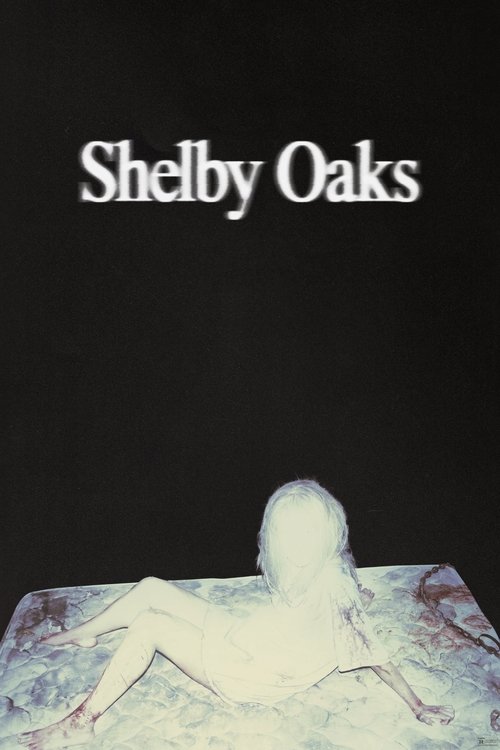
Shelby Oaks
A nocturnal descent into obsessive grief and fractured memories, where corroded VHS static gives way to subterranean horrors, illuminating how the shadows of childhood trauma never truly release their hold.
Shelby Oaks

Shelby Oaks

"Who took Riley Brennan?"

02 October 2025 United States of America 91 min 5.7 (306)

Director: Chris Stuckmann

Cast: Camille Sullivan, Sarah Durn, Brendan Sexton III, Michael Beach, Keith David

Mystery Horror The Destructive Obsession with Closure & Unresolved Grief Reality vs. Media Perception & Voyeuristic Exploitation The Lingering Persistence of Childhood Trauma Human Depravity Masked by Fanaticism and the Occult
Budget: $1,400,000
Box Office: $2,350,523

Overview

Shelby Oaks marks the feature directorial debut of film critic and YouTube personality Chris Stuckmann, who co-wrote the screenplay with his wife, Samantha Elizabeth. The story begins twelve years after the unexplained disappearance of Riley Brennan (Sarah Durn), the charismatic lead of the early-YouTube ghost-hunting collective "The Paranormal Paranoids". After exploring the eerie ghost town of Shelby Oaks, Ohio, Riley and her crew vanished into thin air. The tragedy became an unsolved true-crime obsession for internet sleuths and an unrelenting wound for Riley’s older sister, Mia (Camille Sullivan), whose marriage to Robert (Brendan Sexton III) strains under her inability to move on.

The cold trail violently reignites when an unhinged stranger, Wilson Miles (Charlie Talbert), arrives at Mia’s doorstep holding an unreleased videotape and abruptly takes his own life. Spurred by this harrowing new clue, Mia bypasses the cautious counsel of Detective Burke (Michael Beach) and embarks on a desperate quest that pulls her across derelict Midwest landmarks—including an abandoned prison and amusement park.

Blending the gritty aesthetic of archival found-footage mockumentary with a narrative psychological thriller, Shelby Oaks unravels a mystery that crosses the boundary between mundane human depravity and an ancient, lingering supernatural evil linked directly to the sisters' shared childhood.

Core Meaning

The core message of Shelby Oaks centers on the consuming nature of unresolved grief and the generational cost of denial. Chris Stuckmann, drawing heavily from his personal upbringing and estrangement from family within the strict confines of the Jehovah's Witnesses, explores what happens when a loved one disappears into a system or trauma from which you cannot rescue them.

The film warns against the idolization of closure: Mia’s monomaniacal refusal to mourn Riley leads her into dark revelations that eclipse the pain of not knowing. Stuckmann suggests that evil thrives precisely where people ignore early warning signs—whether rationalizing childhood night terrors as "mere imagination" or looking away from vulnerable individuals isolated at society’s forgotten fringes.

Thematic DNA

The Destructive Obsession with Closure & Unresolved Grief 30%
Reality vs. Media Perception & Voyeuristic Exploitation 25%
The Lingering Persistence of Childhood Trauma 25%
Human Depravity Masked by Fanaticism and the Occult 20%

The Destructive Obsession with Closure & Unresolved Grief

Mia’s pursuit of Riley destroys her domestic stability and endangers her life. The narrative illustrates how unresolved loss becomes an emotional parasite, driving an individual to sacrifice present relationships for the ghost of the past.

Reality vs. Media Perception & Voyeuristic Exploitation

Through the lens of "The Paranormal Paranoids," the film critiques early internet spectacle culture. Riley turns urban exploration and terror into entertainment for an audience that cannot distinguish genuine distress from staged content, leading to societal apathy when actual danger strikes.

The Lingering Persistence of Childhood Trauma

The entity stalking the sisters initially manifested during their youth, dismissed by Mia as Riley’s "imaginary friend". The narrative asserts that buried traumas do not vanish; they quietly gather strength until confronted.

Human Depravity Masked by Fanaticism and the Occult

While supernatural elements persist, the physical suffering inflicted throughout the story is carried out through fanatical devotion and captivity, exploring how belief systems weaponize isolation and terror.

Character Analysis

Mia Brennan

Camille Sullivan

Archetype: The Obsessive Seeker / Tragic Hero Key Trait: Unyielding determination bordering on reckless tunnel vision.

Motivation

Relentlessly driven to uncover what happened to Riley, regardless of the danger to her marriage, safety, or sanity.

Character Arc

Begins as a grief-paralyzed sister; transforms into an active investigator, only to realize that uncovering the truth brings harrowing horror rather than peace.

Riley Brennan

Sarah Durn

Archetype: The Vanished Catalyst / Persecuted Victim Key Trait: Fragile curiosity masking deep-seated psychological vulnerability.

Motivation

In the past, to seek online fame and conquer her childhood terrors through ghost-hunting; later, mere physical survival.

Character Arc

Seen first through energetic found-footage recordings as an intrepid content creator, before her horrific reality as an imprisoned captive is unveiled.

All 6 characters and cast

Symbols & Motifs

Analog Camcorders / VHS Tapes

Meaning:

Represent preserved memory, voyeurism, and distorted truth. The degrading video quality serves as a motif for fading clarity and the gap between documented media and hidden realities.

Context:

Utilized throughout the archival found-footage clips of "The Paranormal Paranoids" and the mysterious tape brought to Mia's house.

The Childhood Entity / "Tarion"

Meaning:

The horned demonic silhouette signifies childhood fear made flesh—a manifestation of ancestral vulnerability and repressed psychological wounds.

Context:

Appears in Riley's childhood drawings, accounts of night terrors, corrupted video footage, and physical encounters.

Abandoned Industrial & Midwestern Spaces (Prison and Theme Park)

Meaning:

The Ohio State Reformatory and decayed rides mirror the psychological arrest of the characters, abandoned remnants of an earlier era trapped in decay.

Context:

Featured prominently during Mia's physical investigation across regional Midwest landmarks in Ohio.

The Photo Album

Meaning:

Symbolizes normalized madness and the perverse domesticity maintained by the cultic perpetrators.

Context:

Discovered late in the film inside Norma's house, an organized album chronicling horrifying milestones of ritual captivity.

The Doorstep Threshold

Meaning:

Serves as a literal boundary between domestic sanity and the madness of Riley's world breaking back in.

Context:

The site of the confrontation on Mia’s porch where Wilson Miles delivers the tape and kills himself.

Memorable Quotes

She finally let me leave.
— Wilson Miles (Charlie Talbert)

Context

Spoken on Mia's doorstep moments before he takes his own life.

Meaning

It triggers the narrative, providing the shocking realization that Riley might not be dead, but rather kept alive somewhere under dreadful authority.

You'd be so proud of her.
— Tagline / Norma

Context

Featured as a central promotional motif and within the film’s domestic horror twist.

Meaning

Subverting maternal affection into horrific ritualistic grooming.

All 3 quotes

Philosophical Questions

Does the pursuit of truth justify the destruction of the present?

Mia systematically dismantles her living reality, neglecting safety and marriage to pursue a ghost.

Is human depravity more terrifying when attributed to cosmic forces, or does occultism serve as an excuse for human sadism?

The film blurs the border between genuine supernatural malice and cultic abuse.

How does digital media redefine human mourning?

When a disappearance is turned into viral entertainment, who owns the victim's memory—the grieving family or the voyeuristic public?

Alternative Interpretations

Literal Demonology vs. Shared Delusional Trauma: A major discussion revolves around whether the demon "Tarion" is an actual supernatural entity or a shared psychological trauma construct. Some viewers interpret the creature as an ancient demonic entity that Norma and her son appease, while a grounded psychological reading posits that Norma’s household was an abusive enclave of deranged cultists, and the demonic visions were trauma-induced hallucinations experienced by Mia and Riley to cope with incomprehensible human cruelty.

Full ending explanation

Cultural Impact

Shelby Oaks landed in the cultural consciousness at a pivotal moment for digital-creator-turned-filmmaker transitions. Following the mainstream critical and box-office triumph of Danny and Michael Philippou’s (RackaRacka) Talk to Me (2023), industry interest surged regarding whether prominent internet creators could make viable, cinematic genre work. Stuckmann, possessing over two million YouTube subscribers and fifteen years of film critique, was scrutinized with exceptional intensity by both fans and professional critics.

The film had its initial festival premiere at the Fantasia International Film Festival in July 2024, drawing solid genre buzz that led to Neon’s distribution acquisition. Following revisions, it made its North American festival bow at Fantastic Fest in late 2025 before a wide theatrical rollout on October 24, 2025.

Audience Reception

Critical reception was moderately mixed to positive, with Rotten Tomatoes settling around the low-to-mid 80% range among genre reviewers. Overall, audiences and reviewers viewed it as an earnest, stylistically ambitious debut feature from a passionate cinephile that, while structurally flawed in its pacing and conventional back half, delivers genuine tension and proof of real directorial promise.

Praise:

  • Camille Sullivan’s raw, emotionally grounded performance as Mia was widely cited as the movie's anchor.
  • The opening 25–30 minutes—the "Paranormal Paranoids" mockumentary segments—earned acclaim for authentic VHS texture and escalating dread.
  • High production value achieved relative to its low crowdfunded budget ($1.4 million).

Criticism:

  • The transition from mockumentary to standard Hollywood three-act narrative caused significant tonal whiplash.
  • Baffling third-act character choices (e.g., Mia investigating abandoned sites at night without law enforcement backup) strained suspension of disbelief.
  • Familiarity and over-reliance on established horror tropes from The Blair Witch Project, Lake Mungo, and modern folk-horror.

Interesting Facts

  • The film was initially launched via Kickstarter in March 2022 with a modest $250,000 target, quickly raising nearly $1.4 million to become the most-funded horror film project in Kickstarter history.
  • Prior to filming and throughout early funding, Stuckmann and his team ran an intricate online Alternate Reality Game (ARG) centered around the channel "The Paranormal Paranoids," posting eerie "lost tapes" on Reddit and YouTube.
  • After watching an early cut, acclaimed horror filmmaker Mike Flanagan (along with Intrepid Pictures partner Trevor Macy) boarded the project as executive producer in 2024 to assist with fine-tuning, editing, and distribution leverage.
  • Following its world premiere at the Fantasia International Film Festival on July 20, 2024, prestige distributor Neon acquired worldwide distribution rights and financed three additional days of reshoots to complete missing scenes and amplify horror/gore sequences.
  • Filming took place across Chris Stuckmann's home state of Ohio, notably utilizing the historic Mansfield Reformatory (the famous setting of The Shawshank Redemption) for the prison exploration scenes.
  • Stuckmann grew up in a strict Jehovah's Witness household and experienced real-life estrangement when his sister was disfellowshipped/excommunicated, directly inspiring the film's driving sibling search.
  • The atmospheric original score was composed by James Burkholder alongside The Newton Brothers, frequent collaborators with Mike Flanagan on projects like The Haunting of Hill House.

Easter Eggs

The Shawshank Redemption Filming Site

The sequences exploring the abandoned detention center were shot inside the Ohio State Reformatory in Mansfield, Ohio, paying deliberate homage to one of Stuckmann's all-time favorite cinematic masterworks.

Horror Cameo Casting

Derek Mears (who played Jason Voorhees in the 2009 Friday the 13th) appears in a cameo role, serving as a tip of the hat to physical horror character performance.

Found Footage Archetypes

The opening sequence deliberately recreates the look, sound, and artifacting of late-2000s YouTube vlog equipment (standard definition, blown-out low-light contrast, 4:3 aspects), mirroring the golden era of early web series like Marble Hornets and Lonelygirl15.

Keith David’s Genre Pedigree

Casting Keith David serves as a meta-nod to legendary 1980s horror and science-fiction classics, most notably John Carpenter’s The Thing.

Frequently Asked Questions

Explore More About This Movie

Dive deeper into specific aspects of the movie with our detailed analysis pages

Comments (0)

Leave a comment

No comments yet. Be the first to share your thoughts!

Similar Movies