Klaus
A heartwarming animated adventure breathes life into a desolate, snow-laden town, illuminating the transformative power of a single selfless act.
Klaus

Klaus

"Welcome to the jingle."

08 November 2019 Spain 96 min ⭐ 8.2 (4,362)
Director: Sergio Pablos
Cast: Jason Schwartzman, J.K. Simmons, Rashida Jones, Joan Cusack, Norm Macdonald
Animation Family Fantasy Comedy Adventure
The Transformative Power of Kindness Selflessness vs. Selfishness The Origin of Tradition and Myth Overcoming Grief and Finding New Purpose

Overview

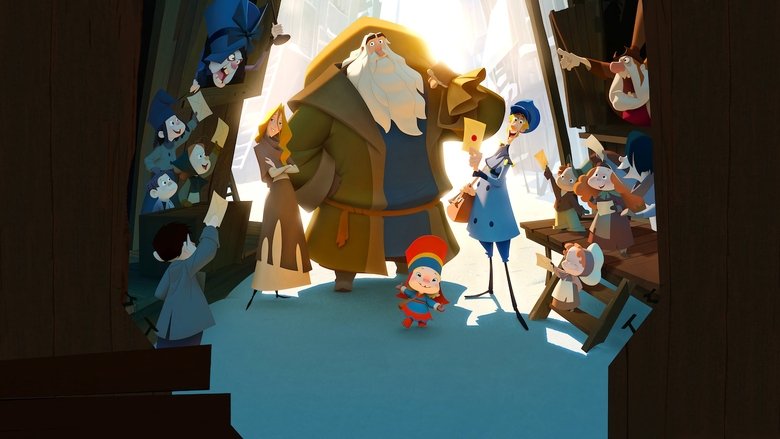
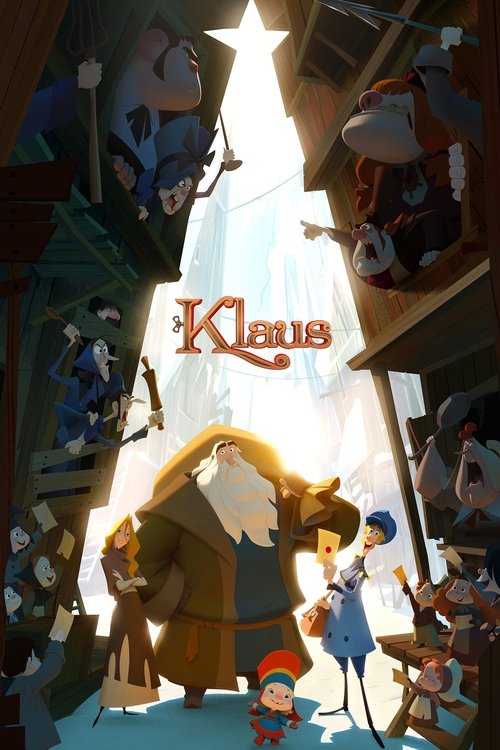
"Klaus" is a 2019 animated Christmas fantasy comedy film that serves as an alternate origin story for Santa Claus. The story follows Jesper Johansen, the lazy and spoiled son of the Royal Postmaster General, who is sent to the remote, frozen island town of Smeerensburg as punishment for his idleness. He is given an ultimatum: post 6,000 letters within a year or be cut off from his family's fortune.

Smeerensburg, however, is a bleak and miserable place, populated by two feuding families, the Ellingboes and the Krums, who are consumed by their centuries-old hatred for one another and have no interest in sending letters. Just as Jesper is about to give up, he stumbles upon a reclusive and imposing toymaker named Klaus, who lives in a cabin filled with handmade toys. Through a series of events, they begin an unlikely partnership, delivering toys to the children of Smeerensburg in secret. This act of kindness starts a chain reaction, bringing joy and slowly healing the divisions within the town.
Core Meaning

The core meaning of "Klaus" revolves around the idea that a single, selfless act can spark immense change and overcome deep-seated hatred and apathy. Director Sergio Pablos wanted to explore how generosity, even when initially motivated by selfish reasons, can transform individuals and an entire community. The film posits that the spirit of Christmas wasn't born from magic, but from the simple, human capacity for kindness. It carries a powerful message that our actions, no matter how small, can have a ripple effect, fostering compassion, unity, and hope in the darkest of places.

Thematic DNA

The Transformative Power of Kindness 35%
Selflessness vs. Selfishness 30%
The Origin of Tradition and Myth 20%
Overcoming Grief and Finding New Purpose 15%

The Transformative Power of Kindness

This is the central theme of the film. The initial act of delivering a toy to a sad child sets off a chain reaction of positive change in Smeerensburg. Children start performing good deeds to receive toys, which in turn inspires the adults to let go of their age-old feud. The film beautifully illustrates how kindness is contagious, capable of melting even the most frozen of hearts and rebuilding a community founded on hatred. Jesper's own transformation from a selfish brat to a caring individual underscores this theme on a personal level.

Selflessness vs. Selfishness

The film presents a stark contrast between selfishness, embodied by Jesper at the beginning, and selflessness, which Klaus comes to represent. Jesper's initial motivations are entirely selfish; he wants to meet his letter quota to escape Smeerensburg. However, through his interactions with Klaus and seeing the joy their actions bring, he undergoes a profound character arc, learning the value of giving without expecting anything in return. The film argues that true happiness is found not in personal gain but in bringing joy to others.

The Origin of Tradition and Myth

"Klaus" offers a creative and secular origin story for the myth of Santa Claus. It demystifies the legend by grounding it in plausible, albeit whimsical, events. The film explains everything from the sleigh and reindeer to the chimney entrances and the naughty-or-nice list through the logical, escalating consequences of Jesper and Klaus's actions. It suggests that powerful myths and traditions are not born from magic, but from the memorable actions of ordinary individuals that inspire hope and are passed down through generations.

Overcoming Grief and Finding New Purpose

Klaus is initially a recluse, shrouded in grief over the loss of his wife, Lydia. The toys he made were intended for the children they were never able to have. His partnership with Jesper gives him a new purpose, allowing him to share his gifts and find joy again by bringing happiness to other children. His story is a poignant exploration of how channeling personal loss into acts of generosity can lead to healing and a renewed sense of life.

Character Analysis

Jesper Johansen

Jason Schwartzman

Archetype: Anti-hero / The Reformed Scoundrel
Key Trait: Cynical but ultimately good-hearted

Motivation

Initially, his sole motivation is to post 6,000 letters so he can return to his life of luxury. This later shifts to a genuine desire to bring happiness to the town and continue the work he started with Klaus.

Character Arc

Jesper begins as a lazy, spoiled, and utterly selfish young man who is exiled by his father to Smeerensburg. His initial motivation is to manipulate the situation to meet his letter quota and escape. However, as he witnesses the genuine joy his and Klaus's actions bring, he undergoes a significant transformation. He develops empathy and finds a sense of purpose beyond his own selfish desires, ultimately choosing to stay in Smeerensburg with the new family he has formed.

Klaus

J.K. Simmons

Archetype: Mentor / The Grieving Giant
Key Trait: Generous and deeply kind, beneath a gruff exterior

Motivation

His initial motivation is rooted in the memory of his wife and their shared dream. Partnering with Jesper allows him to fulfill that dream in an unexpected way, finding joy in giving his creations to the children of Smeerensburg and beyond.

Character Arc

Klaus is first introduced as an intimidating and reclusive woodsman, isolated by grief after the death of his wife. His home is filled with toys he made for children he never had. Through his friendship with Jesper, he rediscovers his purpose and finds an outlet for his immense generosity and skill. He evolves from a solitary, mournful figure into the benevolent, legendary symbol of Christmas generosity.

Alva

Rashida Jones

Archetype: The Cynic with a Hidden Heart
Key Trait: Disillusioned but passionate

Motivation

Initially, her motivation is to earn enough money to leave Smeerensburg for good. This transforms into a desire to educate the town's children and contribute to the newly hopeful community.

Character Arc

Alva is a once-optimistic teacher who has become a cynical fishmonger because the feuding townspeople of Smeerensburg refuse to send their children to school. She is saving money to escape the miserable town. As Jesper and Klaus's actions inspire children to learn to write, her hope is rekindled. She uses her savings to reopen and improve her school, rediscovering her passion for teaching and becoming an integral part of the town's revival.

Mrs. Krum

Joan Cusack

Archetype: The Obstacle / The Tradition-Bound Matriarch
Key Trait: Traditionalist and antagonistic

Motivation

Her primary motivation is to uphold the "glorious hatred" and traditions of the feud between the Krums and the Ellingboes, which has defined her family and the town for generations.

Character Arc

Mrs. Krum is one of the two elders perpetuating the ancient feud in Smeerensburg. She is fiercely dedicated to the tradition of hatred and sees the burgeoning happiness and unity as a threat to her way of life. Her arc is one of resistance to change; she conspires with her rival, Mr. Ellingboe, to stop Jesper and Klaus. The feud she cherishes is ultimately ended not by her, but by the love that blossoms between the younger generation of her family and the Ellingboes.

Symbols & Motifs

Toys

Meaning:

The handmade wooden toys symbolize hope, joy, and the innocence of childhood. In a town devoid of happiness, they are the catalysts for change. They also represent Klaus's lost dreams of fatherhood, which are transformed into a legacy of generosity for all children.

Context:

Klaus's cabin is filled with toys he created for the children he and his wife hoped to have. These toys become the gifts that he and Jesper deliver, sparking acts of kindness among the children of Smeerensburg and eventually leading to the town's transformation.

Letters

Meaning:

Letters symbolize communication, connection, and the expression of desire and hope. In Smeerensburg, the lack of letter-writing signifies the town's deep-seated division and apathy. The act of children writing letters to Klaus represents a newfound hope and a bridge across the community's emotional divide.

Context:

Jesper's mission is to post 6,000 letters. He cleverly turns this selfish goal into a system where children write to Klaus to ask for toys. This initiative not only helps him reach his quota but also revives the school, as children need to learn to read and write, thereby restoring communication and education in the town.

The Wind and Swirling Leaves

Meaning:

The recurring visual of wind and swirling leaves represents the spiritual presence of Klaus's late wife, Lydia, and a gentle, guiding magic. It symbolizes destiny and the invisible forces that connect people and guide them towards their true purpose.

Context:

The magical wind appears at key moments. It first guides Klaus to Jesper, hinting at a new path. Years later, after their work is done, the same swirling wind appears to lead Klaus away, suggesting he is being reunited with his wife in the afterlife.

Smeerensburg's Color Palette

Meaning:

The town's color palette is a visual metaphor for its emotional state. Initially drab, gray, and monochromatic, it symbolizes the misery, conflict, and lack of joy among the townspeople. As kindness spreads, the colors become warmer and more vibrant, reflecting the town's transformation.

Context:

When Jesper first arrives, Smeerensburg is depicted in striking foggy monochrome, with sarcastic ferryman Mogens noting, "You should see it in the spring... That's when those greys really pop". As Jesper and Klaus's actions bring happiness, the town is gradually infused with color, light, and warmth, visually representing the end of the feud and the dawn of a new, joyful era.

Memorable Quotes

A true selfless act always sparks another.

— Klaus

Context:

Klaus says this line to Jesper, explaining the profound impact their actions are having on Smeerensburg. It marks a key moment in Jesper's understanding of the true value of what they are doing, shifting his perspective from a selfish scheme to a meaningful mission.

Meaning:

This is the central philosophical statement of the film. It encapsulates the core theme that acts of kindness, done without expectation of reward, are contagious and have the power to create a positive ripple effect that can transform a community.

Ho ho ho.

— Klaus

Context:

After a moment of genuine joy, Klaus lets out a deep, booming laugh. A surprised Jesper immediately asks, "Wait, wait, wait. Time out. Really? THAT'S how you laugh?". This interaction establishes Klaus's iconic laugh within the film's narrative.

Meaning:

This quote is a humorous and meta-commentary on the creation of one of Santa Claus's most iconic traits. It shows the story playfully constructing the legend from organic, even awkward, character moments rather than pre-existing myth.

We need to show people that a true selfless act always sparks another.

— Jesper

Context:

Jesper says this as he rallies support to counteract the elders' plan to destroy the Christmas toys. It demonstrates that he is now driven by the desire to protect the newfound joy of Smeerensburg, not by his original goal of leaving.

Meaning:

This quote signifies the completion of Jesper's character arc. He has fully internalized Klaus's philosophy and is no longer motivated by selfish desires. He has become a true believer in the power of kindness.

This is tradition! Centuries of glorious hatred, passed down through generations!

— Mr. Ellingboe

Context:

Mr. Ellingboe proclaims this to Jesper while explaining the history of the conflict between the Krums and the Ellingboes, citing events like "The Great Mooning of '86" as points of pride.

Meaning:

This line perfectly captures the absurdity and ingrained nature of the feud that has crippled Smeerensburg. It highlights the central conflict of the story: the resistance of old, destructive traditions to the new, positive changes brought by kindness.

Philosophical Questions

Does the motivation behind a good deed matter if the outcome is positive?

The film delves into this question through Jesper's character arc. His initial actions are entirely selfish—he facilitates the toy delivery system solely to generate 6,000 letters and escape Smeerensburg. Yet, these selfishly motivated actions lead to overwhelmingly positive outcomes: children become happy, the town's feud begins to dissolve, and community spirit is born. The narrative suggests that while the initial intent may be flawed, the act of doing good can itself be transformative for the doer. Jesper doesn't remain selfish; the positive consequences of his actions change him, and he eventually embraces selflessness for its own sake. The film seems to argue that while pure intentions are the ideal, even 'impure' good deeds can start a chain reaction that ultimately leads to genuine altruism.

Can deeply ingrained hatred and tradition be overcome by simple acts of kindness?

Smeerensburg is defined by a "centuries of glorious hatred" between its two main families, a tradition so ingrained it dictates every aspect of life. The film presents a powerful argument that such deep-seated animosity can indeed be dismantled, not by grand gestures or force, but by a grassroots movement of simple kindness. The delivery of toys to children creates a ripple effect; happy children begin to play together and do good deeds, which in turn forces their parents to interact and cooperate. The film posits an optimistic view of human nature, suggesting that the universal desire for joy and connection, especially for one's children, is a more powerful force than inherited hatred.

What is the nature of legacy and immortality?

The film explores legacy through Klaus's story. He begins as a man haunted by a personal tragedy—the inability to have children and the loss of his wife. The toys he made represent a legacy he thought he'd never have. By giving them away, he transforms his personal grief into a public gift. His legacy is not a bloodline, but the tradition of generosity he creates. The film's ambiguous ending—where Klaus vanishes to be with his wife but returns in spirit every Christmas—poses questions about immortality. It suggests that one becomes immortal not by living forever, but by creating a powerful, positive idea or tradition that is carried on by others, ensuring one's spirit and values endure long after they are gone.

Alternative Interpretations

The ending of "Klaus" is intentionally ambiguous and has led to a few different interpretations among viewers, primarily concerning Klaus's fate.

One interpretation is purely magical and literal. In this view, Klaus doesn't simply die of old age. Instead, he transcends his mortal existence to become the immortal spirit of Christmas, Santa Claus. The magical wind that guides him away is seen as a supernatural force, and his annual return on Christmas Eve to deliver toys with Jesper is a literal, magical event. This reading embraces the fantasy elements of the story, suggesting that the spirit of selfless giving he embodied has become an enduring, magical force in the world.

A more metaphorical and poignant interpretation suggests that Klaus does pass away, and his "return" each Christmas is symbolic. In this reading, Jesper, now married to Alva and with children of his own, continues the tradition they started. When Jesper waits by the fireplace and hears the sleigh bells, he is feeling the presence and spirit of his old friend. He has taken up the mantle, ensuring Klaus's legacy of generosity lives on. Klaus's spirit returns through the continuation of the tradition he inspired. This view emphasizes the film's central theme: a selfless act creates a legacy that sparks another, making the spirit of the original act immortal, even if the person is not.

Cultural Impact

"Klaus" made a significant cultural impact upon its release in 2019, primarily through its revitalization of 2D animation. In an industry dominated by 3D CGI, the film was celebrated for its innovative approach that blended traditional, hand-drawn techniques with cutting-edge digital tools for lighting and texturing. This unique visual style, which made 2D animation feel volumetric and new, was praised by critics and demonstrated that traditional animation could still be a commercially and artistically viable medium for feature films. As Netflix's first original animated feature, its success and critical acclaim—including an Academy Award nomination and a BAFTA win—solidified the streaming giant as a major player in the animation world, capable of competing with established studios like Disney and Pixar.

The film was widely praised by audiences and critics for its heartfelt story, emotional depth, and clever reimagining of the Santa Claus origin myth. It was lauded for avoiding many holiday movie clichés and instead offering a narrative focused on themes of kindness, empathy, and community. For many, "Klaus" quickly became a modern holiday classic, with viewers appreciating its humor, charm, and poignant message. Its success has likely encouraged further investment in diverse animation styles and signaled to the industry that there is a strong audience appetite for stories that feel both nostalgic and refreshingly new.

Audience Reception

Audience reception for "Klaus" was overwhelmingly positive. Viewers widely praised the film for its beautiful and innovative 2D animation, with many calling it visually stunning and a refreshing departure from the prevalence of 3D CGI. The story was celebrated as heartwarming, charming, and emotionally resonant, with many viewers considering it an 'instant Christmas classic'. The voice cast, particularly J.K. Simmons as Klaus and Jason Schwartzman as Jesper, received high marks for their performances.

The main points of praise focused on the film's originality in telling a Santa Claus origin story, its successful blend of humor and heartfelt emotion, and its powerful central message about kindness. Some minor criticisms were directed at the predictability of certain plot points and a perceived lull in the middle section of the film. A few critics found Jesper's character initially grating and the humor occasionally leaning towards sarcasm. However, the overall verdict from audiences was that "Klaus" is a masterful and moving holiday film that appeals to both children and adults.

Interesting Facts

  • The film was directed by Sergio Pablos, who was also the co-creator of the "Despicable Me" franchise.
  • "Klaus" was Netflix's first original animated feature film.
  • The film utilizes a unique animation style that blends 2D, hand-drawn animation with innovative volumetric lighting and texturing to give it a 3D look. This was a deliberate choice by director Sergio Pablos to push the boundaries of traditional animation.
  • The voice of sarcastic ferryman Mogens was the final film role for comedian Norm Macdonald that was released in his lifetime.
  • J.K. Simmons, the voice of Klaus, reportedly performed the character's emotional monologue about his late wife in a single, powerful take that left the production team in tears.
  • The production team included over 270 people from 22 different countries.
  • Many of the place names seen on Jesper's map of Smeerensburg are actually the names of animators and other crew members who worked on the film.
  • The film won seven Annie Awards, including Best Animated Feature, and Best Animated Film at the 73rd British Academy Film Awards.

Easter Eggs

A child in the film is shown playing with a doll of the character 'Margo' from "Despicable Me."

This is a nod to director Sergio Pablos's previous work as the co-creator of the "Despicable Me" franchise. It's a fun, subtle tribute to his significant contribution to modern animation.

The visual style and character design, particularly for Jesper, have been noted for their similarity to Disney's "The Emperor's New Groove."

This is likely an homage to the irreverent humor and angular design of that film, which stood out from other Disney animations of its time. Critics have pointed out the shared comedic and visual sensibilities between the two films.

⚠️ Spoiler Analysis

Click to reveal detailed analysis with spoilers

Frequently Asked Questions

Explore More About This Movie

Dive deeper into specific aspects of the movie with our detailed analysis pages

Comments (0)

Leave a comment

No comments yet. Be the first to share your thoughts!