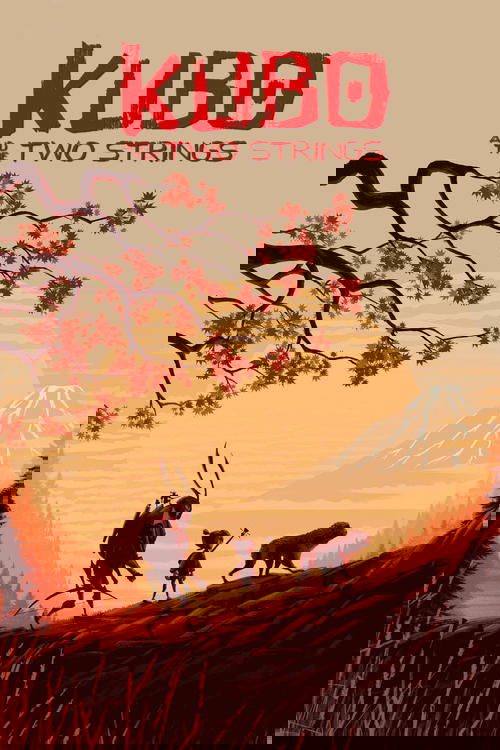
Kubo and the Two Strings
"Be bold. Be brave. Be epic."
Overview
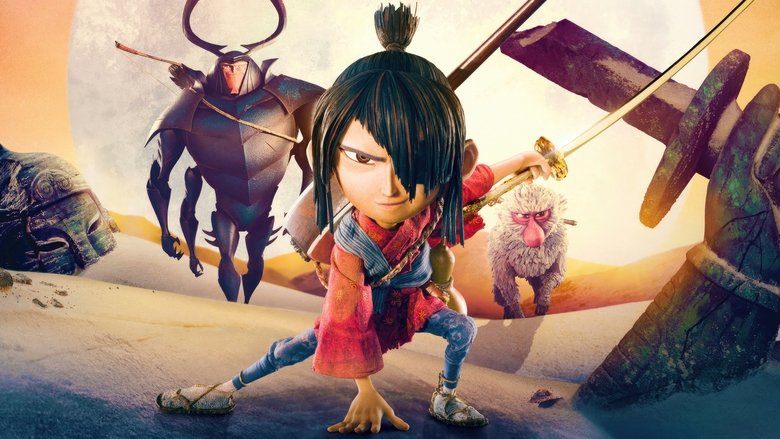
Kubo is a young boy living a quiet life in ancient Japan, caring for his ailing mother who suffers from fading memories. He entertains the local villagers by using his magical shamisen to bring origami to life, telling legendary tales of his late father, a great samurai warrior. However, a strict rule—never stay out after dark—keeps him hidden from his vengeful grandfather, the Moon King, and his sinister aunts.
When Kubo accidentally breaks this rule, he is thrust into a perilous quest to locate his father's magical suit of armor, the only thing that can protect him. Accompanied by a no-nonsense Monkey and an amnesiac samurai Beetle, Kubo battles terrifying monsters and his malevolent family. Throughout his journey, he uncovers the profound truth about his history and learns that the enduring power of memories is the ultimate magic.
Core Meaning
The director, Travis Knight, uses Kubo and the Two Strings to explore the transformative power of storytelling and the necessity of confronting grief. The film posits that memories of our loved ones are the most potent magic we possess. Rather than running from the pain of loss, embracing those memories allows the dead to live on within us, providing the strength to face an often cruel world with compassion and humanity.
Thematic DNA
The Power of Storytelling
Kubo's ability to manipulate origami with his shamisen is a literal manifestation of how stories shape reality [1.1]. Stories connect the past to the present, heal emotional wounds, and grant immortality to those who have passed away, ensuring they are never truly forgotten.
Grief, Memory, and Loss
The film doesn't shy away from the pain of loss. Instead of portraying death as something to be 'fixed' with magic, it emphasizes that remembering loved ones is how we keep their spirits alive. The stringing of Kubo's instrument with his parents' hair symbolizes carrying their memory into battle.
Compassion vs. Cold Perfection
The Moon King represents a desire for a cold, unfeeling perfection—a heavenly world without grief, but also without love. Kubo, by contrast, embraces his humanity, his 'weakness' of feeling pain, which ultimately proves to be his greatest strength.
Family and Identity
Kubo's makeshift family of Monkey and Beetle reflects the importance of familial bonds, both biological and forged. Through them, he uncovers his true identity and legacy, learning that family provides the protective 'armor' he genuinely needs.
Character Analysis
Kubo
Art Parkinson
Motivation
To find his father's armor to protect himself, and ultimately, to honor and preserve the memories of his parents.
Character Arc
Kubo grows from a frightened boy hiding from his family's dark past into a brave, compassionate storyteller who accepts his grief [1.4]. He learns to use his memories to heal his grandfather rather than destroy him through violence.
Monkey / Sariatu
Charlize Theron
Motivation
To protect Kubo at all costs from the Moon King and her evil sisters, driven by a mother's fierce love.
Character Arc
Initially strict and purely focused on Kubo's survival, Monkey gradually reveals her maternal warmth, ultimately sacrificing herself to ensure Kubo's safety.
Beetle / Hanzo
Matthew McConaughey
Motivation
To serve the son of his master, Hanzo, which stems from a deeply ingrained, though forgotten, fatherly instinct.
Character Arc
Starting as an amnesiac, cursed warrior who serves as comic relief, he slowly regains his identity as Hanzo, proving his enduring love for his family before his tragic death.
The Moon King / Raiden
Ralph Fiennes
Motivation
To 'save' Kubo from the pain of human existence by blinding him to earthly empathy.
Character Arc
A god who rejects human emotion and seeks to pull his grandson into the cold heavens. After being defeated, he is stripped of his memories and given a chance to live as a compassionate human.
Symbols & Motifs
The Shamisen
Kubo's magical instrument symbolizes the power of art, music, and narrative to influence the world [1.1].
Used throughout the film by Kubo to control origami, and in the climax to channel the spirits and memories of the village's ancestors against the Moon King.
The Left Eye
Kubo's missing eye represents humanity's ability to see the world with love, empathy, and emotional vulnerability. The Moon King wants Kubo's remaining eye to make him 'blind to humanity'.
A central plot point; the Moon King and the Sisters constantly pursue Kubo to take his remaining eye and bring him to the cold heavens.
Origami
The delicate paper figures represent the fragile yet enduring nature of memories and tales. They are ephemeral but can be reshaped and brought to life, mirroring how stories are passed down.
Kubo uses origami to tell stories in the village, and the origami figure of 'Little Hanzo' literally guides him on his quest.
The Three Pieces of Armor
The Sword Unbreakable, the Breastplate Impenetrable, and the Helmet Invulnerable represent the traditional hero's journey items. However, they are ultimately a misdirection, symbolizing that physical defense cannot defeat profound emotional emptiness.
The driving MacGuffins of the plot, which Kubo collects but eventually abandons in favor of his shamisen during the final pacifistic battle.
Memorable Quotes
Ifyoumustblink, doitnow.Paycarefulattentiontoeverythingyouseeandhear, nomatterhowunusualitmayseem.Andpleasebewarned, ifyoufidget, ifyoulookaway, ifyouforgetanypartofwhatItellyou, evenforaninstant, thenourherowillsurelyperish.
— Kubo
Context:
Kubo's opening narration, spoken while he tells his origami story to the villagers and directly addressing the audience.
Meaning:
Establishesthefilm'scentralthemeregardingtheimportanceofbearingwitness, storytelling, andremembering[1.1].
Memories are powerful things, Kubo. Never lose it.
— Monkey
Context:
Monkey explaining the significance of the hair bracelet Kubo wears, which contains his mother's magic.
Meaning:
Highlights the core message that holding onto the memory of loved ones is the truest form of magic and protection.
We grow stronger, the world grows more dangerous. Life has a funny way of keeping things balanced.
— Monkey
Context:
Monkey warning Kubo as his magical control over his shamisen and origami improves.
Meaning:
A sobering truth about growing up and the responsibilities and perils that come with increased capability.
Oh, Kubo. He doesn't hate you. He wants to make you just like him. Blind to humanity, as I once was. Only then can you take your place beside him as part of his family. Cold and hard, and perfect.
— Monkey
Context:
Monkey explaining the Moon King's intentions to Kubo while taking shelter in a cave.
Meaning:
Explains the antagonist's twisted motivation and the thematic conflict between flawless immortality and painful, beautiful humanity.
Philosophical Questions
Is it ethical to erase someone's memory to make them a better person?
The film's ending sees the villagers convincing the amnesiac Moon King that he is a good man [1.7]. This raises the philosophical question of whether identity is rooted in our past actions and memories, and whether imposing a 'good' but false narrative onto someone is an act of merciful rehabilitation or an unethical erasure of their true self.
Why must human existence include pain and suffering?
The Moon King offers Kubo a life of immortal perfection in the heavens, but it requires giving up his humanity and his ability to feel empathy and grief. The film argues that pain and loss are essential components of love, and that a flawed, painful mortal life is preferable to a cold, unfeeling eternity.
Do the dead truly survive through our memories of them?
Through the motif of storytelling and the Obon festival, the film explores the idea of secular and spiritual immortality. It posits that people are never truly gone as long as their stories are told, framing memory as a tangible, protective magic against the void of death.
Alternative Interpretations
One of the most discussed alternative interpretations surrounds the film's ending, where the defeated Moon King is stripped of his memory and the villagers collectively lie to him, telling him he was a kind and generous man. Some viewers interpret this act not as a beautiful redemption, but as a morally ambiguous or even hypocritical manipulation. From this perspective, the villagers are forcing a false identity onto him, erasing his true self—an act uncomfortably similar to the Moon King's own attempt to erase Kubo's humanity. Proponents of this view argue that the 'lies' are actually forgotten truths of human potential, but the debate remains.
Another popular interpretation is a psychological or metaphysical reading of the entire quest. Some audiences posit that both of Kubo's parents actually died in the film's opening sequence or shortly after, and that the entire journey with Monkey and Beetle is a manifestation of Kubo's grief. In this reading, Kubo uses his storytelling magic to cope with his profound trauma, projecting the spirits of his parents into his wooden monkey charm and a samurai beetle to safely guide himself through the psychological process of accepting their deaths.
Cultural Impact
Kubo and the Two Strings stands as a monumental achievement in stop-motion animation, pushing the boundaries of the medium by seamlessly blending practical puppetry with CGI to create an unprecedented sense of epic scale. Culturally, the film is celebrated for its deep respect for Japanese folklore, art, and spirituality. Director Travis Knight drew heavy inspiration from ukiyo-e woodblock prints, specifically the works of Kiyoshi Saito, as well as origami, Noh theater, and the Obon festival. This dedication to cultural aesthetics positioned the film as a beautiful homage to Japanese heritage.
Critically, the film was universally acclaimed, holding a 97% on Rotten Tomatoes, and was nominated for two Academy Awards: Best Animated Feature and Best Visual Effects—a rare feat for an animated film. While it was not a massive box-office hit, earning only $77.5 million against a $60 million budget, its legacy has only grown. It is frequently cited as one of the best animated films of the 2010s. Its mature handling of grief, memory, and the philosophy that our deceased loved ones live on through the stories we tell has resonated deeply with audiences, cementing its status as a modern animated classic.
Audience Reception
Audiences and critics overwhelmingly praised Kubo and the Two Strings, frequently highlighting its breathtaking visual artistry, intricate stop-motion animation, and emotionally mature narrative. Reviewers on platforms like Rotten Tomatoes (where it holds a 97% approval rating) and Reddit frequently cite it as a masterpiece that doesn't talk down to children, applauding its willingness to tackle complex themes of death, grief, and loss with profound sensitivity and grace.
However, the film did face some criticism. A point of contention for a subset of viewers was the film's ending; some found the villagers' decision to lie to the amnesiac Moon King to be a confusing or ethically questionable resolution to the conflict. Additionally, while the voice acting was praised in isolation, there was mild criticism regarding the casting of predominantly white actors (such as Charlize Theron, Matthew McConaughey, and Ralph Fiennes) for a film so deeply rooted in Japanese culture and folklore. Despite these critiques, the overall verdict remains overwhelmingly positive, with audiences recognizing it as one of Laika's greatest achievements.
Interesting Facts
- ThegiantskeletonmonsterintheHallofBonesisconsideredthelargeststop-motionpuppetevercreated, standing16to18feettallandweighing400pounds[1.12].
- The film was heavily inspired by Japanese woodblock prints, specifically the works of artist Kiyoshi Saito, which influenced the movie's texture and color palette.
- At 1 hour and 41 minutes, it surpassed Laika's 'Coraline' as the longest stop-motion animated film ever made at the time of its release.
- To create the intricate origami figures seen in the film, the production team initially tried real paper but found it too fragile for animation. They eventually used Tyvek, a durable synthetic material, which was dyed to look like paper.
- Over 23,000 prototype faces were printed for Kubo, allowing for approximately 48 million possible facial expressions to be captured on camera.
Easter Eggs
The name of George Takei's character, Hosato.
This is a direct reference to the actor himself, as George Takei's actual middle name is Hosato [1.12].
The giant Skeleton time-lapse in the credits.
In a post-credits sequence, the filmmakers included a time-lapse video showing the incredibly complex process of animating the massive skeleton puppet, serving as a tribute to the animators' painstaking practical work.
A shared Laika universe nod in a later film.
Though an Easter egg appearing later, in Laika's Missing Link (2019), explorer Lionel Frost has references to Kubo alongside Coraline and ParaNorman hidden in his drawer, establishing a multiverse of Laika artifacts.
⚠️ Spoiler Analysis
Click to reveal detailed analysis with spoilers
Frequently Asked Questions
Explore More About This Movie
Dive deeper into specific aspects of the movie with our detailed analysis pages
Comments (0)
No comments yet. Be the first to share your thoughts!