La Strada
A poetic and melancholic drama that paints a portrait of love and cruelty on the desolate backroads of post-war Italy.
La Strada

La Strada

La strada

"Filmed in Italy - where it happened!"

23 September 1954 Italy 115 min ⭐ 7.9 (1,121)
Director: Federico Fellini
Cast: Giulietta Masina, Anthony Quinn, Richard Basehart, Aldo Silvani, Marcella Rovere
Drama
The Journey of Life Brutality vs. Innocence Love and Dependency The Search for Meaning and Purpose

Overview

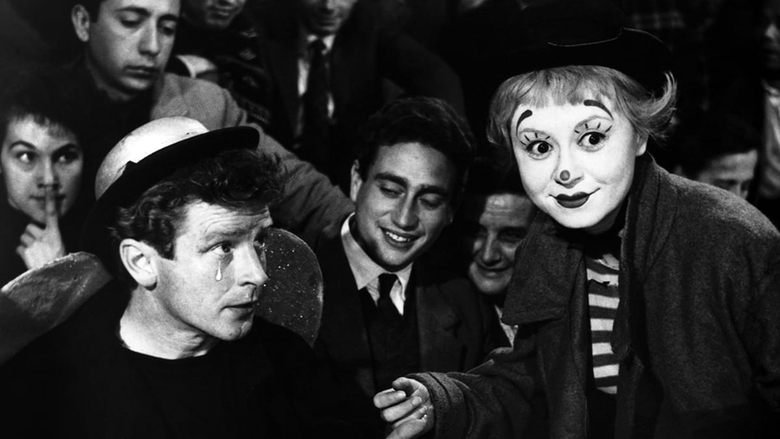
"La Strada" tells the story of Gelsomina (Giulietta Masina), a naive and gentle young woman who is sold by her impoverished mother to Zampanò (Anthony Quinn), a brutish and itinerant strongman. Zampanò travels the Italian countryside on a ramshackle motorcycle-pulled caravan, performing a feat of strength where he breaks a chain with his chest muscles. Gelsomina becomes his assistant, learning to play the drum and the trumpet to accompany his act. Despite Zampanò's cruelty and infidelity, Gelsomina develops a complex attachment to him, seeing a glimmer of humanity beneath his rough exterior.

Their journey leads them to a small traveling circus, where they encounter Il Matto, or "The Fool" (Richard Basehart), a high-wire artist and clown who relentlessly taunts Zampanò. The Fool takes a liking to Gelsomina and plants a seed of self-worth in her, suggesting that everything and everyone has a purpose, even a small pebble. This encounter deepens the rift between Zampanò and Gelsomina and sets the stage for a tragic turn of events that will forever alter the course of their lives.
Core Meaning

At its core, "La Strada" is an allegorical exploration of the human condition, delving into the complexities of love, dependency, and the search for meaning in a harsh and indifferent world. Director Federico Fellini described the film as a "complete catalogue of my entire mythological world." The film contrasts the brutish, animalistic nature of Zampanò with the innocent, spiritual purity of Gelsomina. Through their tumultuous relationship, Fellini examines the struggle between the body and the soul, and the profound tragedy of a man who recognizes love and connection only after it is lost. The central message is that even the most seemingly insignificant person has a purpose, and that the failure to recognize this leads to an empty and desolate existence.

Thematic DNA

The Journey of Life 30%
Brutality vs. Innocence 30%
Love and Dependency 25%
The Search for Meaning and Purpose 15%

The Journey of Life

The title itself, "La Strada" (The Road), establishes the central theme of life as a journey. The characters are constantly traveling, moving from one desolate town to another, mirroring an internal journey of self-discovery and spiritual awakening. The road represents the unpredictable path of life, with its hardships and fleeting moments of joy. For Gelsomina, it is a path of painful growth, while for Zampanò, it is a road he travels blindly until his devastating realization at the end.

Brutality vs. Innocence

The film is built on the stark contrast between Zampanò's brutal, primal nature and Gelsomina's childlike innocence. Zampanò represents a raw, unexamined existence, driven by base instincts and devoid of emotional expression. Gelsomina, often compared to a Chaplinesque clown, embodies purity, unconditional love, and a spiritual connection to the world. Their dynamic explores whether innocence can redeem brutality, or if it will inevitably be crushed by it.

Love and Dependency

The complex relationship between Gelsomina and Zampanò is a central theme. Gelsomina's devotion to the abusive Zampanò can be seen as a form of unconditional love or a tragic dependency born of her circumstances. Despite his cruelty, she believes her purpose is to be with him. The film suggests that human companionship, even in a destructive form, is preferable to complete loneliness. Zampanò's tragedy is his inability to recognize or reciprocate Gelsomina's love until it's too late, highlighting the devastating consequences of emotional illiteracy.

The Search for Meaning and Purpose

"La Strada" delves into the existential quest for meaning in a seemingly pointless world. This theme is most explicitly articulated by The Fool, who tells Gelsomina that everything has a purpose, even a small pebble. This idea gives Gelsomina the strength to endure her hardships with Zampanò, believing that her purpose is to help him. The film ultimately questions whether this purpose is self-determined or thrust upon us, and what happens when that purpose is lost.

Character Analysis

Gelsomina

Giulietta Masina

Archetype: The Innocent/The Fool/The Soul
Key Trait: Innocence

Motivation

Gelsomina is motivated by a deep-seated need for connection, love, and a sense of purpose. She is driven by the belief, instilled by The Fool, that her purpose is to stay with and help the brutish Zampanò, whom she sees as a lost soul.

Character Arc

Gelsomina begins as a simple-minded, childlike woman sold into a life of servitude. Despite the abuse she endures, she maintains a sense of wonder and a capacity for unconditional love. Her encounter with The Fool awakens a sense of self-worth and purpose. However, witnessing Zampanò's murder of The Fool shatters her spirit, and she descends into a state of profound apathy from which she never recovers. Her tragic death serves as the catalyst for Zampanò's eventual, and too-late, emotional awakening.

Zampanò

Anthony Quinn

Archetype: The Antihero/The Brute/The Body
Key Trait: Brutality

Motivation

Zampanò is primarily motivated by base survival instincts: earning money, eating, and satisfying his carnal desires. He is fiercely independent and fears any form of emotional vulnerability, which he perceives as weakness. His actions are driven by a need to maintain control and dominance over his environment and the people in it.

Character Arc

Zampanò is a brutish, emotionally stunted strongman who lives a solitary, animalistic existence. He treats Gelsomina with cruelty and views her as a possession. Throughout the film, he resists any form of emotional connection, responding with violence and anger. After causing The Fool's death and abandoning the broken Gelsomina, he continues his life unchanged for several years. It is only upon learning of Gelsomina's death that his hardened exterior finally cracks, leading to a complete emotional breakdown on a desolate beach, suggesting the beginning of a painful self-awareness.

Il Matto (The Fool)

Richard Basehart

Archetype: The Jester/The Catalyst/The Mind
Key Trait: Whimsy

Motivation

The Fool is motivated by a playful, existential philosophy and a seemingly compulsive need to mock and provoke Zampanò, for reasons he himself doesn't fully understand. He acts as a catalyst, disrupting the dysfunctional dynamic between Gelsomina and Zampanò and forcing them to confront their reality.

Character Arc

The Fool is a whimsical and mischievous high-wire artist who serves as a direct foil to Zampanò. He is intelligent, spiritual, and lives with a carefree, almost reckless abandon. He befriends Gelsomina and provides her with a philosophy of purpose that changes her outlook on life. His relentless taunting of Zampanò ultimately leads to a tragic confrontation where Zampanò accidentally kills him. His death is the pivotal event that breaks Gelsomina's spirit and seals Zampanò's fate.

Symbols & Motifs

The Road

Meaning:

"La Strada" translates to "The Road," and it is the film's most prominent symbol, representing the journey of life. It signifies both the physical and spiritual path the characters travel, a journey fraught with hardship, loneliness, and fleeting moments of connection.

Context:

The entire film takes place on the road, as Zampanò and Gelsomina travel from town to town. The desolate, post-war Italian landscapes they traverse reflect their own internal desolation and the harsh realities of their existence.

The Sea

Meaning:

The sea, which frames the beginning and end of the film, symbolizes transformation, the unconscious, and the cyclical nature of life and death. It is a place of both origin and final reckoning. For Fellini, the sea often represents a vast, mysterious force with no easy answers.

Context:

The film opens with Gelsomina by the sea before she is sold to Zampanò, and it concludes with a grief-stricken Zampanò collapsing on a beach after learning of her death, howling at the waves.

The Pebble

Meaning:

The pebble symbolizes the idea that everything and everyone, no matter how small or seemingly insignificant, has a purpose in the universe. It represents a kernel of hope and meaning in a harsh world.

Context:

The Fool gives Gelsomina a pebble and explains his philosophy that if this small stone has a purpose, then she must have one too. This gives Gelsomina the conviction to stay with Zampanò, believing it is her mission to help him.

The Trumpet and Drum

Meaning:

Music, particularly the simple melody Gelsomina plays on the trumpet, symbolizes beauty, freedom, and the enduring nature of the human spirit. The drum, which Zampanò forces her to play in a specific way, can symbolize her subjugation to his will.

Context:

Gelsomina learns to play a wistful tune on the trumpet, which becomes her signature melody. Years after her death, it is this same tune, sung by another woman, that informs Zampanò of her fate, triggering his emotional breakdown.

Breaking the Chain

Meaning:

Zampanò's strongman act of breaking an iron chain across his chest is a complex symbol. On one hand, it represents his physical strength and his animalistic nature. On the other, it can be seen as an ironic symbol of his own emotional imprisonment and his inability to break the chains of his own brutishness.

Context:

This is Zampanò's sole performance, repeated endlessly throughout the film. It is the act that defines him in the eyes of the world and is the foundation of his and Gelsomina's livelihood.

Memorable Quotes

Tutto serve a qualcosa. Anche questo sasso.

— Il Matto (The Fool)

Context:

The Fool says this to Gelsomina when she is despairing and wants to run away from Zampanò. He picks up a pebble from the ground to illustrate his point, which gives Gelsomina a newfound sense of purpose to stay with the brutish strongman.

Meaning:

This quote, meaning "Everything is good for something. Even this stone," encapsulates the film's central philosophical message. It's a profound statement of existential hope, suggesting that even in a seemingly meaningless world, every person and every object has a purpose and a place.

Se non sto con lui, chi ci sta?

— Gelsomina

Context:

Gelsomina says this to The Fool after he has given her the parable of the pebble. It is her justification for returning to Zampanò, accepting her role as his companion and caretaker despite his cruelty.

Meaning:

"If I don't stay with him, who will?" This poignant question reveals the depth of Gelsomina's compassionate and perhaps codependent bond with Zampanò. It highlights her selfless and ultimately tragic decision to embrace her perceived purpose, even at the cost of her own well-being.

È morto.

— Gelsomina

Context:

Gelsomina repeats this phrase over and over in a state of shock after Zampanò accidentally kills The Fool. Her inability to move past this moment leads Zampanò to abandon her.

Meaning:

Meaning "He's dead," this simple, repeated line signifies the complete shattering of Gelsomina's spirit. The phrase becomes a haunting mantra, demonstrating that the trauma of witnessing The Fool's death has broken her mind and severed her connection to the world.

Philosophical Questions

Does every life have a purpose, no matter how insignificant it seems?

This is the central philosophical question posed by the film, articulated by The Fool's parable of the pebble. Gelsomina, who feels useless and is treated as such by Zampanò, clings to this idea as her reason for living. Her 'purpose' becomes enduring Zampanò's cruelty in the hope of saving him. The film explores this question through her tragic fate, leaving the audience to ponder whether her purpose was fulfilled or if her belief in it was a form of self-delusion that ultimately led to her destruction.

What is the nature of love and connection?

"La Strada" presents a challenging and unconventional exploration of love. Gelsomina's unwavering devotion to the abusive Zampanò questions the boundaries between love, pity, and dependency. Is her bond with him a pure, unconditional love that sees a soul worth saving, or is it a trauma bond born of her desperate circumstances? Zampanò's inability to feel or express love until it's too late forces a reflection on whether love is an innate emotion or a learned capacity, and the tragedy that ensues when that capacity is never realized.

Can a person truly change, and when is redemption possible?

Zampanò's character arc raises questions about human nature and the possibility of redemption. For the vast majority of the film, he is an unthinking brute, seemingly incapable of change. His final, agonized breakdown is a powerful depiction of remorse, but the film leaves it ambiguous whether this constitutes true redemption. Is this a transformative moment that will lead to a new way of being, or is it simply the shattering of a man who has destroyed his only source of light and is now left alone in the darkness? The film suggests that redemption may only be possible after profound loss and the full recognition of one's own destructive actions.

Alternative Interpretations

While the dominant interpretation of "La Strada" is that of a spiritual allegory about love, redemption, and purpose, other readings exist. Some critics have viewed the relationship between Zampanò and Gelsomina as a stark portrayal of a pre-feminist marriage, representing the dynamic between an abusive husband and a subjugated wife, an interpretation Fellini himself disliked. Another perspective suggests the three main characters represent a Freudian or Platonic trinity: Zampanò as the Body (Id), Gelsomina as the Soul or Heart (Ego), and The Fool as the Mind or Spirit (Superego). In this reading, the tragedy stems from the body's inability to connect with the soul until the mind is destroyed.

Furthermore, some analyses have focused on the character of The Fool, suggesting he is not merely a benevolent spirit but also possesses a streak of cruelty and sadism in his relentless taunting of the simple-minded Zampanò, making him partially responsible for his own demise. The film's ending is also open to interpretation. Zampanò's final breakdown on the beach can be seen as a moment of genuine repentance and the birth of his soul, a true redemption. Alternatively, it can be viewed more pessimistically as the cry of a man utterly broken by guilt and loneliness, a final, despairing recognition of his own emptiness without any guarantee of change.

Cultural Impact

"La Strada" is widely regarded as one of the most influential films ever made. Released in 1954, it marked a pivotal moment in Italian cinema, signaling a departure from the strict tenets of neorealism towards a more poetic and personal style that would become known as "Felliniesque." While retaining neorealism's focus on the poor and marginalized, Fellini infused the film with symbolism, allegory, and a dreamlike quality that prioritized emotional and spiritual realities over purely social ones. This shift was controversial at the time, with some Italian critics accusing Fellini of abandoning social responsibility.

Despite the initial mixed reception in Italy, the film was a massive international success. Its victory as the first recipient of the Academy Award for Best Foreign Language Film in 1957 brought significant global attention to Italian cinema. "La Strada" influenced a generation of filmmakers worldwide, including Martin Scorsese, Akira Kurosawa, and Krzysztof Kieślowski, who were struck by its emotional power and artistic vision. The film's impact extended beyond cinema, inspiring musicians like Bob Dylan, who cited it as an influence on "Mr. Tambourine Man," and Kris Kristofferson for "Me and Bobby McGee." The characters of Gelsomina and Zampanò have become archetypes, and Giulietta Masina's Chaplinesque performance made her an international star. The film's blend of pathos, cruelty, and grace has secured its place as a timeless masterpiece that continues to resonate with audiences and critics.

Audience Reception

Upon its initial release, audience reception for "La Strada" was polarized, particularly in its native Italy. Many mainstream viewers found the film unrealistic and naive, especially when compared to the prevailing neorealist films of the era. However, the film was immensely popular with international audiences, especially in France, Britain, and the United States, who were deeply moved by its emotional power and poetic storytelling. Audiences were particularly captivated by Giulietta Masina's heart-breaking performance as Gelsomina, a character who became an iconic symbol of innocence and resilience. The film's blend of tragedy and hope, cruelty and tenderness, resonated strongly, and for many, it was a deeply affecting cinematic experience. Over the years, any initial criticism has faded, and "La Strada" is now overwhelmingly praised by audiences, holding a high approval rating on sites like Rotten Tomatoes and being widely considered a timeless classic.

Interesting Facts

  • The film won the first-ever Academy Award for Best Foreign Language Film in 1957.
  • Director Federico Fellini suffered a nervous breakdown just before shooting was completed and required medical treatment to finish the film.
  • Fellini considered "La Strada" to be his most personal film, describing it as "a complete catalogue of my entire mythological world."
  • The initial critical reaction in Italy was harsh, and the screening at the Venice Film Festival led to a public brawl between Fellini's supporters and detractors.
  • Anthony Quinn and director Federico Fellini had a difficult working relationship, with Quinn initially wanting to withdraw from the film.
  • The sound in "La Strada" was dubbed in post-production, a common practice in Italian cinema at the time. This allowed Fellini to talk to his actors during takes.
  • The character of Gelsomina was inspired by Fellini's wife, Giulietta Masina, who played the role. Fellini asked her to look to her own childhood for inspiration.
  • Producer Dino De Laurentiis initially wanted to replace Giulietta Masina, but executives at Paramount lauded her performance after seeing the rushes.
  • The film's score, composed by Nino Rota, features a wistful main theme that is central to the narrative and is played by both The Fool and Gelsomina.

⚠️ Spoiler Analysis

Click to reveal detailed analysis with spoilers

Frequently Asked Questions

Explore More About This Movie

Dive deeper into specific aspects of the movie with our detailed analysis pages

Comments (0)

Leave a comment

No comments yet. Be the first to share your thoughts!