Skip to content
The East Palace
In an abyss of blood-stained court intrigue and haunting mist, a ghost-hunter and an empathic maid unravel ancestral grief where the royal palace mirrors a suffocating underworld.
The East Palace

The East Palace

동궁

"Beyond boundaries, they unearth the truth."

17 July 2026 — 17 July 2026 South Korea 1 season 8 episode Ended 8.1 (100)

Cast: Nam Joo-hyuk, Roh Yoon-seo, Cho Seung-woo, Jang Young-nam, Hong Seo-jun

Drama Sci-Fi & Fantasy Action & Adventure Mystery The Monstrosity of Human Ambition vs. Supernatural Terror Grief, Unheard Voices, and Shamanic Atonement The Cost of Concealment and Corrupted Heritage The Isolation of Walking Between Dimensions

Overview

Set during an alternate Joseon dynasty, The East Palace plunges into the dark heart of royal succession where an ominous curse has doomed crown princes for over thirty years. Following the gruesome death of the latest heir near the palace grounds, whispers of an insatiable aquatic phantom resurface, prompting the secretive King to assemble an unprecedented spiritual investigation inside the forbidden compound.

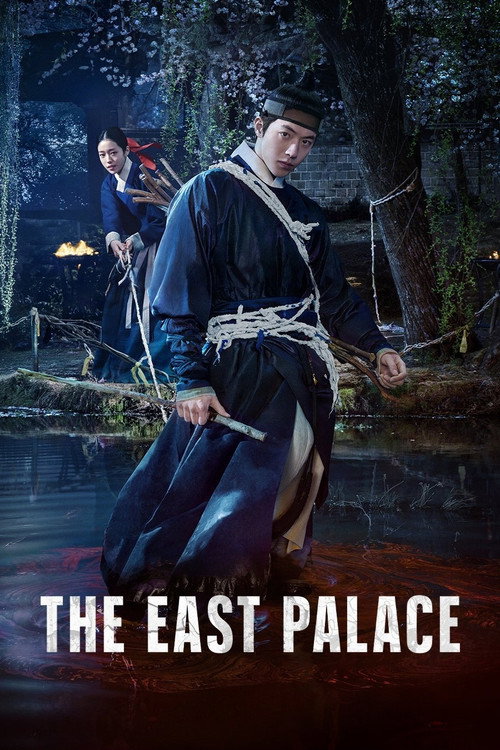
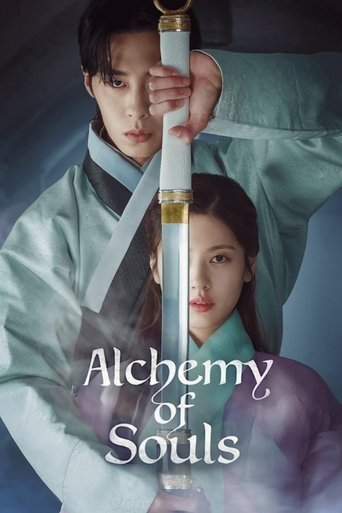
To confront horrors ordinary soldiers cannot touch, the monarch enlists Gu-cheon, a reclusive spirit-slayer gifted with the ability to project his soul into the Realm of Gwi—a perilous mirror dimension inhabited by vengeful apparitions. Gu-cheon is partnered with Saeng-gang, an astute low-ranking court lady who possesses the uncanny ability to perceive and communicate with the voices of the dead, masking her own dangerous lineage and investigative motives.

As the pair delve into recurring hauntings, from drowned spirits to poltergeists trapped in palace storehouses, they gradually discover that the malevolent entities terrorizing the East Palace are symptoms rather than the root cause. Their descent into the spirit realm uncovers a devastating cycle of human greed, systemic butchery, and sovereign betrayal where the living prove far deadlier than the dead.
Core Meaning

At its core, The East Palace argues that monsters are born from institutional sin and repressed guilt. The ghosts haunting the Joseon court are not random cosmic malice, but the physical manifestations of unresolved royal grievances (wonhon). The series posits that political power built on clandestine bloodshed will inevitably collapse into madness unless rulers acknowledge systemic crimes and extend genuine atonement to the victims discarded in their ascent.

Thematic DNA

The Monstrosity of Human Ambition vs. Supernatural Terror 30%
Grief, Unheard Voices, and Shamanic Atonement 25%
The Cost of Concealment and Corrupted Heritage 25%
The Isolation of Walking Between Dimensions 20%

The Monstrosity of Human Ambition vs. Supernatural Terror

While the series sets up classic K-occult horror tropes involving vengeful phantoms, it progressively subverts them by revealing that every ghost haunting the court was created by lethal political maneuvers. The insatiable specters of the Realm of Gwi merely mirror the merciless slaughter engineered by mortal courtiers seeking dynastic power.

Grief, Unheard Voices, and Shamanic Atonement

Through Saeng-gang's gift of hearing the deceased, the narrative explores the duty of bearing witness to marginalized and slaughtered individuals whose deaths were erased by sovereign authority. Resolving spiritual malice requires listening to historical trauma rather than violently repressing it.

The Cost of Concealment and Corrupted Heritage

The King's throne is perpetually compromised because his crown was bought with covert matricidal conspiracies. The curse does not stem from demonic infection from without, but from systemic family deceit eating the dynasty from within.

The Isolation of Walking Between Dimensions

Gu-cheon's dual existence illustrates the alienation of individuals burdened with dark perceptions. Both he and Saeng-gang are social outcasts whose survival hinges on finding mutual trust amid an environment where truth is treason.

Character Analysis

Gu-cheon

Nam Joo-hyuk

Archetype: Reluctant Warrior / Spirit Slayer Key Trait: Steely stoicism concealing profound spiritual trauma and formidable swordsmanship.

Motivation

Initially motivated by coercive royal commands and survival, but later dedicated to ending the cycle of ancestral slaughter alongside Saeng-gang.

Character Arc

Begins as a traumatized, cynical drifter operating on the fringes of society, driven solely by survival and combat instinct. Through his reluctant partnership with Saeng-gang and harrowing soul excursions into the Realm of Gwi, he evolves into an empathetic protector who risks his physical eyesight and soul to liberate the court's tormented dead.

Saeng-gang

Roh Yoon-seo

Archetype: The Truth-Seeker / Medium Key Trait: Perceptive emotional intelligence coupled with unyielding moral courage.

Motivation

To uncover the truth behind her mother's mysterious execution and grant voice to spirits silenced by court brutality.

Character Arc

Starts as an unassuming court maid concealing both her ability to commune with ghosts and her secret royal paternity. Over the course of the eight episodes, she steps forward from the shadows of the royal compound to become the moral compass of the palace, ultimately unmasking the matriarchal conspiracy that took her mother's life.

All 5 characters and cast

Symbols & Motifs

The Palace Pond

Meaning:

Symbolizes the watery tomb of hidden palace secrets and the porous threshold separating the mortal court from the underworld.

Context:

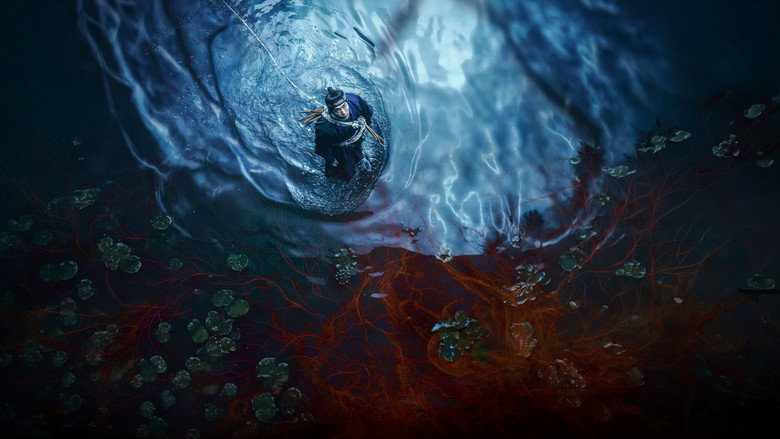
Recurring throughout the season as the site where multiple heirs drown or encounter the vengeful aquatic spirit, serving as the central vortex connecting Joseon to the Realm of Gwi.

Gu-cheon's Ghost-Cleaving Sword

Meaning:

Represents severance, defensive violence, and the burden of confronting traumatic memory in physical combat.

Context:

Gu-cheon channels spiritual energy through his blade whenever he astral-projects into the mirror dimension to strike down hostile wraiths.

Mirrors and Crimson Atmospheric Distortion

Meaning:

Signifies duality, suppressed palace guilt, and the inverted nature of royal righteousness.

Context:

The visual shift into the Realm of Gwi is framed by warped reflections and a crimson color wash across familiar court pavilions.

Court Lady Hanbok and Hairpins

Meaning:

Embody feminine invisibility, silence under monarchical patriarchy, and hidden lethal resolve.

Context:

Saeng-gang uses ordinary court accoutrements to store shamanic talismans and conceal relics left behind by her murdered mother.

Memorable Quotes

현실의 경계를 넘어, 귀의 세계로 간다.
— Gu-cheon

Context

Spoken in Episode 1 as Gu-cheon prepares to plunge into the East Palace pond to track the entity stalking the crown heirs.

Meaning

Articulates Gu-cheon's unique fatalistic mission to leave mortal safety and confront malevolent entities on their home territory.

세자를 살려내라. 그렇지 못하면 네놈의 목을 벨 것이다.
— King Ju Sang

Context

Delivered in Episode 3 when the King corners Gu-cheon in private chambers after a second heir falls comatose.

Meaning

Reveals the King's ruthless desperation and transactional view of human life when his royal lineage faces total collapse.

All 5 quotes

Episode Highlights

Episode 1

S1E1

Following the sudden death of the Crown Prince near the palace pond, King Ju Sang summons the spirit-slayer Gu-cheon and palace maid Saeng-gang into the forbidden East Palace, forcing them to encounter the terrifying Pond Spirit in the mirror dimension.

Significance:

Establishes the dual-dimension mechanic of the Realm of Gwi and initiates the uneasy alliance between Gu-cheon's physical combat and Saeng-gang's supernatural perception.

Episode 3

S1E3

Under royal ultimatum, Gu-cheon crosses deep into the spiritual realm to rescue the dying prince, coming face-to-face with the restless phantom of a slaughtered former royal guard who died protecting a past prince.

Significance:

Marks the first critical plot pivot proving that the hauntings are connected to a thirty-year-old purge rather than a spontaneous curse.

Episode 4

S1E4

Gu-cheon and Saeng-gang mount a concerted effort to seal the Pond Spirit, only for Saeng-gang to discover that the spirit bears the remnants of court ladies who were burnt alive to silence witnesses of royal poisonings.

Significance:

Shifts the entire mystery from a monster-slaying procedural to an institutional murder conspiracy targeting the King's own bloodline.

Episode 6

S1E6

During an intense clash within the spiritual vortex, Gu-cheon suffers critical damage to his vision while defending Saeng-gang from an onslaught of court specters, forcing the duo to rely purely on sensory symbiosis to survive.

Significance:

Cementing the deep emotional dependence between the leads while escalating stakes as the king falls incapacitated by spiritual miasma.

Episode 8

S1E8

The palace descends into cataclysm as the prime evil spirit manifests to devour the royal compound. The conspiracy of the King's biological mother, Lady Choi, is exposed before Gu-cheon and Saeng-gang execute a final ritual to sever the curse, leaving the throne morally fractured.

Significance:

Delivers the climax of the limited series, resolving the mystery of thirty years of royal infanticide and concluding the characters' emotional arcs.

Philosophical Questions

Can political stability achieved through atrocity ever be morally legitimized?

The narrative systematically deconstructs King Ju Sang's reign by demonstrating that an empire founded on the covert assassination of rival heirs remains spiritually and socially tainted, regardless of the ruler's subsequent benevolence.

Is justice for historical slaughter attainable through vengeance, or does vengeance merely breed new monsters?

Explored through the vengeful spirits in the East Palace pond, who began as innocent victims but transformed into indiscriminating demons that destroy current innocent princes until Saeng-gang offers empathetic reconciliation rather than mere extermination.

How It Ends

Alternative Interpretations

While presented on the surface as an occult fantasy about slaying malevolent specters, many critics interpreted The East Palace as an allegory for historical revisionism and state violence. In this reading, the Realm of Gwi represents the suppressed collective consciousness of state victims whose erased murders destabilize succeeding generations until acknowledged. Alternatively, the King's ambiguous moral positioning led some viewers to interpret the entire curse as an internal psychological collapse born of the King's subconscious guilt over ascending a throne built on fratricide.

Full ending explanation

Cultural Impact

Premiering globally on Netflix in July 2026, The East Palace carved out a distinct milestone in the 'K-Occult Sageuk' subgenre pioneered by series like Kingdom. By infusing authentic Korean folklore regarding wongwi (resentful spirits) with psychological court melodrama, it broadened international appreciation for Joseon demonology. The series hit Number 1 in South Korea and ranked across Top 10 charts in over 20 countries, solidifying demand for mature, horror-tinged historical dramas.

Audience Reception

The East Palace debuted to massive global viewership, accumulating over 8 million views within two weeks of release and sweeping streaming charts across Asia. Audiences and critics universally praised Cho Seung-woo's complex, layered performance as the morally torn King and lauded Nam Joo-hyuk's physical transformation into an action-oriented swordsman. While initial episodes drew minor criticism for slow exposition and convoluted court faction dialogue, the shocking narrative revelations in Episodes 6 through 8 received widespread acclaim for subverting standard horror expectations into poignant tragedy.

Interesting Facts

  • The East Palace marked actor Nam Joo-hyuk's highly anticipated return to dramatic television following his completion of mandatory military service.
  • The project was Cho Seung-woo's first major OTT streaming original production, featuring fewer than ten direct on-screen scenes with Nam Joo-hyuk despite their narrative rivalry.
  • Writers Kwon So-ra and Seo Jae-won previously collaborated on acclaimed Korean occult thrillers including 'The Guest' and 'Bulgasal: Immortal Souls'.
  • Director Choi Jung-kyu reunited with high-concept genre storytelling following his work on 'The Devil Judge' and 'Children of Nobody'.
  • Production required grueling underwater filming sets and specialized practical rigs to simulate weightless spirit movement between the real world and the Realm of Gwi.

Easter Eggs

Kwon So-ra and Seo Jae-won Shamanic Lore Overlap

The metaphysical terminology and visual motifs used for the Realm of Gwi echo the spirit-possession mechanics and shamanic rituals previously established in the writers' cult classic series The Guest.

Mirroring The Devil Judge Visual Framing

Director Choi Jung-kyu uses dramatic overhead perspective shots and stark throne room silhouettes reminiscent of his visual style in The Devil Judge, reinforcing themes of legalistic moral corruption in a historical palace setting.

Frequently Asked Questions

Explore More About This Movie

Dive deeper into specific aspects of the movie with our detailed analysis pages

Comments (0)

Leave a comment

No comments yet. Be the first to share your thoughts!

Similar Movies