Skip to content
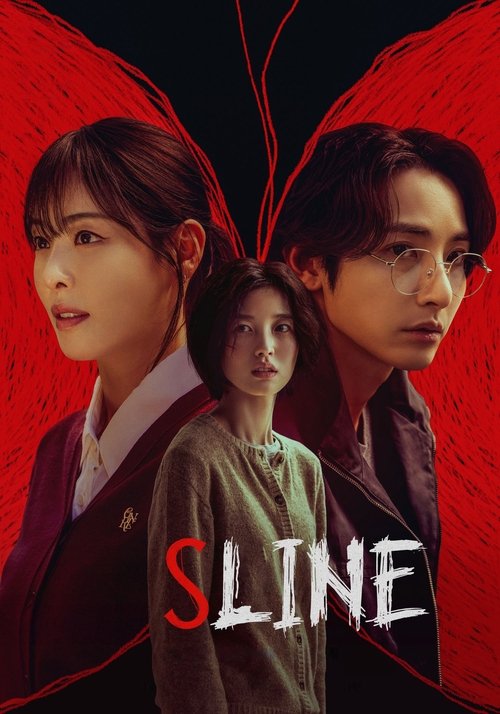
S Line
A suffocating dark fantasy thriller where crimson threads of hidden intimacy slice through human morality, bleeding long-buried shame into a neon-soaked, paranoid labyrinth of judgment and social unraveling.
S Line

S Line

S라인

"Social. Sex. Secrets."

11 July 2025 — 25 July 2025 South Korea 1 season 6 episode Ended 7.5 (167)

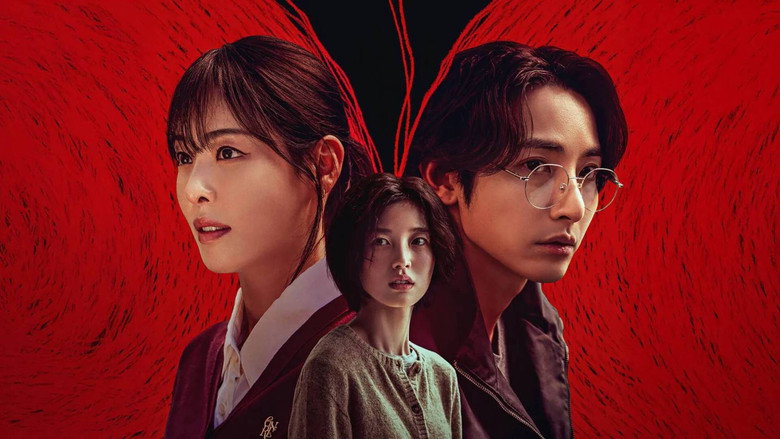
Cast: Lee Soo-hyuk, Choi Ye-won, Lee Da-hee, Lee Eun-saem, Kim Dong-young

Drama Sci-Fi & Fantasy Mystery Privacy, Secrets, and Voyeurism Moral Hypocrisy and Public Shaming Trauma and Institutional Isolation Weaponized Truth vs. Justice

Overview

S Line (S라인) is a six-episode South Korean dark fantasy crime thriller adapted from the acclaimed Naver webtoon by kkomabi. Set in a near-future South Korea, the show revolves around a supernatural phenomenon: glowing, semi-organic red threads extending upward from individuals' heads, visually connecting them to everyone with whom they have shared physical intimacy. While high school student Shin Hyun-heup has been burdened with seeing these lines natively since birth, ordinary citizens gain the ability only when wearing mysterious crimson-tinted glasses that begin circulating secretly through classrooms, apartments, and workplaces.

The overarching story arc follows Han Ji-wook, a disillusioned detective with a messy personal life, as he investigates a series of murders linked to the glasses. Joining forces with Hyun-heup and encountering Lee Gyu-jin, an enigmatic high school teacher with no visible lines above her head, Ji-wook uncovers a sprawling web of institutional corruption, hidden sexual trauma, and cultish fanaticism. Across its six tightly packed episodes, the series functions as an anthology-like thriller examining how the sudden collapse of privacy turns societal hypocrisy into a fatal weapon.

Core Meaning

The core thesis of S Line is a scathing critique of modern human hypocrisy, digital voyeurism, and the illusion of privacy in contemporary society. Through its provocative premise, the creators argue that modern civilization relies on selective blindness and unsaid secrets to maintain social order and empathy. When absolute truth is forced into the open and weaponized, humanity does not achieve moral enlightenment; instead, it devolves into cruelty, moral outrage, and self-destruction. The show demonstrates how society eagerly judges the intimate pasts of others while harboring its own unspeakable desires and sins.

Thematic DNA

Privacy, Secrets, and Voyeurism 30%
Moral Hypocrisy and Public Shaming 25%
Trauma and Institutional Isolation 25%
Weaponized Truth vs. Justice 20%

Privacy, Secrets, and Voyeurism

The series explores the nightmare of total transparency. As the glasses reveal hidden connections, characters turn into obsessive voyeurs who use intimate secrets for blackmail and destruction.

Moral Hypocrisy and Public Shaming

S Line highlights how people hold others to impossible moral standards. Characters who project purity in public are exposed as deeply compromised in private, exposing the performative nature of societal morality.

Trauma and Institutional Isolation

Through Hyun-heup and Seon-a, the show examines the profound isolation that comes from carrying forbidden knowledge or enduring hidden abuse within families and schools.

Weaponized Truth vs. Justice

The show questions whether total revelation equals justice. The antagonist uses the lines to force a twisted rebirth, showing how dogmatic pursuit of truth can become a form of psychological terrorism.

Character Analysis

Han Ji-wook

Lee Soo-hyuk

Archetype: Cynical Detective / Ethically Flawed Antihero Key Trait: Obsessive tenacity masked beneath a cool, detached exterior.

Motivation

Initially driven to solve murder cases, his motivation shifts to protecting his niece Seon-a and exposing the origin of the glasses.

Character Arc

Ji-wook begins as an attractive, free-spirited detective whose head is covered in dozens of S Lines. When he puts on the glasses to solve local crimes, his cynicism collapses into despair as he discovers that his own family hides horrific secrets, driving him into a psychological breakdown.

Shin Hyun-heup

Arin / Choi Ye-won

Archetype: Cursed Seer / Tragic Catalyst Key Trait: Quiet resilience ("iron fist in a velvet glove").

Motivation

Escaping her isolation and seeking a quiet, normal existence free from judgment.

Character Arc

Born with the ability to see S Lines without glasses, Hyun-heup grew up traumatized as a reclusive shut-in. Pulled back into society by a series of murders, she survives a tragic confrontation and transitions from a victim of her vision to the catalyst for global revelation.

All 4 characters and cast

Symbols & Motifs

Glowing Red S Lines

Meaning:

The visual manifestation of past physical intimacy, symbolizing visual guilt and inescapable personal history.

Context:

They function like puppet strings or scarlet letters hovering over characters' heads.

The Crimson Glasses

Meaning:

Symbolizes technological surveillance, dangerous curiosity, and the loss of personal boundaries.

Context:

Devices distributed in secret that allow wearers to view the hidden lines.

Floating Blood Sphere

Meaning:

Symbolizes the global release of suppressed truth and the spread of Hyun-heup's lifelong burden onto all of humanity.

Context:

In the finale, Hyun-heup’s blood floats upward and condenses into a massive red orb before bursting into the sky.

Helmets, Visors, and Sunglasses

Meaning:

Symbolizes humanity's desperate attempt to build artificial blindfolds to restore the comfort of ignorance.

Context:

Worn by people in the aftermath of the global awakening to avoid seeing the S Lines.

Rooftops and Heights

Meaning:

Representing places of exposure, public judgment, and physical or moral falls.

Context:

Featured in multiple pivotal scenes occurring on high school or apartment roofs.

Memorable Quotes

보이지 않는다면 없는 것인가? 보인다면 그것이 전부인가?
— Narrator

Context

Series opening line in Episode 1.

Meaning

Frames the entire series' core philosophical inquiry into truth, perception, and human judgment.

이 안경을 쓰면 그 선이 보인다고?
— Han Ji-wook

Context

Episode 4/5 turning point.

Meaning

Marks Ji-wook's transition from an indifferent investigator to a user of the cursed glasses.

All 4 quotes

Episode Highlights

The Girl in Sunglasses

S1E1

Establishes Hyun-heup's painful childhood, her innate ability to see S Lines, and her self-imposed isolation after her family broke apart.

Significance:

A local murder pulls her out of hiding, initiating her collaboration with Detective Ji-wook.

Animal Kingdom

S1E2

Shifts focus to Bangju High School, detailing the horrific bullying endured by Seon-a and showing the mysterious glasses inside a student locker.

Significance:

Illustrates how revealing secret sexual links corrupts high school social hierarchies.

Apartment

S1E3

Focuses on adult infidelity and blackmail, culminating in Seon-a falling from the school roof into a coma.

Significance:

Transforms Ji-wook's routine case into an intense personal crusade.

Ungrown

S1E4

An aspiring actress named Mi-sung finds the glasses at a boarding house.

Significance:

Reveals how sexual jealousy and obsession destroy lives when people peer into the private connections of their crushes.

Glasses

S1E5

Ji-wook recovers the glasses from a bloodstained bathtub and puts them on to witness his own chaotic S Lines.

Significance:

Ji-wook uses the vision to expose systemic sexual abuse at Bangju High School.

S Line

S1E6

Unmasks Lee Gyu-jin as the mastermind and reveals that Seon-a was abused by Ji-wook's father.

Significance:

Concludes with a surreal climax where Hyun-heup's blood bursts across the sky, granting the S Line vision to the entire world.

Philosophical Questions

Is absolute transparency a form of divine justice, or is privacy essential for human survival?

Explored through the social breakdown that occurs when secret connections are laid bare, showing that forced transparency leads to paranoia rather than moral purity.

Does exposing someone's hidden past validate destroying their present life?

Examined through characters who utilize S Line revelations to blackmail, harass, and drive others to destruction regardless of context.

Is societal order built on genuine virtue, or merely on the collective ability to keep secrets?

Demonstrated by how rapidly social structures, families, and high school hierarchies collapse when hidden acts are visually exposed.

When truth is weaponized for judgment, does it cease to be truth and become vengeance?

Illustrated through Lee Gyu-jin's cultish crusade, where the total revelation of truth functions as psychological terrorism.

Alternative Interpretations

The series presents three major thematic readings:

Full ending explanation

Cultural Impact

Premiering during a period in South Korea marked by heightened public discourse surrounding digital sex crimes, cyber-surveillance, and online public shaming, S Line acted as a dark mirror to modern cancel culture by turning sexual history into an unhideable physical visual.

Audience Reception

Audience reception was overall strong with significant debate surrounding the ending:

  • Positives: Viewers praised the compelling original concept, tight pacing across episodes 1–5, strong performances by Lee Soo-hyuk, Arin, and Lee Da-hee, and Junoh Lee's eerie soundtrack.
  • Criticisms: Episode 6 generated intense debate due to its sudden tonal shift from a grounded thriller into surreal fantasy, leaving some subplots unexplained and making viewing uncomfortable due to intense themes of abuse.

Interesting Facts

  • S Line made history at Canneseries 2025 by becoming the first South Korean series to win the Best Music Award, composed by Junoh Lee.
  • Director Ahn Joo-young modified the setting of kkomabi's webtoon by introducing glasses as a prequel mechanism before global visibility occurs.
  • Director Ahn Joo-young previously gained critical acclaim for her indie feature film A Boy and Sungreen (2019).
  • The production team created dynamic, pulsating red tendrils that move like living organisms rather than static lines.
  • The show was produced with an R-rating (18+) to tackle mature themes including sexual trauma and graphic violence without self-censorship.

Easter Eggs

The 'Trilogy of Death' Universe

S Line is part of webtoon artist kkomabi’s famous "Trilogy of Death" alongside A Killer Paradox and Deus Ex Machina.

Shared Character Names

Detective characters in the police department share subtle naming conventions with law enforcement figures in A Killer Paradox.

Cursed Object Trope

The sleek wooden boxes containing the glasses pay homage to Asian psychological horror tropes seen in works like The Ring.

Frequently Asked Questions

Explore More About This Movie

Dive deeper into specific aspects of the movie with our detailed analysis pages

Comments (0)

Leave a comment

No comments yet. Be the first to share your thoughts!

Similar Movies