
Skip to content
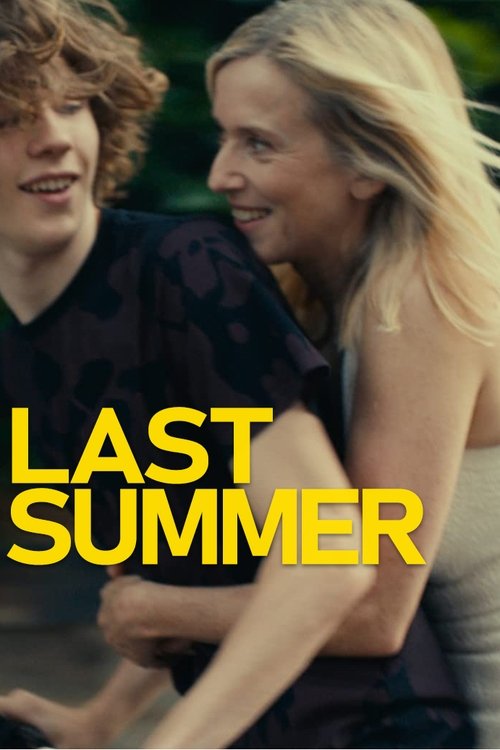
Last Summer
An erotic thriller drenched in golden summer light, where a pristine suburban paradise slowly dissolves into a suffocating, moral quicksand. Crisp white linens and sun-baked olive trees mirror a cold, ivory mask concealing transgressive, consuming fire.
Last Summer

Last Summer

L'Été dernier

13 September 2023 France 104 min 6.1 (253)

Director: Catherine Breillat

Cast: Léa Drucker, Samuel Kircher, Olivier Rabourdin, Clotilde Courau, Serena Hu

Drama Transgressive Desire & Female Agency Truth, Gaslighting & The Conscious Lie Power Imbalances & Generational Friction Bourgeois Facade & Domestic Fragility Youth, Vulnerability & Loss of Innocence
Box Office: $1,022,551

Overview

Anne (Léa Drucker) is a renowned Parisian defense attorney specializing in cases of adolescent abuse and minor protection. She leads an enviable, meticulously structured life in an idyllic country estate on the heights of Paris with her successful businessman husband, Pierre (Olivier Rabourdin), and their two young adopted daughters. Her serene domestic existence appears impenetrable, defined by professional authority, high-bourgeois elegance, and quiet affection.

The tranquil order of her household is disrupted when Pierre's rebellious 17-year-old son from a previous marriage, Théo (Samuel Kircher), comes to live with them after being expelled from school. Sullen, volatile, yet deeply vulnerable, Théo clashes with his father while bringing an unpredictable energy into the home. Anne initially acts as a level-headed mediator between father and son, but a subtle, charged friction quickly develops between her and the young man.

As summer progresses and Pierre leaves on frequent corporate trips, the boundaries between stepmother and stepson begin to erode. What starts as a provocative game escalates into a secret, passionate affair that threatens to shatter Anne's career, marriage, and carefully cultivated reality. Without resorting to cheap sensationalism, the narrative explores the treacherous, slippery slope of desire, power, and self-preservation.


Core Meaning

In Last Summer (L'Été dernier), director Catherine Breillat examines the hypocrisies of female desire, power dynamics, and the mechanics of the conscious lie. Rather than offering a didactic moral lesson or reducing the narrative to a simple story of victim and predator, Breillat approaches transgressive desire with a detached, clinical intimacy.

The film highlights the friction between society's demand for moral perfection and the dark, chaotic reality of human impulse. Anne's professional identity—protecting young victims—ironically mirrors her private transgressions, illustrating how easily individuals can compartmentalize their actions and rewrite truth to protect their privilege. Breillat asserts that moral certainty is a fragile construct, showing how adult respectability often relies on silencing uncomfortable truths to maintain the illusion of harmony.

Thematic DNA

Transgressive Desire & Female Agency 30%
Truth, Gaslighting & The Conscious Lie 25%
Power Imbalances & Generational Friction 20%
Bourgeois Facade & Domestic Fragility 15%
Youth, Vulnerability & Loss of Innocence 10%

Transgressive Desire & Female Agency

The film delves into the raw, unvarnished nature of a mature woman's sexual awakening and obsession. Desire is depicted not as a romantic ideal, but as an unpredictable force that defies legal, familial, and ethical boundaries.

Truth, Gaslighting & The Conscious Lie

The narrative centers on how truth can be bent and weaponized. When exposed, Anne uses her legal intellect to aggressively gaslight her husband and demonize her teenage stepson, demonstrating how social authority can crush vulnerable accusations.

Power Imbalances & Generational Friction

Though Théo initiates flirtation through adolescent bravado, Anne holds absolute institutional and adult power. The film highlights how age, social status, and maturity alter power dynamics, leaving the teenager ultimately discarded when adult interests are threatened.

Bourgeois Facade & Domestic Fragility

The idyllic home, expensive wines, and pristine suits function as armor against moral chaos. The film exposes how high-bourgeois domestic peace is often bought through collective silence and systemic self-deception.

Youth, Vulnerability & Loss of Innocence

Beneath Théo's sullen rebellion lies a deep longing for parental affection. His affair with Anne is both an assertion of adulthood and an exploitation of his emotional displacement within the family.

Character Analysis

Anne

Léa Drucker

Archetype: Protagonist / Antiheroine Key Trait: Chilly, elegant calculation paired with hidden, burning passion

Motivation

Reclaiming sensual vitality and preserving her comfortable lifestyle at all costs.

Character Arc

Shifts from a cool, controlled advocate for justice into a transgressive lover, eventually becoming a ruthless protector of her own status.

Théo

Samuel Kircher

Archetype: Catalyst / Antihero Key Trait: Sullen, magnetic rebelliousness hiding intense emotional insecurity

Motivation

Seeking attention, affection, and validation in a family where he feels discarded.

Character Arc

Evolves from a resentful teenage delinquent into a vulnerable lover, ending up crushed and alienated by adult manipulation.

All 4 characters and cast

Symbols & Motifs

The Tattoo (Cubital Fossa Piercing)

Meaning:

It symbolizes the physical, indelible mark of their transgression and a permanent secret bond beneath her professional clothing.

Context:

Théo insists on giving Anne a real ink tattoo on her inner arm.

White and Cream Wardrobe

Meaning:

Inspired by Hitchcockian heroines, this visual motif represents an impenetrable exterior of purity and social control covering hidden guilt.

Context:

Anne consistently wears crisp, light-colored suits and dresses.

The Voice / Tape Recorder

Meaning:

The recorder symbolizes objective truth and confession versus verbal deception.

Context:

Used early in the film during legal prep and personal exchanges.

Shirtlessness / Youthful Physicality

Meaning:

Represents uninhibited, youthful vitality, contrasting sharply with Pierre's sagging, aging body.

Context:

Théo's loose linen shirts and frequent shirtlessness throughout the film.

The Convertible Sports Car

Meaning:

It symbolizes her underlying impulse for speed, freedom, and reckless escape from her predictable domestic routine.

Context:

Anne drives an open-topped sports car through the French countryside.

Memorable Quotes

Tu vas pas me dire que tu l'as cru une seconde ?
— Anne

Context

Confronted by Pierre after Théo reveals their secret affair, Anne turns the accusation back on her husband with indignant disbelief.

Meaning

Captures the decisive moment of gaslighting, where Anne leverages her social credibility to invalidate the boy's truth.

Ton fils est un monstre, mets-toi bien ça dans la tête.
— Anne

Context

Intimidating Pierre during his crisis of faith.

Meaning

Demonstrates Anne's ruthless self-preservation, villainizing the teenage boy to protect her marriage.

All 5 quotes

Philosophical Questions

Is social survival dependent on the maintenance of a conscious lie?

Explored through Anne's aggressive defense of her domestic position and Pierre's ultimate acceptance of silence over truth to keep the family unit intact.

Can a person perform objective moral good in public life while acting predatorily in private?

Explored through Anne's career as a dedicated defense attorney protecting abused minors contrasting directly with her exploitation and manipulation of her teenage stepson.

Where does genuine romantic awakening end and predatory power exploitation begin when age and maturity are vastly unequal?

Explored through the evolving dynamic between Anne and Théo, where initial adolescent flirtation gives way to systemic adult gaslighting and emotional abandonment.

Alternative Interpretations

The Willful Blindness Reading: Pierre knows Théo is telling the truth. His final command ("Tais-toi") is an act of self-preservation—choosing quiet living over the total destruction of his marriage and home.

Full ending explanation

Cultural Impact

Released in a cultural climate hyper-aware of consent, age gap relationships, and power dynamics, Last Summer sparked debate for refusing to deliver a simple moral condemnation of its female lead.

The film cements Breillat’s legacy alongside her controversial classics (Romance, Fat Girl) as one of France’s most uncompromising cinema artists exploring female sexual desire.

It premiered in Main Competition at the 2023 Cannes Film Festival, earning 4 César Award nominations (including Best Director and Best Actress for Léa Drucker) and widespread praise from international critics for its emotional precision.

Audience Reception

Praised Aspects: Léa Drucker’s captivating, layered performance; Samuel Kircher’s expressive debut; tight narrative tension; exquisite visual framing by Jeanne Lapoirie.

Main Points of Criticism: Viewers expecting traditional moral retribution criticized the lack of explicit legal consequences for Anne. Some found the premise uncomfortable or preferred the colder tragedy of the original Danish film.

Overall Verdict: A brilliant, provocative, and discomforting character study that lingers long after viewing.

Interesting Facts

  • The film is an official remake of May el-Toukhy's acclaimed 2019 Danish film Queen of Hearts (Dronningen). Producer Saïd Ben Saïd acquired the rights and brought the project to Breillat.
  • It marks Catherine Breillat's return to feature directing after a 10-year hiatus following Abuse of Weakness (2013). Breillat had previously declared she was done with cinema due to harsh French critical press and health challenges following a 2004 stroke.
  • Samuel Kircher was cast as Théo after his older brother, Paul Kircher (The Animal Kingdom), had to drop out right before production.
  • Breillat intentionally softened the explicit, icy tone of the Danish original, focusing on intense facial close-ups and deep adolescent kissing rather than graphic body shot nudity.
  • Breillat famously eschewed intimacy coordinators, believing that direct, humble, and trusting collaboration between director and actors creates genuine grace on screen.
  • The film's tense, unsettling score was composed by Kim Gordon (founding member of Sonic Youth) alongside Bill Nace (Body/Head).
  • Director of Photography Jeanne Lapoirie and Breillat styled Léa Drucker's tailored light wardrobe after Kim Novak in Vertigo and Tippi Hedren in The Birds.

Easter Eggs

Reference to Visconti’s Death in Venice

Théo’s tousled hair, lanky frame, and languid summer demeanor are visual nods to Björn Andrésen’s character Tadzio in Luchino Visconti’s 1971 masterpiece.

Cocteau Dictum

During promotional interviews at Cannes, Breillat cited Jean Cocteau’s famous quote, "I am a lie that always tells the truth," as the conceptual foundation for Anne’s denial scene.

Real-Life Sibling Cesar Battle

At the 2024 César Awards, Samuel Kircher was nominated for Best Male Revelation alongside his own brother, Paul Kircher.

Léo Ferré End Credits

The film closes with Léo Ferré’s melancholic song "20 ans," underlining the tragedy of lost youth and fleeting passion.

Frequently Asked Questions

Explore More About This Movie

Dive deeper into specific aspects of the movie with our detailed analysis pages

Comments (0)

Leave a comment

No comments yet. Be the first to share your thoughts!

Similar Movies