Skip to content
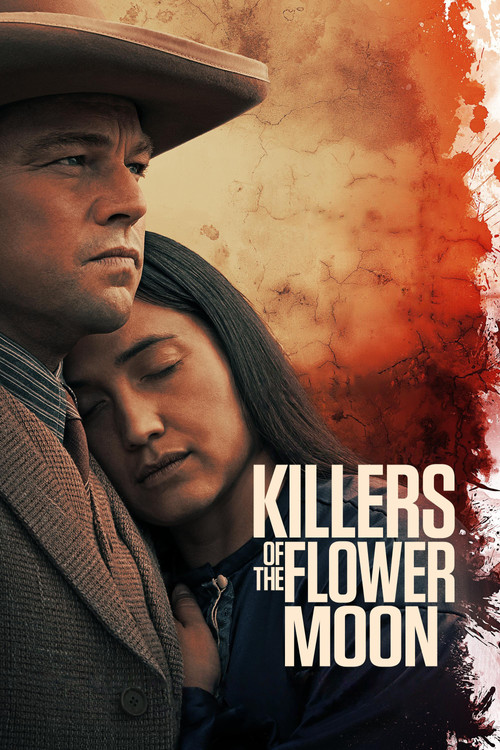
Killers of the Flower Moon
A grim, slow-burning historical crime tragedy steeped in suffocating dread, exposing the monstrous banality of evil lurking beneath declarations of love on sacred prairie earth choked by black oil.
Killers of the Flower Moon

Killers of the Flower Moon

"Can you find the wolves in this picture?"

18 October 2023 United States of America 206 min 7.4 (4,308)

Director: Martin Scorsese

Cast: Leonardo DiCaprio, Robert De Niro, Lily Gladstone, Jesse Plemons, Tantoo Cardinal

Drama Crime History Systemic Erasure and Colonization Greed, Extraction, and Exploitative Capitalism The Banality of Evil and Compartmentalized Betrayal The Complicity of Storytelling and Mass Entertainment
Budget: $200,000,000
Box Office: $158,722,599

Overview

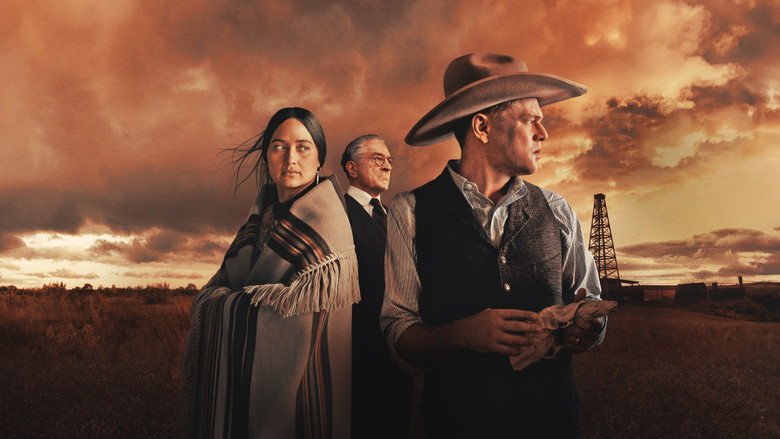
Set in 1920s Oklahoma, Killers of the Flower Moon chronicles the reign of terror inflicted upon the Osage Nation after immense oil reserves were discovered beneath their reservation land. Overnight, tribal members became among the wealthiest individuals per capita in the world, holding collective subterranean headrights that could not be sold—only inherited. This windfall attracted white opportunists, swindlers, and businessmen eager to siphon Osage wealth through predatory conservatorships, fraudulent intermarriages, and insidious violence.

Returning from World War I with little ambition and empty pockets, Ernest Burkhart arrives in Fairfax to work for his wealthy, charismatic uncle William "King" Hale, a civic benefactor and self-proclaimed friend to the Osage. Urged by his uncle to ingratiate himself with the local Osage elite, Ernest begins driving and courting Mollie Kyle, an Osage woman of remarkable poise whose family controls significant oil headrights.

As Ernest and Mollie wed and start a family, a succession of mysterious illnesses, execution-style shootings, and unexplained deaths strikes Mollie’s immediate family and the wider Osage community. With local law enforcement compromised, corrupt, or indifferent, Mollie and tribal elders journey to Washington to plead for intervention, precipitating a federal investigation that gradually closes in on the heart of Osage County.

Core Meaning

Director Martin Scorsese sought to deconstruct the myth of the American frontier by exposing the institutionalized extraction and moral decay that underpinned settler expansion. Rather than portraying the atrocities as the work of rogue outlaws, the film demonstrates that genocide and exploitation were normalized, polite, and embedded in daily commerce, church life, and marriage vows.

Through Ernest's moral cowardice and Hale's sociopathic paternalism, Scorsese explores pathological compartmentalization: how ordinary, smiling people can convince themselves they care for someone while participating in their calculated destruction. Ultimately, the film implicates the audience and cinema itself, demonstrating how Indigenous suffering has historically been mined, sensationalized, and repackaged for mass entertainment.

Thematic DNA

Systemic Erasure and Colonization 30%
Greed, Extraction, and Exploitative Capitalism 25%
The Banality of Evil and Compartmentalized Betrayal 25%
The Complicity of Storytelling and Mass Entertainment 20%

Systemic Erasure and Colonization

The film illustrates how legal frameworks, such as paternalistic federal guardianships labeling Osage adults "incompetent," operated in tandem with targeted homicide. White settlers systematically engineered hereditary transfers to absorb Osage resources into white bloodlines and institutions rather than merely killing for quick cash.

Greed, Extraction, and Exploitative Capitalism

Oil, or "black gold," represents an earthly blessing turned curse. The boomtown economy of Fairfax exposes transactional parasitism ranging from extortionate medical bills and funeral services to hired gunmen, showing how extreme wealth breeds ruthless predation.

The Banality of Evil and Compartmentalized Betrayal

Ernest Burkhart genuinely loves Mollie, yet simultaneously administers poisoned insulin and coordinates hits on her family members, while Hale gives public eulogies for victims he ordered killed. The film highlights how weak-willed obedience and moral rationalization allow monstrous cruelty to occur in broad daylight.

The Complicity of Storytelling and Mass Entertainment

Scorsese challenges narrative voyeurism by concluding not with triumphant FBI court victories, but with a sensationalized 1930s radio dramatization. This forces viewers to reflect on whether true-crime narratives respect historical victims or simply exploit their trauma as entertainment products.

Character Analysis

Ernest Burkhart

Leonardo DiCaprio

Archetype: Antihero / Weak-willed Accomplice Key Trait: Moral cowardice and cognitive dissonance.

Motivation

Desires wealth, easy comfort, and approval from his domineering uncle.

Character Arc

Shifts from a malleable, aimless veteran into an active conspirator in the destruction of his wife's family, eventually testifying against his uncle while remaining unable to confess his deepest sins to Mollie.

Mollie Burkhart (née Kyle)

Lily Gladstone

Archetype: Tragic Heroine / Moral Center Key Trait: Unflinching quiet dignity, intuition, and stoic grace.

Motivation

Focused on protecting her family, preserving her heritage, and seeking justice for her murdered kin.

Character Arc

Evolves from an observant, independent Osage matriarch into a bedridden, grief-stricken victim of systematic poisoning, before summoning the resolve to cut ties and escape Ernest’s orbit.

All 5 characters and cast

Symbols & Motifs

The Wolves

Meaning:

Establishes that lethal predators walk openly as respected neighbors, civic leaders, and spouses rather than hidden monsters.

Context:

Early in the film, Ernest reads an illustrated book titled The Osage People, which asks: "Can you find the wolves in this picture?" while the camera pans across the white townsfolk.

Crude Oil / Black Gold

Meaning:

Represents both a miraculous fortune and a literal sticky black poison that stains the sacred soil, fueling mortal corruption.

Context:

Shown erupting from the earth during the prologue while Osage men dance within its geyser.

The Owl

Meaning:

A death omen in Osage spirituality, signifying the impending departure of a spirit to the ancestral realm and representing cultural endurance alongside impending loss.

Context:

An owl enters the home of Mollie’s mother, Lizzie Q, shortly before her passing.

Fire and Hellfire

Meaning:

Underscores William King Hale's demonic, destructive appetite, moral corruption, and calculated greed.

Context:

A sequence showing Hale’s pasture burning, where Hale and his henchmen appear silhouetted against a wall of flame as he revels in the blaze from an insurance fraud scheme he orchestrated.

Traditional Osage Blankets

Meaning:

Symbolizes cultural identity, dignity, and sovereignty. Their successive disappearance visualizes the stripping away of Osage heritage under white encroachment.

Context:

Worn by Mollie and her sisters throughout the narrative until each sister is murdered one by one.

The Hypodermic Needle / Poisoned Insulin

Meaning:

Represents the ultimate perversion of marital care—the delivery of slow death under the guise of medical treatment.

Context:

A tool intended to heal diabetes that Ernest uses to inject a debilitating poison directly into his ailing wife.

Memorable Quotes

Can you find the wolves in this picture?
— Ernest Burkhart

Context

Read aloud by Ernest from an illustrated book titled The Osage People early in the film.

Meaning

Acts as the thesis statement for the entire narrative, foreshadowing that the predators are hidden in plain sight among the community.

I love that money, sir.
— Ernest Burkhart

Context

Spoken during Ernest’s initial conversation with Hale about his tastes and future in Fairfax.

Meaning

Candidly summarizes the base greed that overrides his humanity and steers his subsequent actions.

All 6 quotes

Philosophical Questions

Can love and violent exploitation coexist within the human heart?

The film examines how affection can intertwine with predatory intent, questioning whether love contaminated by self-interest and calculated harm can legitimately be recognized as love.

How does systemic racism transform average citizens into complicit murderers?

Scorsese depicts evil not as grand villainy, but as mundane compliance, peer pressure, and casual dehumanization embedded in social, religious, and legal frameworks.

Who owns historical trauma, and can cinema depict it without exploiting it?

The metanarrative radio drama ending forces the audience to interrogate whether mass entertainment inherently commodifies real-world atrocities for voyeuristic enjoyment.

Is legal justice capable of repairing moral and cultural genocide?

While federal convictions caught individual conspirators, the wider networks of predatory doctors, guardians, and lawyers kept their wealth, illustrating the severe limits of judicial resolution.

Alternative Interpretations

Debate centers around the authenticity of Ernest Burkhart's feelings toward Mollie. One interpretation views Ernest as experiencing genuine cognitive dissonance: he truly loved Mollie and their children, but possessed such profound intellectual and moral deficiency that he compartmentalized his affection from the murders. An alternative interpretation views Ernest as a purely predatory sociopath whose domestic warmth was entirely performative to keep Mollie pacified while orchestrating her demise.

Full ending explanation

Cultural Impact

The film catalyzed a major historical reckoning by bringing the Osage Reign of Terror (1921–1926)—an atrocity omitted from Oklahoma school curriculums for decades—into widespread global consciousness.

It also set a benchmark for Indigenous representation in major studio cinema by employing hundreds of Native craftspeople and actors. Lily Gladstone made history as the first Native American to win the Golden Globe for Best Actress and to be nominated for the Academy Award for Best Actress.

Critically, alongside revisionist Westerns such as Unforgiven, the film deconstructs the classic American Western genre by rejecting romanticized gunfights in favor of an examination of bureaucratic corruption, legal fraud, and corporate land theft. It debuted at Cannes to a nine-minute standing ovation, secured 10 Oscar nominations, and grossed over $157 million worldwide.

Audience Reception

The film received widespread acclaim, particularly for Lily Gladstone's performance, which was hailed as the emotional anchor of the story for conveying immense grief and dignity through stillness and micro-expressions. Critics also praised the deliberate subversion of the "white savior" trope, as well as Rodrigo Prieto’s cinematography, Robbie Robertson’s atmospheric score, and Thelma Schoonmaker’s editing.

Conversely, some viewers found the 206-minute runtime and deliberate procedural pacing exhausting. Certain Indigenous commentators, including language consultant Christopher Cote, noted that the narrative still allocated the majority of screen time to the white conspirators rather than the Osage community. Additionally, Brendan Fraser's theatrical turn as attorney W.S. Hamilton generated polarized reactions, though Scorsese defended the performance as historically fitting.

Interesting Facts

  • The original script adapted David Grann’s book as a conventional procedural focusing on Tom White and the birth of the FBI with Leonardo DiCaprio playing White, but Scorsese and DiCaprio rewrote it to focus on Ernest and Mollie to avoid a 'white savior' narrative.
  • Filming occurred on location in Osage County, Oklahoma (Pawhuska and Fairfax) with direct collaboration from Principal Chief Geoffrey Standing Bear, tribal elders, and local Osage consultants, actors, and craftspeople.
  • Lily Gladstone, Leonardo DiCaprio, and Robert De Niro learned the Osage language under instructor Christopher Cote, allowing De Niro's character to speak Osage fluently on screen.
  • Casting director Ellen Lewis insisted Martin Scorsese personally read the final lines of the film as the radio dramatist reciting Mollie's obituary, which Scorsese filmed in a cleared studio to accept moral culpability as a filmmaker.
  • The film's propulsive score was the final work of Scorsese’s long-time collaborator Robbie Robertson, who passed away in August 2023 shortly before the film's release.
  • Prior to being cast by Scorsese over Zoom, Lily Gladstone was planning to quit acting and enroll in a data analytics course to track hornets for the Washington State Department of Agriculture.
  • Cinematographer Rodrigo Prieto and the special effects crew built a full-scale replica of Bill and Rita Smith’s house and detonated it practically in Osage County during dawn lighting.

Easter Eggs

Martin Scorsese’s Meta Cameo

Scorsese plays a radio producer reciting Mollie’s obituary, directly confronting Hollywood’s legacy of transforming genocide and tragedy into consumable entertainment.

Homage to The FBI Story (1959)

The live radio studio setup references 1930s true-crime radio programs like The Lucky Strike Hour, while also nodding to how the 1959 Jimmy Stewart film The FBI Story minimized the Osage murders as a brief plot footnote.

Larry Fessenden Cameo

Independent horror pioneer and longtime Scorsese admirer Larry Fessenden appears as the enthusiastic radio voice actor delivering dramatic live sound effects and narration.

Prominent Musicians in Acting Roles

Features notable American musicians in acting roles, including country singer Jason Isbell as Bill Smith, Sturgill Simpson as bootlegger Henry Grammer, and Jack White as an actor in the radio broadcast.

Autochrome LUT Processing

Rodrigo Prieto and colorist Yvan Lucas developed a custom digital lookup table (LUT) modeling 1920s Autochrome color photography, allowing Osage floral beadwork and blanket colors to glow authentically against prairie tones.

Frequently Asked Questions

Explore More About This Movie

Dive deeper into specific aspects of the movie with our detailed analysis pages

Comments (0)

Leave a comment

No comments yet. Be the first to share your thoughts!

Similar Movies