Skip to content
Les Misérables
A summer's day in a Paris housing estate tightens like a fist: three cops, one stolen lion cub, and a drone overhead turning a small humiliation into a fuse waiting for a spark.
Les Misérables

Les Misérables

14 November 2019 France 104 min 7.6 (1,628)

Director: Ladj Ly

Cast: Damien Bonnard, Alexis Manenti, Djebril Zonga, Steve Tientcheu, Jeanne Balibar

Drama Crime Thriller Policing as an abuse of power Intergenerational injustice The cycle of violence and retaliation Images, surveillance and who tells the story A fragile social ecosystem
Budget: $2,500,000
Box Office: $54,606,372

Overview

Stéphane, a newcomer to the Anti-Crime Squad, transfers to Montfermeil, the eastern Paris suburb where Victor Hugo set his famous novel. On his first days he is paired with two experienced partners, Chris and Gwada, who introduce him to their beat by way of a patrol that is less law enforcement than a daily negotiation: with street vendors, with teenage boys, with the self-appointed power brokers who keep a fragile peace on the estate.

That peace is disturbed when a boy named Issa steals a lion cub, Johnny, from a travelling circus. The circus owner, Zorro, storms to the local community leader known as "the Mayor" and threatens to come back armed if the animal is not returned. What begins as an absurd errand — find a lion in a housing project — pulls the three officers through every faction in the neighbourhood, each with its own claim on the territory.

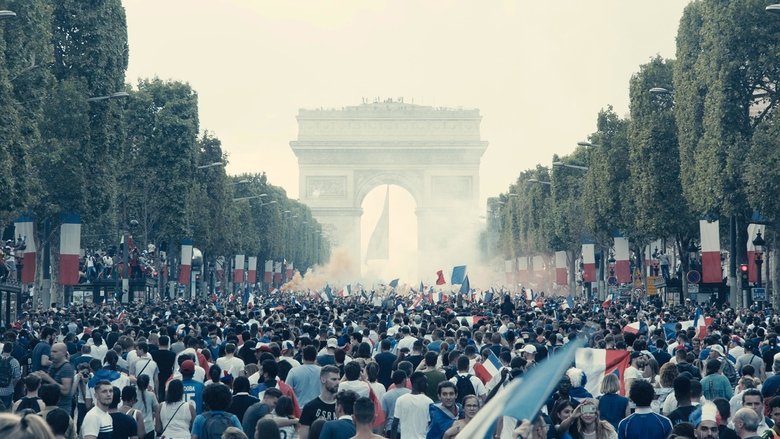
When the squad is overwhelmed during an arrest, a drone hovering above the courtyard records what happens. Ladj Ly's debut feature compresses all of this into roughly a single day, building from documentary-like observation to a thriller whose tension comes less from a mystery than from watching adults in uniform discover how little control they actually have.
Core Meaning

Ly closes the film with Hugo's line — "there are no such things as bad plants or bad men; there are only bad cultivators" — and that sentence is the thesis. The film argues that the violence erupting on the estate is not an expression of anyone's nature but a harvest: the predictable yield of decades of neglect, policing-by-humiliation, and adults who treat children as bargaining chips in their own power games.

Crucially, Ly refuses to make this a story of villains and victims. The cops are not monsters and the kids are not innocents; the Mayor, the Muslim Brotherhood figures, the dealers and the police all operate a system that works for them and is paid for by the youngest. Ly, who grew up in Montfermeil as the son of a Malian immigrant and has been filming the neighbourhood for more than a decade, has described the film as an alarm bell rather than an indictment — a warning delivered by someone who lives there, insisting that people from the banlieue tell their own story instead of having it told for them.

Thematic DNA

Policing as an abuse of power 25%
Intergenerational injustice 25%
The cycle of violence and retaliation 20%
Images, surveillance and who tells the story 15%
A fragile social ecosystem 15%

Policing as an abuse of power

The film observes police work from the inside without softening it. Chris's casual searches and intimidation of teenage girls, Gwada's weary complicity and Stéphane's slow-burning refusal show three positions on the same spectrum. The squad's authority depends on being feared, and the moment a courtyard full of children stops being afraid, the whole arrangement collapses.

Intergenerational injustice

Every adult faction — police, the Mayor, the circus, the religious authorities — is willing to sacrifice a boy to protect its own standing. The children absorb the cost of an order they had no part in making, and the film frames age-related mistreatment as an abuse of power on a par with ethnic discrimination and social exclusion.

The cycle of violence and retaliation

The plot is a chain of escalations in which each party's attempt to contain a problem creates the next one: a theft provokes a threat, the threat provokes a raid, the raid provokes an injury, the injury provokes a cover-up, and the cover-up provokes an uprising. Ly stages retaliation as something almost mechanical — not chosen, but caused.

Images, surveillance and who tells the story

Buzz's drone turns the estate into something watched from above, and the footage it captures becomes the film's most dangerous object. The camera is simultaneously a weapon against impunity and another way of turning residents into spectacle — the same voyeurism the audience is implicated in from the first drone shot.

A fragile social ecosystem

Montfermeil is shown as a working equilibrium of rival authorities who all need each other: the Mayor's clientelism, the brotherhood's discipline, the dealers' commerce, the police's tolerance. The film's real horror is how little it takes — one stolen animal — to reveal that the peace was never governance, only a truce.

Character Analysis

Stéphane

Damien Bonnard

Archetype: The outsider / audience surrogate Key Trait: Restraint

Motivation

To do the job decently and keep the situation from escalating, while discovering that decency has no institutional support.

Character Arc

He arrives as a transfer to the Anti-Crime Squad and functions as our eyes, learning the unwritten rules of the beat. His initial discomfort with his partners' methods hardens into objection, but the film denies him the satisfaction of being the good cop who fixes anything — by the climax he is simply one of three men in a stairwell with a weapon in his hand and no good options.

Chris

Alexis Manenti

Archetype: Antihero / the bully with a badge Key Trait: Aggression

Motivation

To hold absolute authority over his territory and prove that his way is the only thing keeping the estate in check.

Character Arc

The squad's swaggering engine, who polices by provocation and treats fear as a tool of the trade. Chris never repents; instead the film strips his bravado away by force, leaving him bleeding from a bottle to the face and dependent on the very people he has spent the day humiliating.

All 4 characters and cast

Symbols & Motifs

Johnny, the lion cub

Meaning:

The stolen cub is the film's central image of misplaced power: a king of the jungle who is not yet ferocious, taken by a supposedly powerless child who believes he can tame it. It doubles as the boy himself — young, caged, spectacular to outsiders, and about to grow into something no one is prepared to handle.

Context:

Issa steals Johnny from a travelling circus, triggering the entire plot; the incongruity of a lion in a concrete courtyard sets the film's fable-like register against its documentary texture.

The drone

Meaning:

The bird's-eye view stands for both the promise and the limits of the image: it can expose systemic violence but cannot stop it, and it treats the people below as objects to be looked at. It is the film's emblem of a generation that answers surveillance with surveillance.

Context:

Buzz first uses the drone for adolescent voyeurism, spying on women; later it films the encounter that the officers most need hidden, turning a toy into evidence.

The stairwell

Meaning:

Vertical, enclosed and inescapable, the stairwell literalises the social architecture of the estate: a narrow channel where the people who usually move freely are suddenly trapped, and where the hierarchy of the street is inverted.

Context:

The climax confines the three officers in a stairwell, surrounded on all sides by teenagers — the first time in the film that the police cannot walk away.

Fire and the Molotov cocktail

Meaning:

Fire is the last language available to people whose other appeals have failed; it is both purification and self-destruction, burning the neighbourhood the rioters live in.

Context:

Backup is driven off and a vehicle is destroyed before Issa lights a Molotov cocktail, freezing the film on the instant before ignition.

Montfermeil itself

Meaning:

The location is a symbol before a single shot is fired: the same ground on which Hugo set his novel of the dispossessed, now housing a new set of misérables. It argues that nothing structural has changed in more than 150 years — only the names and the faces.

Context:

The film never leaves the commune and its estates, and the Hugo epigraph that closes it retroactively reframes the whole day as a continuation of the novel.

Memorable Quotes

Mes amis, retenez ceci : il n'y a ni mauvaises herbes ni mauvais hommes. Il n'y a que de mauvais cultivateurs.
— Victor Hugo (closing epigraph)

Context

The line from Hugo's novel appears as a title card closing the film, immediately after the confrontation in the stairwell cuts to black.

Meaning

Rendered in English as "Remember this, my friends: there are no such things as bad plants or bad men. There are only bad cultivators." Placed after the film's unresolved final image, it reassigns responsibility from the children on screen to the adults and institutions that shaped them — and to the audience that has just watched.

Philosophical Questions

Are there bad people, or only bad conditions?

The film's closing Hugo quotation states the position outright — no bad plants, no bad men, only bad cultivators — but the preceding ninety minutes complicate it by giving every character genuine agency in small cruelties. The tension between the epigraph and the drama is the film's central philosophical problem.

Can authority that rests on fear ever produce order?

Chris's method works right up to the moment it doesn't. By confining the squad in a stairwell at the climax, the film performs an argument: coercion maintains an appearance of peace that is structurally indistinguishable from a truce awaiting its breach.

What do adults owe the children of a place they have failed?

Each faction — police, the Mayor, the circus, the religious authorities — arrives at the same solution of sacrificing a boy to protect an arrangement that benefits adults. The uprising is staged as the bill for that arithmetic.

Does the recorded image deliver justice or merely spectacle?

The drone footage can expose what happened, yet the film also shows the drone used for voyeurism and shows us the estate from above as an object of entertainment, implicating the viewer in the same gaze. Evidence, here, is never neutral.

Is retaliatory violence a moral act or a trap?

The teenagers' uprising is presented as intelligible, even earned, and simultaneously as a mechanism that will consume them and their own neighbourhood. The film withholds the final blow precisely so the question cannot be answered by the plot.

Alternative Interpretations

The ending as deliberate suspension. The freeze on Stéphane's raised gun and Issa's lit Molotov, cutting to black before either acts, has been read as a refusal to grant catharsis: the film hands the decision to the viewer, making the outcome a question about what we believe these two people are capable of.

Full ending explanation

Cultural Impact

Arriving as a debut feature in competition at the 72nd Cannes Film Festival, Les Misérables became one of the most widely discussed French films of its year: it took the Jury Prize at Cannes, then collected twelve César nominations and four wins, including Best Film. Rotten Tomatoes' critical consensus summarised the reaction — the film "transcends its unwieldy story with compelling ideas and an infectious energy that boils over during a thrilling final act."

Its cultural weight comes from who made it. Ly's authorship — a filmmaker from Montfermeil, the son of a Malian immigrant, who has documented the estate for over a decade and still lives there — reframed a genre long dominated by outsiders looking in. As Ly put it in interviews, "people tend to tell our story in our name." The film consequently functioned as a political event as much as a cinematic one, read in France as an alarm bell about policing, the banlieues and the state's relationship to its poorest citizens.

It also placed itself deliberately in a literary lineage. By borrowing Hugo's title and closing on Hugo's words, Ly claimed continuity with the nineteenth century's great novel of social abandonment while stripping out its religious framework and adding the racial and ethnic dimensions that define the contemporary suburbs — an argument that France's misérables never stopped existing, only changed address and complexion.

Audience Reception

Praised: Viewers and critics responded above all to the film's energy and escalating tension — the widely cited critical consensus credits it with "compelling ideas and an infectious energy that boils over during a thrilling final act." The performances of the three leads, the documentary-grade authenticity of the estate (a direct result of Ly's decade of filming there and the actors' patrols with real police), and the refusal to reduce anyone to a type were repeatedly singled out. Audience scores reflected this enthusiasm, with the film holding a strong user rating on IMDb (around 7.6/10).

Criticised: The most common reservation concerns the screenplay's shape — the same consensus that praises the film concedes an "unwieldy story," and some viewers found the first act's survey of neighbourhood factions closer to sociological tour than drama. Others felt the lion-cub premise strained credibility against the realist texture, or that the closing Hugo quotation spelled out a message the images had already delivered.

Divisive: The ending is the flashpoint. Cutting to black on a raised gun and a lit Molotov reads to some as a masterstroke of moral suspension and to others as an evasion. A parallel debate concerns balance: viewers disagree over whether Ly's even-handed portrait of cops and kids is honest humanism or a softening of the power asymmetry the film otherwise documents.

Verdict: An overwhelmingly well-received debut, validated by the Cannes Jury Prize and four César wins including Best Film, admired more for its urgency, authenticity and final act than for its plotting.

Interesting Facts

  • The feature grew out of Ladj Ly's earlier short film of the same name, and the three central actors from the short carried over into the feature.
  • Ladj Ly has been filming the Montfermeil neighbourhood for more than ten years and still lives there.
  • Ly is the son of a Malian immigrant and grew up in the banlieues east of Paris; the film draws directly on that experience.
  • To prepare, Ly immersed his actors with real police officers, who took them out on patrol.
  • Alexis Manenti, who plays Chris, is also credited as a co-writer of the screenplay alongside Ladj Ly and Giordano Gederlini.
  • The film was Ly's debut feature and was selected to compete for the Palme d'Or at the 72nd Cannes Film Festival, where it won the Jury Prize.
  • It received twelve nominations at the César Awards and won four, including Best Film.
  • The story is set in Montfermeil, the commune where Victor Hugo set passages of his 1862 novel — the setting, not the plot, is what the title borrows.

Easter Eggs

The choice of Montfermeil as the setting

Montfermeil is where Hugo set his famed novel, so the film's title is less an adaptation than a geographical claim: the same streets, the same dispossessed, 150 years later. Viewers who know the novel read every location as a palimpsest.

The Hugo quotation as the final title card

Ending on "there are only bad cultivators" retroactively converts a police thriller into a moral argument, and is the only moment the film speaks in its own voice — a direct handoff from Hugo's text to Ly's images.

The short film inside the feature

Ly had already made a short called Les Misérables with the same three lead actors; the feature effectively expands that earlier work, so the central trio arrive on screen already carrying a history from a previous film.

The circus owner named Zorro

Naming the aggrieved showman after a masked avenger of folklore adds a sardonic layer: the man demanding his lion back under threat of firearms carries the name of a fictional righter of wrongs, in a film where no avenger is righteous.

Frequently Asked Questions

Explore More About This Movie

Dive deeper into specific aspects of the movie with our detailed analysis pages

Comments (0)

Leave a comment

No comments yet. Be the first to share your thoughts!

Similar Movies