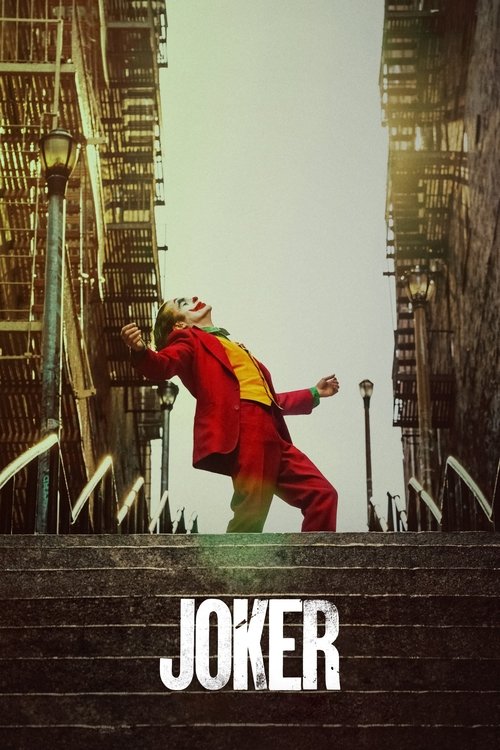
Joker
A gritty, psychological thriller that charts a lonely man's descent into madness, painting a grim portrait of societal decay with strokes of unnerving empathy and explosive violence.
Joker

Joker

"Put on a happy face."

01 October 2019 Canada 122 min ⭐ 8.1 (26,850)
Director: Todd Phillips
Cast: Joaquin Phoenix, Robert De Niro, Zazie Beetz, Frances Conroy, Brett Cullen
Drama Crime Thriller
Mental Illness and Societal Neglect Class Conflict and Alienation Reality vs. Delusion The Search for Identity and Recognition
Budget: $55,000,000
Box Office: $1,078,958,629

Overview

Set in 1981, "Joker" centers on Arthur Fleck, a mentally ill, impoverished party clown and aspiring stand-up comedian living in a crime-ridden and decaying Gotham City. He lives with and cares for his frail mother, Penny, and suffers from a neurological condition that causes him to laugh at inappropriate times. Disregarded and mistreated by society, Arthur's life is a series of misfortunes and humiliations.

After being fired from his job and assaulted on the subway, Arthur's grip on reality begins to loosen. He discovers unsettling secrets about his past and his mother's history, which further fuel his alienation. As Gotham City descends into chaos and class warfare, Arthur's personal descent mirrors the city's turmoil, leading him to adopt a new, nihilistic persona: the Joker. The film is a character study that provides a potential origin story for the iconic villain, exploring how a man on the fringes of society can be pushed to the brink and become a symbol of a violent countercultural revolution.
Core Meaning

The core meaning of "Joker" serves as a dark cautionary tale about the consequences of societal neglect, lack of empathy, and the systemic failure to care for the mentally ill. Director Todd Phillips has stated that a central theme is the "power of kindness" and what happens in its absence. The film explores how a person, repeatedly beaten down, marginalized, and stripped of support systems like therapy and medication, can descend into violence. It's a character study examining the symbiotic relationship between a deteriorating individual and a decaying society, suggesting that monsters are not born, but created by the very communities that ostracize them. The film doesn't necessarily justify Arthur's actions but rather provides a disturbing and empathetic look at the circumstances that could forge such a figure, questioning who the real "clowns" are in a world rife with cruelty and inequality.

Thematic DNA

Mental Illness and Societal Neglect 35%
Class Conflict and Alienation 30%
Reality vs. Delusion 20%
The Search for Identity and Recognition 15%

Mental Illness and Societal Neglect

This is the central theme of the film. Arthur Fleck is a man with multiple, poorly-defined mental health issues, including a condition causing pathological laughter (Pseudobulbar Affect). The narrative meticulously details how the system fails him at every turn. Funding for his social worker and medication is cut, leaving him without any support. The film critiques a society that expects the mentally ill to "behave as if you don't" have an illness, showing how this lack of empathy and support can lead to catastrophic consequences. His transformation into the Joker is presented as a direct result of his untreated trauma and society's cruelty.

Class Conflict and Alienation

The film is set against a backdrop of extreme wealth disparity in a garbage-choked Gotham City. Arthur represents the disenfranchised and forgotten lower class. The wealthy, personified by Thomas Wayne who dismissively calls the struggling masses "clowns," are portrayed as callous and out of touch. Arthur's violent acts on the subway are unintentionally interpreted as a political statement, sparking a populist "Kill the Rich" movement. This theme explores how social and economic alienation can fester into violent rebellion when the marginalized feel they have nothing left to lose.

Reality vs. Delusion

"Joker" is told from the perspective of an unreliable narrator, blurring the lines between what is real and what is a product of Arthur's deteriorating mind. The most significant example is his entire romantic relationship with his neighbor, Sophie, which is revealed to be a complete fantasy. This ambiguity extends to other key plot points, including his celebrity status on Murray Franklin's show and even the film's ending. This theme forces the audience to question the narrative they are being shown, mirroring Arthur's own fragile grip on reality and suggesting that much of his story could be an elaborate delusion constructed from his cell in Arkham Asylum.

The Search for Identity and Recognition

Throughout the film, Arthur is invisible and desperately craves to be seen. His social worker doesn't listen to him, his boss fires him, and his idol, Murray Franklin, mocks him on national television. His journal entry, "The worst part of having a mental illness is people expect you to behave as if you don't," highlights his feeling of being unseen. The transformation into Joker, while horrifying, is the first time he feels acknowledged and powerful. His climactic, violent act on live TV is a brutal assertion of his existence, ensuring that society can no longer ignore him. He doesn't care about the political movement he inspires; he is just happy to finally be noticed.

Character Analysis

Arthur Fleck / Joker

Joaquin Phoenix

Archetype: Antihero / Villain Protagonist
Key Trait: Marginalized

Motivation

Initially, Arthur is motivated by a simple desire to care for his mother and to bring laughter and joy to the world as a comedian. As he is continually rejected and brutalized, his motivation shifts to a desperate need for recognition and, eventually, revenge against a society and the specific individuals he feels have wronged him. His ultimate motivation as the Joker is to expose the hypocrisy of society and to assert his own existence through chaos.

Character Arc

Arthur begins as a deeply troubled, empathetic, and pitiable man trying to do the right thing in a society that constantly mistreats him. He is a victim of abuse, mental illness, and systemic neglect. Through a series of traumatic events—losing his job, his access to therapy, and discovering the truth about his past—he slowly sheds his identity as Arthur. His arc is a descent into nihilism and violence, culminating in his rebirth as the Joker, a confident, chaotic agent of anarchy who feels empowered for the first time by embracing the very madness society tried to ignore.

Murray Franklin

Robert De Niro

Archetype: The False Idol
Key Trait: Cynical

Motivation

Murray is motivated by ratings and entertainment. He seeks out content that will amuse his audience, even at the expense of others' dignity. His decision to bring Arthur on his show is not out of kindness, but because he sees Arthur as a joke to be exploited for cheap laughs.

Character Arc

Murray Franklin is a successful, charismatic late-night talk show host whom Arthur idolizes, viewing him as a symbolic father figure. Murray's arc is short and impactful: he transforms from Arthur's hero into his ultimate tormentor. Initially, he seems like a classic TV host, but he reveals a cruel streak when he airs a clip of Arthur's failed stand-up routine purely to mock him. This act of public humiliation shatters Arthur's fantasy and leads directly to Murray's on-air murder, completing his arc from idol to victim.

Sophie Dumond

Zazie Beetz

Archetype: The Unattainable Ideal / The Illusion
Key Trait: Imagined

Motivation

The real Sophie is motivated by the desire to care for her daughter and live her life. The imagined Sophie is motivated by a deep love and acceptance of Arthur, providing him with the support and affection he desperately craves but cannot find in reality.

Character Arc

Sophie is Arthur's neighbor and a single mother. In Arthur's mind, she represents a chance at normalcy, connection, and love. Her arc is unique because, for most of the film, her character exists only as a figment of Arthur's imagination. The real Sophie has only minimal, polite interactions with him. Her 'arc' is the revelation that she was never part of Arthur's story, which serves to highlight the profound depth of his delusion and isolation.

Penny Fleck

Frances Conroy

Archetype: The Flawed Caregiver
Key Trait: Delusional

Motivation

Penny is motivated by a desperate, delusional belief that Thomas Wayne will save her and Arthur from their poverty. She lives in a fantasy world, writing letters to him and clinging to a past that may not have existed as she remembers it. Her primary motivation is her own comfort and escape, rather than Arthur's well-being.

Character Arc

Penny is Arthur's frail, homebound mother whom he cares for. She initially appears to be a gentle, loving mother who encourages Arthur to 'smile and put on a happy face.' Her arc is a tragic unveiling of a dark past. She is revealed to be a narcissist who was complicit in Arthur's severe childhood abuse and delusional about her past affair with Thomas Wayne. Arthur's discovery of this truth shatters the last pillar of his support system, leading him to smother her to death, completing her arc from a seemingly loving mother to the source of his original trauma.

Symbols & Motifs

Stairs

Meaning:

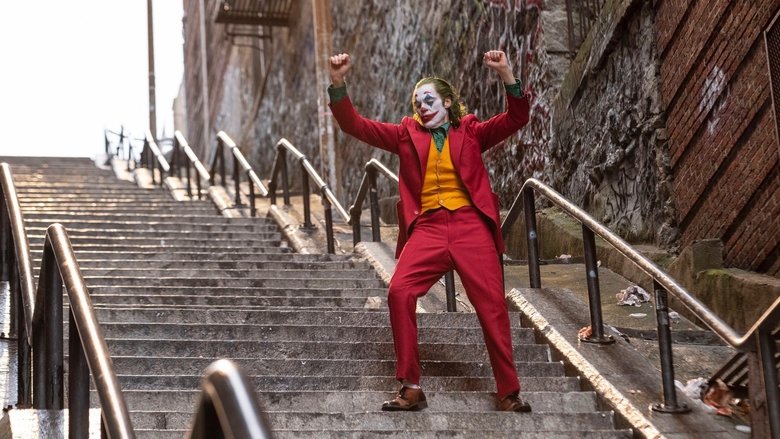
The long, steep flight of stairs represents Arthur's arduous and oppressive daily struggle. Going up is a tiring, joyless climb, symbolizing his attempt to function within a society that pushes him down. Conversely, dancing down the stairs as the fully-formed Joker represents his liberation, his descent into madness, and his gleeful embrace of chaos. It's no longer a struggle; it's an effortless, triumphant fall.

Context:

Arthur is frequently shown trudging wearily up the stairs to his apartment, each step a visual metaphor for his difficult life. The film's most iconic scene features him, in full Joker costume, dancing triumphantly down the same set of stairs to the song "Rock and Roll Part 2," marking his complete transformation and rejection of his former struggles.

The Clown Persona / Masks

Meaning:

The clown symbolizes Arthur's forced smile and his failed attempt to bring joy to a cruel world. It represents the mask of happiness people are expected to wear, hiding their inner turmoil. After his first murders, the clown mask is co-opted by a protest movement, becoming a symbol of the anonymous, disenfranchised underclass rising up against the elite. For Arthur, fully embracing the clown makeup as Joker is an act of empowerment, turning a symbol of his humiliation into one of terror and rebellion.

Context:

Arthur works as a clown-for-hire, a job that brings him more pain than joy. He is in full clown makeup when he commits his first murders on the subway. Later, protestors throughout Gotham adopt clown masks as a symbol of their anti-rich movement. The climax sees Arthur apply his makeup and fully become the Joker before his appearance on the Murray Franklin show.

Uncontrollable Laughter

Meaning:

Arthur's laughter is not a sign of joy but of a neurological disorder, likely Pseudobulbar Affect (PBA), stemming from past trauma. It symbolizes his pain and his inability to control his own emotional expression. It's a physical manifestation of his internal suffering, often appearing at the most inappropriate and stressful moments, further isolating him from others. When he fully becomes the Joker, his laughter changes, becoming a tool of menace and a genuine expression of his nihilistic amusement.

Context:

Arthur's condition is established early on, with him carrying a card to explain it to strangers. He laughs uncontrollably on a bus when trying to entertain a child, on the subway while being beaten, and during his stand-up routine, all of which lead to negative consequences. Director Todd Phillips instructed Joaquin Phoenix to make the laugh sound painful.

Memorable Quotes

The worst part of having a mental illness is people expect you to behave as if you don't.

— Arthur Fleck (in his journal)

Context:

This line is shown written in Arthur's journal, which serves as a window into his deteriorating mental state. It's a moment of quiet reflection that explains the immense social burden he carries every day.

Meaning:

This quote encapsulates the central theme of societal neglect and the invisible struggle of the mentally ill. It expresses Arthur's profound frustration and isolation, feeling the pressure to mask his pain and act 'normal' in a world that offers no understanding or support for his condition.

I just hope my death makes more cents than my life.

— Arthur Fleck (in his journal)

Context:

This is another entry from Arthur's journal, which he fills with disturbing thoughts, drawings, and failed jokes. The misspelling of 'sense' as 'cents' highlights his tragic state and bleak worldview.

Meaning:

This poignant, darkly clever pun reveals Arthur's feelings of worthlessness and his growing suicidal ideation. He feels his life has no value or impact, and he begins to believe that only his death might bring him some form of significance or attention. It foreshadows his plan to kill himself on live television.

Is it just me, or is it getting crazier out there?

— Arthur Fleck

Context:

Arthur says this during one of his therapy sessions at the beginning of the film. The therapist is barely listening, highlighting the systemic failure that contributes to his decline.

Meaning:

This question, posed to his social worker, reflects the film's blurring of internal and external chaos. It's unclear if the world is genuinely becoming more chaotic or if it's simply a projection of Arthur's own unraveling mind. It sets the tone for the film's exploration of a sick society creating a sick individual.

You get what you f*cking deserve!

— Joker (Arthur Fleck)

Context:

During his chaotic interview on the Murray Franklin show, Arthur, now as Joker, confesses to the subway murders. When Murray confronts him, Arthur delivers this line before shooting him in the head, shocking the live audience and inciting city-wide riots.

Meaning:

This is Joker's punchline before he murders Murray Franklin on live television. It signifies his complete break from societal norms and morality. It is his judgment and execution, a violent retaliation against someone who represents the society that mocked and rejected him. It's a declaration that the powerless will fight back.

Philosophical Questions

Are monsters born, or are they created by society?

The film squarely positions itself on the side of nurture over nature. Arthur is not depicted as being born evil; rather, he is a product of his environment. He is a mentally ill man subjected to relentless bullying, systemic neglect, and profound trauma. The film asks the audience to consider if his horrific transformation into the Joker would have occurred had he received proper mental healthcare, been shown a shred of human kindness, or lived in a more equitable society. It challenges the viewer to see the humanity within the 'monster' and to question society's complicity in creating its own villains.

What is the relationship between mental illness and violence?

"Joker" controversially wades into the complex and often stigmatized connection between mental illness and violence. While it shows a mentally ill character committing heinous acts, the film takes pains to illustrate that the violence is not a direct symptom of his illness itself, but rather a result of his illness going untreated and being exacerbated by societal cruelty and alienation. It explores how the pain, isolation, and desperation stemming from his condition, combined with easy access to a gun, create a perfect storm for violence. This raises difficult questions about social responsibility and the potential consequences of failing to provide adequate mental health support.

Where is the line between reality and subjective perception?

Through its use of an unreliable narrator, the film constantly forces the audience to question the nature of reality. Arthur's entire relationship with Sophie is a delusion, making viewers re-evaluate everything they've seen. This raises the philosophical question of whether an objective reality truly matters more than one's subjective experience. For Arthur, his delusions provided him with comfort and connection that the real world denied him. The film suggests that when reality becomes unbearable, the human mind is capable of constructing its own, and it leaves the audience uncertain as to how much of Arthur's story is 'real' versus a fantasy constructed to cope with his miserable existence.

Alternative Interpretations

The most prominent alternative interpretation of "Joker" is that nearly the entire film is a delusion fabricated by Arthur in Arkham State Hospital. The film is told from his unreliable perspective, and several key events are explicitly shown to be fantasies, such as his relationship with Sophie.

This theory suggests that Arthur never left the asylum and that the entire narrative—his mother's secrets, the murders, his appearance on the Murray Franklin show, and his rise as a revolutionary symbol—is a complex story he created to give his meaningless suffering a grand, tragic purpose. Proponents of this theory point to the final scene: Arthur is in Arkham, being interviewed by a psychiatrist. He laughs, and when she asks what's so funny, he says, "You wouldn't get it." This could imply the entire film was the 'joke' he was thinking of. The ambiguity of the clock in the asylum scenes (showing the same time) and the surreal nature of his public adoration support the idea that the audience has been inside the fantasy of a deeply disturbed man all along.

Cultural Impact

"Joker" made a significant cultural impact upon its release in 2019. It became the first R-rated film to gross over $1 billion worldwide and generated intense debate for its sympathetic portrayal of a violent character. Critics were polarized; some praised Joaquin Phoenix's Oscar-winning performance and the film's gritty realism, while others condemned it as irresponsible and feared it could incite real-world violence. The film's themes of societal decay, mental health stigma, and class warfare resonated strongly with global audiences. The image of the Joker, particularly the dancing on the Bronx steps, became an instant internet meme and a tourist attraction. Furthermore, the clown mask from the film was adopted as a symbol in various protests around the world, from Lebanon to Hong Kong, used by demonstrators to symbolize their own struggles against oppressive systems. "Joker" transcended the comic book genre, proving that such films could be serious, character-driven psychological dramas that tackle complex social and political issues.

Audience Reception

Audience reception for "Joker" was largely positive, often more so than the divided critical response. Viewers overwhelmingly praised Joaquin Phoenix's transformative and powerful performance, with many calling it one of the greatest of all time. The film's dark, gritty tone, stunning cinematography, and haunting musical score were also frequently lauded. Many audience members found it to be a compelling and thought-provoking character study that resonated with contemporary anxieties about social decay and mental health. However, the film was not without its detractors among the public. The primary points of criticism centered on its bleakness and extreme violence, which some found gratuitous and difficult to watch. There was also significant controversy and debate surrounding the film's themes, with some viewers arguing that it dangerously sympathized with its violent protagonist and could be interpreted as an endorsement of incel culture or lone-wolf violence. Overall, it was a polarizing film that sparked intense discussion, but a majority of viewers regarded it as a masterpiece of the genre.

Interesting Facts

  • Joaquin Phoenix lost 52 pounds for the role by eating an extremely low-calorie diet, which he said affected his psychology and gave him a feeling of 'dissatisfaction, hunger, a certain kind of vulnerability, and a weakness.'
  • Several key scenes were improvised by Joaquin Phoenix. The haunting bathroom dance after the first murders and the moment he climbs into the refrigerator were not in the script.
  • Director Todd Phillips had the score composed by Hildur Guðnadóttir before shooting began. He would play the music on set to help influence the mood and Phoenix's performance, which is how the improvised bathroom dance scene came about.
  • Robert De Niro's character, Murray Franklin, is a direct homage to his role as Rupert Pupkin in Martin Scorsese's 1982 film "The King of Comedy," which served as a major inspiration for "Joker."
  • Phoenix based Arthur's pained, uncontrollable laugh on videos of people suffering from Pseudobulbar Affect (PBA), a real neurological disorder.
  • The film is deliberately set in 1981 to separate it from the contemporary DC Extended Universe and to evoke the gritty, character-driven films of that era, like "Taxi Driver."

Easter Eggs

During a scene where Arthur is at a lavish event, a clip from a Charlie Chaplin film, "Modern Times" (1936), is shown playing to the wealthy audience.

This is a significant thematic reference. "Modern Times" is a comedy about Chaplin's 'Little Tramp' character struggling to survive in a modern, industrialized society that is indifferent to his plight. By showing the rich laughing at the struggles of the 'Little Tramp', the film draws a direct parallel to how society, and particularly the elite, views Arthur's own suffering as a joke, reinforcing the theme of class insensitivity.

The clown masks worn by the protestors throughout Gotham become a symbol of a populist uprising against the rich.

This mass adoption of a mask as a symbol for a political movement has been compared to the real-world use of the Guy Fawkes mask (popularized by the film "V for Vendetta") by the activist group Anonymous and other protest movements worldwide. It reflects how a fictional symbol can be embraced by a real-world disenfranchised group to represent their rebellion.

⚠️ Spoiler Analysis

Click to reveal detailed analysis with spoilers

Frequently Asked Questions

Explore More About This Movie

Dive deeper into specific aspects of the movie with our detailed analysis pages

Comments (0)

Leave a comment

No comments yet. Be the first to share your thoughts!