The Traitor
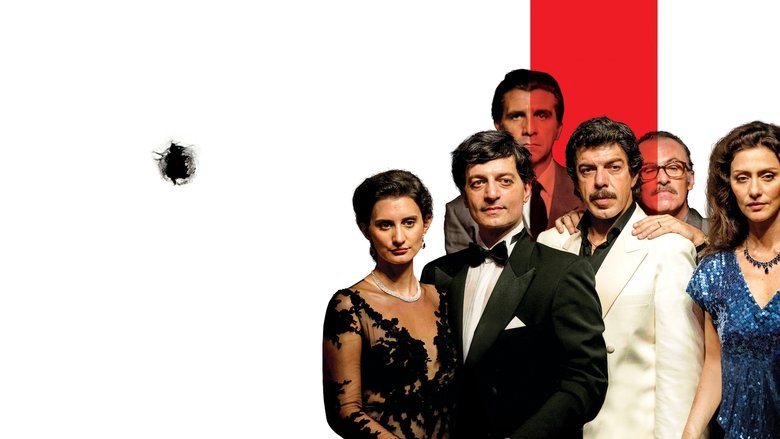
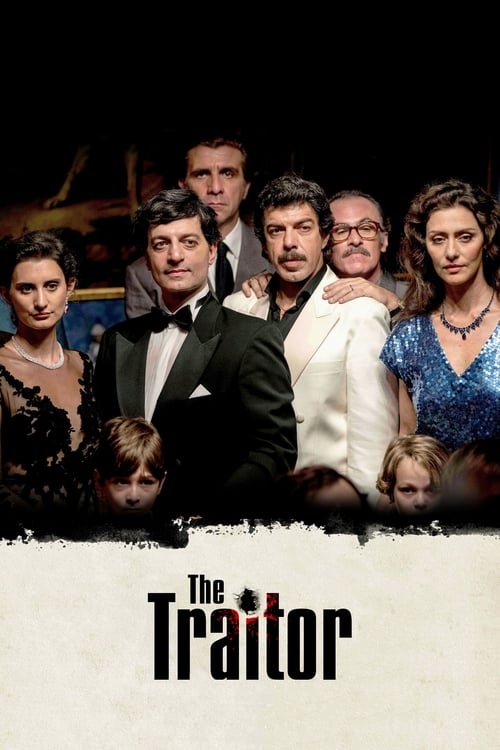
A sweeping, melancholic crime epic radiating tension and profound isolation. It paints a portrait of loyalty and betrayal, where a man's honor becomes a gilded cage suspended over a sea of blood.
The Traitor

The Traitor

Il traditore

"The true story about the man who brought down the Mafia"

23 May 2019 Brazil 151 min ⭐ 7.6 (1,408)
Director: Marco Bellocchio
Cast: Pierfrancesco Favino, Maria Fernanda Cândido, Fabrizio Ferracane, Fausto Russo Alesi, Luigi Lo Cascio
Drama Crime Thriller
The Myth of the Noble Mafia Honor versus Survival Institutional Power and Justice Guilt and the Ghosts of the Past

Overview

Set during the brutal mafia wars of the early 1980s, the film follows Tommaso Buscetta, a prominent member of the Sicilian Cosa Nostra. As tensions between rival factions escalate into a bloody conflict known as The Slaughter, Buscetta flees to Brazil with his family to seek a peaceful retirement. However, the violence follows him when his sons and allies who remained in Italy are systematically murdered by the ruthless Corleonesi clan.

Arrested and subjected to severe torture by Brazilian authorities, Buscetta is eventually extradited back to Italy. In a groundbreaking and historically unprecedented move, he decides to break the sacred oath of silence (omertà) and meet with the incorruptible Judge Giovanni Falcone. This monumental decision transforms Buscetta into the first high-ranking informant in mafia history.

His testimonies lead to the sprawling Maxi Trial, forcing the state to confront an institution it had long failed to control. The film meticulously tracks Buscetta's transformation from a hardened mobster to an indispensable witness, navigating the treacherous waters of loyalty, self-preservation, and a deeply personal code of honor.
Core Meaning

Director Marco Bellocchio utilizes Buscetta's story to dissect the mythology and hypocrisy of the Mafia. The film fundamentally challenges the romanticized notion of honor among thieves, portraying Cosa Nostra not as a brotherhood of noble outlaws, but as a syndicate driven by greed, savagery, and betrayal. Bellocchio's core message suggests that the true betrayal was not Buscetta turning to the state, but the Mafia abandoning any semblance of its fabricated moral code.

Furthermore, the film is a profound exploration of ego, guilt, and the weight of history. It examines how fragile institutional power truly is and highlights the moral ambiguity of a protagonist who cooperates with justice not out of a sudden awakening to civil duty, but primarily for vengeance and self-preservation.

Thematic DNA

The Myth of the Noble Mafia 35%
Honor versus Survival 25%
Institutional Power and Justice 20%
Guilt and the Ghosts of the Past 20%

The Myth of the Noble Mafia

Buscetta continually insists that he is not a pentito (repentant), claiming the Mafia was once an honorable institution that protected the weak. The film contrasts this delusion with the brutal reality of the Corleonesi clan's slaughter of women and children, shattering the romanticized mob myth.

Honor versus Survival

The narrative revolves around conflicting definitions of honor. Buscetta must navigate his internal code of ethics against his desperate need to survive and avenge his murdered family, ultimately choosing to collaborate with the very state he once defied.

Institutional Power and Justice

The film juxtaposes two massive institutions: the Italian State and the Cosa Nostra. Through the chaotic yet methodical Maxi Trial, the film illustrates the state's arduous attempt to impose order and the law upon an entrenched, violent subculture.

Guilt and the Ghosts of the Past

As Buscetta ages in witness protection, he is heavily burdened by his trauma. Dream sequences and hallucinations of his murdered sons illustrate that while he survived the physical war, he can never escape the psychological toll of his past.

Character Analysis

Tommaso Buscetta

Pierfrancesco Favino

Archetype: Antihero
Key Trait: Contradictory pride

Motivation

Driven initially by self-preservation and revenge for his murdered sons, he later seeks to expose the corruption of the new Mafia to validate his own sense of honor.

Character Arc

Buscetta transitions from a powerful, respected Mafia boss seeking peace in Brazil to a broken, tortured prisoner, and finally to the state's most vital informant. He ultimately ages into a paranoid but resolute man living in permanent exile.

Judge Giovanni Falcone

Fausto Russo Alesi

Archetype: Mentor / Ally
Key Trait: Incorruptible integrity

Motivation

An unwavering commitment to justice and the dismantling of the Cosa Nostra at any personal cost.

Character Arc

Falcone acts as the stoic, moral anchor of the film. He steadily gains Buscetta's trust and orchestrates the massive legal strike against the Mafia, tragically culminating in his assassination.

Cristina Buscetta

Maria Fernanda Cândido

Archetype: The Loyal Spouse
Key Trait: Resilience

Motivation

To protect her immediate family and support her husband through his harrowing ordeal.

Character Arc

Cristina starts as Buscetta's hopeful Brazilian wife, representing his escape. She endures the trauma of his arrest and extradition, ultimately standing by him as they vanish into the witness protection program.

Symbols & Motifs

The Courtroom Cages

Meaning:

The large metal cages lining the back of the courtroom symbolize the barbaric, zoo-like devolution of the Mafia.

Context:

Used during the Maxi Trial scenes, the cages hold dozens of screaming, unruly mobsters who act like caged animals, directly contrasting with the formal order of the judicial system.

The Supermarket Assault Rifle

Meaning:

This symbolizes Buscetta's eternal paranoia and the inescapable shadow of his violent past.

Context:

In the final act, an elderly Buscetta living in the United States under witness protection casually examines and purchases a semi-automatic weapon while grocery shopping.

The Delayed Title Card

Meaning:

The title Il Traditore appearing late symbolizes the complex, unresolved nature of Buscetta's identity.

Context:

The title is deliberately withheld until the very end of the film, forcing the audience to grapple with whether Buscetta was truly a traitor or a man who stayed true to his own twisted morals.

Memorable Quotes

First, they'll try to kill me; then it'll be your turn. They'll keep trying until they succeed.

— Tommaso Buscetta

Context:

Spoken by Buscetta to Judge Falcone after finalizing their collaboration, warning the judge of the deadly path they have both chosen.

Meaning:

This quote serves as a chilling foreshadowing of the relentless, unforgiving nature of the Mafia's vengeance.

I didn't betray the Mafia. The Mafia betrayed itself.

— Tommaso Buscetta

Context:

Delivered during his testimonies and interrogations, as Buscetta justifies his decision to break the sacred oath of silence.

Meaning:

This encapsulates Buscetta's entire psychological defense. It highlights his refusal to accept the label of 'traitor' by shifting the moral failing onto the syndicate's new, bloodthirsty leadership.

You call yourself a man of honor, but what is honor when it's built on blood?

— Judge Giovanni Falcone

Context:

Spoken during an unexpectedly calm and philosophical meeting between Falcone and Buscetta.

Meaning:

A direct challenge to the Mafia's mythical code, stripping away the romanticism to reveal the inherent brutality of organized crime.

Philosophical Questions

Can an evil institution have an honorable past?

The film constantly questions Buscetta's belief in the 'old' Mafia. It asks whether the concept of honor among thieves was ever real, or if it was always just a violent syndicate that merely changed its tactics to become more visibly ruthless.

What is the true nature of betrayal?

The narrative explores whether breaking an oath to a corrupt, murderous organization is a moral failing or an act of profound bravery, challenging the absolute meaning and stigma of the word traitor.

How does ego shape our perception of our own morality?

By showing Buscetta's stubborn refusal to be called a pentito (repentant), the film delves into how individuals construct elaborate personal mythologies to justify their survival and protect their pride.

Alternative Interpretations

While the film predominantly presents Buscetta through his own lens—as a man holding onto a lost, noble code of honor—many critics argue the film subtly undermines this perspective. An alternative reading suggests Buscetta's honor is a complete self-delusion, a coping mechanism for his fragile ego. In this view, he did not cooperate out of morality, but purely out of revenge against Totò Riina and a cowardly desire to survive.

Furthermore, the ending—Buscetta dying quietly in an American bed rather than in a blaze of glory—can be seen not as a victory over his enemies, but as a purgatorial punishment, leaving him alone with the ghosts of the family he failed to protect.

Cultural Impact

Premiering in competition at the 2019 Cannes Film Festival, The Traitor served as a profound cultural touchstone for Italy, revisiting one of its most traumatic modern eras. It was celebrated as the definitive cinematic account of the Maxi Trial, stripping away the glamorous Hollywood veneer often applied to the Mafia.

Critics frequently compared it favorably to Martin Scorsese's The Irishman for its sprawling scope and focus on an aging informant, though noting Bellocchio's distinctly European, socio-political lens. By humanizing the man who first confirmed the existence of Cosa Nostra to the state, the film reignited public discourse around the true nature of the Mafia and the immense sacrifices made by figures like Judge Falcone.

Audience Reception

Audiences and critics widely praised The Traitor for its sweeping ambition and Pierfrancesco Favino's commanding, nuanced performance. The visceral, chaotic courtroom scenes were highlighted as masterclasses in tension and historical recreation.

However, some viewers criticized the film's structural shifts, noting that the transition from a bloody mafia thriller in the first act to a dense, dialogue-heavy procedural in the second half occasionally bogged down the pacing. Despite its lengthy runtime, the overall verdict was highly positive, with audiences appreciating its authentic, unromanticized depiction of Italian organized crime and its deep psychological focus.

Interesting Facts

  • Director Marco Bellocchio was 80 years old when he stitched together this massive epic, proving his enduring mastery of Italian cinema.
  • The film authentically features five distinct languages: Sicilian, Italian, Portuguese, English, and Spanish.
  • Lead actor Pierfrancesco Favino spent months meticulously researching Tommaso Buscetta to internalize his psychological state and master his specific vocal inflections.
  • The chaotic and highly theatrical courtroom scenes were heavily based on actual transcripts and archival footage from the historic 1986 Maxi Trial.
  • The production team consulted extensively with anti-mafia experts and filmed on location in Palermo to ensure strict historical authenticity.

Easter Eggs

The chaotic courtroom design and mobster outbursts

The set pieces and the bizarre behavior of the mafiosi (screaming, undressing, smoking cigars in cages) are direct recreations of real archival footage from the Maxi Trial, serving as a historical easter egg for Italian audiences.

The Godfather reference

Buscetta is subtly seen watching The Godfather with visible disdain, reinforcing the film's theme of demystifying the romanticized Hollywood vision of the Mafia.

⚠️ Spoiler Analysis

Click to reveal detailed analysis with spoilers

Frequently Asked Questions

Explore More About This Movie

Dive deeper into specific aspects of the movie with our detailed analysis pages

Comments (0)

Leave a comment

No comments yet. Be the first to share your thoughts!