Skip to content
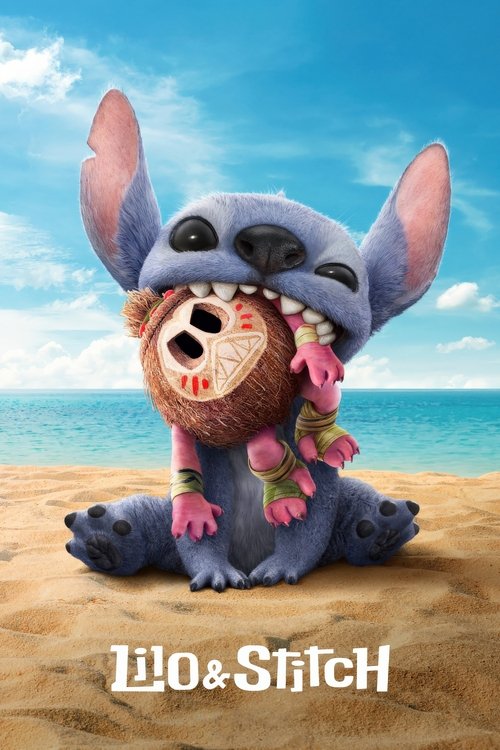
Lilo & Stitch
A sun-drenched collision of tropical melancholy and interstellar chaos, where the splintered wreckage of childhood grief is tenderly mended by the feral, stubborn warmth of an alien embrace.
Lilo & Stitch

Lilo & Stitch

"Hold on to your coconuts."

17 May 2025 United States of America 108 min 7.2 (2,268)

Director: Dean Fleischer Camp

Cast: Maia Kealoha, Sydney Agudong, Chris Sanders, Zach Galifianakis, Billy Magnussen

Family Comedy Science Fiction ʻOhana, Chosen Family, and Community Care Grief, Trauma, and Unprocessed Loss Nature vs. Nurture and Redemption Youth, Sacrificed Potential, and Sisterhood
Budget: $100,000,000
Box Office: $1,038,027,526

Overview

Directed by Dean Fleischer Camp from a screenplay by Chris Kekaniokalani Bright and Mike Van Waes, Lilo & Stitch (2025) is a live-action/CGI hybrid reimagining of Walt Disney Animation’s 2002 animated classic. Set against the lush, grounded backdrop of Kauaʻi, Hawaii, the film introduces six-year-old Maia Kealoha in her debut role as Lilo Pelekai, a fiercely imaginative yet profoundly lonely Hawaiian orphan struggling to fit in after the sudden loss of her parents. Her elder sister, Nani, struggles to balance exhausting service-industry jobs with the overwhelming responsibilities of legal guardianship under the scrutinizing gaze of social worker Mrs. Kekoa and government agent Cobra Bubbles.

Parallel to their earthly troubles, light-years away across the cosmos, the Galactic Federation prosecutes rogue geneticist Dr. Jumba Jookiba for engineering Experiment 626: a pint-sized, hyper-destructive bio-weapon possessing razor claws, bulletproof skin, and devastating intelligence. Escaping federal custody in a hijacked cruiser, the blue menace crash-lands onto Kauaʻi, where he is promptly run over by a tourist trolley and carted off to the local animal shelter.

Desperate for companionship, Lilo adopts 626 as an ugly stray "dog," renaming him Stitch. While Stitch initially exploits Lilo as a human shield against pursuing alien operatives—Dr. Jumba and flamboyant, disguise-loving "Earth expert" Agent Pleakley—Lilo’s earnest introduction to Hawaiian values, vinyl records, and unconditional love begins to spark genuine empathy within Stitch’s synthetic soul. What ensues is a balance of manic comic mayhem and domestic drama as the fragmented family fights to stay whole against earthly authorities and extraterrestrial hunters.
Core Meaning

The central thesis of Lilo & Stitch remains rooted in the Hawaiian cultural philosophy of ʻOhana ("family") and Kuleana ("responsibility"). Director Dean Fleischer Camp approaches the material not merely as a slapstick alien adventure, but as an empathetic study of non-traditional families coping with sudden grief and the weight of adult duties thrust upon youth. The film underscores that brokenness does not preclude love, and that belonging is forged through active emotional labor rather than bloodlines alone. In Fleischer Camp's lens, community support networks (broadened to include neighbors and extended elders) are vital lifelines that prevent struggling caretakers from drowning in solitary despair.

Thematic DNA

ʻOhana, Chosen Family, and Community Care 35%
Grief, Trauma, and Unprocessed Loss 25%
Nature vs. Nurture and Redemption 20%
Youth, Sacrificed Potential, and Sisterhood 20%

ʻOhana, Chosen Family, and Community Care

The film re-examines family as a fluid, chosen collective. While the original focused almost exclusively on the nuclear core of Lilo, Nani, and Stitch, the 2025 remake expands ʻOhana to encompass the wider Hawaiian neighborhood—incorporating David Kawena, his grandmother Tūtū, and community elders as active participants in child-rearing.

Grief, Trauma, and Unprocessed Loss

Lilo’s eccentric hostility and Nani’s paralyzing panic attacks stem directly from the death of their parents. The narrative illustrates that behavioral outbursts in children are frequently cries for help amid bereavement, requiring patience rather than institutional correction.

Nature vs. Nurture and Redemption

Stitch was biologically programmed by Jumba to do nothing except destroy cities. His gradual transformation proves that an entity’s origins or genetic programming do not dictate their capacity for gentleness, kindness, and moral agency.

Youth, Sacrificed Potential, and Sisterhood

Nani represents young adult caregivers forced into premature maturation. The narrative explores the tragedy of having one’s dreams, education, and youth abruptly derailed by circumstance, questioning whether sacrificing every ounce of oneself is truly the healthiest way to sustain a loved one.

Character Analysis

Lilo Pelekai

Maia Kealoha

Archetype: The Orphan / Wounded Innocent Key Trait: Fierce, idiosyncratic imagination and unyielding loyalty.

Motivation

To find an unwavering friend who will never abandon or misunderstand her.

Character Arc

Moves from bitter social isolation, ostracization by her peers, and paralyzing grief toward trust, emotional grounding, and community security.

Stitch / Experiment 626

Chris Sanders

Archetype: The Wild Card / Trickster transitioning into Protector Key Trait: Hyper-kinetic physical chaos combined with an emergent capacity for deep tenderness.

Motivation

Initially to evade capture; later, to protect Lilo and earn a place in her family.

Character Arc

Awakens from a hardwired destructive instrument of galactic warfare into a sentient creature capable of guilt, self-sacrifice, and filial love.

All 5 characters and cast

Symbols & Motifs

Scrump (The Homemade Doll)

Meaning:

Represents Lilo's internal sense of difference and fractured identity. Just as Lilo accepts Scrump despite her bizarre flaws, she intuitively extends that acceptance to Stitch.

Context:

Lilo's rag doll with button eyes and stitched hair, kept close as an expression of her idiosyncratic personality.

The Cluttered Pelekai House

Meaning:

Serves as a literal shrine and frozen mausoleum to grief, illustrating Nani's inability to clean or pack away their parents' belongings.

Context:

The domestic space is filled with oceanographic diving gear and botanical specimens belonging to their late parents.

Pudge the Fish & The Peanut Butter Sandwich

Meaning:

Symbolizes Lilo's childlike attempt to impose order onto an unpredictable, cruel universe that took her parents in a rainy car accident.

Context:

Lilo's ritual of bringing Pudge a peanut butter sandwich every Thursday to control the weather.

Elvis Presley Records

Meaning:

Provides a stylistic bridge of rebellion, coolness, and comfort, functioning as Lilo's template for teaching Stitch how to become an honorable citizen.

Context:

Played on vinyl by Lilo to soothe herself and to educate Stitch about human culture.

The Ugly Duckling Book

Meaning:

A thematic mirror for Stitch; an exiled monster who wanders through rejection until discovering a flock where his peculiar differences are understood and welcomed.

Context:

Read by Stitch as he begins to grapple with his lack of an origins story or family.

Memorable Quotes

ʻOhana means family. Family means nobody gets left behind or forgotten.
— Lilo Pelekai / Stitch

Context

Spoken when teaching Stitch the concept of unconditional familial fidelity.

Meaning

The philosophical backbone of the narrative, highlighting the core principle of unconditional familial fidelity.

It's little, and it's broken, but good. Yeah. Still good.
— Stitch

Context

Uttered during the climactic aftermath when presenting his reconstructed family to galactic authorities.

Meaning

An affirmation of imperfect love and acceptance of their non-traditional, fractured family.

All 6 quotes

Philosophical Questions

Can community support liberate without fracturing the core unit?

The film questions whether reliance on neighborly guardianship strengthens or fragments the sacred bond of immediate family.

Is moral identity predestined or constructed?

Through Stitch’s biological designation as a weapon, the narrative challenges biological determinism, illustrating that environment and love supersede genetic destiny.

What is the balance between sacrifice and self-actualization?

Through Nani’s ambitions, the film asks whether a caregiver must destroy their own future to nurture someone else's.

Alternative Interpretations

The film’s radically altered resolution sparked fierce discourse among analysts and audiences:

Full ending explanation

Cultural Impact

Arriving in May 2025 amid scrutiny surrounding Disney’s live-action remake strategy, Lilo & Stitch became a monumental commercial juggernaut, crossing $1 billion at the worldwide box office. Critics praised Maia Kealoha’s debut, Chris Sanders' retained vocal performance, and Nigel Bluck’s cinematography. However, it reignited conversations regarding Native Hawaiian family representation, encountering pre-production colorism debates alongside post-release debates over structural changes to the original film's themes of domestic sovereignty.

Audience Reception

The film was received as a massive box-office hit that delivered strong nostalgic comfort. Praise centered on newcomer Maia Kealoha as a natural talent capturing Lilo’s vulnerability, Chris Sanders' authentic voice work, and a CGI design that steered clear of the uncanny valley. Criticism targeted abbreviated pacing across several character beats, Zach Galifianakis's harsher and less comedic Jumba, and the total removal of Captain Gantu, alongside divisive reactions to the altered Pelekai family dynamic at the climax.

Interesting Facts

  • Chris Sanders recorded Stitch’s vocal tracks across five separate four-hour sessions while simultaneously directing DreamWorks’ animated feature The Wild Robot.
  • Dean Fleischer Camp was hired off the Academy Award-nominated success of his indie hit Marcel the Shell with Shoes On.
  • Director Dean Fleischer Camp and production designer Todd Cherniawsky developed a backstory establishing that the parents were a marine biologist and a botanist to explain the gear and specimens in the house.
  • Originally commissioned as a direct-to-consumer Disney+ streaming exclusive, the studio reversed course in late production to grant the film a Memorial Day theatrical release on May 23, 2025.
  • Principal photography took place on location in Kauaʻi and Oahu, Hawaii, utilizing practical sets and local communities.
  • Kaipo Dudoit took over the role of David Kawena just prior to production after the original actor cast was replaced following online controversy.

Easter Eggs

Original Voice Actors Return

Tia Carrere (original Nani) appears as social worker Mrs. Kekoa, symbolizing a literal torch-passing; Jason Scott Lee (original David) cameos as the Luau manager and Nani's boss; and Amy Hill (original Mrs. Hasagawa) portrays Tūtū.

Moana Reference

David wears a carved fishhook necklace modeled directly after Maui’s magical hook from Disney’s Moana.

The 'Ice Cream Guy'

The running gag from the animated feature featuring the sunburned tourist who perpetually drops his mint snow-cone the moment Stitch causes chaos is recreated in live-action.

'Me Alone' Drawing

Lilo's crayon illustration depicting herself isolated in the rain is visibly displayed on the refrigerator during Mrs. Kekoa's home inspection.

The Frog Watcher

The tiny green frog that witnesses Stitch's fiery atmospheric landing makes a direct visual callback from the animated original.

Frequently Asked Questions

Explore More About This Movie

Dive deeper into specific aspects of the movie with our detailed analysis pages

Comments (0)

Leave a comment

No comments yet. Be the first to share your thoughts!

Similar Movies