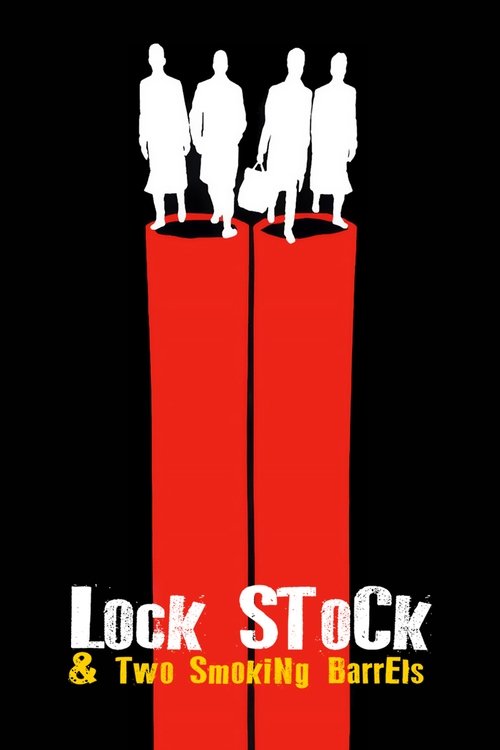
Lock, Stock and Two Smoking Barrels
A frenetic, darkly comedic cockney crime caper where desperation and chance collide, visually represented as a tangled web of overlapping criminal ambitions spiraling towards an explosive, yet humorous, climax.
Lock, Stock and Two Smoking Barrels

Lock, Stock and Two Smoking Barrels

"A Disgrace to Criminals Everywhere."

28 August 1998 United Kingdom 105 min ⭐ 8.1 (6,887)
Director: Guy Ritchie
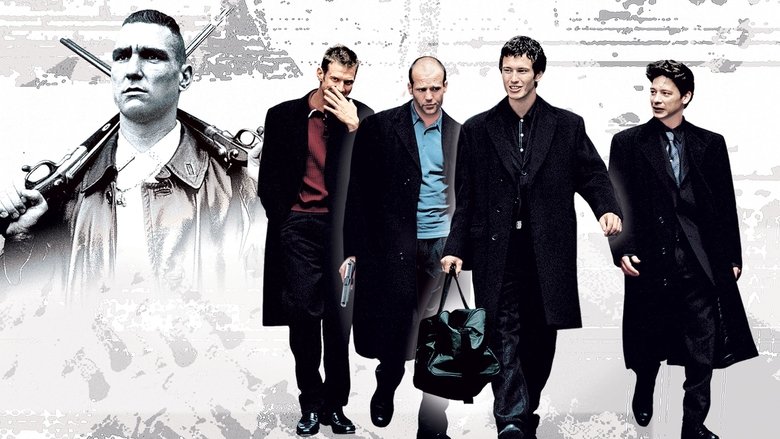
Cast: Vinnie Jones, Jason Flemyng, Dexter Fletcher, Nick Moran, Jason Statham
Crime Comedy
Chance and Coincidence Incompetence in the Criminal Underworld Masculinity and Friendship The Allure and Dangers of Greed
Budget: $1,350,000
Box Office: $28,356,188

Overview

"Lock, Stock and Two Smoking Barrels" is a British crime comedy that catapults viewers into the grimy underworld of London's East End. The story kicks off when four friends—Eddie, Tom, Soap, and Bacon—pool their life savings of £100,000 to back Eddie, a gifted cardsharp, in a high-stakes poker game run by the menacing crime lord "Hatchet" Harry Lonsdale. However, the game is rigged, and the friends find themselves not only broke but also £500,000 in debt to Harry, with only a week to pay it back before they start losing their fingers.

In a desperate attempt to raise the money, the foursome decides to rob a small-time gang of thieves who operate out of the neighboring apartment. This sets in motion a chaotic and hilarious chain of events, as their plan becomes entangled with the schemes of various other criminal factions. These include a ruthless gangster named Rory Breaker, a group of cannabis growers, two incompetent burglars, and a hard-as-nails debt collector, Big Chris, who is also a devoted father. The plot weaves and twists as multiple groups vie for a pile of cash, a large quantity of marijuana, and two very valuable antique shotguns, leading to a series of double-crosses and violent confrontations.

Core Meaning

At its core, "Lock, Stock and Two Smoking Barrels" is a darkly comedic exploration of the roles of chance, desperation, and incompetence in the criminal underworld. The film suggests that even the most carefully laid plans can be upended by unforeseen circumstances and the sheer ineptitude of those involved. Director Guy Ritchie seems to be saying that the world of small-time crime is not one of masterful criminals but rather one of flawed, often foolish individuals caught in a chaotic whirlwind of their own making. The intersecting storylines, which ultimately converge in a bloody and ironic climax, highlight the interconnectedness of actions and consequences, often with unforeseen and fatal results for the characters. Ultimately, the film presents a cynical yet humorous view of crime, where survival is less about skill and more about sheer luck.

Thematic DNA

Chance and Coincidence 35%
Incompetence in the Criminal Underworld 30%
Masculinity and Friendship 20%
The Allure and Dangers of Greed 15%

Chance and Coincidence

The entire plot is driven by a series of coincidences and strokes of luck (both good and bad). From Eddie's rigged card game to the accidental acquisition of the antique shotguns, the characters' fates are constantly manipulated by chance. The complex, intertwining narratives demonstrate how seemingly unrelated events can have profound and often deadly consequences for everyone involved.

Incompetence in the Criminal Underworld

Unlike many crime films that portray criminals as slick and professional, this film is populated by characters who are often comically inept. The main quartet are amateurs, the burglars Gary and Dean are hopelessly out of their depth, and even the more seasoned criminals make crucial mistakes. This theme serves as a major source of the film's dark humor and underscores the idea that the criminal world is far from glamorous.

Masculinity and Friendship

The bond between the four main friends is central to the story. Despite their constant bickering and the dire situation they find themselves in, their loyalty to one another never wavers. The film explores a particular brand of working-class male friendship, characterized by witty banter, shared schemes, and a willingness to face danger together.

The Allure and Dangers of Greed

Nearly every character in the film is motivated by greed. The desire for easy money is what initially gets Eddie and his friends into trouble, and it is the driving force behind the actions of all the other criminal factions. The film illustrates how this relentless pursuit of wealth leads to betrayal, violence, and ultimately, self-destruction for many of the characters.

Character Analysis

Eddie

Nick Moran

Archetype: The Overconfident Protagonist
Key Trait: Ambitious

Motivation

Initially motivated by the thrill of the game and the desire for a big win, his motivation quickly shifts to pure survival and the desperate need to pay off his debt to "Hatchet" Harry to save his and his friends' lives, as well as his father's pub.

Character Arc

Eddie begins as a confident and somewhat arrogant cardsharp who believes he can outsmart a major crime boss. His arc is one of humbling, as his overconfidence leads to a massive debt that endangers himself and his friends. He is forced to become more resourceful and desperate, ultimately relying on luck as much as skill to survive.

Bacon

Jason Statham

Archetype: The Street-Smart Pragmatist
Key Trait: Pragmatic

Motivation

Bacon's primary motivation is financial gain and self-preservation. He is always looking for an angle and is quick to point out the risks involved in any given situation. He is fiercely loyal to his friends and is willing to do what it takes to get them out of trouble.

Character Arc

Bacon is introduced as a street vendor selling stolen goods. He is the most cynical and pragmatic of the group, often questioning the morality and feasibility of their plans. His character doesn't have a significant arc, but he remains a grounding and realistic voice for the friends throughout their ordeal.

Tom

Jason Flemyng

Archetype: The Resourceful Entrepreneur
Key Trait: Resourceful

Motivation

Tom is motivated by the prospect of making money. He is the one who purchases the antique shotguns, not for their intrinsic value, but as a means to an end. His entrepreneurial spirit is what makes him a valuable, if sometimes reckless, member of the group.

Character Arc

Tom is the most business-minded of the group, always looking for a deal and a way to make a profit. His arc sees him move from dealing in questionable but relatively low-level goods to being involved in a high-stakes robbery and dealing with dangerous criminals. He is often the one tasked with procuring the necessary tools for their schemes.

Soap

Dexter Fletcher

Archetype: The Reluctant Criminal
Key Trait: Cautious

Motivation

Soap is motivated by a desire to stay out of trouble and live an honest life. However, his loyalty to his friends and the threat of violence from "Hatchet" Harry force him to participate in their criminal plans. He is constantly trying to minimize the risks and avoid violence.

Character Arc

Soap is the most morally conflicted of the four friends. He works as a chef and is hesitant to get involved in criminal activities. His arc is about his struggle to reconcile his desire for a clean life with his loyalty to his friends and the desperate situation they are in. He often voices his concerns and fears, acting as the group's conscience.

Big Chris

Vinnie Jones

Archetype: The Principled Enforcer
Key Trait: Protective

Motivation

Big Chris is motivated by his job and, more importantly, the well-being of his son. He is a professional who takes his work seriously but will not hesitate to turn on his employer if his son is threatened. His actions are often dictated by what is best for Little Chris.

Character Arc

Big Chris is a feared debt collector who works for "Hatchet" Harry. His arc is unique in that he is a ruthless criminal who also displays a strong sense of paternal love and a personal code of conduct. He is a man of contradictions, capable of extreme violence while also being a caring father to his son, Little Chris. By the end of the film, he has taken over Harry's money-lending business, suggesting a rise in his own criminal standing.

Symbols & Motifs

The Two Antique Shotguns

Meaning:

The shotguns represent the unpredictable nature of value and the ignorance of the characters. Initially seen as just tools for a robbery, their immense monetary worth is unknown to most who possess them. They symbolize the hidden opportunities and unforeseen consequences that lie beneath the surface of the criminal world.

Context:

The shotguns are a central plot device, passing through the hands of multiple groups of criminals, each unaware of their true value. Their journey through the story connects the various subplots and ultimately becomes the focus of the film's cliffhanger ending, where their fate, and the fate of the protagonists, is left hanging in the balance.

The Rigged Card Game

Meaning:

The card game symbolizes the deceptive and treacherous nature of the criminal underworld. It's a world where the rules are not what they seem and where outsiders are easily taken advantage of by more powerful and ruthless players. It represents the loss of control and the descent into a world of debt and violence.

Context:

Early in the film, Eddie's confidence is shattered when he loses a rigged game of three-card brag to "Hatchet" Harry. This event is the catalyst for the entire plot, plunging the four friends into a desperate situation and forcing them to enter the criminal world in a much more dangerous capacity.

Memorable Quotes

It's a deal, it's a steal, it's the sale of the fucking century!

— Tom

Context:

Tom says this to Nick the Greek while trying to sell him some stolen stereos. It's a classic salesman's pitch, delivered with the kind of bravado that is typical of the film's dialogue.

Meaning:

This quote perfectly encapsulates Tom's character as a fast-talking, deal-making entrepreneur. It's a humorous and memorable line that highlights his enthusiastic, if somewhat naive, approach to the world of buying and selling questionable goods.

Guns for show, knives for a pro.

— Soap

Context:

Soap says this as the friends are planning their robbery. He is arguing for the use of knives over guns, believing them to be more effective and less likely to draw attention.

Meaning:

This line reveals Soap's more cautious and thoughtful approach to their criminal enterprise. It suggests a belief that true professionals rely on stealth and efficiency rather than loud and messy violence. It also adds to the film's dark humor, as the characters debate the best tools for their impending robbery.

If you bend the truth, or I think you're bending the truth, I'll kill ya. If you forget anything, I'll kill ya. In fact, you're gonna have to work very hard to stay alive, Nick. Now, do you understand everything I've just said? 'Cause if you don't, I'll kill ya.

— Rory Breaker

Context:

Rory Breaker delivers this threat to Nick the Greek after Nick has sold him some stolen goods that have turned out to be from Rory's own suppliers. Rory is trying to extract information from Nick about the people who robbed him.

Meaning:

This quote establishes Rory Breaker as a terrifying and unpredictable character. It's a chilling and darkly funny monologue that leaves no doubt as to the level of violence he is capable of. It showcases Guy Ritchie's talent for writing memorable and menacing dialogue.

Philosophical Questions

To what extent are our lives governed by chance versus our own choices?

The film constantly plays with the idea of fate and free will. Eddie's decision to play in the rigged card game sets the plot in motion, but the subsequent events are a cascade of unforeseen coincidences and accidents. The complex web of intersecting storylines suggests that while individual choices are important, their outcomes are often dictated by external factors beyond anyone's control. The survival of the main characters is ultimately a result of a series of lucky breaks rather than any masterful planning on their part.

Can a person be morally upright in a corrupt world?

The character of Soap grapples with this question throughout the film. He is a man with a conscience who is dragged into the criminal underworld by his friends. His reluctance and constant worrying highlight the moral compromises one has to make to survive in such an environment. The character of Big Chris also raises interesting questions about morality. He is a violent criminal, yet he adheres to a strict personal code and is a loving father. The film suggests that morality is not black and white, and even in the most corrupt of worlds, individuals can still possess their own unique, if skewed, moral compass.

Alternative Interpretations

While the film is largely seen as a straightforward crime comedy, some interpretations delve deeper into its themes of fate and social class. One perspective is that the film is a modern-day morality play, where the characters' greed and poor choices lead to their downfall, while those who exhibit some form of a moral code (like Big Chris's devotion to his son) are the ones who ultimately succeed. The film's chaotic and coincidence-driven plot could also be interpreted as a commentary on the unpredictable nature of life, suggesting that no matter how much individuals try to control their destinies, they are ultimately at the mercy of chance. The ending, in particular, has been the subject of much debate. The cliffhanger can be seen as a final, darkly humorous statement on the film's themes of luck and uncertainty. It leaves the audience to ponder whether the protagonists will finally achieve their much-sought-after wealth or if their streak of bad luck will continue. It's a fittingly ambiguous conclusion to a film that revels in chaos and unpredictability.

Cultural Impact

"Lock, Stock and Two Smoking Barrels" burst onto the British film scene in 1998, revitalizing the gangster genre with its energetic style, witty dialogue, and complex, intertwining plot. Coming at the height of the "Cool Britannia" era, a period of increased pride in British culture, the film captured the zeitgeist perfectly. It was seen as a British answer to the works of Quentin Tarantino, particularly "Pulp Fiction," due to its non-linear narrative, focus on low-life criminals, and blend of dark humor and violence. However, the film also drew heavily on earlier British gangster films and TV shows like "The Long Good Friday" and "Minder," giving it a distinctly British flavor. The film's success launched the careers of director Guy Ritchie, and actors Jason Statham and Vinnie Jones, all of whom have become major figures in the film industry. It also spawned a wave of imitators, creating a subgenre of British crime comedies. The film was a critical and commercial success, earning praise for its clever script and innovative direction. It has since become a cult classic, celebrated for its memorable quotes and characters, and its influence can still be seen in crime films today.

Audience Reception

Audiences have generally praised "Lock, Stock and Two Smoking Barrels" for its clever and witty dialogue, its complex and engaging plot, and its memorable characters. Many viewers appreciate the film's dark humor and its energetic and stylish direction. The way the various storylines come together at the end is often cited as a highlight of the film. However, some viewers have criticized the film for its convoluted plot, finding it difficult to keep track of the numerous characters and their intersecting schemes. The thick cockney accents have also been a point of contention for some, making the dialogue difficult to understand at times. Additionally, some critics have found the film to be overly stylized, prioritizing style over substance. Despite these criticisms, the film is widely regarded as a highly entertaining and influential cult classic.

Interesting Facts

  • The film was the feature film debut for both former footballer Vinnie Jones and former diver Jason Statham, who were both launched into successful acting careers.
  • The film's budget was a mere £800,000 (around $1.35 million), yet it went on to gross over $28 million worldwide, making it a significant commercial success.
  • The original ending of the film was changed after test audiences reacted poorly to it. The more elaborate and ambiguous cliffhanger ending was written and filmed months after the initial shoot.
  • Sting, who plays Eddie's father JD, became involved in the film after his wife, Trudie Styler, saw Guy Ritchie's short film "The Hard Case" and was impressed.
  • Tom Cruise was instrumental in getting the film an American release after he saw it and enjoyed it.
  • Many of the extras and smaller roles were played by actual ex-convicts to give the film a more authentic and menacing feel.
  • The final film appearance of Lenny McLean, who played Barry the Baptist, as he passed away from cancer shortly before the film's release.

Easter Eggs

Producer Matthew Vaughn makes a cameo appearance.

Matthew Vaughn, the film's producer and a now-successful director in his own right, appears as the yuppie whose car is stolen by the character Dog.

A reference to the director, Guy Ritchie, can be heard in the background.

During a scene in a pub, a football commentary can be heard in the background where the announcer mentions Guy Ritchie playing on the wing.

A poster for a Bollywood film is visible in the background of a scene.

A poster for the Indian film 'Pardes' can be seen on a wall, which was not a deliberate choice by the director but was simply part of the location where they were filming in East London. It adds an unintentional layer of cultural authenticity to the setting.

⚠️ Spoiler Analysis

Click to reveal detailed analysis with spoilers

Frequently Asked Questions

Explore More About This Movie

Dive deeper into specific aspects of the movie with our detailed analysis pages

Comments (0)

Leave a comment

No comments yet. Be the first to share your thoughts!