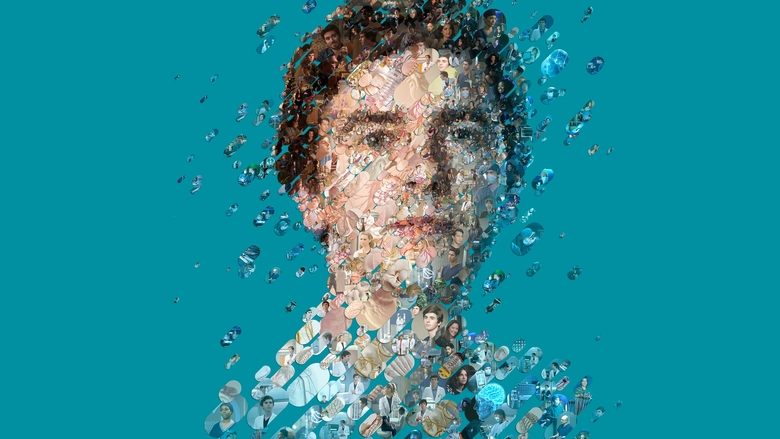
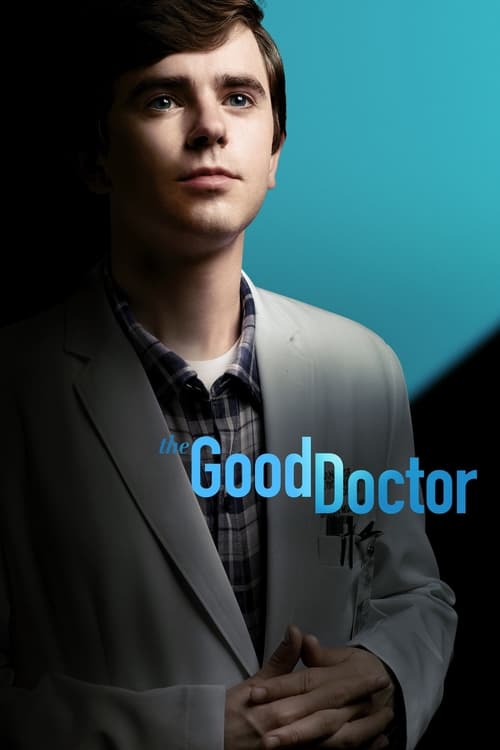
The Good Doctor
"Everyone operates differently."
Overview
"The Good Doctor" chronicles the journey of Dr. Shaun Murphy, a young surgeon with autism and savant syndrome, who relocates from a quiet country life to join the prestigious surgical unit at San Jose St. Bonaventure Hospital. Mentored by his surrogate father, Dr. Aaron Glassman, Shaun navigates the high-stakes world of medicine, challenging the skepticism of his colleagues and the hospital board. His extraordinary medical gifts, including a near-photographic memory and the ability to visualize the human body in intricate detail, allow him to see things other doctors miss, leading to miraculous saves and innovative solutions.
Across seven seasons, the series explores Shaun's professional and personal growth as he learns to connect with patients and colleagues, forms meaningful friendships, and experiences love, heartbreak, and loss. The narrative isn't confined to Shaun; it also delves into the complex lives of his fellow doctors, tackling their ethical dilemmas, career ambitions, and personal relationships. The show balances intricate medical cases with the overarching story of a brilliant individual striving for acceptance and proving that being different is a powerful strength.
Core Meaning
The core meaning of "The Good Doctor" is a profound exploration of empathy, communication, and the inherent prejudices of society. The series posits that true brilliance and compassion are not defined by conventional social norms. Through Dr. Shaun Murphy, the creators, led by David Shore, argue that different perspectives and ways of thinking are not just valid but essential, especially in a field as complex as medicine. The show consistently challenges viewers to look beyond first impressions and question their own biases about neurodiversity and capability. It champions the idea that everyone, regardless of their ability to communicate in traditional ways, has a unique contribution to make and that true connection is built on understanding and acceptance, not conformity.
Thematic DNA
Neurodiversity and Acceptance
This is the central theme of the series, embodied by Dr. Shaun Murphy. The show explores the challenges and triumphs of an individual with autism in a high-pressure professional environment. It depicts his struggles with social cues, sensory overload, and literal interpretation, while simultaneously showcasing his exceptional medical talents. Over the seasons, the theme evolves from Shaun's struggle for initial acceptance to a broader examination of how his unique perspective enriches the hospital and changes the people around him, fostering a more inclusive environment.
The Nature of Empathy and Communication
The series constantly questions what it means to be empathetic. While Shaun struggles with typical social expressions of empathy, he often demonstrates a profound, unfiltered concern for his patients' well-being. This contrasts with other doctors who might have a perfect bedside manner but are sometimes detached. The theme is explored through character interactions, where miscommunications often lead to conflict, but also to deeper understanding. It suggests that communication is more than words and that empathy can be expressed in many different, often unconventional, ways.
Mentorship and Found Family
The relationship between Dr. Shaun Murphy and his mentor, Dr. Aaron Glassman, is the emotional anchor of the series. Glassman acts as Shaun's advocate and father figure, guiding him through professional and personal challenges. This theme extends to the broader hospital staff, who evolve from skeptical colleagues into a supportive, albeit sometimes dysfunctional, found family for Shaun. The series highlights how mentorship and chosen family can be transformative, providing the support needed to overcome adversity.
Medical Ethics and Human Fallibility
As a medical drama, the show frequently delves into complex ethical dilemmas. Doctors are faced with life-or-death decisions, from experimental treatments to resource allocation. The series portrays its characters as brilliant but flawed human beings who make mistakes, face personal biases, and grapple with the emotional toll of their profession. This theme underscores that even in a field guided by science and rules, the human element is inescapable and often complicates the path to the right answer.
Character Analysis
Dr. Shaun Murphy
Freddie Highmore
Motivation
Shaun's primary motivation stems from the traumatic loss of his younger brother, Steve. He is driven by a deep-seated desire to save lives to prevent others from experiencing the pain he endured. This evolves over time to include a desire to prove his capabilities to a skeptical world and, later, to build a life and protect his own family, including his wife Lea and their children.
Character Arc
Shaun's arc is one of profound growth from isolation to connection. Initially, he is a brilliant but socially isolated surgeon who struggles to navigate the neurotypical world. Across the series, he learns to form relationships, communicate his emotions, and stand up for himself. He evolves from being solely reliant on Dr. Glassman's protection to becoming a leader, a husband, a father, and ultimately, the Chief of Surgery. His journey is about finding his place in the world without losing the unique qualities that make him who he is, proving that personal growth doesn't require changing one's fundamental nature.
Dr. Aaron Glassman
Richard Schiff
Motivation
Glassman's motivation is rooted in a promise to Shaun and a need to atone for the death of his own daughter, Maddie. He sees in Shaun a chance to be the father he couldn't be for his daughter. His drive is to protect Shaun at all costs, which often puts him in conflict with the hospital board and even Shaun himself as he learns to balance protection with allowing for growth.
Character Arc
Dr. Glassman's arc is a journey of learning to let go. Initially, he is Shaun's fierce protector and the hospital president who risks his career to hire him. His relationship with Shaun is deeply paternal, but also controlling. Over the seasons, he must learn to trust Shaun's ability to be independent, both professionally and personally. He confronts his own mortality with a recurring cancer diagnosis, which forces him to repair his relationship with Shaun and accept his own limitations. His final arc is about finding peace and accepting his fate while ensuring his legacy—Shaun—is secure.
Lea Dilallo-Murphy
Paige Spara
Motivation
Lea is initially motivated by a desire for adventure and a connection with Shaun, whom she finds refreshingly honest. As their relationship deepens, her motivation shifts to building a stable, loving life with him. She is driven by her love for Shaun and her desire to create a family, facing numerous challenges, including a miscarriage and the pressures of Shaun's demanding career, with resilience.
Character Arc
Lea begins as Shaun's free-spirited neighbor who introduces him to experiences outside of his structured life. Initially hired for only two episodes, her character became central to Shaun's personal development. Her arc is about maturing and learning what it means to be a true partner to someone with autism. She evolves from a sometimes-impulsive friend to a steadfast, loving wife and mother who becomes Shaun's primary emotional support system. She learns to communicate with Shaun on his terms and becomes a fierce advocate for him, helping him navigate the complexities of adult life, marriage, and parenthood.
Dr. Audrey Lim
Christina Chang
Motivation
Dr. Lim is motivated by a fierce dedication to her patients and a strong sense of justice. As a woman of color in a leadership position, she is driven to be twice as good as everyone else to prove her worth. Her motivations are tested by her personal traumas, leading her to seek a purpose that extends beyond her own career ambitions, focusing on making a tangible difference in the world.
Character Arc
Dr. Lim's arc is one of resilience in the face of immense physical and emotional trauma. She starts as a confident and skilled trauma surgeon who rises to the position of Chief of Surgery. Her journey is marked by significant challenges, including PTSD from the pandemic and a violent attack that leaves her temporarily paralyzed. Her arc focuses on her struggle to regain her physical abilities and her identity as a surgeon, forcing her to confront her own vulnerability. In the end, she finds a new purpose beyond the hospital, joining a medical aid organization in Ukraine.
Symbols & Motifs
The Toy Scalpel
The toy scalpel is a powerful symbol of Shaun's connection to his deceased brother, Steve, and his core motivation for becoming a doctor. It represents his past trauma, his promise to his brother, and the innocent, pure reason he pursues medicine: to save people so they don't have to suffer the loss he did.
Shaun holds the toy scalpel, a gift from Steve, during moments of extreme stress or when he needs to focus. It appears frequently in flashbacks to his childhood and is a physical anchor to his past that he carries with him into his professional future. It's a reminder of the human cost of failure and the driving force behind his incredible determination.
Anatomical On-Screen Graphics
The stylized, floating anatomical drawings and medical text that appear on screen symbolize Shaun's unique cognitive process. They provide a visual representation of his savant abilities, allowing the audience to see the world through his eyes and understand how he processes information, diagnoses complex conditions, and visualizes surgical solutions in a way others cannot.
These graphics are used whenever Shaun is deep in thought, analyzing a patient's case. As he looks at a patient or a medical scan, the detailed illustrations overlay the scene, highlighting anomalies and connecting disparate symptoms. This visual motif is a core part of the show's identity and is crucial for conveying the 'how' behind his medical genius.
The Carousel
The carousel symbolizes the enduring, cyclical nature of the relationship between Shaun and Dr. Glassman. It represents moments of connection, mentorship, and poignant reflection. It's a place of both happy memories and solemn goodbyes, embodying the father-son bond that is central to the entire series.
The carousel appears in the first season as a place of comfort for Shaun. It makes a powerful return in the series finale, where Shaun and a terminally ill Glassman share a final ride, bringing their journey full circle. The last shot of Shaun on the carousel alone signifies his acceptance of Glassman's death and his ability to carry his mentor's lessons forward.
Memorable Quotes
I am a surgeon!
— Dr. Shaun Murphy
Context:
This line is famously shouted by Shaun in Season 2, Episode 17 ("Breakdown") during a confrontation with Dr. Han, who wants to transfer him out of surgery. It's a climactic moment where Shaun, pushed to his breaking point, finally unleashes his pent-up frustration.
Meaning:
This exclamation, often delivered in moments of high stress or frustration, is Shaun's defiant assertion of his identity and capability. It's a powerful declaration against those who doubt him because of his autism, encapsulating his fight for respect and his core professional identity.
Being lonely and being alone are two different things.
— Dr. Aaron Glassman
Context:
Dr. Glassman offers this advice to Shaun early in the series as he helps him navigate his new life and the complexities of social interaction. It's a guiding principle that helps Shaun understand his own feelings and relationships throughout the show.
Meaning:
This piece of wisdom from Dr. Glassman speaks to the nuanced difference between solitude and isolation. It's a recurring theme in the series, particularly for Shaun, who is often alone but not always lonely, and for other characters who can feel lonely even when surrounded by people.
Just because something is hard, doesn't mean you can't do it.
— Lea Dilallo
Context:
Lea says this to Shaun during a moment when he is doubting his abilities, likely related to a complex case or a social challenge at the hospital. Her words help him reframe his perspective and find the strength to persevere.
Meaning:
This quote from Lea to Shaun perfectly captures her role as his biggest supporter and cheerleader. It's a simple but profound message of encouragement that speaks to the show's core theme of overcoming obstacles, whether they are internal or external.
I don't know what it feels like to be anyone but me.
— Dr. Shaun Murphy
Context:
In Season 1, Episode 14 ("She"), Shaun says this to a young patient who is transgender. The patient replies, "Me too." It's a powerful moment of connection and mutual understanding between two people who feel different from the world around them, bridging their disparate experiences with a shared truth.
Meaning:
This quote is a beautifully simple and honest expression of Shaun's perspective. It highlights his self-awareness and addresses a fundamental challenge in his interactions. While he struggles to understand others' feelings through conventional empathy, this line shows his unique, logical approach to the concept of identity and experience.
Episode Highlights
Burnt Food
The series premiere introduces Dr. Shaun Murphy on his way to his first day at San Jose St. Bonaventure Hospital. Before he even arrives, he uses his extraordinary skills to save a boy injured by falling glass at an airport. The episode masterfully intercuts this high-stakes medical emergency with flashbacks to Shaun's traumatic childhood and the hospital board's intense debate over whether to hire a surgeon with autism.
This episode perfectly establishes the show's premise, core themes, and central conflict. It showcases Shaun's medical genius while simultaneously highlighting the prejudice he faces. Dr. Glassman's passionate defense of Shaun sets up their crucial mentor-mentee relationship. The episode received the Humanitas Prize for its writing.
More
In the season one finale, Shaun's focus is compromised after a major mistake. He and Dr. Glassman have a significant falling out, leading Shaun to question his place at the hospital. Meanwhile, the team treats a patient with an unexplained injury, and Shaun makes a critical error that puts his and Glassman's careers on the line.
This episode marks a major turning point for Shaun's relationship with Dr. Glassman, forcing Shaun to confront the possibility of a future without his mentor's constant guidance. It also features Dr. Glassman receiving a devastating medical diagnosis, setting up his major arc for the following seasons.
Breakdown
After the new Chief of Surgery, Dr. Han, transfers Shaun from surgery to pathology due to his communication issues, Shaun spirals. Believing his dream is being taken from him, Shaun has a public and emotional breakdown in front of Dr. Han, repeatedly and forcefully declaring, "I am a surgeon!"
This episode is a tour de force for actor Freddie Highmore and a pivotal moment for Shaun's character. It's the first time he truly fights for himself in such a visceral, emotional way, refusing to be sidelined. His raw vulnerability shifts the perspectives of many of his colleagues and demonstrates his immense growth in self-advocacy.
I Love You
The conclusion of a two-part finale set during a massive earthquake. The hospital staff are in peril, and Shaun is trapped in a flooded brewery with a severely injured patient. The episode is fraught with life-or-death decisions and ends with both a tragic loss and a new beginning.
This episode is one of the most emotional and consequential of the series. It features the shocking death of a beloved main character, Dr. Neil Melendez, which has a lasting impact on the team. In the aftermath of the tragedy, it also marks the long-awaited romantic union of Shaun and Lea, a pivotal moment for Shaun's personal life.
Expired
Shaun and Lea find a pregnant woman injured in a car accident. At the hospital, her baby is delivered prematurely but dies after being given expired medication, which Shaun blames on Lea's oversight in managing the hospital pharmacy. The grief and misplaced blame cause Shaun to have a complete breakdown in the hospital pharmacy, smashing vials and shouting at Lea.
A raw and devastating episode, it showcases Shaun at his most vulnerable. The loss of the baby is a tragic event that nearly destroys his relationship with Lea. His subsequent breakdown is a powerful depiction of grief and sensory overload, highlighting the immense emotional pressures he faces and the challenges in his most important relationship.
Goodbye
In the series finale, the doctors work on one of their most important cases while confronting their futures. Dr. Glassman's cancer has returned and is terminal, and Shaun must learn to accept his mentor's decision to forgo painful treatment. The episode concludes with a flash-forward that reveals where all the characters end up years later.
This episode provides a poignant and satisfying conclusion to the series. It centers on the final, emotional goodbye between Shaun and his father figure, Dr. Glassman. The flash-forward shows Shaun as a father of two, Chief of Surgery, and the head of the Dr. Aaron Glassman Foundation for Neurodiversity in Medicine, bringing his journey of acceptance and triumph full circle.
Philosophical Questions
What is the true meaning of 'normalcy' and who gets to define it?
The series consistently challenges the audience's perception of what is considered 'normal.' Shaun's thought processes and social behaviors are different, yet he is exceptionally gifted. The show forces other characters, and by extension the viewers, to question their own definitions of normal behavior, intelligence, and communication. It explores whether 'normalcy' is simply a social construct that unfairly marginalizes those who don't fit into a narrow definition, and it suggests that deviating from the norm is often a source of great strength and insight.
Can empathy be learned, and how is it authentically expressed?
"The Good Doctor" delves into the nature of empathy through Shaun's journey. He struggles to understand and display emotion in a way his neurotypical colleagues recognize, yet he demonstrates deep care for his patients through his actions and dedication. The series explores whether empathy is an innate feeling or a skill that can be developed through logic and observation, as Shaun often attempts. It also questions the validity of performative empathy (a good bedside manner) versus a more genuine, albeit awkwardly expressed, concern for others' well-being.
To what extent should we accept our limitations versus striving to overcome them?
This question is central to the character arcs of not just Shaun, but everyone at St. Bonaventure. Shaun works tirelessly to improve his communication skills, yet he also learns to accept that he will always have autism. Dr. Lim must grapple with a physical disability that changes her life. Dr. Glassman faces the ultimate limitation: his own mortality. The series explores the delicate balance between pushing boundaries to grow and the wisdom of accepting who you are, with all your inherent strengths and weaknesses.
Alternative Interpretations
One alternative interpretation focuses on the show as an allegory for the experience of any outsider. While Shaun's condition is explicitly autism, his journey can be read as a metaphor for the struggles of anyone who feels different, whether due to their background, beliefs, or identity. His need to constantly prove his worth, the social missteps, and the ultimate formation of a "found family" resonate with the universal human experience of seeking belonging in a world that often rewards conformity.
Another critical perspective examines the show's depiction of the medical system. Some interpret the series not just as a character study, but as a critique of the inherent flaws within modern medicine. Shaun's direct, logic-based approach often cuts through hospital bureaucracy and the ego-driven conflicts of his colleagues. From this viewpoint, Shaun is not just a doctor with autism; he is a symbolic figure representing a purer, more objective form of medicine, one that is untainted by social politics and cynicism. His success can be seen as a commentary on what the medical profession could be if it prioritized pure skill and patient outcomes over social graces and hierarchical power structures.
Cultural Impact
"The Good Doctor" became a significant cultural phenomenon upon its premiere in 2017, lauded for bringing a character with autism to the forefront of a major network drama. Its primary cultural impact lies in its contribution to the mainstream conversation about neurodiversity and inclusion. The series offered millions of viewers a nuanced look into the life of a person with autism, highlighting both the challenges and the unique strengths associated with the condition. This portrayal, while sometimes criticized by members of the autistic community for relying on the "autistic savant" trope, has been widely praised for fostering empathy and breaking down stereotypes.
The show's success demonstrated a significant audience appetite for stories centered on diverse characters and proved that a series led by a neurodivergent protagonist could achieve massive commercial success. It sparked discussions in households and media about representation in television, particularly the importance of authentic portrayals of disabilities. While Freddie Highmore, a neurotypical actor, received acclaim for his performance, the show also faced scrutiny regarding the casting, which contributed to the broader industry conversation about casting actors with disabilities to play characters with those same disabilities. The series' legacy is its role in increasing the visibility of autism on a global scale, challenging misconceptions, and paving the way for more inclusive storytelling in television.
Audience Reception
"The Good Doctor" was an immediate ratings hit for ABC, becoming one of the most-watched dramas of its debut season. Audience reception has been largely positive throughout its seven-season run, with viewers consistently praising Freddie Highmore's compelling and nuanced performance as Dr. Shaun Murphy. Many fans connected deeply with the show's heartfelt tone and its optimistic message of overcoming prejudice. The relationship between Shaun and Dr. Glassman was frequently cited as a major emotional highlight.
However, the show also generated significant discussion and criticism, particularly from the autistic community. While many appreciated the increased visibility, some felt the portrayal leaned too heavily on the "savant" stereotype, which is not representative of the majority of people on the autism spectrum. There were debates about whether a neurotypical actor should play the role. Over the seasons, some viewers criticized certain romantic plotlines and character departures. Despite these critiques, the series maintained a loyal fanbase who appreciated the character development, the emotional medical cases, and the show's overall message of hope and acceptance. The series finale was generally well-received for providing a conclusive and emotionally satisfying ending for the beloved characters.
Interesting Facts
- The series is an American adaptation of a 2013 South Korean drama of the same name, "Good Doctor." Actor Daniel Dae Kim discovered the original series and bought the rights to develop it for an American audience.
- Creator David Shore also created another iconic medical drama, "House." While both feature brilliant but unconventional doctors, Shore has emphasized the stark difference in their personalities: House is cynical about humanity, while Shaun is fundamentally optimistic.
- Freddie Highmore, who plays Shaun, initially turned down the role. He had just finished five seasons of "Bates Motel" and was hesitant to commit to another long-running series so quickly. He was convinced to take the role just three days after finishing his previous show.
- To ensure an authentic portrayal of autism, the show's creators consulted with autism experts and organizations. Freddie Highmore did extensive research, including watching documentaries and reading literature, to develop the character of Shaun.
- Freddie Highmore not only starred in the show but also served as an executive producer, directed several episodes, and wrote the premiere episode of season two.
- The role of Dr. Glassman's love interest, Debbi, is played by Richard Schiff's real-life wife, Sheila Kelley.
- Paige Spara, who plays Lea, was originally only hired for two episodes. However, her chemistry with Freddie Highmore and the positive audience reaction led to her character being promoted to a series regular.
- Several actors on the autism spectrum were cast in guest roles throughout the series, including in the final season where Kayla Cromer played a medical student with autism who idolized Shaun.
⚠️ Spoiler Analysis
Click to reveal detailed analysis with spoilers
Frequently Asked Questions
Explore More About This Movie
Dive deeper into specific aspects of the movie with our detailed analysis pages
Comments (0)
No comments yet. Be the first to share your thoughts!