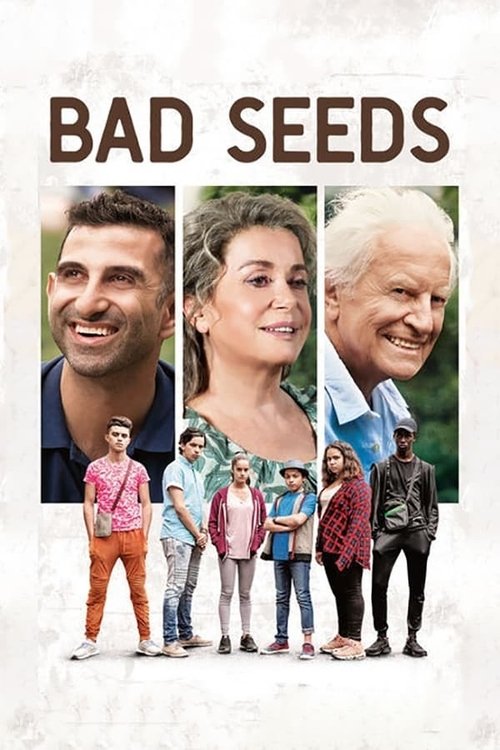
Bad Seeds
A heartfelt comedic drama where the jagged scars of past trauma meet the tender roots of a makeshift family. It paints a portrait of redemption, proving that even in concrete jungles, hope can bloom with the right care.
Bad Seeds

Bad Seeds

Mauvaises herbes

21 November 2018 France 100 min ⭐ 7.6 (618)
Director: Kheiron
Cast: Kheiron, Catherine Deneuve, André Dussollier, Hakou Benosmane, Leila Boumedjane
Drama Comedy
The Lingering Impact of Trauma Makeshift and Chosen Families Unorthodox Education and Mentorship Redemption and Second Chances

Overview

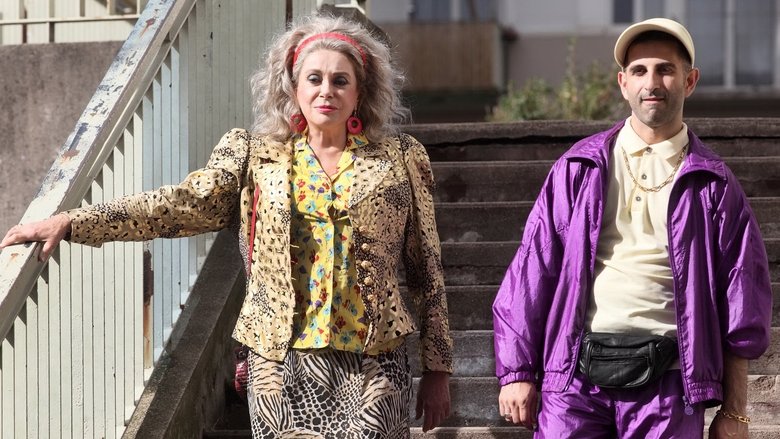
Bad Seeds (Original title: Mauvaises herbes) follows the unconventional life of Waël, a former street child who now makes a living orchestrating petty scams in the Parisian suburbs alongside his adoptive mother and partner-in-crime, Monique. Their comfortable routine of swindling unsuspecting shoppers comes to an abrupt halt when they accidentally target Victor, an old acquaintance of Monique's who now runs an educational support center for troubled teenagers.

Instead of turning them over to the police, Victor offers them a deal for redemption: Monique must work as his secretary, and Waël must step in as an interim educator for a group of six unruly students who have been excluded from the traditional school system. Armed with no formal teaching experience but possessing a wealth of street smarts, Waël faces the daunting task of keeping these marginalized youths engaged.

As Waël attempts to break through the defensive walls of his students, the film interweaves poignant flashbacks of his own harrowing childhood in a war-torn country. Through a blend of humor, unorthodox methods, and genuine empathy, Waël discovers that the only way to heal these deeply troubled kids is to confront the shadows of his own past.
Core Meaning

The core message of Bad Seeds is rooted in a famous quote by Victor Hugo: "There are no bad plants or bad men. There are only bad cultivators." Director Kheiron uses this philosophy to challenge societal prejudices against marginalized youth and immigrants. The film argues that delinquent behavior is rarely born of innate malice; rather, it is a defensive symptom of unresolved trauma, neglect, and systemic failure.

Furthermore, the film highlights the universal nature of pain. By drawing a parallel between Waël's extreme survival in a war zone and the teens' struggles in the modern urban ghettos of France, the director suggests that empathy and shared vulnerability are the most effective tools for healing and redemption.

Thematic DNA

The Lingering Impact of Trauma 35%
Makeshift and Chosen Families 30%
Unorthodox Education and Mentorship 20%
Redemption and Second Chances 15%

The Lingering Impact of Trauma

The film explores how deeply childhood trauma shapes adult behavior. This is revealed through the stark contrast between Waël's present-day comedic coping mechanisms and the dark, violent flashbacks of his youth in a war-torn country. The teenagers in his class mirror this theme, each acting out due to their own hidden domestic or societal traumas.

Makeshift and Chosen Families

Traditional family structures are notably absent or broken for most characters. Instead, the film champions the family you choose. The bond between Waël and the elderly Monique—who took him in when he was an orphaned street child—is the emotional anchor of the narrative, proving that love and loyalty transcend bloodlines.

Unorthodox Education and Mentorship

The narrative critiques the rigidity of traditional educational systems that frequently discard "problem" children. Waël's success with the students stems from his refusal to treat them as subordinates. Instead, he uses street-smart pedagogy, humor, and radical honesty to earn their respect and trust.

Redemption and Second Chances

Through Victor's benevolent intervention, Waël and Monique are given a chance to pivot away from petty crime. In turn, Waël passes this second chance down to his students, illustrating a ripple effect of grace and forgiveness.

Character Analysis

Waël

Kheiron

Archetype: The Reluctant Mentor / Antihero
Key Trait: Charismatic and resourceful

Motivation

Initially driven purely by self-preservation and a desire to protect his adoptive mother, Monique. Later, his motivation shifts to a genuine desire to save his students from falling through the cracks of society.

Character Arc

Waël begins the film as a charming but cynical petty criminal, using his tragic past as a shield against genuine responsibility. Thrust into a teaching role to avoid jail, he initially treats it as a joke. However, as he recognizes his own pain in the students, he evolves into a dedicated, empathetic mentor, ultimately leaving his criminal life behind.

Monique

Catherine Deneuve

Archetype: The Unconventional Mother Figure
Key Trait: Defiant and maternal

Motivation

Fierce, unconditional love for Waël, combined with a mischievous desire to live life on her own terms outside the bounds of conventional morality.

Character Arc

Monique transitions from a gleeful accomplice in Waël's scams to a supportive maternal figure for the youth center. Reconnecting with Victor allows her to rediscover a sense of legitimacy and romance that she had long abandoned.

Victor

André Dussollier

Archetype: The Wise Benefactor
Key Trait: Compassionate and perceptive

Motivation

A deep-seated belief in rehabilitation and second chances, driven by his love for education and a lingering affection for his old friend, Monique.

Character Arc

Victor remains a steadfast moral compass throughout the film. His arc is less about personal transformation and more about vindication; his unorthodox gamble of placing a scammer in charge of troubled youths pays off, proving his deeply held belief in human potential.

Symbols & Motifs

The "Bad Weeds" (Mauvaises Herbes)

Meaning:

The title itself is a metaphor for the troubled teenagers. In gardening, weeds are plants considered undesirable in a particular situation, often pulled and discarded. Here, they symbolize youth whom society has deemed worthless or problematic.

Context:

The symbol is contextualized immediately by the opening quote from Victor Hugo, establishing that these children only need the right "cultivator" to thrive, rather than being inherently bad.

The Shopping Cart

Meaning:

The shopping cart represents Waël and Monique's marginal, survivalist lifestyle, as well as their reliance on deception to navigate society.

Context:

It is featured prominently in their opening scam in the supermarket parking lot, setting the stage for their dynamic before they transition into legitimate roles at the youth center.

Waël's Childhood Flashbacks

Meaning:

The flashbacks act as a narrative symbol for the universality of suffering. They represent the invisible emotional baggage that every "problem child" carries with them.

Context:

The film deliberately cuts to these dark, desaturated memories whenever Waël connects with a student over their specific pain, drawing a direct line between a war zone and the socio-economic struggles of the Parisian suburbs.

Memorable Quotes

Il n'y a ni mauvaises herbes, ni mauvais hommes. Il n'y a que de mauvais cultivateurs.

— Opening Title Card (Victor Hugo quote)

Context:

This quote opens the film, setting a poignant thematic foundation before jumping into the comedic and tragic events of the narrative.

Meaning:

This translates to: "There are no bad plants or bad men. There are only bad cultivators." It encapsulates the entire thesis of the film, arguing that environment and guidance are what shape a person's morality and success.

N'oublie pas qu'un enfant qui cause des problèmes, c'est avant tout un enfant qui a des problèmes.

— Victor / Waël

Context:

It is used as a guiding principle for Waël as he learns how to manage and connect with the rebellious teenagers in his care.

Meaning:

This translates to: "Remember that a problem child is above all a child with problems." It is a profound shift in perspective, moving from judging a child's actions to investigating the root cause of their pain.

Je ne suis pas vieille, je suis expérimentée.

— Monique

Context:

Monique says this while navigating her dynamic with Waël during their life of petty crime, asserting her value and capability despite her advanced age.

Meaning:

This translates to: "I'm not old, I'm experienced." It is a humorous but defiant rejection of ageism, reflecting her spirited and rebellious nature.

Philosophical Questions

Are humans shaped more by their nature or their environment?

The film strongly advocates for the nurture side of the debate. Through the central Victor Hugo quote and the transformation of the six teenagers, the narrative explores how toxic environments create defensive, "bad" behavior, while a supportive, understanding environment allows inherent goodness to flourish.

Can morally questionable actions be justified if the outcome is inherently good?

Waël and Monique are criminals who lie, cheat, and steal. Even when Waël becomes an educator, he uses unorthodox, sometimes manipulative tactics to control the teens. The film asks the audience to consider whether the rigid rules of society matter if breaking them results in the salvation of traumatized children.

Alternative Interpretations

While the film is largely viewed as a heartwarming redemption story, some critics read it as a sharp critique of institutionalized education. From this perspective, the film argues that the state's rigid, formal methods are fundamentally incapable of reaching traumatized youth; only someone operating outside the law (Waël) possesses the genuine empathy required to save them. Another interpretation focuses on the psychological mirroring in the film: some viewers suggest that Waël never truly escaped the war zone of his childhood, and that he projects his own need to be saved onto the teenagers, making his mentorship as much an act of self-therapy as it is altruism.

Cultural Impact

Bad Seeds found a significant audience in France and internationally via Netflix by offering a fresh, optimistic take on the banlieue (suburb) film genre. While classic French cinema often depicts the suburbs through a lens of gritty realism and inescapable violence (such as Mathieu Kassovitz's La Haine or Ladj Ly's Les Misérables), Kheiron's film injects warmth, humor, and a "feel-good" sensibility. It sparked conversations about the educational system in France and how marginalized youths are often written off by institutions that fail to understand their specific socio-economic and psychological traumas. By anchoring its message in Victor Hugo's classic literature, the film bridged the gap between historical French philosophy and modern urban crises.

Audience Reception

Audiences largely praised Bad Seeds for its immense heart and the surprising, delightful chemistry between Kheiron, Catherine Deneuve, and André Dussollier. Viewers appreciated the deft balance of laugh-out-loud comedy with genuinely moving explorations of trauma, particularly the gripping flashback sequences. However, some critics pointed out that the film relies heavily on familiar "inspirational teacher" tropes (reminiscent of Dangerous Minds or Dead Poets Society) and that the narrative beats can be quite predictable. Despite the clichés, the overarching verdict was highly positive, with audiences celebrating it as a sincere, feel-good dramedy that delivers its message with authenticity and charm.

Interesting Facts

  • Kheiron, who wrote, directed, and starred in the film, drew loose inspiration from his own life. His real name is Manouchehr Tabib, and his family fled Iran for the Parisian suburbs when he was a child.
  • Catherine Deneuve plays significantly against type in this film; the icon of French cinema glamour portrays an elderly purse-snatcher and scammer.
  • The film uses a distinct structural choice by heavily contrasting the lighthearted, stand-up comedy style of the classroom scenes with incredibly dark, violent flashbacks of a Middle Eastern war zone.
  • This was Kheiron's sophomore directorial feature, following his highly acclaimed 2015 autobiographical debut, 'Nous trois ou rien'.

⚠️ Spoiler Analysis

Click to reveal detailed analysis with spoilers

Frequently Asked Questions

Explore More About This Movie

Dive deeper into specific aspects of the movie with our detailed analysis pages

Comments (0)

Leave a comment

No comments yet. Be the first to share your thoughts!