Skip to content
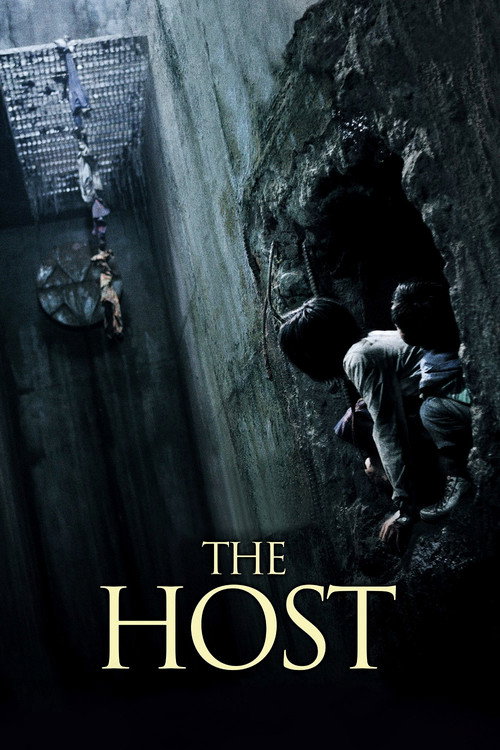
The Host
Drenched in rain and murky river silt, this satirical creature-horror weaves absurd tragicomedy through a family’s desperate embrace, exposing state negligence as a shadow cast across Seoul’s cold, industrial waterways.
The Host
The Host

괴물

"Man has made his newest predator."

27 July 2006 South Korea 120 min 7.0 (3,193)

Director: Bong Joon Ho

Cast: Song Kang-ho, Byun Hee-bong, Park Hae-il, Bae Doona, Ko A-sung

Drama Science Fiction Horror Institutional Incompetence and Bureaucratic Apathy Familial Love and Solidarity Environmental Degradation and Ecological Retribution Foreign Geopolitical Hegemony and Neocolonial Critique Class Marginalization and Socioeconomic Inequality
Budget: $11,000,000
Box Office: $88,489,643

The Host — Ending Explained

⚠️ Spoiler Analysis

The Hidden Truth About the Virus: Throughout the film, Seoul is locked down under the assumption that the Han River creature carries an unprecedented, fatal virus. However, after Gang-du is captured by American military medical personnel, an American doctor candidly reveals to a Korean translator that there is no virus. The entire biological threat was a fictional narrative engineered to save face and justify extreme military quarantine and chemical deployment. To keep Gang-du silent, doctors perform an invasive lobotomy-like brain operation on him under the guise of "extracting the virus".

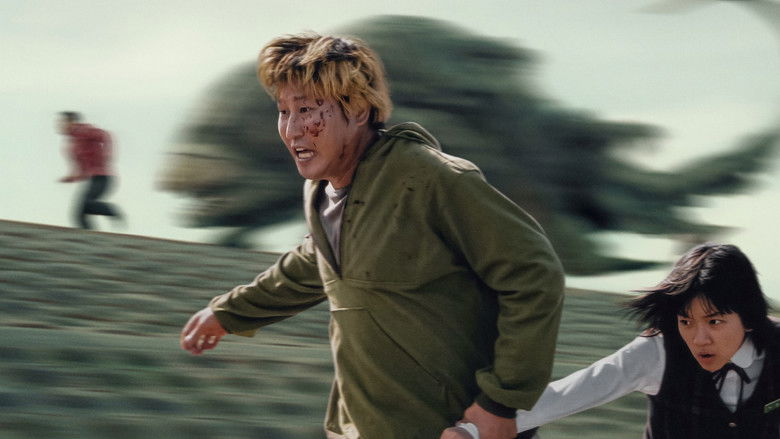
The Climax and Hyun-seo's Fate: Subverting standard Hollywood happy endings, when Gang-du finally breaks out of the medical facility and locates the creature's lair near the sewer discharge pipes, Hyun-seo is already dead. In her final moments inside the sewer, she used her body as a protective shield to cover Se-joo, the younger homeless boy. Gang-du pulls his daughter’s lifeless body from the monster’s mouth, discovering that Se-joo is still breathing inside her arms. Driven by immense grief and fury, Gang-du attacks the beast. Nam-il throws Molotov cocktails, Nam-joo fires a flaming arrow into the monster's eye, and a local homeless man douses it in gasoline. Gang-du impales the burning creature through the mouth with an iron pipe, finally killing it.

The Ending: In the quiet, snowy aftermath, Gang-du resides in his small riverfront food kiosk. He has formally adopted Se-joo, serving him warm rice. As news broadcasts play on TV announcing that the virus scare was a total mistake and that Agent Yellow was unnecessary, Gang-du casually kicks the television shut with his foot, completely turning his back on state media and society, sitting in watchful solitude with his rifle to guard his new son.

Alternative Interpretations

Historical Trauma (Han) Perspective: Many Korean scholars view the monster as the physical manifestation of han—a collective Korean cultural emotion representing deep-seated grief, injustice, and historical trauma caused by foreign intervention and state oppression.

Manufacturing Panic / Mass Hysteria Allegory: The imaginary "virus" and subsequent lockdowns are read by film critics as an allegory for state control through fear. The media spreads unverified government narratives, allowing authorities to curtail civil liberties without opposition.

Pessimistic vs. Hopeful Family Rebirth: The final scene, where Gang-du adopts the orphaned boy Se-joo, is interpreted in two ways: either as a pessimistic continuation of isolated, vulnerable lower-class survival on the periphery, or as a hopeful reconstitution of family constructed through chosen love and mutual resilience.

Explore More About This Movie

Dive deeper into specific aspects of the movie with our detailed analysis pages

Similar Movies