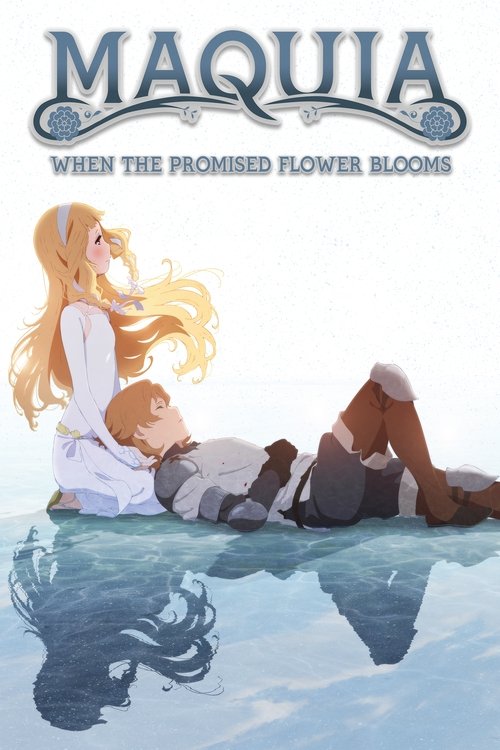
Maquia: When the Promised Flower Blooms
さよならの朝に約束の花をかざろう
Overview
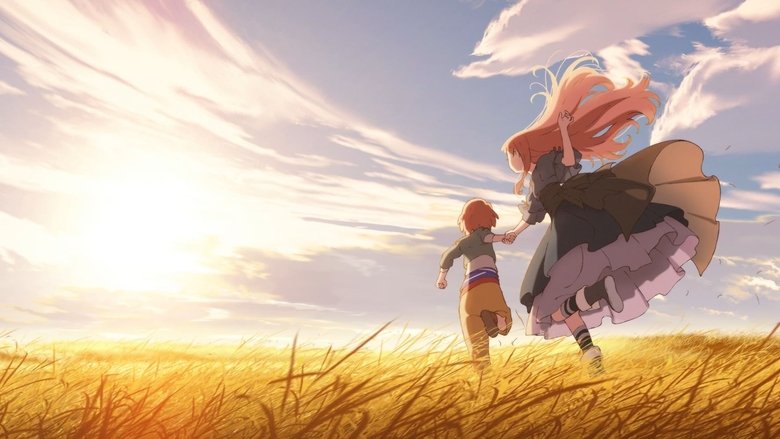
"Maquia: When the Promised Flower Blooms" tells the story of Maquia, a member of the Iorph, a mystical race of beings who live for centuries and spend their days weaving their histories into a special cloth called Hibiol. They are legendary to outsiders, who have dubbed them the "Clan of the Separated." Maquia, a young and orphaned Iorph, feels a sense of loneliness despite being surrounded by her people. Her peaceful existence is shattered when the kingdom of Mezarte invades, seeking the secret to the Iorph's longevity.
During the chaos, Maquia is carried away from her home and finds herself alone in the mortal world. There, she discovers a newborn human baby, Ariel, orphaned in a bandit attack. Compelled by compassion, she decides to raise him as her own, embarking on a journey of motherhood that spans decades. As Ariel grows from a child to a man, Maquia remains eternally fifteen, creating a unique and often painful dynamic between them. The film follows their evolving relationship against the backdrop of a world on the brink of change, exploring themes of love, loss, and the meaning of family.
Core Meaning
The central message of "Maquia: When the Promised Flower Blooms" is a profound exploration of motherhood and the cyclical nature of life and death. Director Mari Okada uses the fantasy setting to delve into the universal human experience of love, loss, and the pain of outliving loved ones. The film posits that despite the inevitable sorrow of separation, the love and connections we form are what give life meaning. Maquia's journey as a mother to a mortal child, despite the warnings of her people that such a connection will only bring loneliness, ultimately leads her to understand that the happiness derived from that love is worth the pain of loss. It is a story about the strength found in maternal love and the bittersweet acceptance of life's transient nature.
Thematic DNA
Motherhood and Found Family
The film's primary theme is motherhood, not in a traditional sense, but through the lens of a found family. Maquia, with no experience, learns to be a mother to Ariel, and their bond forms the emotional core of the narrative. This is contrasted with Leilia, who gives birth but is separated from her child, exploring the different facets of what it means to be a mother. The film delves into the joys, struggles, and self-sacrifice inherent in raising a child.
The Passage of Time and Mortality
The stark contrast between the immortal Iorph and mortal humans is a central theme. Maquia's unchanging appearance as Ariel ages highlights the relentless and often cruel nature of time. This theme is also reflected in the changing world around them, as the era of legends and dragons gives way to industrialization and modern warfare. The film explores the pain of being left behind and the importance of cherishing fleeting moments.
Love and Loss
The Iorph are warned against loving outsiders, as it will lead to ultimate loneliness. Maquia defies this, and her story becomes a testament to the idea that love is worth the inevitable pain of loss. The film portrays different kinds of love—maternal, romantic, and platonic—and the sorrow that accompanies separation and death. Ultimately, Maquia learns that despite the heartbreak, the love she shared with Ariel brought her immense happiness.
Identity and Belonging
Maquia constantly grapples with her identity as an Iorph in the human world and as a mother to a human child. Ariel also struggles with his identity, torn between his love for his eternally young mother and his desire to belong in a world where he is seen as different. The film explores their search for a place to call home and a sense of belonging in a world that often misunderstands them.
Character Analysis
Maquia
Manaka Iwami
Motivation
Her primary motivation is to love, protect, and raise Ariel. She seeks to understand what it means to be a mother and to create a happy life for her son, even as she grapples with her own immortality and loneliness.
Character Arc
Maquia begins as a shy, lonely, and somewhat timid girl. After finding Ariel, she is thrust into the role of a mother and must learn to be strong and resilient for his sake. Over the decades, she experiences the profound joy and deep sorrow of motherhood, ultimately transforming into a wise and compassionate individual who understands that love is worth the pain of loss.
Ariel
Miyu Irino
Motivation
Initially, his motivation is to stay with Maquia. As he grows older, he desires to protect her and later to establish his own identity and family. He is driven by a complex mix of love for Maquia, societal pressure, and the natural desire for independence.
Character Arc
Ariel's arc is that of a normal human life, from infancy to old age. As a child, he is completely devoted to Maquia. As a teenager, he becomes conflicted and resentful of her eternal youth and their unconventional relationship. He distances himself from her but eventually comes to understand the depth of her love and sacrifice. He becomes a soldier, a husband, and a father, living a full life shaped by Maquia's love.
Leilia
Ai Kayano
Motivation
Her main motivation is to see her daughter, Medmel. This desire consumes her, leading to moments of emotional instability. She is also a victim of circumstance, caught between the expectations of the Mezarte kingdom and her Iorph heritage.
Character Arc
Leilia starts as a vibrant and confident young Iorph. After being kidnapped and forced into a political marriage, she becomes a symbol of tragic motherhood, separated from her own child. Her arc is one of despair and longing, providing a stark contrast to Maquia's experience. In the end, after a brief reunion with her daughter, she chooses to leave her past behind and fly away with Maquia.
Krim
Yuki Kaji
Motivation
His sole motivation is to rescue Leilia and return to their old way of life. He is driven by a rigid adherence to the past and an inability to adapt to the changing world, which ultimately leads to his downfall.
Character Arc
Krim is initially presented as a heroic figure, determined to rescue Leilia, his beloved. However, his single-mindedness and inability to accept change turn him into a tragic and somewhat antagonistic figure. He is a foil to Maquia, as he cannot let go of the past and is ultimately consumed by his bitterness and desire for revenge. His arc ends in tragedy when he is killed after Leilia rejects his plan to escape.
Symbols & Motifs
Hibiol
The Hibiol, the woven cloth of the Iorph, symbolizes the passage of time, memory, and the interconnectedness of lives. Each thread represents a moment in time, and the completed tapestry tells a story.
The Iorph weave Hibiol daily to record their long history. Maquia wraps the infant Ariel in a piece of her Hibiol, symbolically weaving him into her life's story. Messages can also be woven into the Hibiol, as seen when Maquia discovers Leilia's fate through a piece of cloth in a shop.
Renato
The Renato, the dragon-like creatures, symbolize a dying era of magic and legends. Their susceptibility to the "Red Eye" disease and their diminishing numbers reflect the changing world and the fading of old ways.
The Mezarte kingdom uses the Renato as weapons of war, but their power is waning. One of the last Renato inadvertently helps Maquia escape her home. At the end of the film, Maquia and Leilia fly away on the last living Renato, signifying a departure from the human world and a return to their own kind.
Memorable Quotes
人を愛すると、本当のひとりぼっちになる
— Racine
Context:
This is said to Maquia at the beginning of the film as a warning against forming attachments with people outside their clan. It sets the stage for Maquia's emotional journey as she defies this advice by choosing to love Ariel.
Meaning:
"If you fall in love, you will become truly alone." This quote, delivered by the Iorph elder, establishes one of the central conflicts of the film. It warns of the pain that comes with loving mortals who will inevitably die, leaving the immortal Iorph behind.
私のヒビオルです
— Maquia
Context:
This line is spoken by Maquia as she reflects on her life with Ariel. It demonstrates her understanding that her personal story is now interwoven with his, and she embraces the path she has chosen.
Meaning:
"This is my Hibiol." This quote signifies Maquia's acceptance of her life with Ariel. Her experiences with him, both joyful and painful, have become the fabric of her own personal history, her own Hibiol.
飛べ!
— Maquia
Context:
During the climax of the film, as the castle is collapsing, Leilia is hesitant to leave. Maquia's shout gives her the courage to leap from the tower and escape, finally freeing herself from her captivity.
Meaning:
"Fly!" This single word is a powerful and emotional cry of encouragement from Maquia to Leilia. It signifies liberation and the strength to move forward from a traumatic past.
Philosophical Questions
Is it better to have loved and lost than never to have loved at all?
The film directly explores this question through Maquia's journey. The Iorph's philosophy is to avoid love with mortals to prevent the pain of loss. Maquia's experience with Ariel challenges this, suggesting that the joy and meaning derived from love outweigh the inevitable sorrow of separation. Her final realization is that loving her son, despite the profound pain it brings, also brought her happiness.
What is the true meaning of motherhood?
"Maquia" presents motherhood as a bond forged through love, care, and sacrifice, rather than just biological ties. Maquia, who is not Ariel's biological mother, embodies the struggles and triumphs of motherhood. This is contrasted with Leilia, who is a biological mother but is denied the experience of raising her child. The film suggests that motherhood is defined by the act of nurturing and loving a child.
Alternative Interpretations
While the film is largely seen as a story about motherhood, some viewers have interpreted the relationship between Maquia and Ariel as having romantic undertones, particularly during Ariel's adolescence when he feels conflicted about his feelings for his eternally youthful mother. However, the film deliberately avoids developing this into a central plot point, instead focusing on the complexities of their familial bond. Another point of discussion is the ending, with some viewers questioning Maquia's decision to leave Ariel for long periods of his adult life, only to return at his deathbed. Interpretations for this range from her needing to protect him and his family from those who would exploit her, to the idea that she had to allow him to live his own life without her constant, unchanging presence.
Cultural Impact
"Maquia: When the Promised Flower Blooms" was highly praised for its emotional depth, stunning animation by P.A. Works, and its mature exploration of themes not often seen in anime with such nuance. It stands out in the fantasy genre for its intimate focus on the mother-child relationship rather than large-scale battles, although it has those as well. The film has been compared to the works of Studio Ghibli in its emotional resonance and world-building, yet it maintains a unique identity. Mari Okada's successful transition from screenwriter to director was also a significant event in the anime industry. The film resonated with audiences worldwide, with many viewers and critics highlighting its powerful and tear-jerking narrative. It has been lauded as a modern classic and a testament to the storytelling potential of animation.
Audience Reception
Audience reception for "Maquia: When the Promised Flower Blooms" has been overwhelmingly positive, with many praising its beautiful animation, emotional depth, and powerful story. Viewers often describe the film as a "tearjerker" that left a lasting impact. The portrayal of motherhood and the relationship between Maquia and Ariel resonated deeply with many. Points of criticism are few but sometimes mention the film's pacing, with large time skips that can feel abrupt. Some viewers also found certain subplots, like that of Krim and Leilia, to be less developed than the central story. However, the overall consensus is that it is a masterful and moving piece of filmmaking.
Interesting Facts
- This film was the directorial debut of Mari Okada, a renowned screenwriter known for works like "Anohana: The Flower We Saw That Day" and "Toradora!".
- The story was inspired by Okada's own relationship with her mother.
- The film received a 100% rating on Rotten Tomatoes based on 27 reviews.
- Acclaimed director Makoto Shinkai praised the film, calling it a "fantastic film that can shake up memories within you that you normally forget."
- The final shot after the credits, showing the descendants of the Iorph, was not originally planned but was added by Okada to represent Maquia's growth and her decision to continue forming new relationships despite the inevitable goodbyes.
- A significant scene where Ariel comforts an insomniac Maquia was cut from the final film.
⚠️ Spoiler Analysis
Click to reveal detailed analysis with spoilers
Frequently Asked Questions
Explore More About This Movie
Dive deeper into specific aspects of the movie with our detailed analysis pages
Comments (0)
No comments yet. Be the first to share your thoughts!