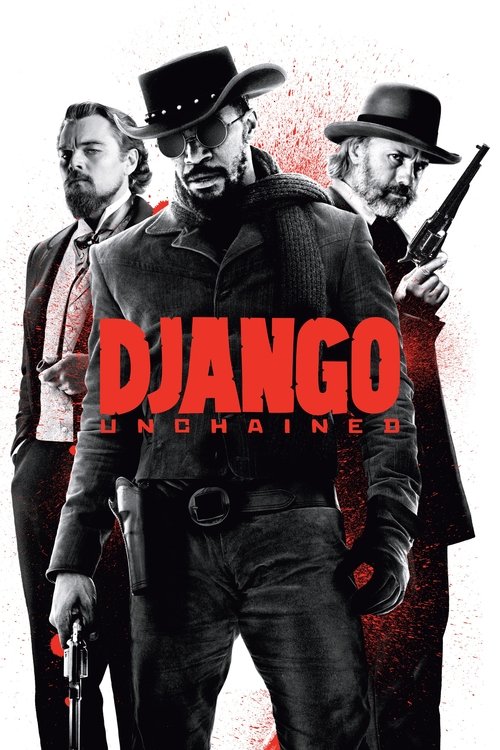
Django Unchained
"Life, liberty, and the pursuit of vengeance."
Overview
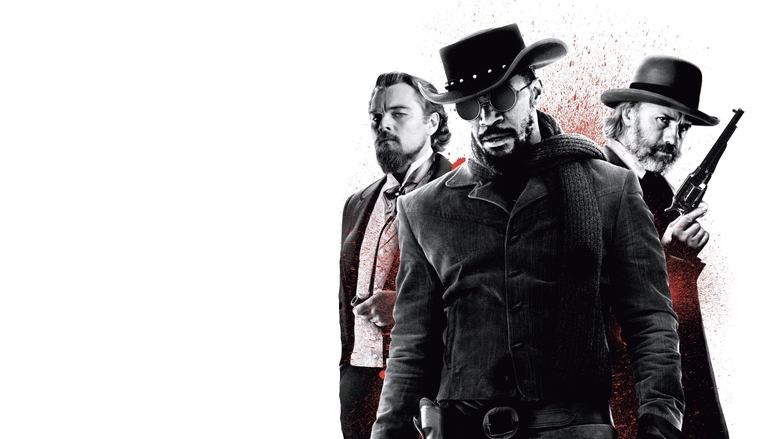
Set two years before the American Civil War, "Django Unchained" follows Django (Jamie Foxx), a slave whose brutal past brings him into contact with Dr. King Schultz (Christoph Waltz), a German-born bounty hunter. Schultz is on the hunt for the murderous Brittle brothers and needs Django to identify them. He promises Django his freedom in exchange for his help. Their success forges an unlikely partnership, and Schultz decides to train Django in the art of bounty hunting.
As they travel together, honing Django's skills, Schultz learns of Django's one true goal: to find and rescue his wife, Broomhilda von Shaft (Kerry Washington), from whom he was separated by the slave trade. Their quest eventually leads them to Candyland, a notorious Mississippi plantation owned by the charming but cruel Calvin J. Candie (Leonardo DiCaprio). Posing as buyers interested in one of Candie's prized "Mandingo" fighters, Django and Schultz must navigate a treacherous world of deception to save Broomhilda, all under the watchful eye of Stephen (Samuel L. Jackson), Candie's shrewd and loyal head house slave.
Core Meaning
"Django Unchained" is a revisionist Western that uses the conventions of the genre to confront the brutal legacy of slavery in America. Director Quentin Tarantino crafts a narrative of empowerment and revenge, transforming a brutal historical reality into a stylized, cinematic fantasy. The core message is one of liberation, not just from physical chains but from the psychological and systemic oppression of slavery. By placing a Black hero at the center of a Western, a genre that has historically marginalized non-white characters, the film reclaims and reshapes American mythology. It posits that in the face of absolute inhumanity, violent retribution is not just a cathartic fantasy but a justified path to reclaiming one's identity and achieving a form of justice where none is legally available.
Thematic DNA
Revenge and Justice
Revenge is a primary motivator for Django. His quest is not only to rescue his wife but to exact vengeance on those who brutalized them, like the Brittle brothers. The film explores the line between justice and revenge, suggesting that in a lawless and immoral society, violent retribution is the only form of justice available to the oppressed. Django's transformation into a skilled gunslinger is the vehicle for this theme, as he turns the tools of violence used against him back on his oppressors.
Freedom and Slavery
The film's central conflict revolves around the brutal institution of slavery and the fight for freedom. Django's journey is a literal and metaphorical 'unchaining' from physical bondage to self-realization and empowerment. The film unflinchingly depicts the horrors of slavery, from whippings and brandings to the dehumanizing Mandingo fights. The destruction of the Candyland plantation at the end symbolizes the destruction of the oppressive system itself, offering a powerful, albeit fictional, vision of liberation.
Racism and Dehumanization
Tarantino confronts racism head-on, showcasing the deeply ingrained white supremacy of the antebellum South. Characters like Calvin Candie use pseudoscience like phrenology to justify their cruelty. The film also explores internalized racism through the character of Stephen, Candie's head house slave, who fiercely upholds the power structure that enslaves his own people. Django's defiance, from riding a horse to talking back to white men, challenges the era's racial hierarchy at every turn.
Mythology and Storytelling
The film is rich with mythological and storytelling elements. Dr. Schultz explicitly compares Django and Broomhilda's story to the German legend of Siegfried and Brünnhilde, casting Django as a mythical hero on a quest to rescue his princess from a dragon's lair (Candyland). This elevates Django's personal story into an epic allegory. Tarantino also pays homage to the Spaghetti Western genre, particularly the 1966 film "Django," creating a new myth within an established cinematic tradition.
Character Analysis
Django Freeman
Jamie Foxx
Motivation
His primary motivation is his unwavering love for his wife, Broomhilda, and the desire to rescue her from slavery. This is coupled with a powerful drive for revenge against the cruel individuals who oppressed and separated them.
Character Arc
Django begins as a traumatized, subjugated slave. After being freed by Dr. Schultz, he transforms from a victim into a confident and lethal bounty hunter. His initial motivation is survival, but this quickly evolves into a singular focus on rescuing his wife, Broomhilda. He learns to read, shoot, and navigate the world as a free man under Schultz's mentorship. By the end, after Schultz's death, Django must rely entirely on his own cunning and skill to escape, return to Candyland, and complete his mission, fully embodying the 'unchained' hero of legend.
Dr. King Schultz
Christoph Waltz
Motivation
Initially motivated by profit, Schultz's motivation shifts to a moral and personal obligation to help Django rescue Broomhilda. He is deeply offended by the inhumanity of slavery and is driven by a strong, if sometimes theatrical, sense of justice.
Character Arc
Schultz is an eccentric German dentist-turned-bounty hunter who is articulate, intelligent, and morally opposed to slavery. Initially, he frees Django for purely pragmatic reasons—to help him identify a bounty. However, he develops a genuine friendship with and sense of responsibility for Django. His arc is one of deepening moral conviction. While he is comfortable with killing for money, he is ultimately so disgusted by Calvin Candie's barbarism and disrespect that he cannot bring himself to shake Candie's hand, an act that leads to his own death but represents his ultimate refusal to compromise with evil.
Calvin J. Candie
Leonardo DiCaprio
Motivation
Candie is motivated by power, profit, and the sadistic pleasure he derives from the complete domination of others. He is entertained by bloodsport and obsessed with maintaining the racial hierarchy from which he benefits.
Character Arc
Calvin Candie does not have a developmental arc; he is a static representation of evil. He is the charismatic, yet monstrously cruel, owner of the Candyland plantation. A supposed Francophile who doesn't speak French, he presents a veneer of Southern gentility and culture that thinly masks his sadistic nature. His cruelty is revealed through his enthusiasm for Mandingo fighting and his casual brutality towards his slaves. His character serves to embody the absolute corruption and moral depravity of the slave-owning class.
Stephen
Samuel L. Jackson
Motivation
Stephen is motivated by the preservation of his own privileged position within Candyland. He is fiercely loyal to Candie and the power structure that, while enslaving him, elevates him above other slaves. He seems to genuinely despise other Black people who challenge the status quo, like Django.
Character Arc
Stephen is Candie's loyal head house slave and the film's secondary antagonist. He has no arc of redemption. He is intelligent, observant, and has carved out a position of significant power for himself within the plantation's hierarchy. Far from seeking freedom, he is a staunch and cunning defender of the slave system and his master. It is Stephen who first suspects that Django and Schultz's story is a ruse. He represents the psychological damage of slavery, showing how the oppressed can become the most fervent enforcers of their own oppression.
Symbols & Motifs
Broomhilda and the Siegfried Legend
Broomhilda's name directly references the German legend of Siegfried and Brünnhilde (Broomhilda), in which the hero must overcome great obstacles, including a mountain and a dragon, to rescue his love. This allegory frames Django's quest as a heroic, mythical endeavor. Candyland becomes the mountain, and Calvin Candie the dragon that Django must slay to save his princess.
Dr. Schultz, being German, is the one who explains the legend to Django after learning his wife's name. This knowledge gives Django's personal mission a grander, epic significance and solidifies his resolve, as he tells Schultz, "I know how he feel."
The Blue Suit
Django's flamboyant blue suit, which he chooses for himself, symbolizes his transformation from a slave into a free man with agency and a distinct identity. It is an allusion to Thomas Gainsborough's 1770 painting "The Blue Boy." The act of a Black man choosing such an aristocratic and conspicuous outfit is a bold act of defiance against the subservient role forced upon him by society.
Django wears this outfit when he acts as Schultz's valet at "Big Daddy" Bennett's plantation. The sight of a Black man in such attire, treated as an equal, is shocking to the plantation owners and underscores the reversal of power dynamics as Django proceeds to whip one of the overseers who had previously abused him.
Dr. Schultz's Tooth Wagon
The large, wobbling tooth on top of Dr. Schultz's carriage serves as a symbol of his cover profession as a dentist. It represents his methodology: just as a dentist extracts rotten teeth, Schultz extracts evil and corruption (wanted criminals) from society. The symbolism is further extended by the fact that his main adversary is named "Candie," whose plantation is "Candyland"—sweets that cause the decay Schultz is equipped to remove.
The tooth wagon is a prominent visual in the film's first act. It's the vehicle in which Schultz, a man of intellect and principle, travels through a barbaric land, bringing his unique form of justice. It establishes his character as both quirky and dangerous.
The Bounty Hunter's Handbill
The handbill from Django's first solo bounty kill, which he keeps, represents his official entry into the world of bounty hunting and his new identity as a free man. It is a tangible document proving his skill, his worth, and his right to kill white men under the sanction of the law, a complete inversion of the power dynamics of slavery.
After successfully collecting his first bounty, Schultz gives Django the handbill and the money. Django keeps the paper, and it later becomes crucial for his survival. When he is captured and being sent to a mining camp, he uses the handbill to prove he is a bounty hunter and trick his captors into freeing him, promising them a share of a non-existent bounty back at Candyland.
Memorable Quotes
The D is silent.
— Django
Context:
Django says this to Amerigo Vessepi (played by original "Django" actor Franco Nero) at a bar in Candyland. When asked his name and how to spell it, he delivers the line with cool assurance. Vessepi's reply, "I know," is a meta-reference to the original 1966 film.
Meaning:
This line establishes Django's newfound identity and confidence. He is no longer just a nameless slave; he has a name and a persona he claims for himself. It is a moment of self-definition and a nod to the film's Spaghetti Western roots.
I like the way you die, boy.
— Django
Context:
As Django is about to whip one of the Brittle brothers, he recalls how the man mocked him while whipping Broomhilda, saying, "I like the way you beg, boy." After brutally whipping the man and then shooting him, Django throws the sadist's words back at him, completing his revenge.
Meaning:
This quote signifies the completion of a revenge arc and a reversal of power. Django reclaims the words once used to mock his suffering and turns them into a triumphant declaration of vengeance. It demonstrates his transformation from a begging victim to a powerful avenger.
Gentlemen, you had my curiosity... but now you have my attention.
— Calvin Candie
Context:
Calvin Candie says this at his dinner table after Stephen informs him of his suspicions about Django and Broomhilda. He drops the pretense of politeness and reveals that he knows their plan is a ruse, shifting the power dynamic of the entire scene and placing the heroes in extreme peril.
Meaning:
This line marks a major turning point in the narrative. It is the moment when Calvin Candie's charming facade begins to crack, revealing the menacing villain beneath. He is no longer just playing the hospitable host; he is now fully engaged and suspicious, significantly raising the tension and stakes for Django and Schultz.
I count two guns, n****r.
— Django
Context:
During the final shootout in the Candyland mansion, Stephen, believing Django is out of ammunition, taunts him, "I count six shots, n****r." Django, revealing a second hidden pistol, retorts with this line before killing the remaining henchmen. According to behind-the-scenes facts, this exchange was written by Tarantino on the spot during filming to address a continuity issue.
Meaning:
This is a line of ultimate defiance and badassery, showcasing Django's complete transformation into a formidable gunslinger. It's a moment of pure Western cool, where the hero, seemingly outgunned, reveals he has the upper hand through superior skill and foresight.
Philosophical Questions
Is extreme violence a justifiable response to systemic evil?
The film poses this question by presenting a world where law and morality are inverted; the legal system protects the monstrous institution of slavery. Django and Schultz operate as bounty hunters, sanctioned by the law to kill, but their most significant acts of violence are directed against the 'legal' slave owners. The film's stylized, often cathartic violence against oppressive figures suggests that when systems of justice are corrupt, personal, violent retribution becomes a valid, and perhaps the only, form of moral action. It forces the audience to consider whether turning the tools of oppression back on the oppressor is a righteous act of liberation or a descent into the same brutality.
What is the nature of freedom?
"Django Unchained" explores freedom as more than just the absence of shackles. Initially, Django is legally freed by Schultz, given papers, and paid for his work. However, he is not truly 'unchained' until he reclaims his identity, asserts his agency, and liberates his wife, the repository of his past and future. The film suggests that true freedom requires self-definition, the ability to protect one's loved ones, and the power to dismantle the very structures of one's oppression. Django's final act of blowing up the Candyland plantation is the ultimate expression of this idea—he doesn't just escape the system, he destroys it.
Can one maintain morality in an utterly immoral world?
Dr. King Schultz embodies this struggle. He is a man of culture, education, and principle who works as a killer-for-hire. He navigates the brutal world of the antebellum South with a detached, ironic civility. However, the sheer depravity of Calvin Candie forces him to a breaking point. His refusal to shake Candie's hand, a seemingly minor social gesture, becomes an absolute moral stand. He cannot abide the pretense of civility with such a monster and chooses death over compromising his conscience. His journey questions whether it's possible to engage with evil, even to fight it, without being corrupted, and suggests that at a certain point, a moral line must be drawn, regardless of the consequences.
Alternative Interpretations
One significant alternative interpretation focuses on the character of Dr. King Schultz, arguing that the film is as much, if not more, his story as it is Django's. This reading suggests the film is a dual hero's journey. Schultz begins as a morally ambiguous killer-for-hire who uses Django for his own ends. His journey, however, leads him to a profound moral reckoning. His disgust with Candie's depravity forces him to evolve from a pragmatic capitalist into a man who sacrifices his life for a principle—the refusal to dignify evil by shaking Candie's hand. In this view, Schultz's final act is the film's moral climax, and Django's subsequent rampage is the explosive, cathartic epilogue.
Another interpretation challenges the film's label as a simple "revenge fantasy." Some analysts argue that Django's primary goal is not revenge but rescue. His mission is centered on love and reunification with Broomhilda. While he certainly enacts vengeance upon those who wronged him, these acts are secondary to his core objective. The destruction of his oppressors is a necessary consequence of his quest for liberation, not the quest itself. This perspective reframes the narrative from one of pure retribution to a heroic love story set against the brutal backdrop of slavery.
Cultural Impact
"Django Unchained" was met with both critical acclaim and significant controversy upon its release. Praised for its bold screenplay, direction, and powerful performances (especially by Waltz, who won an Academy Award), the film was also a major commercial success. It became Tarantino's highest-grossing film at the time. However, its unflinching depiction of the brutality of slavery, stylized violence, and frequent use of racial slurs sparked intense debate. Prominent figures like director Spike Lee criticized the film, calling it "disrespectful" to his ancestors and refusing to see it.
Despite the controversy, the film had a significant cultural impact by forcing a mainstream conversation about the representation of slavery in cinema. Unlike more reverent historical dramas, "Django Unchained" used the framework of a Spaghetti Western to create a revenge fantasy, a "Southern," as Tarantino called it, that centered a Black hero and provided a form of catharsis rarely seen in films about this era. It was particularly popular among African American audiences, who initially made up a large percentage of viewers. The film's blend of historical horror with genre entertainment challenged audiences and continues to be a focal point in discussions about historical accuracy, artistic license, and the power of cinema to reframe narratives of oppression.
Audience Reception
Audience reception for "Django Unchained" was largely positive but also deeply polarized, mirroring the critical response. Many viewers praised the film as a masterpiece of entertainment, lauding its thrilling action sequences, sharp dialogue, dark humor, and compelling performances. It was a significant box office success, indicating broad audience appeal. Audiences particularly responded to the film's empowerment fantasy, celebrating the catharsis of seeing a Black hero rise up against his oppressors in a genre that traditionally excluded such characters.
However, the film was also the subject of intense criticism from a segment of the audience. The primary points of contention were the graphic and stylized violence and, most notably, the prolific use of the n-word. Some viewers found the film's approach to slavery to be flippant or exploitative, arguing that it turned a historical atrocity into fodder for a genre movie. The controversy was amplified by public comments from figures like Spike Lee, leading to widespread debate among moviegoers about the film's appropriateness and its handling of incredibly sensitive subject matter.
Interesting Facts
- Leonardo DiCaprio accidentally smashed a glass and genuinely cut his hand during the dinner scene monologue. He stayed in character, incorporating the real injury into his performance, and his real blood is seen in the final take.
- Will Smith was one of the first actors approached to play Django, but he turned down the role.
- Franco Nero, the star of the original 1966 Italian film "Django," has a cameo appearance. He is the man at the bar who asks Django his name, to which Django replies, "The D is silent," and Nero's character responds, "I know."
- Jamie Foxx used his own horse, Cheetah, for much of the film. The horse was a birthday gift he had received four years prior.
- The comedic scene with the proto-KKK members complaining about their poorly made bag-masks was almost cut from the film. Director Quentin Tarantino was unsure if the comedy landed, but a studio executive insisted it be included.
- Christoph Waltz initially turned down the role of Dr. King Schultz, feeling it was too obviously written for him after his success in "Inglourious Basterds," but Tarantino eventually persuaded him to take the part.
- Zoe Bell, a stuntwoman and actress who frequently collaborates with Tarantino, has a cameo as one of the masked trackers hunting Django.
- The character of Broomhilda's full name is Broomhilda von Shaft, implying she is an ancestor of the iconic 1970s Blaxploitation character John Shaft.
Easter Eggs
Cameo by the original Django, Franco Nero.
In a direct homage to the film's primary inspiration, Franco Nero, who played the titular character in the 1966 Spaghetti Western "Django," appears in a scene at the Cleopatra Club bar. He asks Jamie Foxx's Django to spell his name, leading to the iconic exchange where Nero's character says "I know" after being told the 'D' is silent.
Quentin Tarantino's Cameo
The director makes a brief appearance as an employee of the LeQuint Dickey Mining Company, one of the Australians tasked with transporting Django to a mine. His character is promptly killed when Django turns the tables on his captors.
The 'Trunk Shot'
Tarantino includes his signature "trunk shot," a low-angle shot from the perspective of a car trunk, in nearly all his films. Since "Django Unchained" is set before the invention of cars, he creatively adapts it. The shot is used from the low-angle perspective of a slave in a pit looking up at Calvin Candie.
Broomhilda von Shaft
Broomhilda's last name is revealed to be "von Shaft." This is a direct reference and implies she is an ancestor to John Shaft, the iconic hero of the 1971 Blaxploitation film "Shaft" and its sequels. This connects "Django Unchained" to a larger cinematic universe of Black heroism.
⚠️ Spoiler Analysis
Click to reveal detailed analysis with spoilers
Frequently Asked Questions
Explore More About This Movie
Dive deeper into specific aspects of the movie with our detailed analysis pages
Comments (0)
No comments yet. Be the first to share your thoughts!