Skip to content
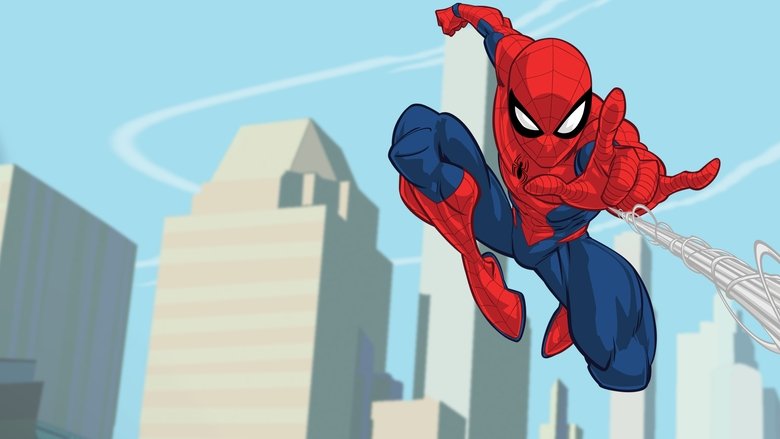
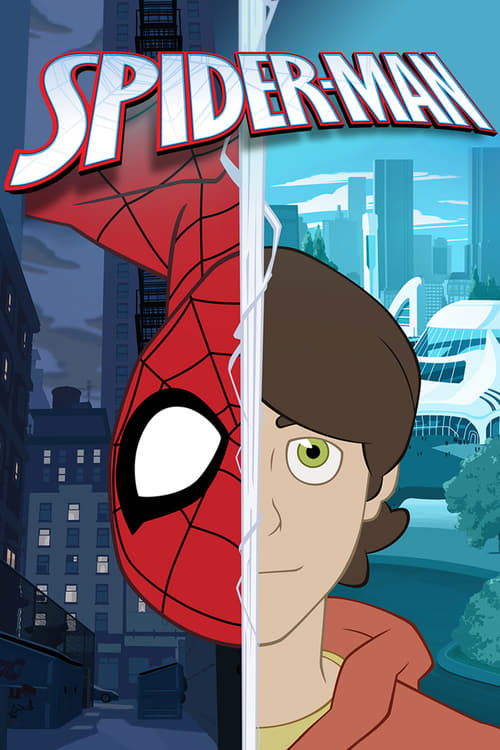
Marvel's Spider-Man
An earnest, high-voltage coming-of-age science adventure that balances adolescent vulnerability with relentless heroic duty, painting a kinetic chalkboard where scientific curiosity and moral responsibility collide in vibrant sparks across a sprawling metropolis.
Marvel's Spider-Man

Marvel's Spider-Man

19 August 2017 — 25 October 2020 United States of America 3 season 57 episode Canceled 7.5 (394)

Cast: Patton Oswalt, Jim Cummings, Nadji Jeter, Alastair Duncan, Robbie Daymond

Animation Sci-Fi & Fantasy Family Comedy Science as a Moral Responsibility & Problem-Solving Tool The Weight of Legacy, Mentorship, and Father Figures Collaboration vs. Isolationist Ego Identity, Redemption, and the Burden of the Second Chance Friendship, Loyalty, and Overcoming Tribal Conflict

Overview

Marvel's Spider-Man (subtitled Marvel's Spider-Man: Maximum Venom for its third season) is an animated television series developed by Kevin Shinick for Disney XD. Serving as a streamlined, science-centric reboot following Ultimate Spider-Man, the series returns Peter Parker to his formative high school roots while anchoring his life in the prestigious, STEM-focused magnet academy known as Horizon High. Across three distinct seasons and 58 total segments/episodes, the overarching narrative traces Peter’s evolution from an isolated novice struggling with the dual identity of student and vigilante into a mature, collaborative leader surrounded by a tight circle of genius peers.

The overarching plot explores Peter's complex relationships with his closest friends—most notably Harry Osborn, Miles Morales, Gwen Stacy, and Anya Corazon—as well as his mentorship under Horizon High founder Max Modell. Across the seasons, the narrative transitions from localized campus rivalries between Horizon High and Norman Osborn’s cutthroat Osborn Academy to sprawling, high-stakes crises involving classic rogues, corporate conspiracies, body-swapping sagas, factional turf wars, and planetary extraterrestrial invasions.

Rather than relying purely on solitary heroics, the show emphasizes collaborative intellect and peer support. Over time, Peter learns that true heroism is not merely a burden to shoulder in secret, but an equation best solved together with friends who share common ethical values and inventive minds.
Core Meaning

The core thematic thesis of the series redefines Uncle Ben’s classic adage through the lens of scientific inquiry: "With great power comes great responsibility, but intellect without conscience is the world's most destructive force."

Through every seasonal arc, the series illustrates that intelligence, talent, and technological breakthroughs are morally neutral tools. When driven by ego, corporate greed, or vengeance (as embodied by Norman Osborn, Spencer Smythe, and Doctor Octopus), genius creates catastrophic monsters. Conversely, when guided by empathy, transparency, mentorship, and communal responsibility (as championed at Horizon High), science becomes an instrument for healing, protection, and human flourishing.

Thematic DNA

Science as a Moral Responsibility & Problem-Solving Tool 30%
The Weight of Legacy, Mentorship, and Father Figures 25%
Collaboration vs. Isolationist Ego 20%
Identity, Redemption, and the Burden of the Second Chance 15%
Friendship, Loyalty, and Overcoming Tribal Conflict 10%

Science as a Moral Responsibility & Problem-Solving Tool

Unlike prior adaptations where Peter's intellect was secondary to street-level brawls, this series frames scientific deduction—including the scientific method, chemical formulas, and physics calculations—as Spider-Man's greatest superpower.

The Weight of Legacy, Mentorship, and Father Figures

Peter and Harry continuously navigate the contrasting philosophies of their mentors—Uncle Ben and Max Modell's benevolent guidance versus Norman Osborn's utilitarian, cutthroat ambition.

Collaboration vs. Isolationist Ego

Starting as a solo vigilante keeping secrets, Peter progressively realizes that building a "Spider-Team" (incorporating Miles, Gwen, and Anya) and sharing trust elevates everyone's potential.

Identity, Redemption, and the Burden of the Second Chance

Explored deeply through Doctor Octopus/Superior Spider-Man, Harry Osborn's Hobgoblin, and Eddie Brock, examining whether individuals corrupted by hubris or alien influence can choose atonement.

Friendship, Loyalty, and Overcoming Tribal Conflict

Manifested in the ideological and physical divide between Horizon High and Osborn Academy students, demonstrating how prejudice and rivalry can be bridged by shared empathy.

Character Analysis

Peter Parker / Spider-Man

Robbie Daymond

Archetype: The Reluctant Hero / Inquisitive Scholar Key Trait: Relentless analytical optimism

Motivation

Honoring Uncle Ben’s legacy while using scientific innovation to save lives without compromising his integrity.

Character Arc

Begins as an overburdened Midtown transfer struggling to balance schoolwork and vigilante guilt. Over three seasons—and surviving having his consciousness suppressed in the Superior Spider-Man saga—he matures into an accomplished scientific leader, mentor to Miles, and dependable team captain.

Harry Osborn / Hobgoblin

Max Mittelman

Archetype: The Tragic Heir / Redemptive Antihero Key Trait: Fierce personal loyalty masked by deep-seated insecurity

Motivation

Seeking validation and protecting his loved ones while escaping his father's toxic expectations.

Character Arc

Starts in his father Norman's shadow, constantly feeling inadequate compared to Peter. He becomes Osborn Academy’s star, adopts the Hobgoblin tech to fight crime, endures manipulation by his father, but ultimately breaks free from the Goblin curse to become a true, selfless ally.

All 5 characters and cast

Symbols & Motifs

The Scientific Method (Hypothesis, Observation, Experimentation)

Meaning:

Represents Spider-Man's fundamental superpower and cognitive framework for navigating both villainous battles and moral quandaries.

Context:

Structured explicitly in the origin shorts and echoed throughout fight sequences where Peter breaks down villainous threats as scientific puzzles to be solved.

The Horizon High White Coat / Laboratory

Meaning:

Signifies the uncorrupted, collaborative pursuit of knowledge, community safety, and intellectual freedom.

Context:

Acts as a recurring visual space and safe haven where Peter and his fellow prodigies conduct experiments and collaborate ethically.

The Goblin Glider / Armor

Meaning:

Symbolizes the toxic, self-destructive ambition of the Osborn family legacy and generational corruption.

Context:

Passed from Norman Osborn to Harry as both a protective technological weapon and a corrupting temptation.

The Symbiote (V-252 / Venom)

Meaning:

A physical manifestation of psychological shortcuts, unchecked rage, emotional toxicity, and the surrender of personal autonomy for quick power.

Context:

Featured across the symbiote invasion storylines and prominently throughout the Maximum Venom season.

Octavius's Neural Interface / Tentacles

Meaning:

Represents technological hubris and mental captivity.

Context:

Depicts both Otto Octavius's physical subjugation by his own mechanical creations and his eventual intellectual takeover of Peter's mind.

Memorable Quotes

Science is about observing the problem, forming a hypothesis, and testing your solution.
— Peter Parker

Context

Delivered in Origin Short 2 (Observation!) and recurring throughout Season 1 during tactical encounters.

Meaning

Encapsulates the entire creative philosophy of the show: utilizing the scientific method as Spider-Man's core superpower.

You're not a hero because of your powers, Parker. You're a hero because of who you choose to be.
— Otto Octavius / Superior Spider-Man

Context

Spoken in Season 2, Episode 19 (Superior), leading directly to Otto surrendering Peter's body back to him.

Meaning

Marks Otto's transformative realization that calculations and superior intellect cannot substitute for genuine moral selflessness.

All 4 quotes

Episode Highlights

Horizon High: Parts 1 & 2

S1E1

Establishes the foundational status quo: Peter's admission into Horizon High, his bond with Harry Osborn, the introduction of Max Modell, and the philosophical conflict with Spencer Smythe.

Significance:

Sets the series' core dynamic, contrasting Horizon's collaborative science with outside corporate malice.

Spider-Island: Part 1–5

S1E20

Adapts the comic crossover where everyday citizens, including Gwen Stacy, gain spider powers from the Jackal's chemicals, forcing Peter to rally his peers into an organized heroic collective.

Significance:

Transitions Peter from a solo vigilante into the leader of an emerging ensemble of super-powered allies.

The Hobgoblin: Parts 1 & 2

S1E25

Norman Osborn’s machinations trigger a tragic confrontation between Peter and Harry, establishing the recurring Goblin threat and fracturing friendships.

Significance:

Serves as the dramatic climax of Season 1, cementing Harry's struggle with his father's toxic legacy.

The Living Brain / My Own Worst Enemy

S2E13

Doc Ock transfers his mind into the Living Brain and subsequently swaps bodies with Peter Parker.

Significance:

Launches the acclaimed Superior Spider-Man multi-episode adaptation, radically altering the show's narrative stakes.

Superior

S2E19

The emotional climax of the body-swap arc; Otto experiences Peter's memories and voluntary sacrifice, willingly returning control of Peter's physical form to save innocent lives.

Significance:

Provides the definitive moral and redemptive turning point for Doctor Octopus in the series.

Goblin War: Parts 1–4

S2E23

A massive faction war between various Goblin-themed factions (Goblin King, Hobgoblin, Electro Goblin), culminating in Norman Osborn transforming into the Dark Goblin.

Significance:

Brings the Osborn family storyline and campus ideological war to a high-stakes Season 2 conclusion.

Web of Venom

S3E1

Kicks off the 44-minute format of Season 3 (Maximum Venom), releasing the extraterrestrial symbiote threat on an apocalyptic scale.

Significance:

Shifts the series from localized high-school rivalries to planetary existential stakes.

Spider-Man Unmasked

S3E4

Peter's secret identity is publicly threatened by Swarm and Tinkerer, escalating personal stakes while showing the trust among his inner circle.

Significance:

Tests the resilience and loyalty of the Spider-Team under extreme public vulnerability.

Maximum Venom

S3E6

Symbiote dragons and alien legions assault Earth; Max Modell is possessed; the destruction of Horizon High leads to Peter founding a new collaborative enterprise.

Significance:

Serves as the series finale, demonstrating Peter's maturation into an independent scientific leader.

Philosophical Questions

Can technological and scientific progress ever be truly neutral?

Explored through the recurring weaponization of Horizon High's benevolent inventions by rogue actors and corporate competitors.

What defines true moral superiority: flawless intellect or genuine empathy?

Posed directly during the Superior Spider-Man storyline when Otto Octavius confronts the limitations of calculating logic over human selflessness.

Is an individual inherently bound to repeat the corrupt legacy of their forebears?

Examined through Harry Osborn's struggle to overcome Norman Osborn's toxic expectations and escape the Goblin mantle.

Does true leadership require self-sacrificing isolation or radical trust in others?

Illustrated through Peter Parker learning to relinquish his solitary burden and share responsibility with his Spider-Team.

Alternative Interpretations

The series can be analyzed through several distinct thematic frameworks:

Full ending explanation

Cultural Impact

Premiering in August 2017, Marvel's Spider-Man catered to a new generation of younger viewers entering the Marvel ecosystem following Tom Holland's live-action debut. While fitting Disney XD's mandate for fast-paced action cartoons, it introduced milestone comic narratives—such as Dan Slott’s Superior Spider-Man and Spider-Island—to television for the first time.

Furthermore, the series acted as a significant media bridge that popularized Miles Morales, Spider-Gwen, and Anya Corazon as Peter's core team members alongside the release of Spider-Man: Into the Spider-Verse.

Audience Reception

Critical and audience reception varied across the series' three seasons:

  • Season 1: Received positive initial marks (IGN awarded the premiere a 7.4/10), praising the science-driven problem solving and skip of the traditional origin, though some fans criticized the simplified background animation.
  • Season 2: Regarded as the creative high point by community reviewers due to ambitious serialized arcs like Superior Spider-Man and Goblin War, which offered stronger character drama.
  • Season 3 (Maximum Venom): Met with mixed responses; while praised for cinematic set-pieces, some fans felt the alien symbiote focus detracted from the grounded high-school STEM theme.

Overall, it is viewed as a solid, accessible Saturday-morning incarnation that rewarded comic enthusiasts with faithful adaptations of modern storylines.

Interesting Facts

  • The series deliberately adopted a back-to-basics, science-heavy approach to tonally synchronize with the MCU's Spider-Man: Homecoming (2017).
  • Veteran comic book writers Dan Slott (creator of Superior Spider-Man and Spider-Island) and Kevin Burke served as consulting producers.
  • For Season 3 (Maximum Venom), the broadcast format shifted from 21-minute episodes to six 44-minute event specials.
  • Nadji Jeter, who voiced Miles Morales in the series, also voiced Miles across the blockbuster PlayStation video game franchise.
  • Comedian Patton Oswalt voiced Uncle Ben Parker and also took on the dual role of the Chameleon.
  • The series concluded after 57 broadcast episodes (58 total segments) following the reorganization of Marvel Television into Marvel Studios.

Easter Eggs

Dan Slott's Horizon Labs Comic Adaptation

The Horizon High setting directly adapts Dan Slott's Big Time comic run, where Peter worked at Horizon Labs, reimagining it as a high school for prodigies.

Josh Keaton Voice Cameo

Josh Keaton, who voiced Peter Parker in The Spectacular Spider-Man (2008), portrays Norman Osborn / Dark Goblin and Ollie Osnick in this series.

Iron Man's 'Paul' Autograph Gag

During early crossover appearances, Tony Stark mistakenly addresses an autograph to "Paul" rather than Peter, referencing a classic comic running gag.

Spider-Man: Homecoming Parallels

Peter's DIY web-shooters, Stark Expo showcases, and Vulture's turbine flight mechanics visually echo elements from Jon Watts' 2017 live-action film.

Frequently Asked Questions

Explore More About This Movie

Dive deeper into specific aspects of the movie with our detailed analysis pages

Comments (0)

Leave a comment

No comments yet. Be the first to share your thoughts!

Similar Movies