
Skip to content
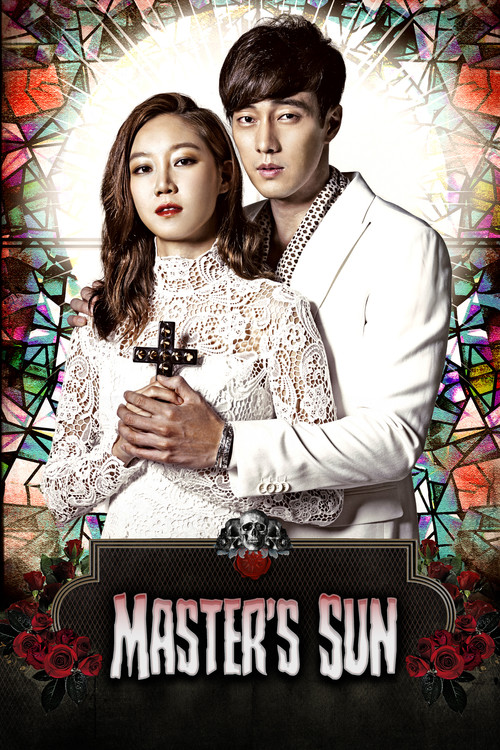
Master's Sun
Enveloped in supernatural mist and eccentric romance, a terrified soul wandering through shadows finds refuge in a fortress before learning to ignite her own blazing light.
Master's Sun
Master's Sun

주군의 태양

07 August 2013 — 03 October 2013 South Korea 1 season 17 episode Ended 8.0 (188)

Cast: So Ji-sub, Kong Hyo-jin, Seo In-guk, Kim Yoo-ri, Hwang Sun-hee

Drama Sci-Fi & Fantasy Comedy Trauma, Grief, and Emotional Scarring Co-dependency vs. Mutual Empowerment The Voices of the Marginalized and Unfinished Business Materialism vs. Genuine Human Value Perception and Deception

Master's Sun — Ending Explained

⚠️ Spoiler Analysis

The overarching mystery centers on the 15-year-old kidnapping of young Joo Joong-won. Joong-won spent years believing his teenage love, Cha Hee-joo, died as an innocent victim while an accomplice escaped with a 10-billion-won necklace. In reality, Hee-joo was the vindictive mastermind who harbored intense jealousy toward her identical twin sister, Hanna Brown, who had been adopted into a wealthy family in the United Kingdom.

Hee-joo used Hanna's gentle nature to orchestrate the kidnapping, subsequently tying Hanna inside the getaway car that detonated. Hee-joo assumed Hanna's identity, underwent plastic surgery, and lived abroad in luxury. Secretary Kim Gwi-do, the twins' estranged uncle, stayed by Joong-won's side hoping to uncover the truth. In Episode 15, guided by the spirit of the deceased Hanna speaking through Gong-shil, the living Hee-joo is arrested at the airport, freeing Joong-won from his traumatic reading disorder.

In Episode 12, Joong-won is critically stabbed while protecting Gong-shil from a murderer. As his body flatlines, his wandering spirit confesses his love before fading. Gong-shil saves his life by pledging her servitude to the medium Madam Go, which revives him but erases all his memories of her. Muscle memory and the sun necklace eventually shatter this amnesia. In the finale, Gong-shil departs for a year to understand her powers, returning as a confident woman who purchases her own rooftop building, ultimately reuniting with Joong-won on fully equal terms.

Alternative Interpretations

Several lenses offer alternative perspectives on the drama's narrative structure:

  • Psychosomatic / Trauma Projection Model: Gong-shil's ghost encounters can be read not as literal supernatural events, but as externalized manifestations of severe survivor's guilt and dissociative trauma following a three-year coma. Joong-won's touch operates as a psychological grounding mechanism, and her efforts to resolve the spirits' lingering issues represent the therapeutic processing of her own grief to reintegrate into waking society.
  • Deconstructed Cinderella Myth: While initially resembling a traditional 'Candy' fairy tale of a destitute girl rescued by an affluent CEO, feminist readings view the story as a critique of that archetype. Gong-shil consciously rejects relying on Joong-won's fortune and shelter, choosing a period of separation to establish her own autonomy and returning only when she can meet him as an empowered equal.
  • Sociological Parable of Social Invisibility: The spirits—ranging from neglected children and military animals to street scavengers—represent the marginalized underclass of modern urban Seoul. In this framing, Kingdom Mall signifies corporate capitalism ignoring human hardship, while Gong-shil forces elite society to acknowledge the humanity of people routinely overlooked.

Explore More About This Movie

Dive deeper into specific aspects of the movie with our detailed analysis pages

Similar Movies